The problems with using either oval or almond as the shape for the Bengal eye is that it does not allow for an openness that is needed on a nocturnal eye. It seems the one thing all Bengal standards agree upon is that the Bengal should have the look of a nocturnal cat. One of the traits that clearly distinguish a nocturnal cat from diurnal or crepuscular cats is its eyes, so we ought to spend some time getting this description correct.
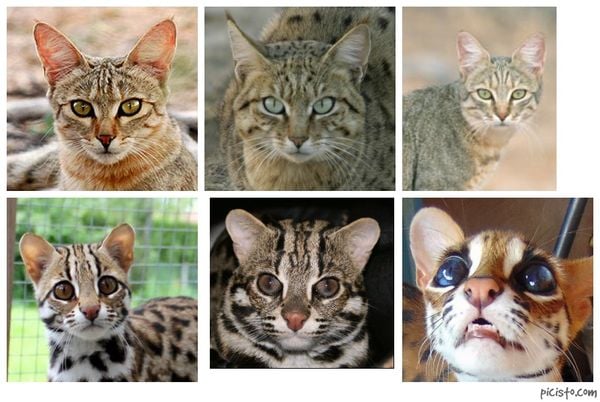
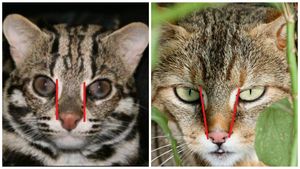
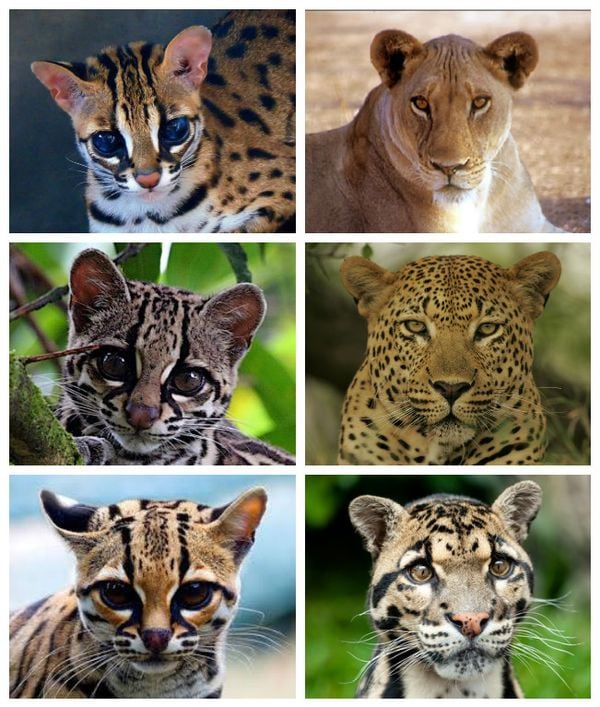
While oval and almond aren’t right, round isn’t exactly accurate either. Of the three, it is likely the closest, but it would be the easy way out when formulating a standard – the description of the very best. The Bengal has this interesting straight edge to the upper inner eyelid. In addition, the widest point of the eye should have a slight bias toward the outer edge of the eye. It is this slight bias that makes the eye look wild, not staring or domestic round. If you look down at the collage of four different tree-dwelling, nocturnal wildcat species, you’ll notice that while their top eyelid shape varies, they all have the lower eyelid that deepens towards the outside of the eye, not directly in the center like a round eye. When we are looking for ways to distinguish the Bengal from all other breeds and using the nocturnal wildcat for inspiration, it is important to note these slight distinctions in the standard.
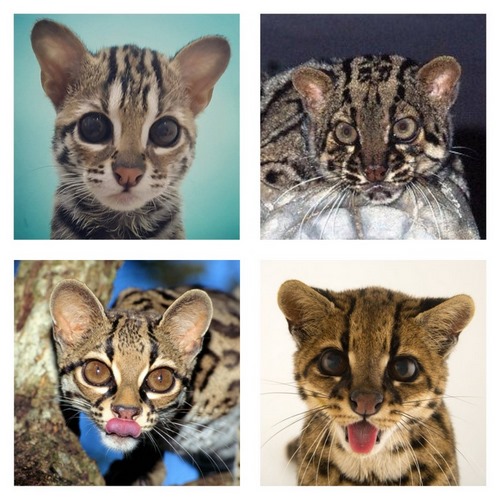 I reached out to a friend who is a judge and asked how one would describe the shape of the eye that I would like to see on the Bengal, and she pointed me to the American Curl standard for some ideas. Bingo, I think they hit it – almost.
The American Curl describes their eye shape as “Walnut in shape; oval on the top and round on the bottom. For the Bengal, I would add “with the deepest point slightly biased to the outer edge.” It seems that using a description that already exists and tweaking it to fit the Bengal would provide the most clarity for judges.
Another aspect that is often included in the description of an eye shape is the proportion of the eye to head size. Look at the collage of four different tree-dwelling wildcats who are nocturnal hunters. Top left, Leopard cat; top right Marbled cat; bottom left, Margay; bottom right, Oncilla. On all cats, the eyes are a dominating feature on the face as they should be on a Bengal as well. So when describing the size, the Bengal eye should be moderately large in proportion to the head. The allowance already made for jowls on male cats accommodates the difference in proportion between a male and female Bengal cat eye to head size proportion.
 Standards need to account for the set of the eyes as well and this is where Bengal standards everywhere have an opportunity to clarify for breeders what a nocturnal set looks like. It is obvious by looking at the wildcat collage that the eyes of nocturnal cats are set to the outside edges of the face with approximately one eye width between them. Defining the width by the size of the eye would help Bengal breeders keep everything in the proper proportion. There seems to be a common understanding that Bengal eyes should be wide apart, but the proportion of width to eye size is off on many Bengals with the width being too wide and the eyes being too small. Clarifying the proportions could be an asset to kitten selection. This would also allow for the eye description to help guide the head width to be in accordance to other areas of the standard – particularly where it calls for the head to be longer than it is wide and slightly small in proportion to the body. It would be nice to start to see the different pieces of the standard working together instead of contradicting one another.
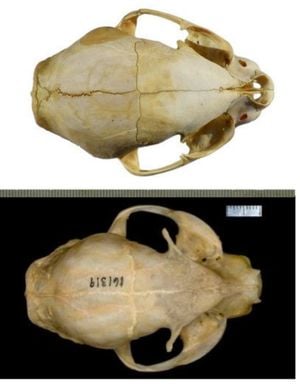
Often Bengal standards will call for the eye to not be bugged, which is understandable because no one should breed for structural flaws. However, a nocturnal eye has a lot of surface area to its lens. The difference between it and a bugged eye is that the non-bugged eye with a copious surface area is held strongly in place by prominent boning. We’ve mentioned above that drop in the lower eye line towards the outside edge of the eye. Look carefully below the lowest point in the lower eyelids on the pictures of the different wildcats, you can see the strength of the bone holding the eye in place so that it isn’t bugged. Now, look at the image of the dorsal view of two skulls. The comparison between a domestic cat skull on the top and a Leopard cat skull beneath shows the difference in the bone structure around the eyes. Notice the Leopard cat’s zygomatic bone sticks out further in the front and sides and is a thicker bone than it is on the domestic cat. Even the bones holding in the top of the eyes are longer and stronger on the Leopard cat. Selecting for the bone structure of a Leopard cat on the SBT Bengal will give the nocturnal eye that is coveted by Bengal breeders without the fear of the eye having the structural weaknesses of a bugged eye. It is this strong bone structure that holds the eyes in a forward facing position.
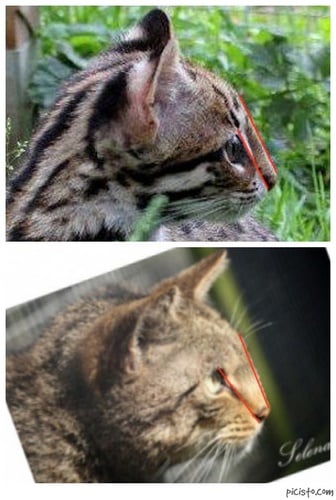 To have the nocturnal look, the Bengal eyes cannot be deeply set into the skull. The nose bridge should not extend out beyond the eye lens very far. This coincides with the need for a lot of surface area on the lens of the eye. A nocturnal eye must allow as much light to enter the eyeball as possible. Furthermore, the bottom of the eye is set further out than it is on the majority of cats making the angle of the eye parallel to the bridge of the nose if the cat has the desired downward turned muzzle that is shown on the Leopard cat in the picture. Even on cats who don’t have the downward turned muzzle, the eye should sit ever so slightly tilted upward. For all of this to exist, the Bengal needs the bone structure from the Leopard cat. If standards start to describe with clarity what a nocturnal eye looks like, breeders will have to start selecting the stronger bone structure. All choices have a domino effect, and this will have a positive domino effect.
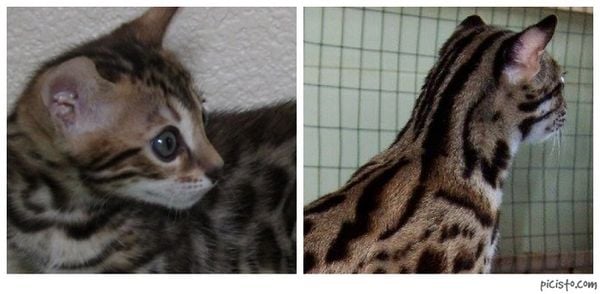
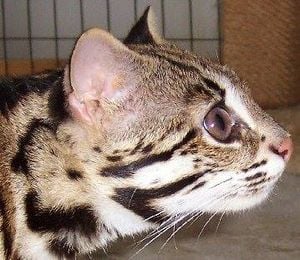
The lens of the Bengal eye should be visible from all sorts of angles – that is what makes the eye nocturnal. In the picture below, look at how you can see the lens of this male Leopard cat’s eye as it protrudes out from the face. You can see the lens from behind the cat. Notice, too, on the Bengal kitten how the lens is visible on the far-away side of the nose bridge. Cats who hunt at night have to capture any of the minimal light they can and they have to be able to pick up light from all different angles. If we are breeding the look of a nocturnal cat, we need to have a standard description that explains it as such.
It is time to get the description of the Bengal eye clarified by standards in order to help breeders make better selections towards the big picture goal of the Bengal breed which is to breed a domestic cat that emulates the look of a small, nocturnal, tree-dwelling wildcat. To do so the eye shape, set, and size should be clearly stated.
Shape: Oval on the top, round on the bottom, with the deepest point slightly biased to the outside. Set: Placed on the outside of the face with one eye width in between, surrounded by prominent boning that holds the eyes at a parallel angle to the nose bridge in profile. Size: Moderately large with a large surface area on the lens. Strong boning keeps eyes from being bugged.
So the question remains – are Bengal breed section members of any organization interested in clarifying their standard’s eye description?
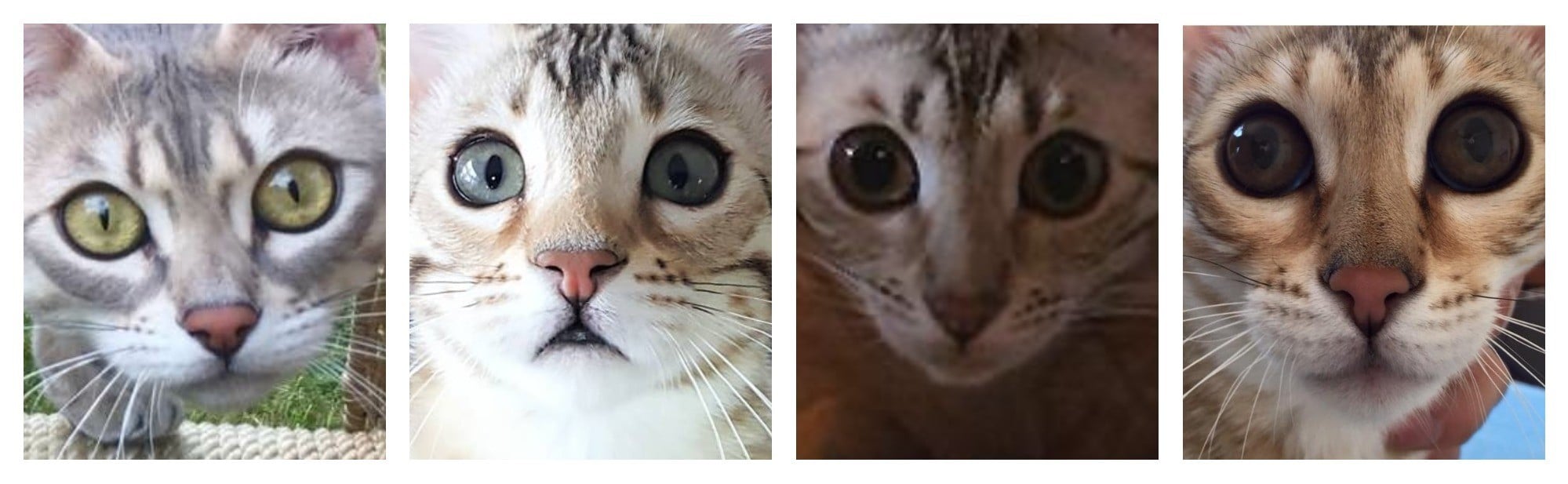
These Bengal eyes from around the world show that the ideal eye is attainable on SBT Bengals. Pictured from left to right: Katzizi Ylvi at Katzizi Bengals in England; Fraser Valley Nova of Jewelspride at Jewelspride Bengals in Canada; Crestwood Vegas of Coppa at Coppa Bengals in the United States; Batifoleurs Moswen of Moulin Rouge at Moulin Rouge Bengals in France.

 The shape of a forest dwelling wildcat’s nose is very distinct from the Felis cats, so this is a great aspect to emulate in the Bengal cat. To being with, look at the upper edge of the nose of the Asian leopard cats in the bottom row of the collage above. The small forest dwelling wildcats have a slight heart shape to the top line of the nose. It does not go straight across like the Felis cats.
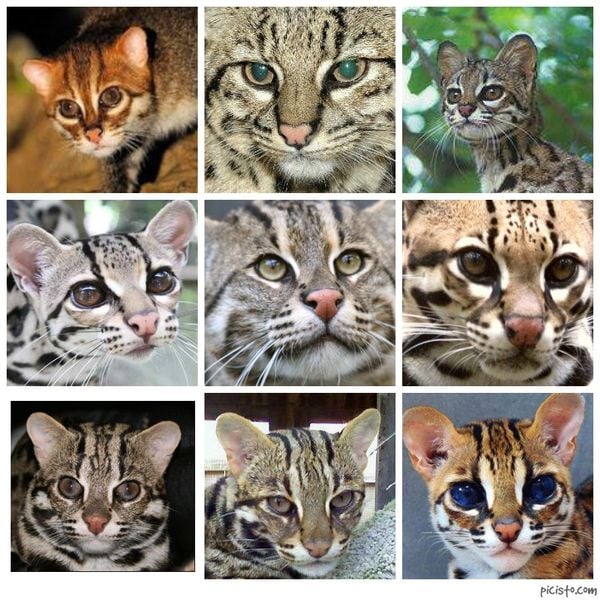 Above is a collage of a variety of small forest dwelling wildcats that live and hunt at night in the trees of jungles and forests. What dominant feature of the face stands out on all of them? That big, huge, puffy nose.
 The nose of the Bengal cat will likely never proportionately reach the size of the small forest dwelling wildcats, but it should still be a standout feature on the face.
  Finally, the absolute must have on a Bengal nose is a puffed nose leather. Most cat breeds have flat nose leather, so the puff of a Bengal’s nose leather is very distinct. The hair line should start back from the outer most surface of the nose, and the leather should wrap around the upper curve. If you look at the Ocelot in the center row, right column of the collage, it show the puffy nose leather the best. When viewing one of these wildcats in profile view, you will notice the nose leather actually puffs out beyond the chin. If you get a Bengal with correct nose set and nose leather, it will too.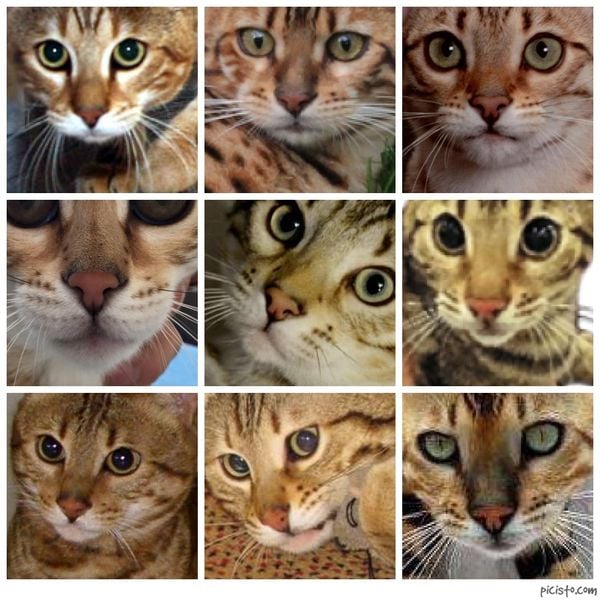

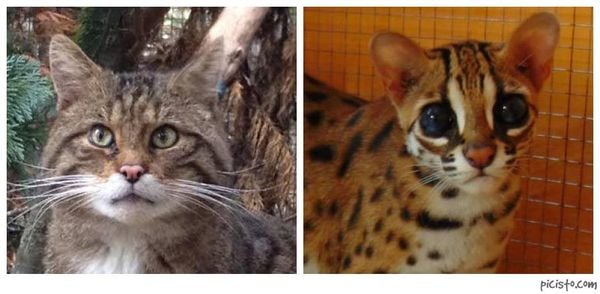 The Bengal Standard doesn’t say anything about where the nose should be set, but a study of small forest dwelling wildcats leads to only one answer – the nose should set low in between the whisker pads – not above them. In the collage above, there is a Scottish Wildcat on the left and an Asian Leopard cat on the right. Notice the whisker pads are below the nose of the Scottish Wildcat. The nose sits on top of them. In contrast, the nose of the Asian Leopard cat is set in between the whisker pads – they are positioned to the side of the nose.
 One thing to look for in looking for a low set nose is the amount of whisker pad that connects between the bottom of the nose and the lip. The more space you have here, the higher the nose set is. Look for noses that have very little connection of the whisker pads beneath them.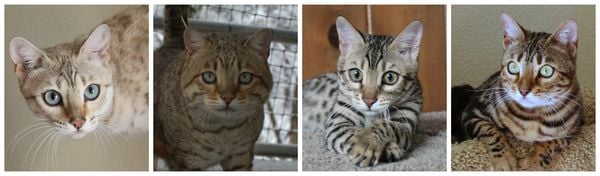

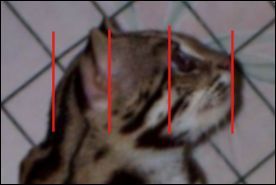 The middle third of the Rule of Thirds is likely the most difficult section to write about because in the middle third, it is more about what you do NOT want to appear there than what you do want to appear there. Notice in the picture of the ALC, the eyes are in the first third and the ears are in the last third. That is exactly as it should be, but it doesn’t leave any obvious facial feature for the middle third.
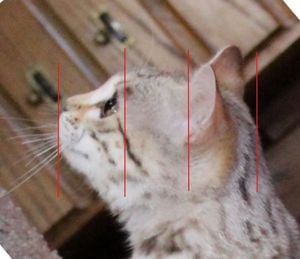 On this middle third, otherwise known as the forehead, you want to try to keep an even sweep to the skull from the nose bridge up over the head and into the back skull. If you look around at Bengal cat adults, you will often see a change of direction above the eyes as the forehead flattens out. This is something to avoid when trying to achieve the skull shape of the ALC. Some Bengals go the the extreme of having a dent in the skull here. It looks as if someone has taken their thumb and pushed the skull in above the eyes. This is not desirable.
 Instead, look for kitten who has a lot of forehead. Look for kittens whose forehead goes UP from a distance above the eyes and ears. Kittens who have exaggerated foreheads will develop into adult cats who have the correct, continuous roll over from the nose bridge all the way through to the back skull. They will not develop a change of direction or the dreaded thumbprint indent on the forehead.

 The first third of on the head of a small forest dwelling wildcat is the most important third of all. The front third of the head distinguishes this group of cats from all other wildcats on the planet.
  All of this background on prey size and muzzle length leads us to the front third of the Asian Leopard cat’s head. In profile view, notice the eyes are on the front third of the skull. If breeders want to emulate the look of the small wildcats, they must select for Bengals who have their eyes on the front third of the skull as well.
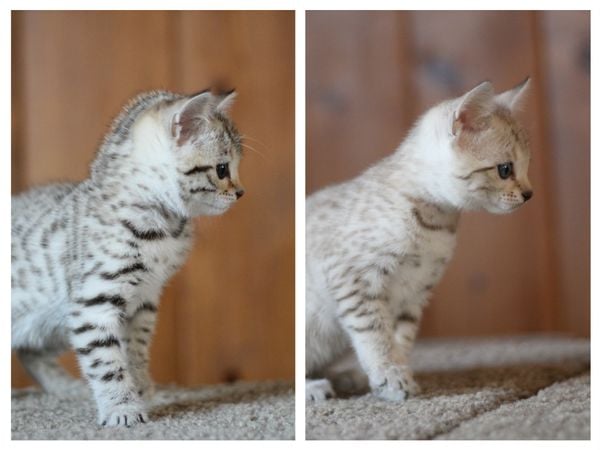
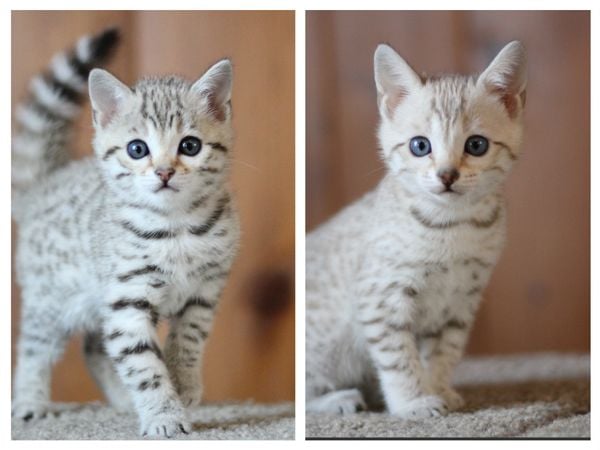


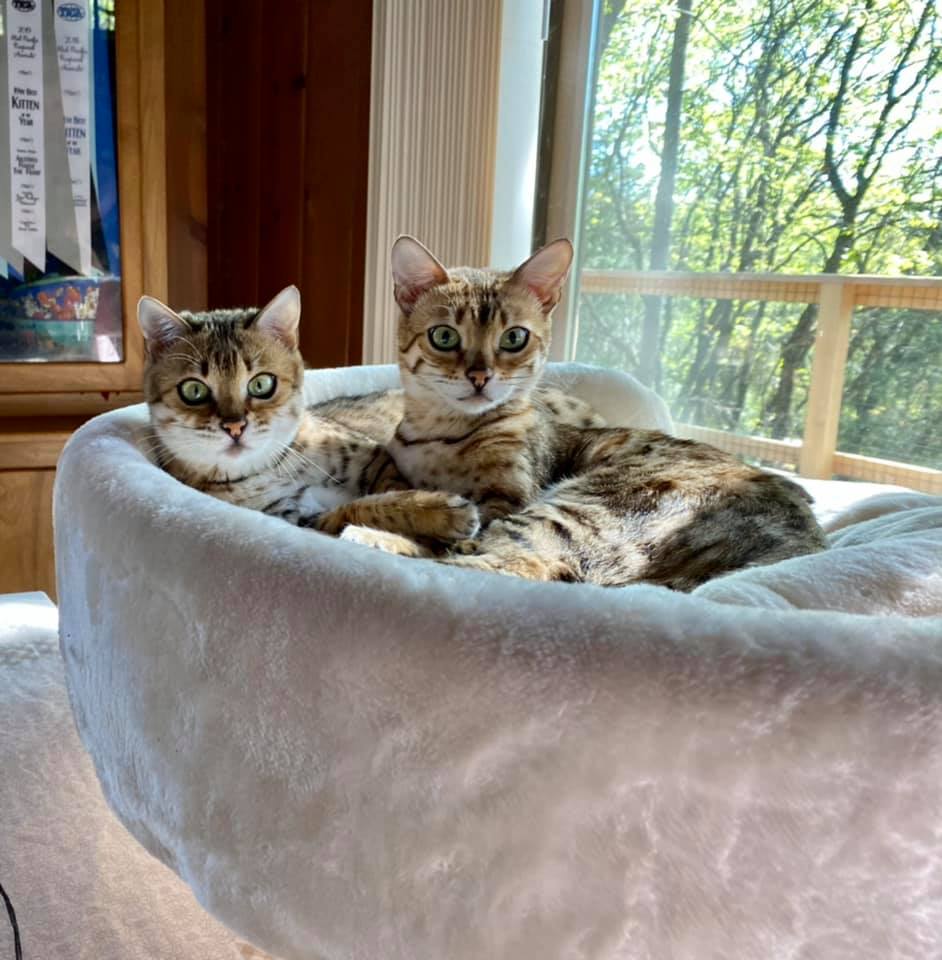 For many years, it has appeared as if the top priority of breeders is to achieve small ears. Small ears are not very wild looking when they are triangular.
 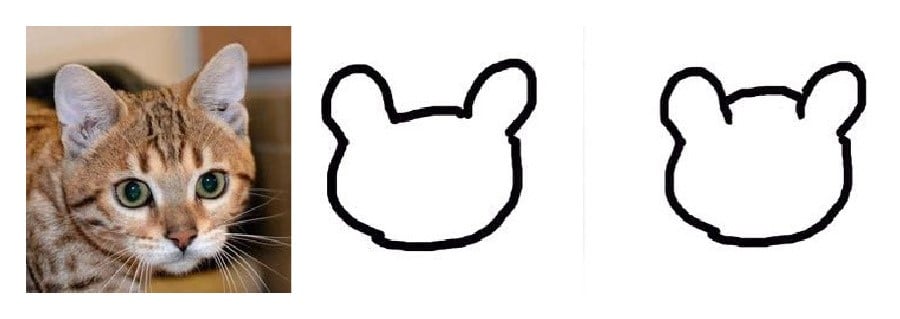 In addition to the forward tilt having an impact on the appearance of the size of the ear, where the ears sit on the head has an impact as well. The kitten collaged with the drawing has a fantastic shape, but the ears are too high on the head. If you move the ears down or add more top skulls, the same ears would “look” smaller. Now imagine not only moving the set down a tiny bit but also adding forward tilt; the ears would appear to be diminutive, even though their actual size would not change.
 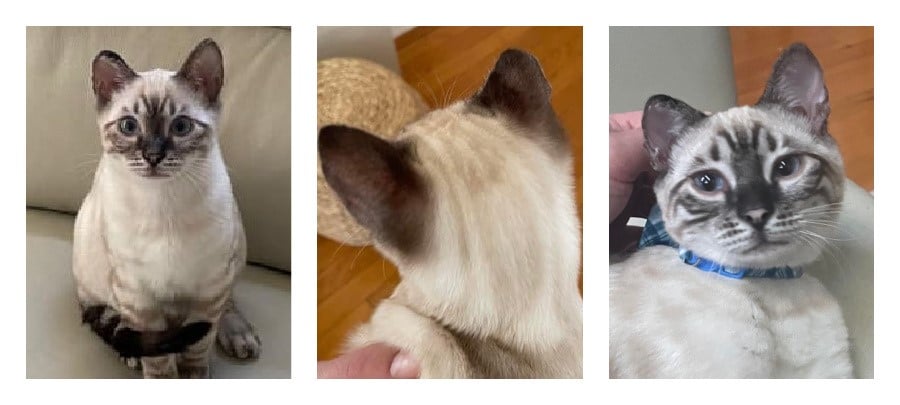 When kittens are born, less than half of the ear flap is physically detached from the head. This is why newborn ears always look tiny. At this stage, there is very little active blood flow in the ear flap. Damage done to the ear flap at this time can easily go unnoticed due to lack of bleeding.
 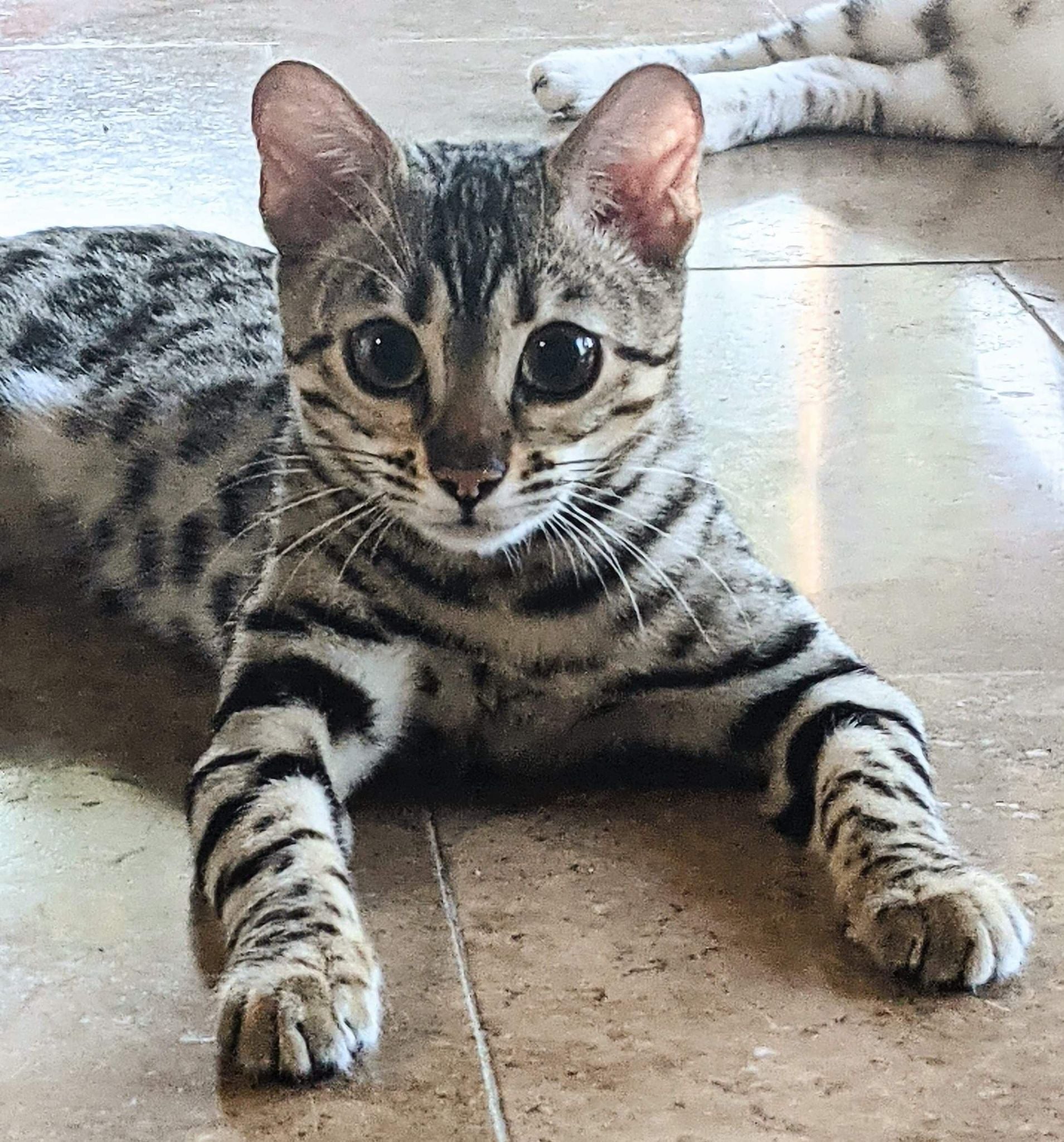 As breeders, sometimes we have to ask ourselves – what is the goal? Small? Or accurate? The Bengal will naturally go through phases in which the best ears do not appear small to get to the accurate ear. These cats will struggle in the show hall as the show hall, at the moment of publication, favors size over the shape and set. Most Bengal standards describe the size of the ears first. By having the size in the first place position in the description, it sends the message to judges that size is the most important aspect of the ear. Bengal breeders may consider discussing with their breed committees and breed chairs whether reorganizing the ear description could assist in the show hall, encouraging breeders to focus more on the shape and set and less on size. We need to get to the point where judges mention the shape of ears, such as these on Lots Of Spots Rayne Dancer; more often than not, they mention size.