Are Bengal Cats Vocal Cats?
 Bengal cats are known to be vocal, but this is not necessarily a consistent breed trait, nor is it something from their hybrid ancestry. In over 20 years of breeding Bengal cats, we have had some vocal Bengal cats and many not-so-vocal Bengals cats. Regardless of whether you want a vocal Bengal, you are likely to find one that suits your wishes – talk to the breeder about the parents’ vocal tendencies. As long as you do your part in mentally and physically stimulating the cat, your Bengal should be quiet if you seek one from a quiet lineage. For clarification, this article focuses on spayed and neutered pet Bengal cats. Unfixed cats of both genders are vocal, without a doubt, as they must make their presence known to potential mates and rivals.
First, let’s dispel the myth that Bengals are vocal because they come from wild ancestry. That isn’t true. Think about it, are wild cats vocal when they are not searching for a mate? No. Noise attracts predators, and leopard cats are a potential prey species to many larger predators. Small cat species fall into the category of being both a predator and a prey species, and due to this, it is not in their nature to make any unnecessary noise. When they call during mating season, they put their life at risk by revealing their location. We own a couple of first-generation Bengal hybrids; these cats rarely vocalize unless they are in heat. In addition, most of their infant baby kittens do not vocalize. Kitten vocalization can be one of the most confusing experiences for an early-generation mother. Her instinct is that silence is necessary for survival. Sometimes a second-generation mother can become distressed and confused if her third-generation offspring make more noise than she is comfortable with. Our experience has been that the earlier the generation of the kitten, the quieter they are. This makes sense when you consider the importance of silence for survival in the wild.
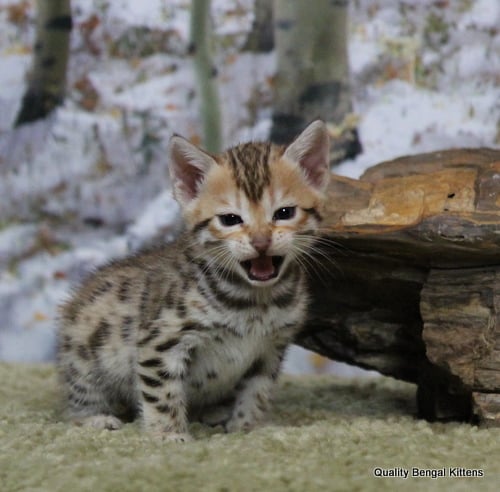 However, we believe that excessive vocalization is hereditary, but it comes from the domestic side of a Bengal cat’s heritage, not the leopard cat side. Through observation, we know that our cats down from the cattery Rosettea tend to be a bit more talkative than our cats that do not have Rosettea lineage. We’ve worked with two different Rosettea-line stud cats over the years. Our direct offspring of those Rosettea sires tended to be more chatty than their quieter mother. That extra level of talkativeness can be bred back out by selecting a non-talkative partner for them, but it can also continue to pass down to the next generation. If one were to breed two talkative cats together, the result would likely be more consistency in the verbose nature of the offspring.
The majority of our cats, however, are not excessively talkative. Most of our cats, not all, will talk back when we talk to them and engage in a brief conversation. The cats will undoubtedly talk about when food is being prepared or when they think it should be prepared. Some will give a meow if they want to greet you when you return home or get up in the morning, but typically this is paired with physical contact. So the cat will stand up to greet us and say hello. Sometimes they chatter while watching the birds outside.
How can you stop your Bengal Cat from talking so much?
Even if you have a Bengal genetically prone to talking more than average, you can control their talking. The first thing you may want to do is rule out any medical reasons for a talkative cat. Assuming that there is no medical condition causing the talking and considering that the Bengal is a high-energy, highly-intelligent breed of cat, it is likely the cause of its excessive and inappropriately timed taking has its roots in boredom. Cries out of boredom or loneliness are the “constant cat meowing or crying [that] usually starts after you go to bed and continues until you respond or she gets tired of calling out for attention” (Kelley). This means you can modify and adjust this behavior to your liking, but it will take some effort. Because Bengal cats are highly-intelligent and high-energy, they are more likely to become bored, increasing their chances of meowing too much out of boredom.
 How Feeding affects Meowing
If you free-feed your cat, the first thing you must do is stop. Secondly, if you feed your cat first thing every morning, you must stop doing this. Free feeding or feeding-first-thing are two everyday habits of humans that can contribute to excessive talking. When you free feed, the cat controls his energy spikes, which likely means he will want to play when you do not want to play – such as at night when you are trying to sleep (Galaxy). When you feed first thing in the morning, your cat associates your getting up with him getting food, so he figures that all he needs to do to get his food is wake you up. Make your cat’s morning feeding take place after you have had your breakfast.
If your cat’s meowing is bothering you, one of the first steps you may try is to control your cat’s energy spikes. You can do this through a play-then-feed routine. Follow the steps in our article on play to get your cat into a routine. Play, then feed your cat 2-5 times a day based on the cat’s needs. We suggest the most extended play session and the most substantial feeding portion be as late into the evening as your routine schedule allows. We also recommend that your first play-then-feed session is as late into the morning as your routine allows. Mornings are often busy and short on time, but if your cat’s meowing is problematic, then you need to make it a priority to play for at least ten minutes before you run out of the house to start your day.
 Reducing Meowing through Training
Training a cat to do anything and actively engaging the cat in that training is an excellent way to decrease the meowing resulting from boredom and or loneliness. You can decide what type of training you want to do with your cat. However, your first task will be to find a treat your cat likes enough to work for. Once you have a treat, what would you like to train your cat to do? Would you like to clicker train it? Harness train it? Or teach it a few noise-reducing tricks? Working your cat’s brain will make it more tired at night and rest easier. If you have a busy day and don’t have time for a training session, you can leave out a puzzle for your cat to solve, but the more persistent the meowing is, the more work you will need to put into tiring your cat out both mentally and physically.
Reduce Meowing by offering a Cat Wheel
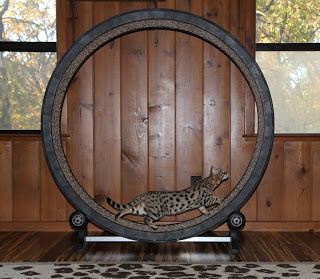
Nighttime would be your cat’s most active time if it lived out in the wild. While you can influence their energy spike by establishing a play-then-feed routine throughout the day, you may also want to offer your cat a Cat Wheel. Feral cats would naturally walk a territory of five acres throughout the night, but it is not safe to let your cat go out roaming. We have multiple cat wheels in our house, and the wheels are often reasonably quiet during the night but go nonstop throughout the night. For more information on our experience with different brands, please read our article on Cat Wheels.
 Stop Responding to your Meowing Cat
If you have done your work at creating a normal body rhythm for your cat using the play-then-feed method and exercising its mind through training or puzzles, then the last step is to ignore the cat’s meowing. While this may be the hardest of all steps, it must be done (Galaxy). Once you’ve worn your cat out to the point of panting, then feed him his last meal of the day and go to bed – with earplugs if necessary and do not respond to any meowing. When you get up in the morning, go through your routine, remembering to feed the cat toward the end of your morning routine.
While it may take a few weeks to eliminate meowing caused by loneliness and boredom, it will happen. The work you put into it will pay off. You will be happier, your cat will be happier, and everyone will sleep better.
Work Cited
Galaxy, Jackson. “Train Your Cat to Let You Sleep.” Jackson Galaxy. 2019, www.jacksongalaxy.com
Kelley, Jane A. “Cat, Won’t Stop Meowing? 7 Reasons For All That Cat Meowing.” Catster. 8 Oct. 2019. www.catster.com
Learn More about Bengal cats in our BLOG.
Learn what makes Quality Bengal Kittens different.
Check out our currently Available Bengal Kittens.


 According to Cornell University’s Cat Watch Newsletter, “50 to 90% of adult cats are affected by periodontal disease to some degree or another” (Dental). Several factors go into the formation of tartar and plaque, but the good news is that it is preventable.
 Furthermore, cats do not have the enzymes to break down carbohydrates. “Because they evolved eating a diet with almost no carbohydrates, they have only one enzyme system capable of handling them. This is quite different from humans and dogs, both having multiple enzyme systems that digest carbohydrates.” We all know that carbohydrates breakdown into sugars – another substance the cat’s body was not designed to eat. Then, bacteria feed on these sugars and produce acid, which, ultimately, causes tooth decay.
  Some cats naturally have proper pH levels in their saliva and maintain cleaner teeth with little to no plaque build-up. Others don’t quite have the ideal pH, so they can be more prone to build up the associated bad breath and later dental woes. Cats need to rip and shred meat from bones to keep their teeth clean, as that is what their teeth were designed to do. Chicken drumsticks, pieces of Cornish hen, or whole quail, pieces of rabbit are delicious and healthy; plus, they act as natural “toothbrushes” for cats. The act of shearing the meat from the bone cleans any debris from the teeth, and crunching up the bones can remove any stubborn plaque. By feeding meaty bones once a week or more, you allow the cat’s teeth to work correctly. As long as the bones are raw, they are safe and can be swallowed and safely digested. This is the easiest way to keep dental hygiene in check, and the cats enjoy the treat.
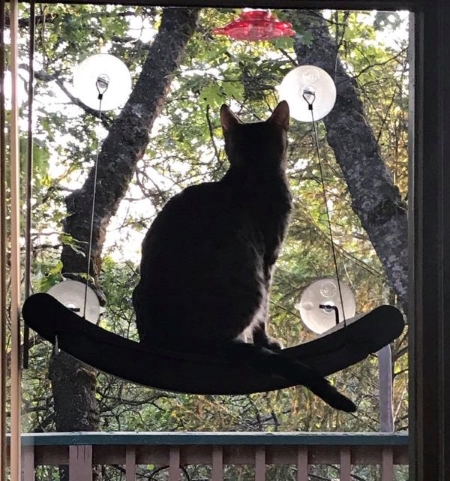 You come home from work to find frayed electrical cords, severed shoelaces, and hole-filled socks. While the guilty party sleeps comfortably at the top of her cat tree, you begin to pick up the pieces and throw away the leftover mess. What are you to do when your cat chews your stuff?
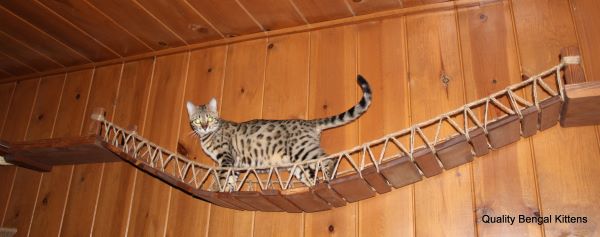 It is important to consider is that “cats also may feed on items due to behavioral compulsive disorders. Boredom and lack of stimulation may drive cats to seek entertainment elsewhere, which may lead to compulsive grooming or eating weird things” (“Recognize”). What does your cat do all day when you aren’t home? Bengals are known for being one of the most intelligent cat breeds, and due to their higher intelligence, Bengals are prone to boredom. If your cat enjoys a
  When you are home, it is crucial to have your cat on a routine
 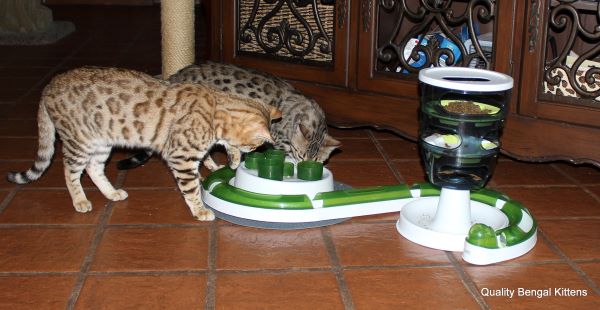 Of course, you should never ignore that excessive chewing could be indicative of a medical condition. While it is okay to implement some of the above tips before going to the vet, if there is no improvement, the cat needs to see a veterinarian. “Gastrointestinal disorders (parasitism, inflammatory bowel disease, food allergies) and endocrine disease (diabetes, kidney, and thyroid problems) are among the medical conditions that could contribute to this behavior” (Bollen). Only a vet can rule out any internal issues that we are not able to see.
  Next, you have to figure where to put these litter boxes – and yes, I said boxes, plural. You really do need one more litter box than you have cats. They cannot all be placed side by side of one another. Cats have an instinctual need to establish their territory, and one of the ways they claim this territory is through urine.
  So now you’ve placed large storage containers in highly prized locations around the house, but what do you put in them? Once again, you have to think like a cat, not like a human. What you’d like and what the cat likes are likely to be two different products. First, since all domestic cats have their roots in the African desert, you need to pick a litter with a texture like sand. Sand is the original cat litter, and it is what cats are more drawn to. Avoid all litters in textures that are not sand-like.
  We live with many cats in our house; one of the comments we enjoy hearing the most from a multitude of people who come to our home is – “I can’t believe your house doesn’t smell.” We attribute the lack of litter box odor to feeding a species-appropriate diet and using Dr. Elsey’s unscented cat litter. Because we live here, we worry we may become accustomed to any potential smell. Therefore, it is wonderful to hear from others – some of whom walk in expecting the house to smell based on preconceived crazy-cat-people stereotypes – that our home does not smell like cat waste or cat litter boxes.
 Bengal cat life expectancy does not differ from the average indoor cat life expectancy of 12-18 years; however, there are steps both your breeder and you can make to extend the life of your cat. We have heard back from people with our cats who are still doing well at 17 years old, and sadly, we have also known cats of ours to pass before age ten. We can share with you, based on our multiple years of breeding Bengal cats, what we believe we can do to lengthen their life expectancy.
 Bengal Cat Breeder Decisions – Genetic Diversity and Linebreeding in Bengal Cats
 If you are out shopping for a Bengal kitten, how do you know if the breeder is making purposeful, healthy decisions based on genetic diversity or linebreeding on known healthy cats? You ask questions. Ask the breeder – how do your breeding choices affect the life expectancy of your kittens. If the breeder’s answer consists only of current cats’ immediate health tests, they aren’t using all the accessible knowledge to make their choices. If their response demonstrates an understanding of how they are either adding genetic diversity by differentiating leopard cat lines, adding domestic outcrosses, or utilizing Optimal Selection’s Genetic Diversity test results or the purposeful linebreeding on older, proven-to-be-healthy-over-time cats, then you have the assurance that the breeder is making the best choices they can to increase the longevity of their kittens’ lifespan. Knowing that your breeder factors this into their decisions offers peace of mind over picking a breeder who breeds pretty cat to pretty cat just because.
 An independent study by Dr. Kollath of the Karolinska Hospital in Stockholm, Sweden, discovered that “when young animals were fed cooked and processed food they initially appeared to be healthy. However, as the animals reached adulthood, they began to age more quickly than normal and developed chronic degenerative disease symptoms. A control group of animals raised on raw whole meat not only aged less quickly but were free of degenerative diseases” (Appel).
 If you understand the logic of being an obligate carnivore, it makes sense that a balanced raw diet is best for a cat. That said, an unbalanced raw diet is possibly the most dangerous diet for your cat. What does this mean for you? First, if the breeder you are talking to says they feed a raw diet, ask how they know their diet is balanced. Get the breeder to explain precisely how they ensure the cat eats 80% muscle meat, 10% organ, and 10% bone. You are in good shape if you get a detailed explanation of how that balance is determined. If you get an incomplete answer such as boneless chicken thigh meat plus a supplement, then check the supplement out yourself to see if the supplement is meant to balance boneless, organless meat.
 Pollutants and Toxins
 While looking around for your future Bengal kittens, you may come across breeder websites talking about HCM testing. What is HCM, and how important is it to buy from a breeder who tests for it? HCM stands for Hypertrophic Cardiomyopathy. When a heart is afflicted with HCM, the walls of the left ventricle of the heart thicken, therefore, making it difficult for the heart to pump blood efficiently. HCM is the most common form of heart disease in all domestic cats, not just Bengal cats.
  At present, there is no genetic test for HCM in Bengal cats. Because of this, some breeders may argue that getting a cardiologist to check breeding cats’ hearts by echocardiogram is not worth doing. A cat could be HCM negative one day, and six months later, the cat could become HCM positive. That is true – especially within the first seven years of a cat’s lifespan when HCM is most likely to develop. However, it is not a justifiable reason not to test breeding cats. Breeders responsible for bringing lives into the world should want to use all resources available to bring healthy lives into this world. While heart testing isn’t a guarantee that the cat won’t ever develop heart disease, monitoring its health is the fastest way to discover any potential problems with the heart and remove that cat from a breeding program. Instead of not testing at all, breeders should be testing their breeding cats through the age of seven and beyond to establish a line of cats with several generations of cats tested to older ages within their cattery. This minimizes the risk of heart disease and the risk of premature death.
  Jon and I have been testing our breeding cats for 20 years. In this time frame, we’ve learned a lot about the value of testing. We’ve learned that establishing a baseline of measurements is critical to understanding what is normal for a particular cat. We’ve learned that seeing changes in a cat’s heart can be more important than the result. And we’ve learned the value of continuing to test cats’ hearts beyond the age of seven years old.
  One of the perks of pedigree cats is all the known factors. You know what the cat will look like. You know what the cat’s personality will be. You know what grooming to expect. And you know the cat’s pedigree. But don’t forget how important it is to know the health history of the kitten as well. That information is critical to the quality of life of the kitten you bring into your family. Breeders who have been around for several years should have their own years of testing, and those who are new should be buying from tested cats.
 When you bring a new kitten home, it will be a traumatic experience for him. To be prepared to make the transition smoother, you’ll want to set up a safe room.
  Once your kitty consistently greets you with a raised tail when you come to visit, it is time for him to explore the rest of the home. If you have other pets, you may want to let the kitty explore without them around the first time. How soon and how often you allow your kitten to explore outside of the safe room will depend on how many other pets and children you have in your home and your kitten’s reaction to all the stimuli in your home. How long your kitten must be kept in the safe room will also vary. How large your home is, whether or not it is on two stories, how many pets and children are in your home, and the kitten’s natural comfort level will all be a factor in determining how long you should continue to put your kitten in the safe room while he is not being supervised.
  You want to buy a Bengal, but you do not want to be scammed? Purchasing a pet online can be unnerving, but it does not have to be. Scams are out there, but with this guide, you will avoid them.
 Most importantly, the glaring red flag all relates to shipping. Scam sites often say free same-day delivery or shipping to your doorstep. None of that is possible with a live animal, as pets need a Health Certificate to travel via cargo. Shipping costs are several hundred dollars at the cheapest. People who have taken the first step to purchasing a kitten from this type of scam website tell us that special shipping costs keep getting tacked on as they continue through the process. All of a sudden, they need more money for a crate. Then they need more money for special shipping needs.
  The Backyard Breeder Scam
 How can you protect yourself from being scammed?
 The website of a responsible breeder should make some attempt to educate the public about Bengal cats. Commonly, you will find Bengal cat history and a page with Sires, and a page with Dams. Sires and Dams should have Registered names. For example, the cat we call Freya is SolanaRanch Let Freedom Ring. SolanaRanch is the cattery prefix; Let Freedom Ring is her registered name; Freya is her pet name. If a website calls cats by their pet names on the Dams and Sires pages, it signifies informality and a lack of credibility. If the website only shows kittens, stay away from that site. There should be some information on these cats’ testing results on the page that shows studs and queens. Look for PK Def, PRAb, and HCM testing information. A switched-on breeder will also have other genetic information, such as what colors, patterns, or agouti genetics the cat has.
 The Importance of Health
 The Importance of Socialization
 One of the most frequent questions we get from people is whether or not Bengal cats are hypoallergenic. The correct answer is yes, they are hypoallergenic, but to fully understand that answer, you must realize that hypoallergenic does NOT mean allergy-free; it means “relatively unlikely to cause an allergic reaction.” Compared to other cat breeds, Bengal cats are less likely to cause an allergic reaction in people, and here is why.
  To sum up, Bengals are hypoallergenic because they groom themselves less often than cats with courser coats and double coats. Feeding your Bengal cat a raw diet rich in
  Because Bengal cats are social animals who often don’t do well as the only pet in a household, people often want to adopt two kittens at one time. It seems everyone has an opinion on what genders make the best pair – including us. We have always recommended two males or a male and a female, but not two females. But this opinion was based on anecdotal evidence – our experience – not research.
 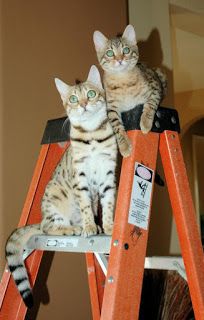 So, if it isn’t gendered that affects these behaviors in spayed and neutered cats, what is it? It is mainly the amount of time spent together and the number of desirable territories that greatly impact the harmony in a pair of cats’ relationship. The number of aggressive interactions a pair of cats had with one another each day decreased with the amount of time they had lived together. As cats grow old together, they engage in fewer aggressive behaviors. When the cats did engage in aggressive interactions, it was largely based on territory. If there was one preferred resting spot, the aggressive interactions tended to happen most frequently around it. Bottom line, the more preferred resting spots you provide in your home and the longer your pair of cats is together, the more harmony there will be in the relationship.
 What can you do to protect yourself?
  Over 85% of cat owners feed kibble, but just because everyone else is doing it doesn’t make it right.
  An average cat needs 200 ml of water a day – that equals 4/5th of a cup of water. Look at the water in the cup. That is how much a cat should drink each day. It is doubtful that a cat, who does not have a strong instinctual drive to drink water, is drinking 4/5ths of a cup of water each day. Most cats, especially those on kibble diets, live in a constant state of low-grade dehydration, and their owners never know it because dehydration is rarely apparent.
 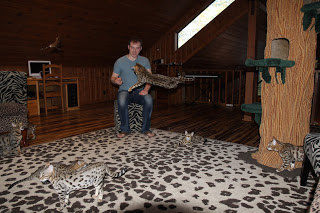 If you spend enough time on any internet Bengal Board, you will hear owners complaining about their cats improperly eliminating, stalking a family member, playing too rough, or destroying the prize couch and curtains. None of these are desirable behaviors, so automatically, this must make the Bengal an undesirable breed, right? Not so fast. Let’s take a look at why these things happen before we blame the cat.
  So what should be done about this? First, future Bengal owners need to make sure they educate themselves on meeting the physical and mental demands of a Bengal cat. The easiest way to meet a Bengal’s needs is to have a second house pet that can keep up with the demands of a Bengal. This companion pet doesn’t have to be another Bengal, and, in fact, sometimes the best companions for a Bengal are small dogs that have similar mental and physical demands as the Bengal. Occasionally, some Bengals do not fit the “Bengal” mold and therefore don’t make the best companion for a typical Bengal. What is important in finding a companion for a Bengal is the intelligence and the energy level of the companion pet.
  Leaving mentally and physically stimulating toys at home is helpful if your cat will voluntarily use them.
  A final, or rather first, factor in limiting the opportunities for a Bengal to become destructive is the introductory period when you first bring your kitten home. It is basic human nature to skip the safe room step in the transition period and throw your adventurous kitten into the mix of the new family. Your new Bengal kitten needs the confines of the

 Picking a Kitten
 Finally, never work with a breeder who wants to send a kitten home before 12 weeks. Kittens are not puppies. They need to stay in the cat community where they were born for at least 12 weeks to learn how to interact with other animals and people. Research has concluded that removing a kitten from its home environment before 12 weeks can increase aggressive tendencies once that kitten becomes an adult. For further information, please read our article
  Next, you must determine where the litter boxes will be in your home. It is important to remember that litter boxes are set up based on the cat’s needs, not the people’s. If you have a toddler at home, this is not an excuse to put all the litter boxes in the garage and install a cat door. Instead, you can use baby gates or
  Bringing the Kitten Home
 While it is important to include your children in the cat’s care, it is best not to give the child the responsibility of litter boxes. Litter box duty can be equated to reading a daily health check on your cat and is best done by an adult. Kids are great at helping feed the cat, participating in its established play routine, and hiding a puzzle daily for the cat to find and solve.
 The Bengal personality can run the gamut. In general, they are highly social cats – wanting to be involved in everything you do, but also, in general, they are all-four-on-the-floor cats, meaning they prefer to have their feet on a surface at all times. How much petting and holding Bengals enjoy varies – just like all cats – and here is why.
 Let’s start with touch. A cat’s sense of touch is much more magnified than people’s. The final kill move in their hunting process is decided based on what the cat feels with its whiskers – not what it sees with its eyes. This gives some perspective on how important the sense of touch is to a cat. Thus, the whiskers are a cat’s most sensitive area, and they do not like to be touched on their whiskers. Most people are familiar with the whiskers on either side of the cat’s nose and above the eyes, but did you realize cats also have whiskers on their feet and legs? You want to avoid touching the cat’s whiskers on purpose because a firm touch can be very overstimulating for a cat.
 Following the cat’s lead is the best method of improving your contact with your cat. Allow the cat to come and lay on you by choice. Stick your finger out near its face and allow it to rub itself on your finger. When you initially let your cat control the touching, it builds trust in your relationship, which leads to more human-initiated petting in the future.
 You can do a few things to increase your cat’s tolerance for being held. You’ll want to limit the bad experiences that come with restraint and increase the positive ones. Think about all the bad things that happen to your cat – vaccinations, medications, nail trimming, etc. They all happen while being restrained. Anytime you can alter negative experiences while being restrained, do so. Try trimming claws while your cat sleeps. Try hiding medications in food.
 Concentrating on my photo shoot, I heard the crash of the lights behind me. Ugh, now I had to clean up this mess before I could get back to my job because the contents of compact fluorescent light bulbs are toxic. In my haste, I didn’t clean well enough or fast enough as the next day we noticed a kitten with a weak rear end. By the following day, she couldn’t stand up.
  Jon learned about Thuja after a whole litter of kittens of his became paralyzed after receiving their vaccinations from the vet. Jon connected the paralysis to the vaccination, but his vet at the time did not believe him. The vet thought the kittens must have broken their spines. After proving with an X-ray that the spines were not damaged, the vet’s only suggestion was to put the entire litter of kittens to sleep.
  Polarization among people is incredibly high and continuing to rise. The Cat World is no different. It has long been known that one must be thick-skinned to interact within the breeding world regardless of species – cat, dog, horse, bird, reptile – but the Cat World has always been known to be extra “catty.”
 Step One – “Heal yourself to heal the world. Your work starts with you – owning your story, and releasing the blocks that stand between you and truly recognizing yourself in another. . . For those of us (read: all of us!) who have felt minimized or unsafe because of who we are, leaning into even more discomfort can feel scary. But the more we connect with our own sense of humanity, the more we can extend that to others.”
 All of us are the products of what we have experienced in the past. If there is a concern for another person’s animal husbandry, befriend the person, and offer that person a different experience from which to build a new understanding. You’ve heard the adage, be the change you want to see. Loving people is understanding the experiences that shape who they are. Instead of calling out their wrongness to the world, show them a different experience and allow them the opportunity to make a change.
 Know your history of both the pedigree cat world and the forces working to destroy the pedigree cat world. Know your breed history. Know the struggles previous breeders faced, conquered, and lost.
  Step Four – “Release perfection, embrace integrity. We will all make mistakes along the way. Doing this work is about integrity: staying in alignment with your values and maintaining your sense of wholeness in the process. . . . none of us will have the perfect word every time.”
 Step Five – “Reframe callouts as opportunities for connection. When someone tells you your words were offensive, it’s easy to get defensive and push back. . . Humans don’t often take the time to let somebody know they feel hurt. . . Framed this way, each callout is a gift in service of our collective healing and evolution.”
 We need to interact within the cat world as if no one inside of our world is trying to take us down. It does not mean that there aren’t people within the cat world who are hurting one another. It means we change how we interact with those people in a conquest to unify the world of pedigree pets. We share something in common – cats. We need to build upon our commonality to form relationships that can’t be torn down, so we can work together for the betterment of pedigree pets.

 – and perhaps most important – purpose of the Safe Room is for you to bond with your new kitten. Your kitten has just left its home and perhaps all its siblings and has been placed in a new environment. Your job is to become the savior. The worst thing you can do in bonding with a kitten is to force the relationship too quickly. The best thing you can do while bonding with a kitten is to allow the kitten to control the bonding speed. If you have brought home two kittens and seem to be bonding with each other more than with the people, you need to establish two Safe Rooms and bond with each kitten separately. How do you bond with a kitten? You follow its lead. Sit in your Safe Room with your kitten. First, sit in there and talk to your kitten in a soft voice. You can watch your kitten play, or you may read a book or go on your phone. Take note of how much your kitten wants to interact with you. As your kitten approaches you, stick out a finger. Let it sniff and hopefully rub its cheek on your finger. When it does this, it is claiming you by placing its scent on you. Next, you want to get out your interactive toys, such as a
  If you remember the three reasons we have a Safe Room, it will be common sense that you do not move forward from the Safe Room until the kitten has mastered each skill to your standards. If you want it using the box 100% of the time, it doesn’t leave the Safe Room until it uses the box 100% of the time. If you want your kitten 100% comfortable in its environment, then it doesn’t leave the Safe Room until it expresses 100% confident body language while in its Safe Room. If you want your kitten bonded to you, then it doesn’t leave the Safe Room until it chooses to sleep next to you in the hunt-catch-eat-rest rhythm that you establish. You are the one in control; the choices are all yours. But you must remember, it is your kitten’s lifelong happiness that is at stake here. If you don’t help the kitten establish good litter box habits, confidence in its home territory, and a bond to its humans, then it won’t be able to live the life it is meant to live.
 How Much Food Does Your Bengal Cat Need?
 When Should You Feed your Bengal Cat?
 What Should You Feed Your Bengal Cat?
 The first change to make is with ingredients. Good cat food should have less than 10% carbohydrates. The second change is the processing and preservation of food. Look for foods with minimal processing and minimal preservatives. And the all-important third change is – except for treats or small meals – to avoid feeding dry food. Cats are designed to get their water through their food. When given dry food, they frequently live with low-grade dehydration because they do not have a high thirst drive. Please read more about this in
  Vera earned the spot of Best Bengal. She started strong by making Double Grand Champion in her first adult show. Many thanks go out to my colleague Dan who covered


 Solana Ranch Patience – Facial photo credit goes to Starrlight Photo


 The next step in making Bengal-approved space is to provide high spots for your cat to play on and rest in. Bengals descend from tree-dwelling ancestry, so their drive to be up high can be pretty strong. For some Bengals, if you don’t make them high spots in your house, they will claim the existing ones. If you are open to using your pre-existing furniture and cabinetry, go for it. Make a pathway via
 Are you thinking about buying a purebred cat, but you aren’t quite sure you should because of all the animals in shelters? You may want to consider the pros and cons of both options before making that decision.
  So what, then, are the benefits of buying a purebred pet from a hobby breeder? There are three main benefits – a known health history, a breed-specific temperament, and a consistent appearance.
  Unfortunately, the pet industry is so large that it attracts the bottom of the barrel in terms of humanity – those willing to deceive others out of money. Over the years, we have had our pictures stolen over and over and over again to be used on fraudulent websites that are created to sell kittens – often at a very reasonable price – but there are no kittens to sell. The picture on the right is a screenshot of a website called Deluxe Cattery that has stolen our pictures and used them on their About Us page. If someone were to send money to these people, they would never get a kitten as these people do not actually have animals to sell. These people take deposits and payments and never send the pet. These types of scam are numerous, so be careful. Once you get one website closed down, they just start another. If the deal sounds too good to be true, it probably is.
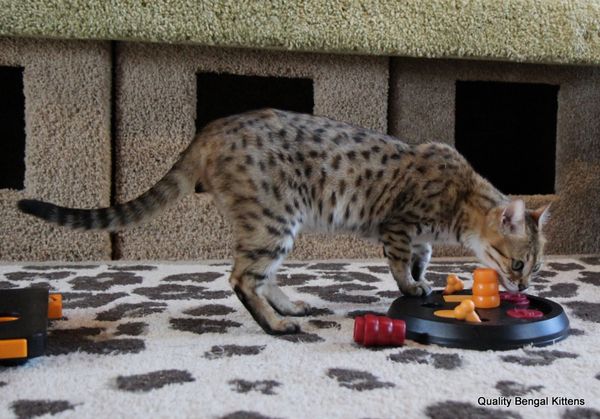
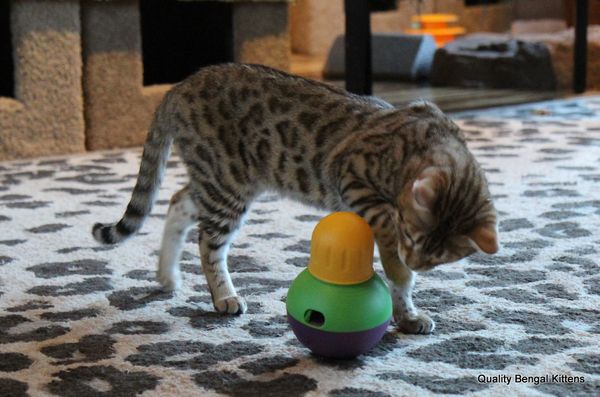


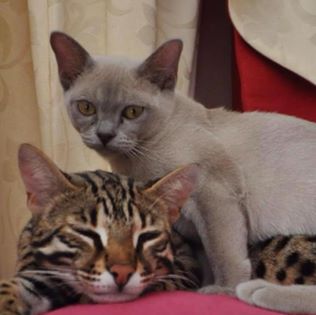
 Bengals are very social animals. That belief that cats would prefer to live a solitary life if they had the choice is not true for the Bengal cat. Bengals need social interaction. They need to have a family – a family to rule over, of course. But when the human members of the family are away doing their human activities outside of the house, Bengals need to have some other furry family members at home with them. If you ever hear a story of a Bengal being destructive, investigate a little. You are bound to discover that the Bengal lived in a home with no other pets.
  It is the Bengal’s higher intelligence that creates this need for social and physical activity. The daily interaction with the dog stimulates their minds. They have great fun playing with the dog, but they also have to try to figure this dog out, providing stimulation for the mind. Without a doubt, the cat will hold a higher position in the social hierarchy than the dog, but the cat must figure out how to communicate this to a species that uses different body language cues. The dog, in most cases, is just thrilled to have another member of its pack. Being pack animals – more is better.
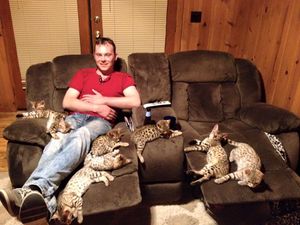
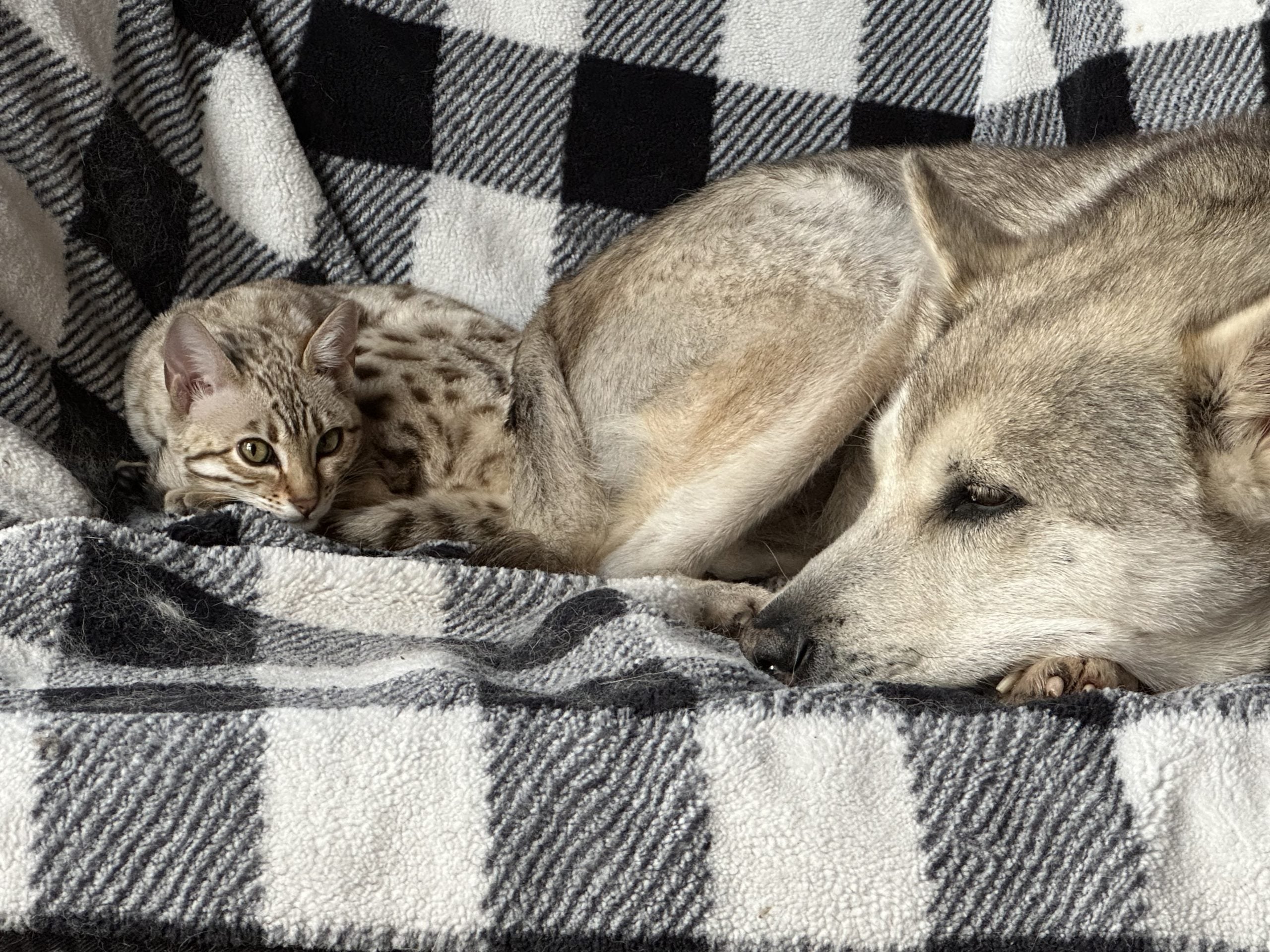
  Often it helps if your kitten has grown up with dogs. If you know you will want your Bengal kitten to buddy up with your dog, look around for a local breeder who raises their kittens with dogs. If the kitten grows up believing that dogs are fun, the fear factor will be smaller. The kitten is likely to still react to your dog when you first meet it because your dog will smell different from their previous dog buddy, but the transition should be a bit smoother. At Quality Bengal kittens, we have Chinook-the-Socializer, whose job is to hang out and play with the kittens. He makes sure that all of our kittens leave here having had positive interactions with a dog.
 Just when you’ve got pet parenthood figured out, you discover there is a baby on the way. This is an absolute time of joy and celebration. We will correct a few misunderstandings about cats and babies and let you know how to prepare your home and your cat to welcome the new baby home.
 The next thing you want to consider in preparing the baby’s room for the cat is
  Another step in preparing your cat for the baby is to prepare the cat for baby noises. Find a soundtrack of a baby crying and play the soundtrack, starting softly while your cat eats his favorite meal. If your cat stops eating, you’ve set the volume up too high. Find the level at which the cat will still eat while you are playing the soundtrack of a crying baby. With each feeding, increase the volume a little. Continue to do this until your cat eats its meal through the cries of a baby at the same volume they would be if you had the baby in the same room. This gets your cat to associate a crying baby’s sounds with a positive experience instead of a negative one.
 Bringing Baby Home
 Once the baby is home, include your cat in as much baby activity as it wants. It is an old wife’s tale that cats can suck the breath out of a baby, so don’t allow a myth to cause fear, but you want to be mindful. Infant babies can suffocate on pillows and blankets, so if the baby is too young to sleep with a loose blanket or pillow, it is too young to leave the cat unattended in the room with a sleeping baby. The cat could snuggle with the baby and, in doing so, inadvertently suffocate it in the same way a blanket or a pillow could suffocate a baby. If your cat doesn’t show any aggression toward you, it is unlikely to show any aggression toward your baby. If your cat doesn’t scratch you, it is unlikely to scratch your baby. However, if your cat plays with its claws out, you want to keep up a regular nail-trimming routine. Your cat isn’t going to mysteriously change its typical behaviors once the baby arrives as long as you keep up the norms you established before the baby arrived.
 While intelligence, energy, and affection all sound like positives, they have their downsides too. If the Bengal’s needs aren’t met, they can express their needs in a destructive way or become depressed. Let’s look at some Bengal quirks that you need to understand before adding one of these guys to your family. I call these Bengal quirks, but the reality is they are quirks that can exist in any cat. They tend to appear more frequently in cats with higher intelligence or a stronger instinctive drive, which is why they can be attributed to Bengals. But if you’ve read any of Jackson Galaxy’s books, you’ll know these are not Bengal specific issues – they are intelligent, instinctive cat issues.
  For these intelligent cats, your home is their playground, and your stuff is their toys. To begin with, you cannot leave expensive family heirlooms out in the open and expect the cat to leave them alone. Items that are important to you need to be inside
  Some Bengals demand your attention. So, if you are gone at work all day, they will want to see you when you come home. If your routine involves coming home and focusing your attention on a certain activity – the tv, the computer, a run – you may have to consider how to set you in this routine. A Bengal cat will need you to spend time with it when you get home from work. If this sounds exhausting or too demanding, then a Bengal may not be the right cat for you. You can do things to alleviate this need – get a second high energy pet, provide lots of vertical space for Bengals to explore while you are home, get a
  December 28, 2018
 Interactive play with your cat means you are at one end of the toy, and the cat is at the other. This type of play must happen daily. Depending on your cat’s needs, it may occur multiple times daily. The first item you need is the right toy. There are some
 Another great option is to use
  Buying a purebred pet is a big decision. Sometimes the shopping process can be confusing because prices can vary greatly and when you start talking to breeders, what they tell you differs as well. The top three reasons to purchase a purebred pet are 1. To get a known health history and health guarantee 2. To obtain a breed-specific temperament 3. To get the desired look. Too often, people shop only based on #3 and ignore 1 and 2, therefore, missing out on two-thirds of the benefits of buying a purebred pet. Here is what you need to know about getting a known health history and a good health guarantee when you buy a purebred Bengal kitten.
  Not every health guarantee is equal, so find out what the breeder’s health guarantee is. Buying a purebred pet should offer you some securities you don’t get when you adopt a shelter or a rescue. The health guarantee should be one of the biggest perks.
  If it is not explicitly stated in the contract, the next thing you want to ask is FIP. FIP is not something any person (either breeder or owner) can cause or prevent a cat from getting, but it isn’t scientifically proven to be genetic or congenital. You want to know if the genetic/congenital health guarantee includes coverage of FIP. Because you can’t cause a kitten to get FIP, it should be covered for the same length of time as the congenital/genetic defects.
  It will be common to have the breeder require tests being done and shared with them or their vet before a replacement is granted. This is perfectly logical. With so much information on the internet, people like to self-diagnose – and they are often wrong. So it is reasonable for you to provide a veterinary diagnosis of the defects before being granted a replacement.
  The early days of a kitten’s life have lasting effects on a cat’s behavior. Early weaning, fighting for food, having no sense of territory are all events that can alter behavior. When deciding to bring a new companion pet into your family, it is essential to know how that kitten began its life. Keeping kittens within their feline family unit in a home environment for 12-14 weeks benefits their lifelong behavior.
 Beyond the possible chemical changes in the brain, why does early weaning cause behavioral problems? Kittens have a lot to learn from their family unit, and if they are removed from that family unit at too young of an age, they miss out on these crucial lessons. One of their first lessons is one in communication – how to read and project cat body language. Their first lesson in communication will be their communication with Mom and her response to their interaction. But they will also watch Mom communicate with other cats in the family unit, and they too will begin to interact with others in the family unit. Most pet cats will be in a home with another cat – either immediately or at some point in their lifetime. To coexist with other cats, they must learn cat body language. Body language in the cat world is a make-it-or-break-it skill. If a cat doesn’t learn to approach another cat correctly, it may never be able to integrate with other cats and be labeled as cat aggressive. Kittens best learn to communicate appropriately with other cats within their homegroup of cats. We can see how vital these communication skills are when observing kittens that are bottle raised by a human with no other cat in the household. When these cats try to meet and interact with another cat, they cannot read or display cat body language, making the feline relationship quite tricky.
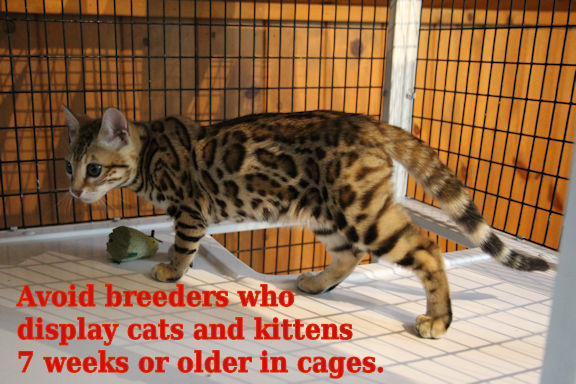
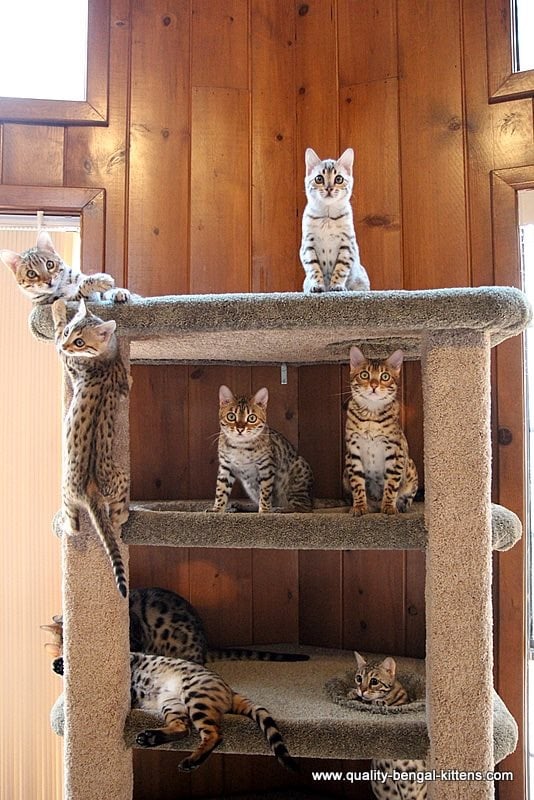 Body language lessons are essential in learning how to claim and be comfortable in a shared territory. A cat’s security, and therefore happiness, all hinges upon its ability to claim and retain territory. This lesson has to be learned in a home environment; it can’t be taught within a cage’s confines. Once the kittens are potty trained, they must begin to explore beyond a restricted environment. Expanding their environment allows them to observe and smell how cats appropriately claim and retain territory by rubbing their scent glands on their home objects. The kittens watch adult cats confidently move throughout the home and appropriately place their scent on items through scratching and rubbing; this becomes the norm for the kittens. Having experienced and lived within a home peacefully shared by other cats can help prevent territory insecurity because it has been established as normal. Kittens who are caged through their first 12 weeks do not get this experience, so just staying with the breeder for 12-14 weeks isn’t the only factor to consider. When looking for a purebred kitten, one needs to know how the kitten lives within that time frame. If a kitten spends its first 12 weeks in a cage, it is more difficult for that cat to feel secure in the larger environment.
  First, we will express that the article’s information is our opinion, and we have not licensed veterinarians. Why should you listen to us over the Banfield Veterinarian at your local PetSmart? Although “We have laws in most states banning corporations from owning veterinary practices, . . . Corporations now own 15 percent to 20 percent of America’s 26,000 pet hospitals, and consolidators . . . are buying them fast” (Clenfield). What does it mean when your veterinarian becomes corporatized? It means profit is the motivating force behind every decision being made – not your pet’s health.
  Your kitten must get one FVRCP vaccine once it is older than 16 weeks. During the first 16 weeks of a kitten’s life, it is unclear how much of any given vaccine remains effective and how much of it is destroyed by the antibodies provided by Mom’s milk. Researchers believe that by 16 weeks, all of Mom’s antibodies are gone from the kitten’s system, and the vaccine given at that time will remain active. When giving the 16-week FVRCP, we recommend a modified live, adjuvant-free vaccine.
 Finally, remember that if you bought your kitten from us at Quality Bengal Kittens, we are here for you through your kitten’s lifespan. If you aren’t quite sure what to do about vaccinating or anything else, send us a message. We’ll give you our experience-based opinion (which comes from over 20 years of experience with Bengals and Jon’s lifetime experience as a sheep/cattle farmer). You can compare our reasoning with others to come to your conclusion.
 Canned Food Options for Storage and Savings
 Dry Food Options
 Anyone who has ever raised a child knows routines are good for children. They are happier and better behaved while on a routine. The same can be said for Bengal cats. Many behavioral problems in Bengal cats can be solved by establishing a routine. Cats “need plenty of stimulation and play, particularly when young, to prevent them from becoming bored. The owner of such a cat needs to be aware of their responsibility to ensure that the cat’s mental needs, as well as its physical ones, are met” (“Playing With Your Cat”). If you find that your Bengal cat is unnecessarily, excessively vocal, playing too rough with you or other animals in the house, pottying outside of the litter box, getting into destructive mischief, or engaging in another unwanted behavior, the solution to all of your problems may be as simple as establishing a routine. The right routine will help your cat develop a natural body rhythm in which you control the energy spikes; it will decrease the stress your cat feels and help your cat feel secure in its territory – AKA, your home.
 Realistically, no one will feed their cat 16 times a day unless they free-feed, but free-feeding is unhealthy for your cat. If your cat engages in unwanted behaviors, one of the first necessary steps in correcting those behaviors is to stop free-feeding. “Cats are not naturally grazers. They expend energy to get their food, eat a small meal and then have a period of rest . . . After this period of rest, they have another period of activity, capture or forage for food again and then eat another meal. This cycle repeats itself several times throughout the day” (Brown). When you allow the cat to graze, you disrupt the cat’s natural body rhythm. While some cats adapt to this disruption, other cats do not adjust, resulting in various potential behavioral problems: pottying outside of the box, aggression, excessive vocalization, etc.
 The first decision you must make in establishing a routine for your cat is to determine how many times a day you can consistently play with your cat. The more, the better, but the other routine must be realistic and consistent. If you cannot always uphold the routine, then the purpose of the routine is lost. Cats are typically most active around morning and evening – dawn and dusk, so these are two good times to plan your longest and hardest play sessions. While we encourage one of your more extensive play-then-feed sessions to occur in the morning, we do not recommend it be the first thing you do when you get up. If you do it first, your cat associates your getting up with its first play session. When you are trying to get an extra hour of sleep, the cat may be trying to wake you to play. Worse yet, the cat may try to control the first session’s timing by waking you earlier and earlier and earlier. We recommend that your morning play session occur after you have done a few things around the house and eaten breakfast.
 If two sessions of play-then-feed do not satisfy your cat, you will need to add more stimulation. If someone is home during the day, this is simple, that person adds a third and possibly fourth session at a convenient time for their schedule. You can make the times work for you if you are consistent with them. If no one is home during the day, you must figure out how to entertain your cat in an empty house. One way to do this is to get your cat a
  If you find your cat needs additional play sessions, but games and puzzles are not enough, you can invest in the equipment to take your cat through a play-then-feed play session from work. First, you must pick an interactive toy that works from a smartphone, such as
 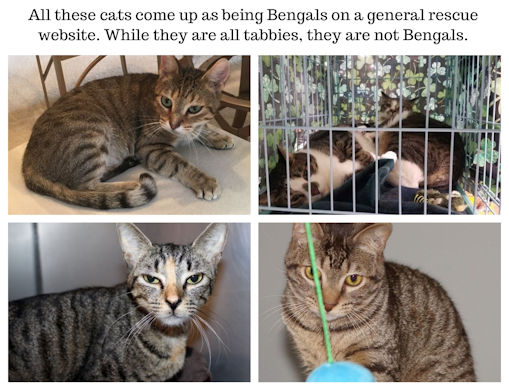 If a Bengal comes without papers or from a general rescue or shelter, there is no way of identifying if it is a Bengal or if it is part Bengal, but it really should not matter. When I picked out my first dog from the SPCA, it was listed on her pen that she was a German Shepherd mix. I was using my common sense and saying a bit of a prayer that the SPCA got that wrong – and they did. I picked my dog because she was what I was looking for in a dog – small, 25 pounds, Brindle and white, with a curly tail, upright ears, and friendly. That is what I wanted in a dog. The SPCA, however, knowing that German Shepherds are popular, attached that breed to her description. Rescues and shelters often attach a breed name to their pets based off the slightest likenesses; in my case, the only thing my dog shared in common with a German Shepherd was upright ears. But giving the pet a breed helps them find homes faster, and ultimately, that is the goal. If you are going to rescue a cat, you should know what you want out of the cat, and its label – or breed – should not matter. If it does, adopt through a Bengal-specific rescue.
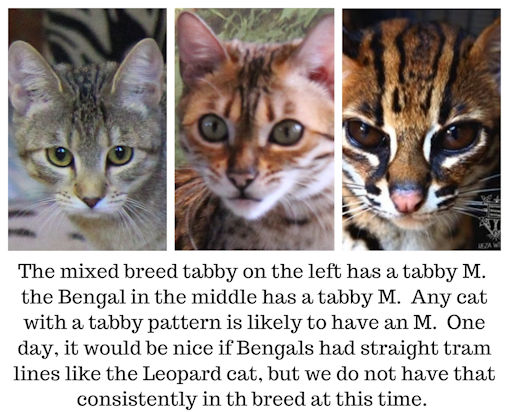 Bengals do not need a vet who knows about Bengals. The veterinarian care for a Bengal is the same as any other cat. Bengals do not have any special needs. They do not get any special diseases. They are just cats; Bengals are not wild. If you happened to rescue a cat that did not have the proper upbringing, it might behave more like a feral than a home-raised cat, but this is not an indicator that it is a Bengal, or part Bengal, or anything else Bengaly. This has to do with the cat’s upbringing. Thus, if you have a cat that is shy, reactive, or aggressive, then it needs to see a vet who has experience with ferals – not experienced with Bengals.
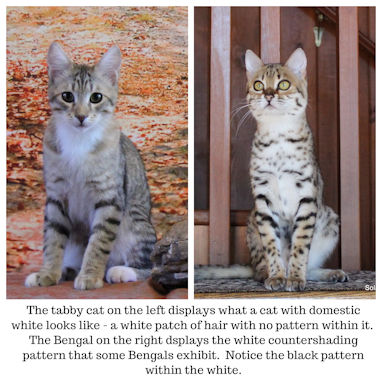 Another pattern confusion is the white tummy. Some Bengals have a white
  Do Bengal cats have more litter box issues than any other cat? No one really knows. People tend to talk about cats with litter box issues, not those with perfect litter box habits. If you spend time in a Bengal discussion group, you’ve probably decided they must be the worst offenders. Watching Jackson Galaxy’s “My Cat From Hell” and seeing all the offenders who are not Bengals quickly brings the picture into focus. Litter box problems are not Bengal-specific problems. It can be a problem with any cat trying to communicate that something is not meeting its needs. We know for a fact Bengal cats are intelligent, which increases their awareness and sensitivity. Bengal cats are high-energy; they must have those energy needs met.
 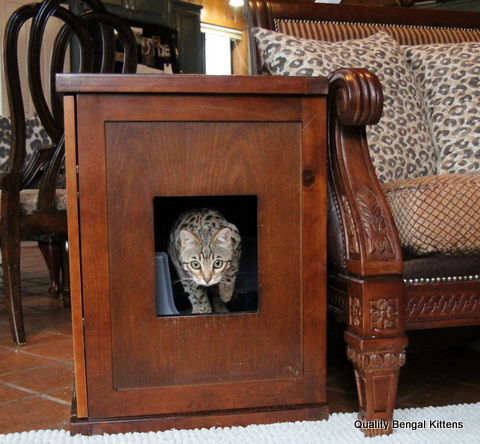 Step number one is the litter box setup. You need to set up multiple oversized boxes with unscented litter that has a texture like sand. The general rule is one more litter box than the number of cats, but that rule needs to be flexible. Perhaps one of your boxes is a small, covered box discretely tucked inside a
  Once you have large, uncovered litter boxes, you must fill them with
  The environment itself, however, is not enough. If your cat is not using its box, it is possibly insecure about something. Establishing a routine is the best way to help ease an insecure or anxious cat. Of all the recommendations we will offer, this one is the most important, and this one takes the most significant time commitment from you. If no clues point to a different cause of your cat’s litter box issues, then – for a Bengal – the most likely reason is insufficient mental and physical stimulation. Putting your cat on a playing and feeding routine will control the energy spikes and give your cat peace of mind that physical play will happen daily. It would be best if you took your cat on a “hunt” by playing with an interactive toy and allowing her to catch that toy after working her to the point of panting; then, you feed your cat. Doing this at approximately the same time of day, 2-5 times a day, will establish a natural body rhythm for your cat and give it the security it needs to stop urinating in your home. For a detailed explanation of how to create a routine and why it is essential, please read
  Cats urinating near windows, doors, or air vents are trying to protect their home from an outside intruder. Some animal – most likely a neighborhood cat – is visiting at night, making your cat feel insecure in her home. It would be best to deter the visitor from coming to your home. The best method is to use motion-activated
 If your cat is not urinating near doors, windows, or air vents, but you’ve seen a change of behavior, that change of behavior could be a warning sign that you have a nighttime visitor. Cats will feel threatened by another animal leaving its scent outside their home. While sometimes this results in them trying to mask the smell of the other animal with their urine, other times, it results in misplaced aggression as your cat tries to dominate anything when it can’t dominate the pesky visitor outside.
 The COVID-19 Pandemic has thrust us into an unknown world. We do not know what to expect; we cannot predict the future, and we do not know what sources of information to trust.
 Before discussing COVID-19, lets first understand Feline Coronavirus or FCoV. “Feline Coronavirus (FCoV) is a common viral infection in cats. It generally causes asymptomatic infection but can cause mild diarrhea” (“Feline Coronavirus”). We have to keep in mind that the common cold people deal with each winter is also a coronavirus (“Common Human Coronaviruses”). As many people contract a common cold as there are cats who contract Feline Coronavirus. The more people we are exposed to, the more likely we are to pick up a cold over the cold season. For cats, “it is estimated that 25–40% of household pet cats have been infected with FCoV, but the infection rate increases to 80 – 100 percent for cats kept in multi-cat households” (“Feline Infectious”). In most cases, Feline Coronavirus is not treated. In fact, in most cases, the owner of a cat with Feline Coronavirus doesn’t even know the cat has it.
 What do we do with this information?
  The season is approaching, and it is time to put the Christmas tree up. With a skip in your step, you bring in the box of special ornaments – all those glass ones that hold significant memories. Just as you place your favorite decoration in the prime spot on the tree, you turn around to see the cats staring at their newest, most excellent toy – a tree with a bunch of bright, sparkly, dangly toys on it. Don’t be afraid. There is no need to give up the tradition of putting up a Christmas tree, nor do you need to lock all the breakable ornaments behind a glass case. There are ways to have your Bengal cats and your Christmas tree too.
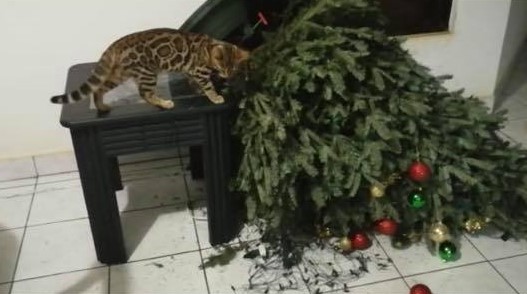 When your tree first comes into the house, let the cats explore it while there is nothing on it. They are cats; they are curious, a tree is a new object; it must be checked out. Giving them this opportunity is kind. While they are exploring the new tree without any decorations, secure the environment. You want to make sure there are no cat trees or furniture near enough to the tree that the cat could reach the tree by launching itself off the nearby cat tree or table. Bengals would be thrilled to go back into the tree-dwelling heritage with a flying leap from the China Hutch to the Christmas tree, so do not provide that opportunity unless you want your tree to end up on the floor. Move all tall cat trees and cat-launching furniture far away from the Christmas tree while your cats check out the tree.
 The best and the more aesthetically pleasing way to keep your cats away from the decorated Christmas tree is to place strategically positioned, motion-activated
  Some people go further yet and set up a tree that is meant for the cats. You can have lots of fun doing this as the cats can too. Decorating a ladder for the cats is a super idea. It is a stable “tree” for them to climb on which you can hang toys. Or, have a Christmas tree decorated with cute Christmas cat toys just for the cats. Embrace your inner crazy cat person desires with fun trees just for the cats.
 A couple of other helpful tips on decorating for Christmas.
 Another incredible independent play toy is the simple
  Nothing beats playing with a wand toy. No home with high-energy cats should go a day without one. The wand itself doesn’t matter to the cat – as long as it works. I prefer the lightweight and easy storability of
  Bengals are intelligent cats, so they always enjoy a good puzzle. We have several food puzzles for our cats, but two are standouts. The cats all love
  In contrast, a
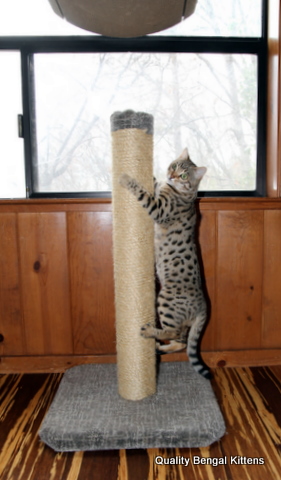
  Two items that get used a lot in our house are pole scratchers and window perches. Even though these aren’t toys, they are must-haves for our cats. A
 The
The  Within any purebred breeding program, the breeder should have specific goals in mind. A primary goal is the one everyone sees – a distinct, recognizable appearance. After all, this is the number one reason breeders choose to breed a specific breed of cat and why pet owners choose to buy a specific breed of cat. But when the focus of a breeding program is only on appearance, that isn’t what is best for the breed. Breeders and pet buyers alike should also remember that buying pedigreed cats is also about having a known, purposefully selected health history.
 From our good friend Kathy Shaw of Kamisha, Jon acquired his first Bengal outcross from a domestic, pedigreed cat. Kamisha Exotic Origins – otherwise known as Ori – was out of a pedigreed Golden Shaded Exotic Kamisha’s Crumpet and Bengal Kamisha Pantalaimon. What is the rationale for starting with this crossing? As seen in the chart showing the genetic distinction of domestic cats, the Exotic Shorthair – one of the green breeds -and the Bengal – one of the purple breeds – have a minimal crossover. The Exotic was not a breed used to create the Bengal. Therefore, the breeds are distinct from one another. This helps make the crossing more worthwhile from a genetic standpoint.
 Once decisions about the health improvements are made, then we do make decisions on what outcrosses will, at the very least, not damage and may actually help retain the physical goals of the breeding program. The Exotic has small rounded ears and large eyes – two physical features critical to our breed goals-are very easy to lose. Small rounded ears are tough to get on the Bengal – tall, triangular ears are regularly seen on even show-winning Bengals. Large open eyes are also challenging to maintain in the breed – as evidenced by so many Bengals having sunken in smaller eyes that come to a point on the outer edge. Ears and eyes are essential traits in our breeding program, and the Exotic wasn’t going to take away from them.
 The Golden Shaded Exotic also helps us with another visible cattery breed goal. Many Golden Shaded Exotics display a countershading pattern. It is clearly a different pattern from the body as there is no ticking on the belly hairs while ticking is present on the Golden Shaded Exotic’s body hairs. We hypothesize that crossing a Bengal with a domestic that displays the countershading pattern – even if it is not the same as the Leopard cat – may help us retain that pattern on Bengals simply because the belly hairs are a lighter shade of color than the body hairs.
 Finding the right treats for a raw-fed cat can be a little challenging because most treats come in kibble form which the raw-fed cat may not recognize as being food. Finding a treat your cat loves, though, is important. Unlike dogs, cats are not strongly motivated by praise. So if you are going to train them or alter their behavior in any way, you’ll need to bribe them. Its part of the beauty of cats – they may not be trainable in the same way that a dog is, but they are bribable.
 You may have the most success with moist treats since your cats are accustomed to moist foods. We have had great success with Inaba Churu brand teats. Try the
  If the freeze-dried foods aren’t exciting your cats, try
 Training cats is a matter of rewarding desired behavior. You need to have your treats on you and ready to administer as soon as the cat does the desired behavior. There are some skills worth training your cat in order to improve his quality of life. Training to go into a carrier will eliminate carrier stress. Training him to come when called could save his life in an emergency. Training him to walk on a leash, use a cat wheel, or complete an obstacle course can help you meet his physical and mental needs.
  In this next chart, The Nutrition Code breaks down the most expensive cat foods for you by the same different food types: homemade raw, kibble, canned, dehydrated raw, freeze dried raw, and pre-made raw. Homemade raw is certainly the winner here, but even the pre-made raw comes in as the third cheapest type of the most expensive brands of cat food.


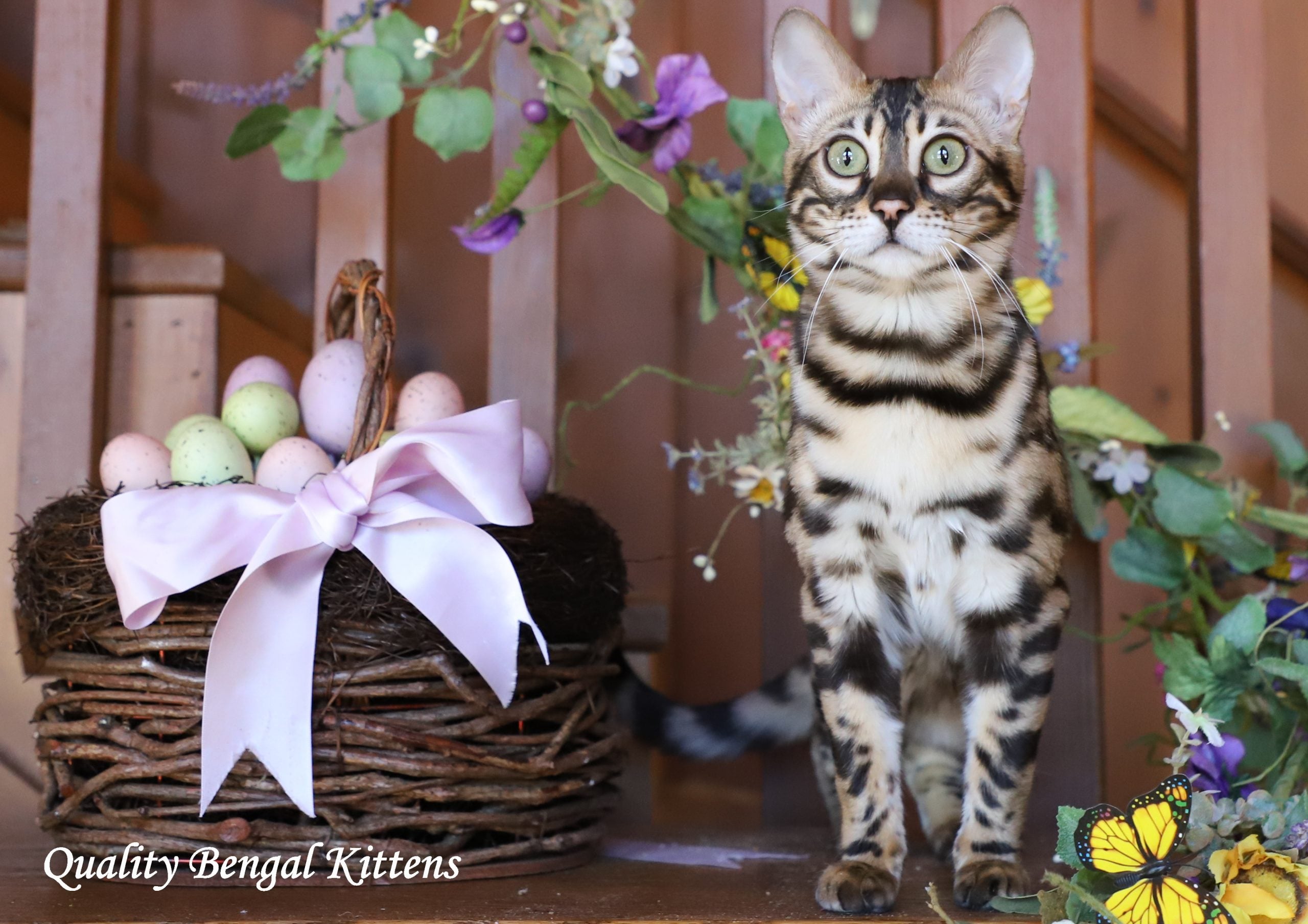 Like plastic grass, plastic eggs can present a problem if they are broken and eaten by the cat. If you have been using the same eggs for multiple years, it may be time to replace them before they become brittle and break. Eco Eggs sells
 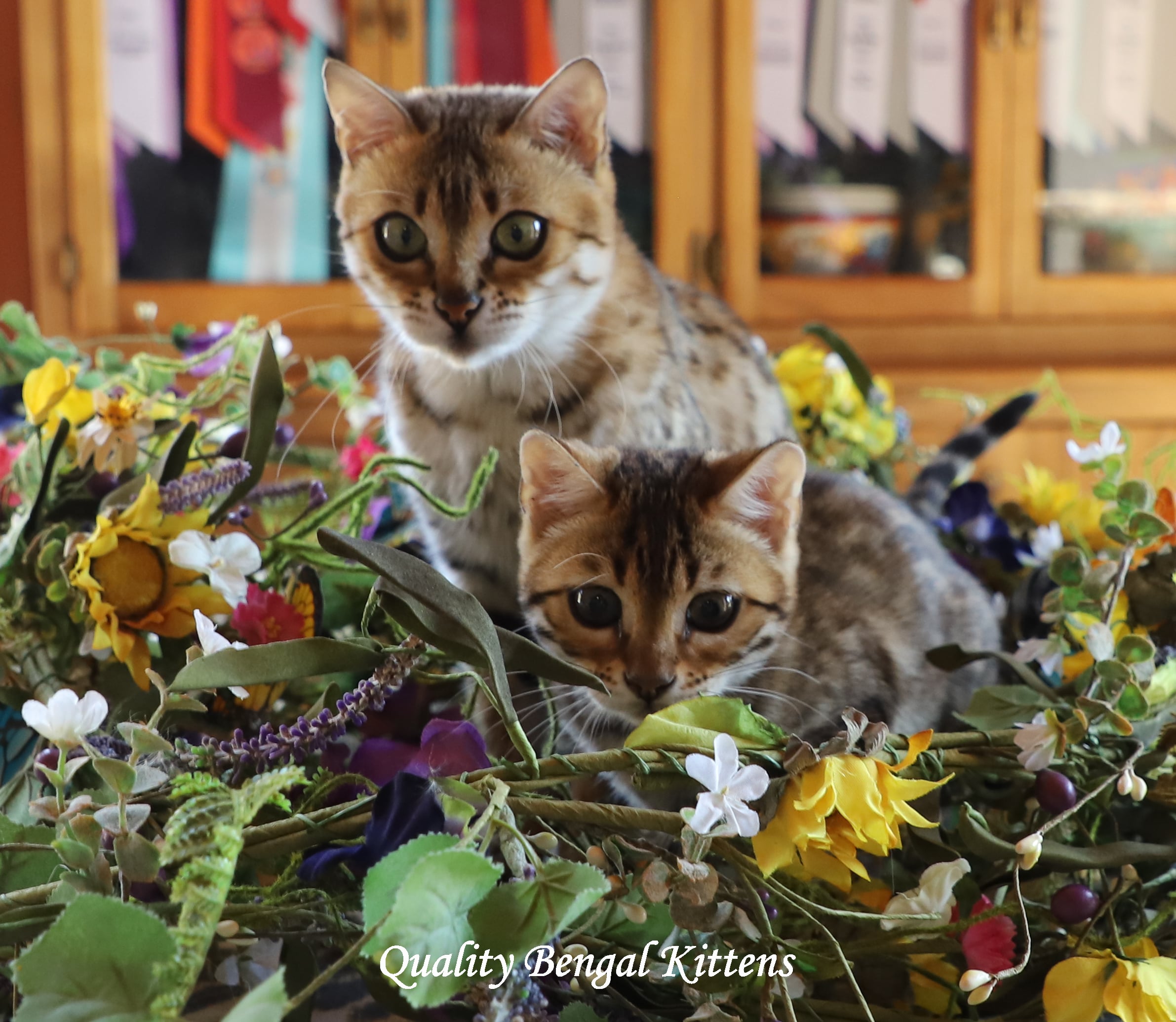 Easter Flowers
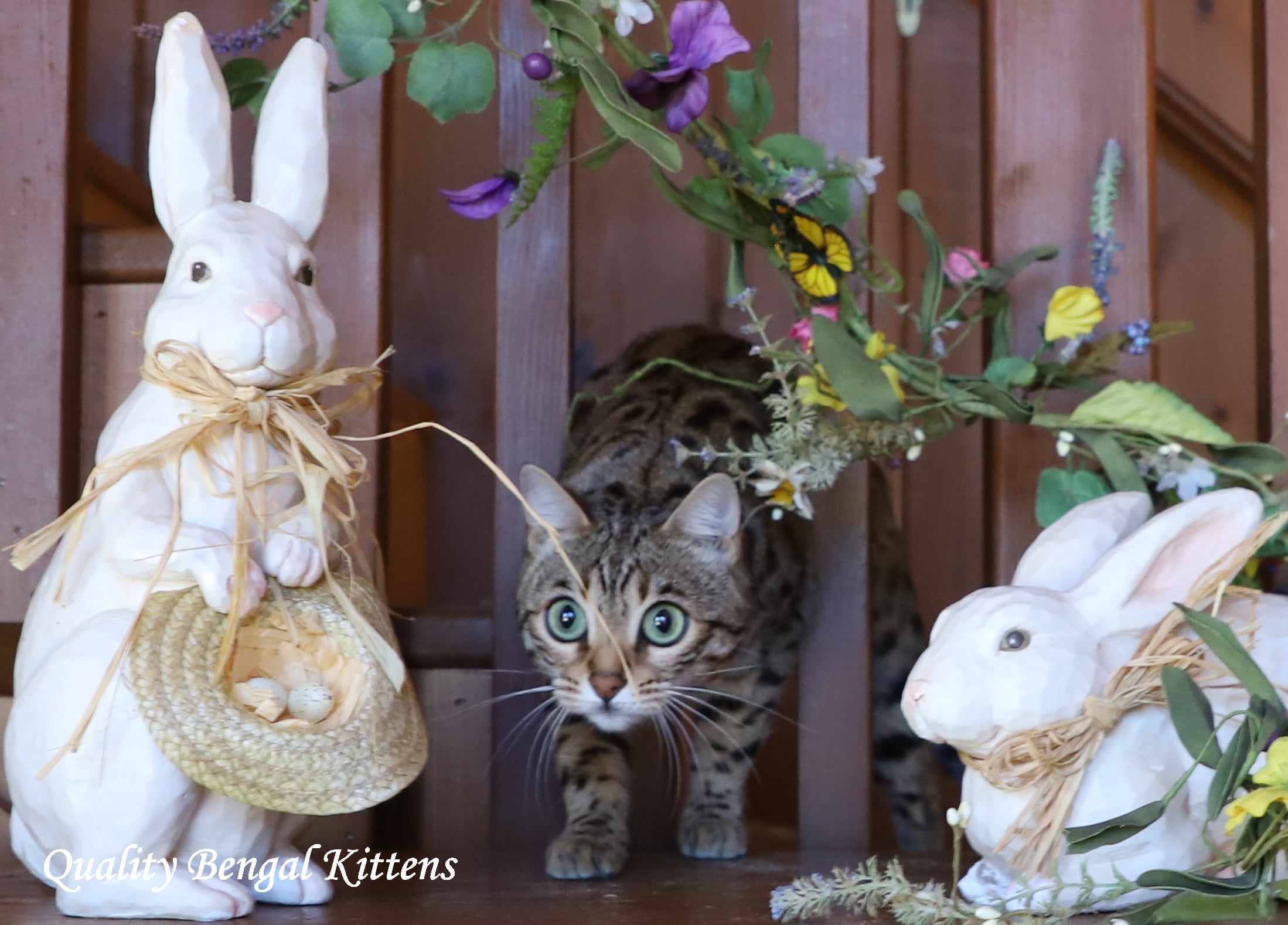 Easter Escapes
 Picking the right cat food can be confusing and sometimes asking the vet makes it even more confusing. If you were to go to a vet and ask, “Is grain-free bad for cats?” the answer you are likely to hear is, yes. However, that is a simplified version of the correct answer.
 Why do Digestive Enzymes matter?
 Plant-based ingredients are not helpful, but are they harmful to a cat?
 Why does my cat appear healthy on its plant-based diet?
 Is grain-free bad for cats?

 Cats are not created to eat plant-based foods.
 Are cats who eat plant-based ingredients getting sick?
 Did domestication make cats more tolerant of plant-based ingredients?
 What is the best cat food?
 From the outside, it looks simple, but breeding cats is complex. Unfortunately, the idea of breeding cats – a household pet, not a livestock animal – has a broad spectrum of motivations behind it. Some people do it for the sake of making money, others because kittens are adorable, and others because they love cats. When searching for a pedigreed pet, you must unearth a breeder’s purpose for breeding. Know their WHY. Why do they breed cats? Why do they breed Bengals, specifically? A breeder’s why should come from passion, not profit, and here is how to tell the difference.
 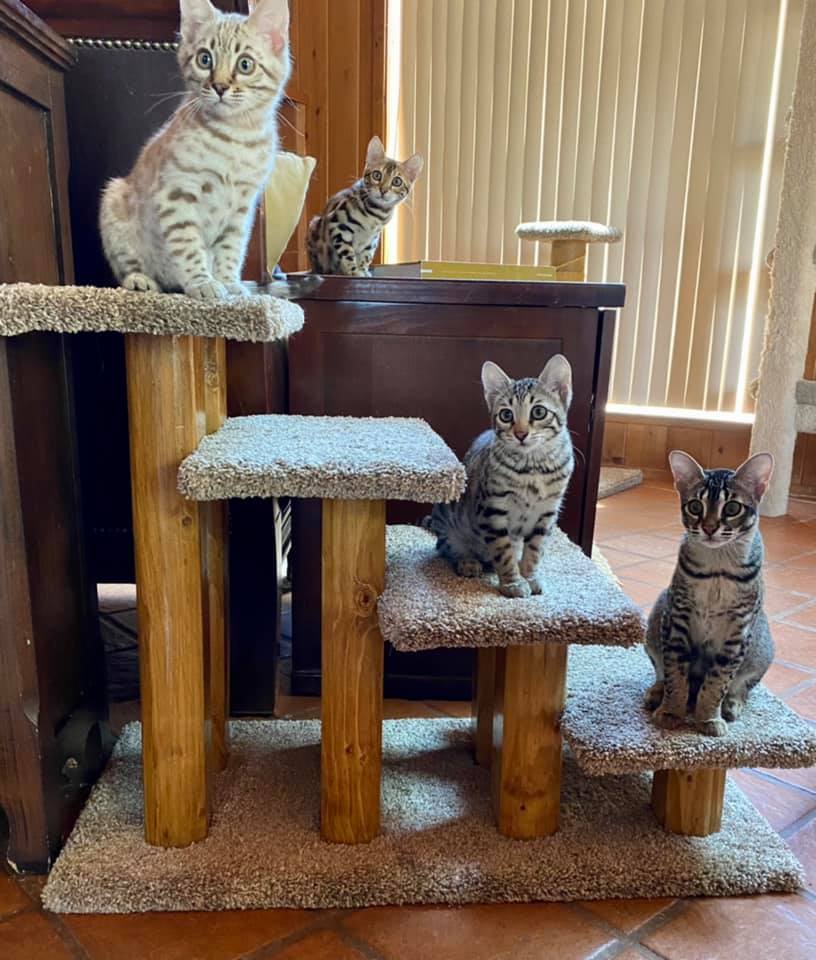 Placing the right Bengal cat in the right home is the most significant responsibility of a breeder. The Bengal cat is known for its confident, friendly, outgoing personality with high energy and intelligence levels. This is the disposition Bengal breeders should be striving for in their cats. If a Bengal breeder discovers a cat in their program that consistently produces temperaments that are shy, less intelligent, or low in energy, those cats should be removed from the program because they do not meet the breed goal.
 When looking for a well-bred kitten, be specific about what you want in a kitten, and then ask the breeder how they know the kitten will be what you want. Good breeders know, so ask!
  One of the benefits of buying a purebred cat should be a known health history and health testing completed on the parents of the Bengal kitten. Responsible breeders should strive to produce cats with a longer lifespan than cats with unknown health statuses. Many factors contribute to the improvement of the overall health of the Bengal breed: health testing, health education, genetic diversity, and the health of the breeding environment.
 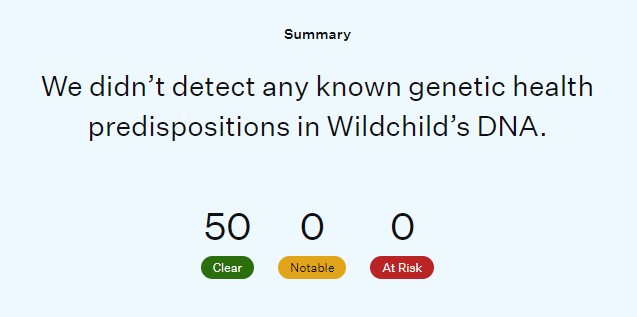 Listening to the rationale of a breeder’s choices tells you about their willingness to self-educate. Health information changes fast. Researchers are discovering new information all the time. When you read what a breeder puts on their website or have a conversation with the breeder, do they sound like a person interested in learning the latest advancements in health? Can they advise you on vaccines with science-based reasoning for their choice? A responsible breeder is your cat consultant for the lifespan of the cat. Unfortunately, the
  Does the breeder understand how food choices affect health? Can the breeder explain the nutritional needs of an obligate carnivore that evolved from a desert animal? Evolution suggests that a raw diet with few to no plant-based ingredients heavy in moisture provides the most bioavailable nutrients to a cat. If the breeder-selected diet diverges from this, can the breeder tell you why they feed what they do based on how their food choice meets the needs of their cats? Again, hearing a science-based rationale is better than having one preconceived answer. Knowing food choices are made for reasons other than the food company giving the breeders a kickback.
  Linebreeding in and of itself also does not make a breeder irresponsible. But if a breeder has linebred, ask the breeder why they did the linebreed and why they were comfortable linebreeding on that particular cat. The breeder should have an answer that includes the goal they were hoping to achieve and the known health history of the cat that was linebred upon. Typically, when linebreeding on a particular cat, that cat should be older, so the breeder knows if any heart issues developed over time, if the cat had any structural weaknesses, and if the cat produced other health ailments. When asking questions about linebreeding, listen to see that the breeder clearly understands the breeding’s benefits and risks.
 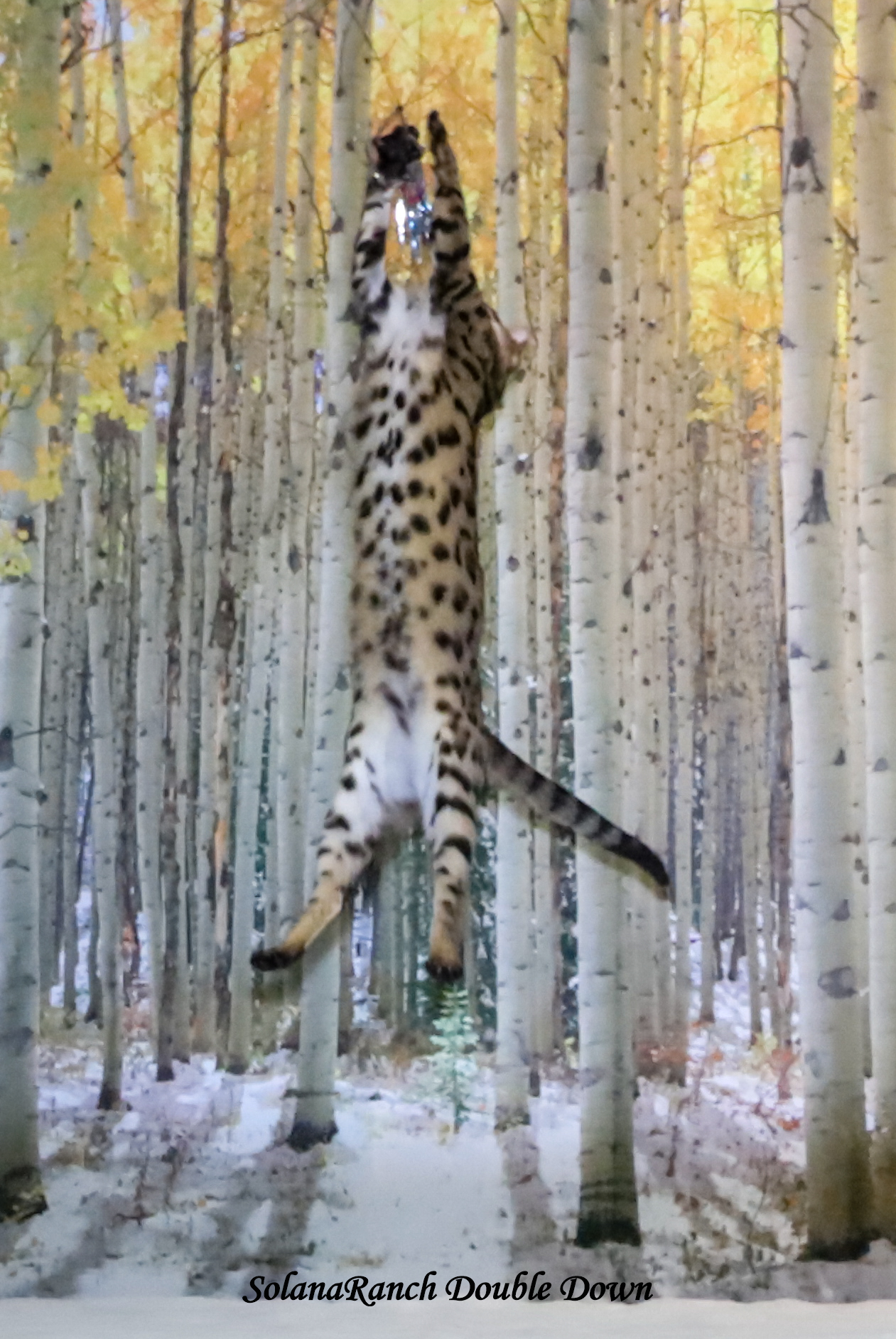 The first draw to a pedigree cat is its appearance. However, appearance should never overshadow health; it is synergistic with health.
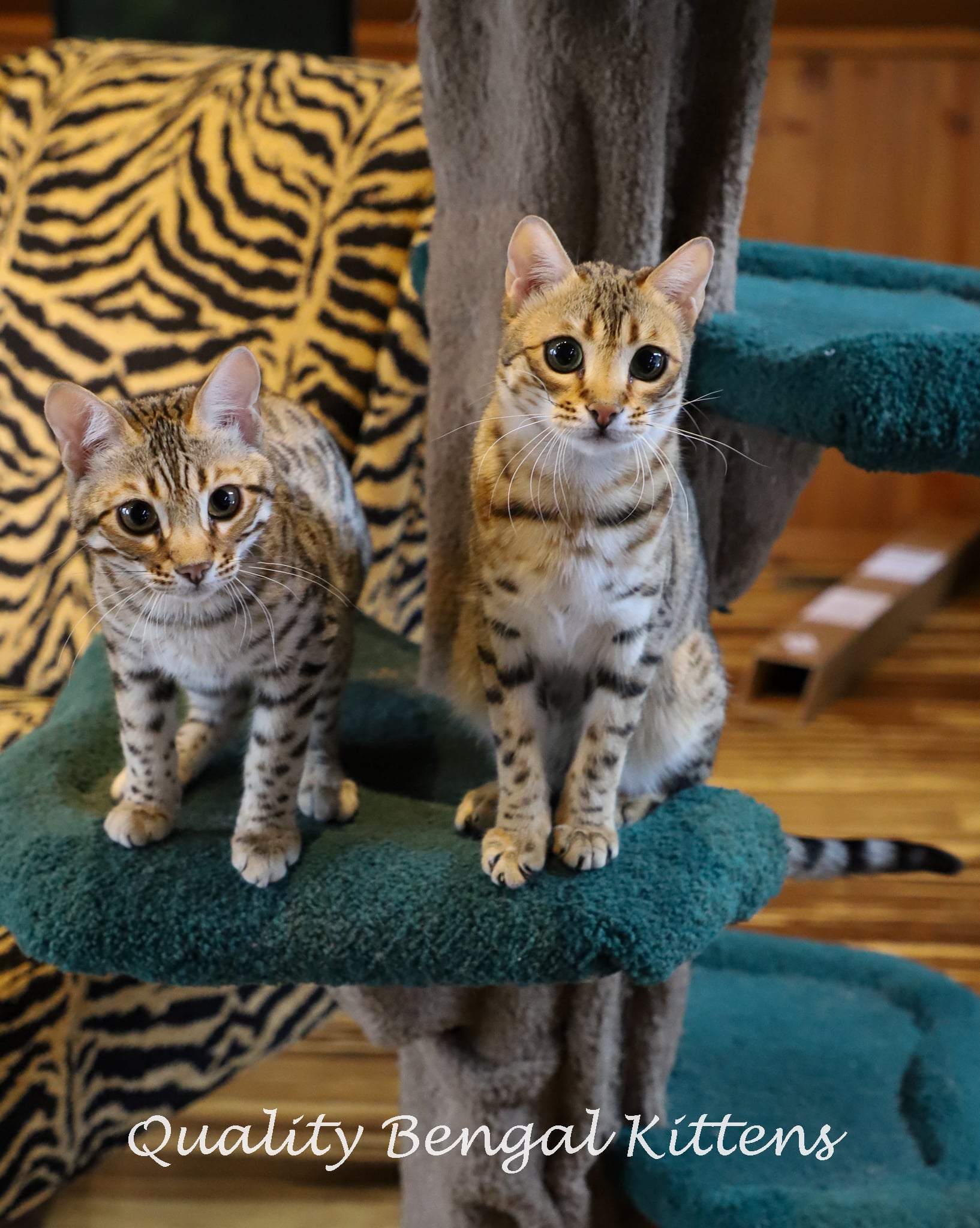 Why Food a Likely Cause of Midnight Meowing
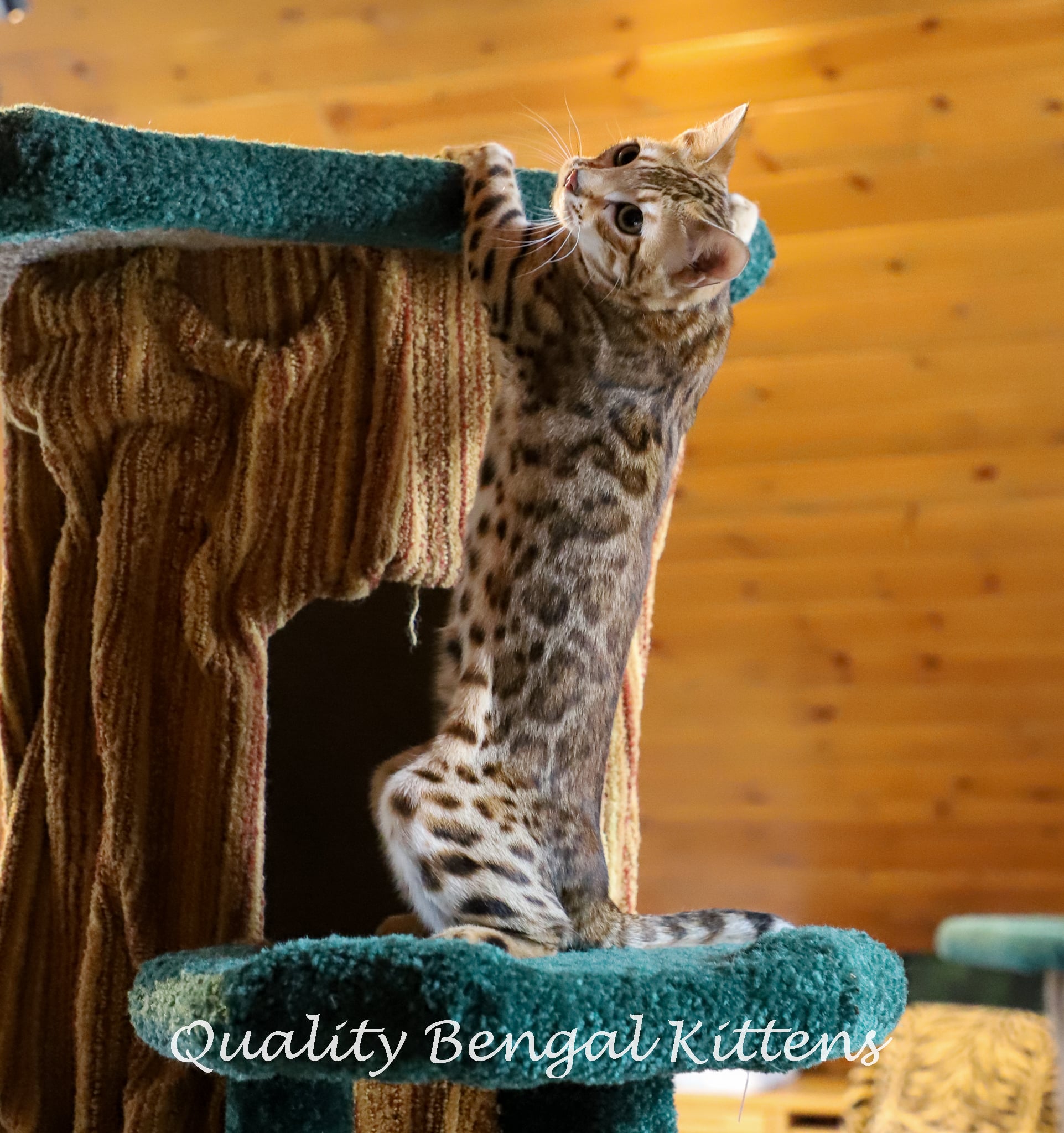 Why Environment is a Likely Cause of Midnight Meowing
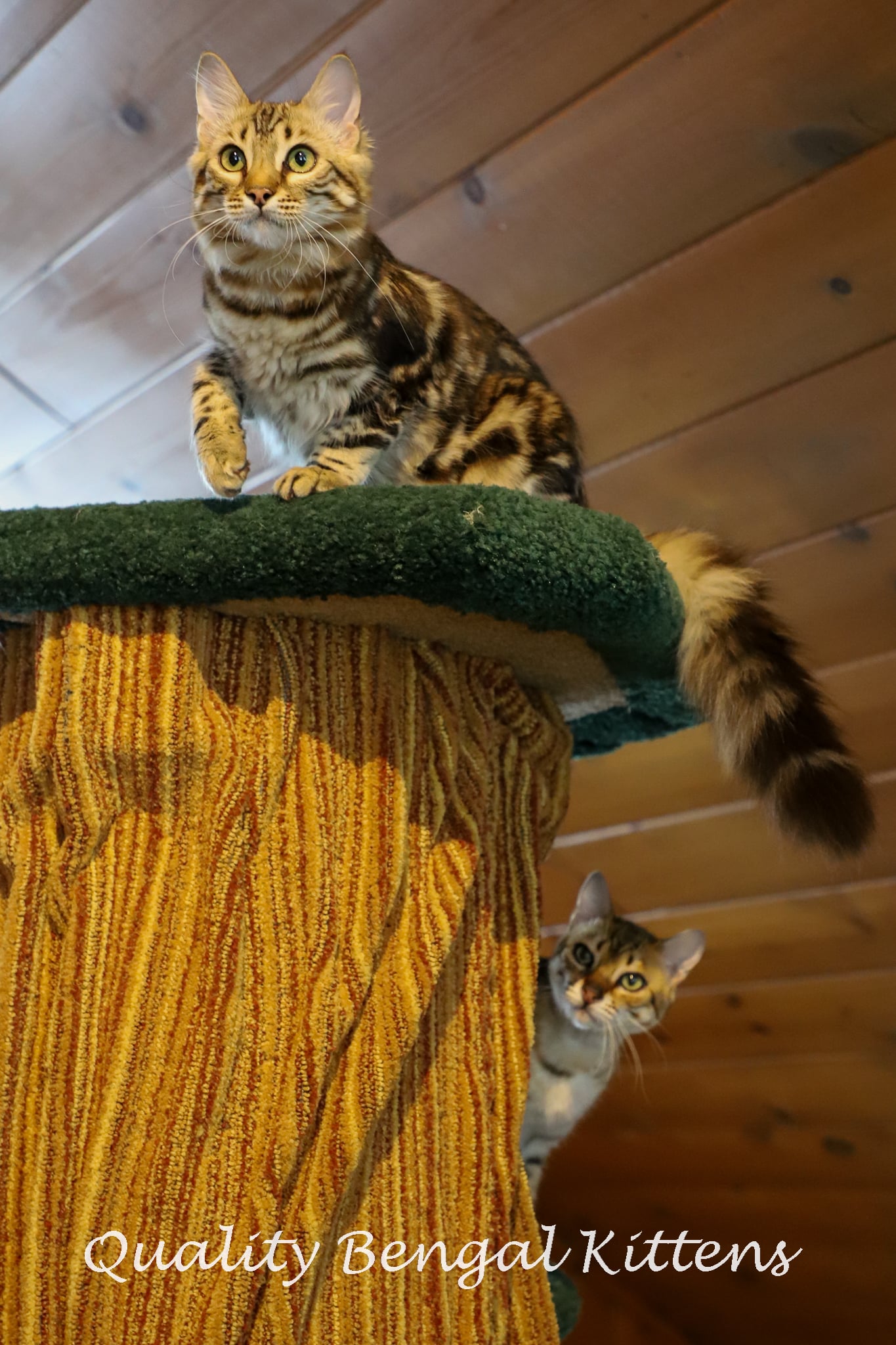 A Bengal cat needs both vertical space and mental stimulation. You should have a set of
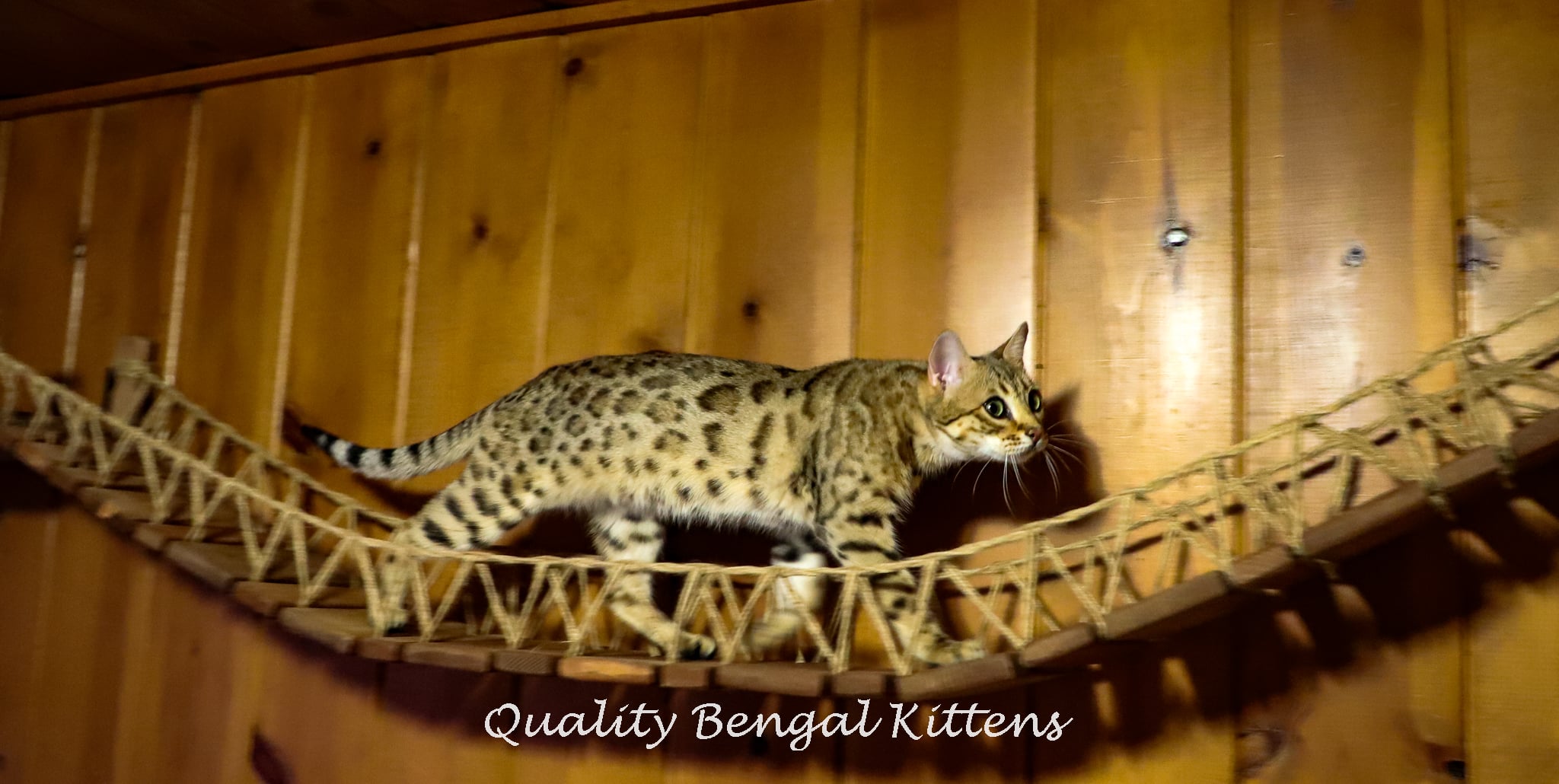 Because Bengal cats descend from a tree-dwelling cat, their need for
 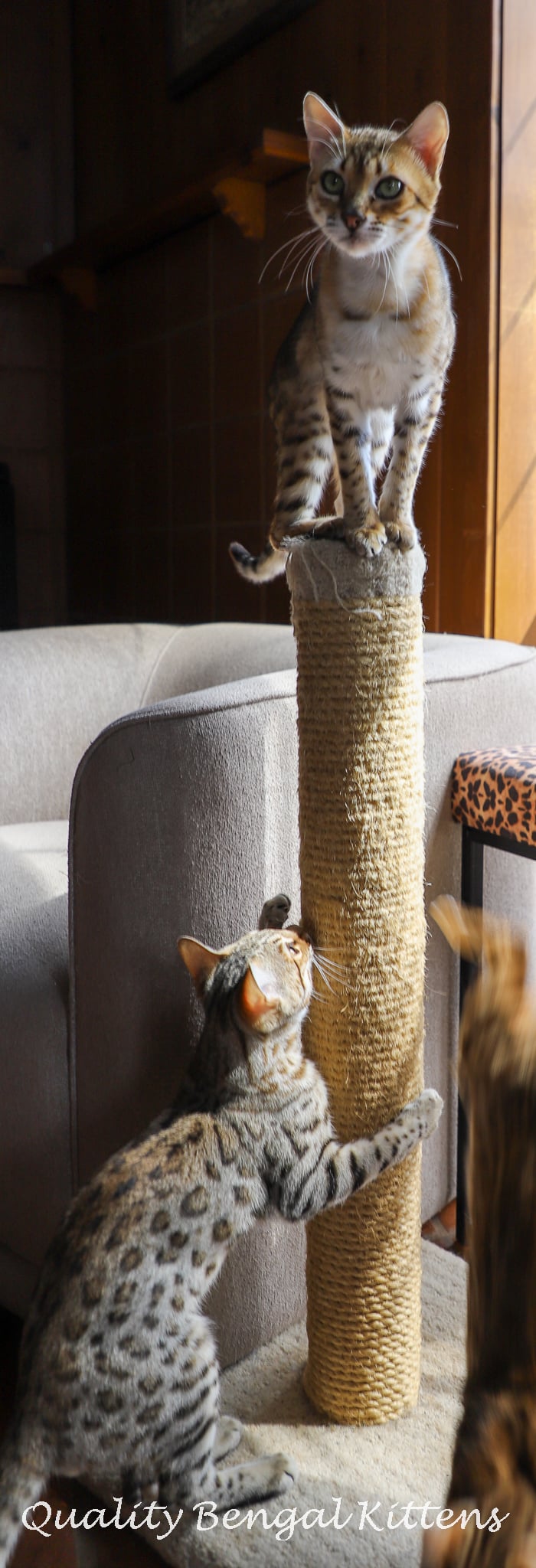 When it comes to scratching posts, the more, the better. Experimenting with a few different types is important to see what your cat likes best.
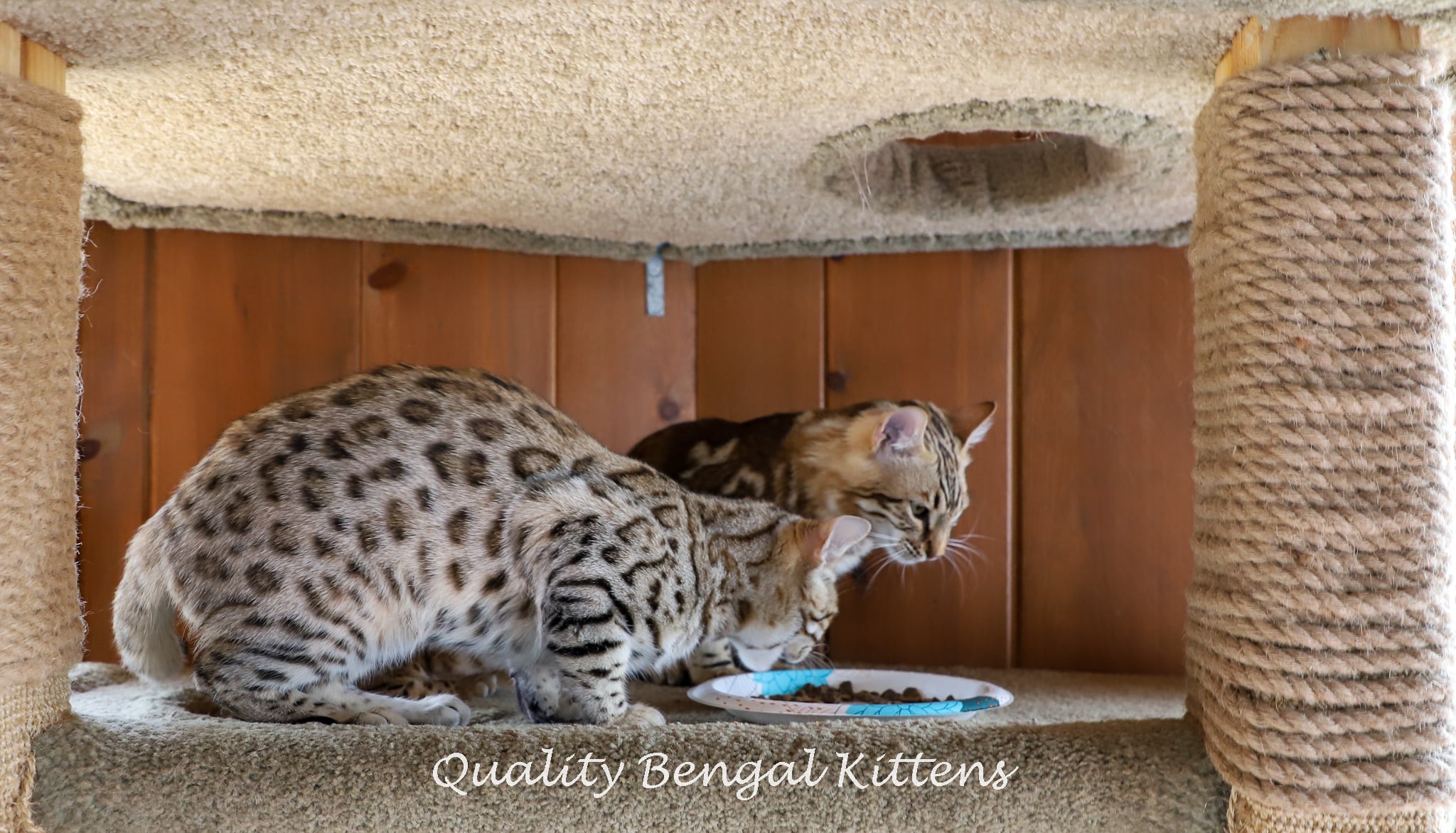 Every cat needs a clean place to eat, drink, and deposit waste. The locations for all of these things are very important to a cat.
 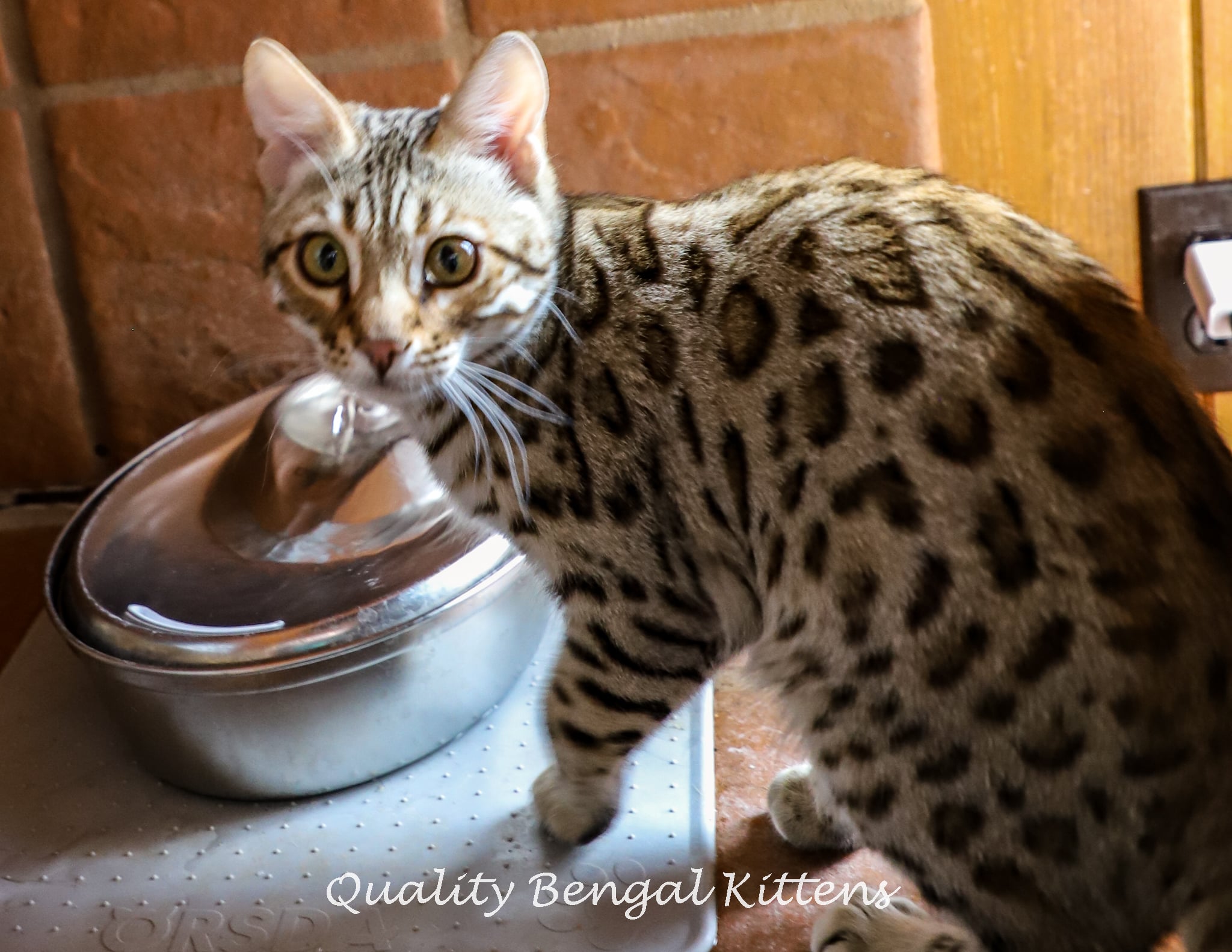 Water needs to be kept separate from food because cats instinctively do not drink water that is near a food source to avoid potential contamination. While they will often tolerate the water bowl near the food bowl, it is just tolerance. This is not ideal.
 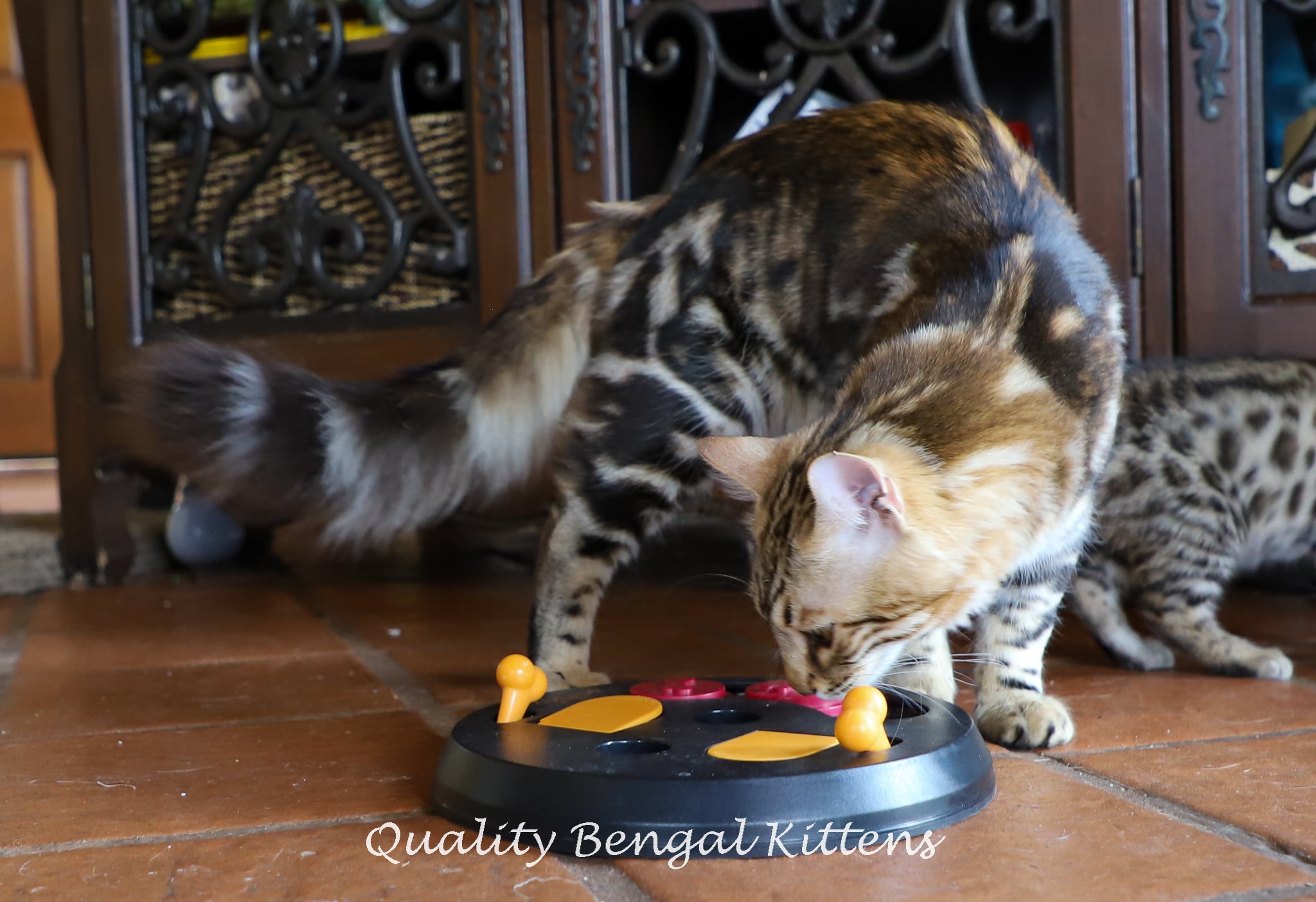 In conclusion, creating a stimulating home environment for your high-energy, intelligent Bengal cat is important. This, however, is only one of the three most influential factors in Bengal cat behavior. You will also want to consider


 A fellow Bengal breeder faced a dilemma. She raised Bengals because she wanted to share the joy of these beautiful cats with others. As usual, her clients picked out their kittens while they were young. As the kittens developed, she noticed that one of the boys was not developing the personality she prided herself in offering her clients. She diligently worked to bring the shy kitten out of his shell – having him play with her children, around the dogs, with the littermates, household visitors, and extended family members, but the kitten never became bold. His personality was, by nature, shy. As the kittens’ departure date approached, she grew weary. This kitten did not epitomize what she wanted to provide for her clients. So she did what every well-intentioned breeder would do. She offered the family her sweet-natured keeper kitten and kept the shy one for herself, not realizing how the selfless act would affect all of her future kittens when using the shy male as her sire.
 What Does This All Mean?
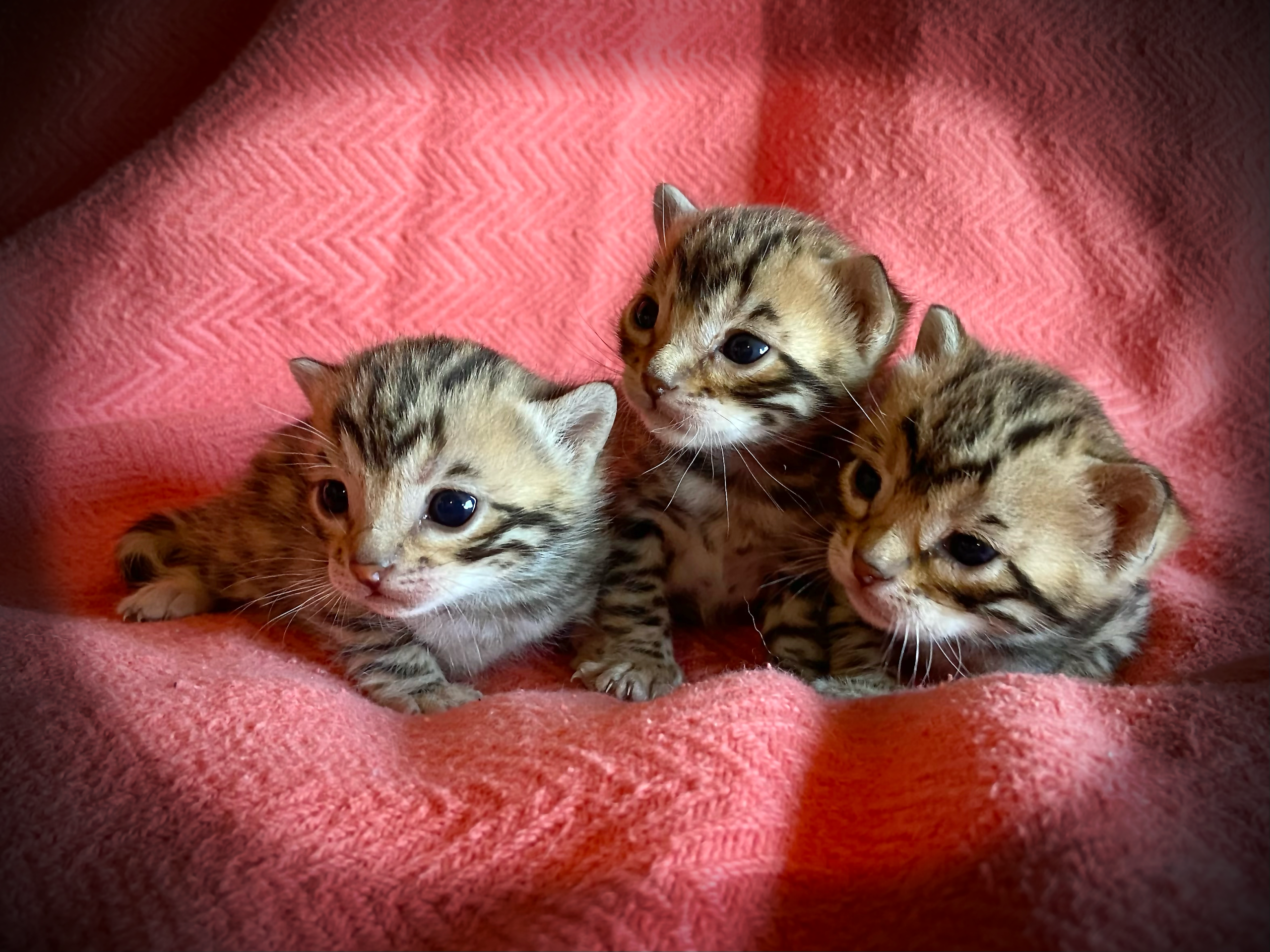
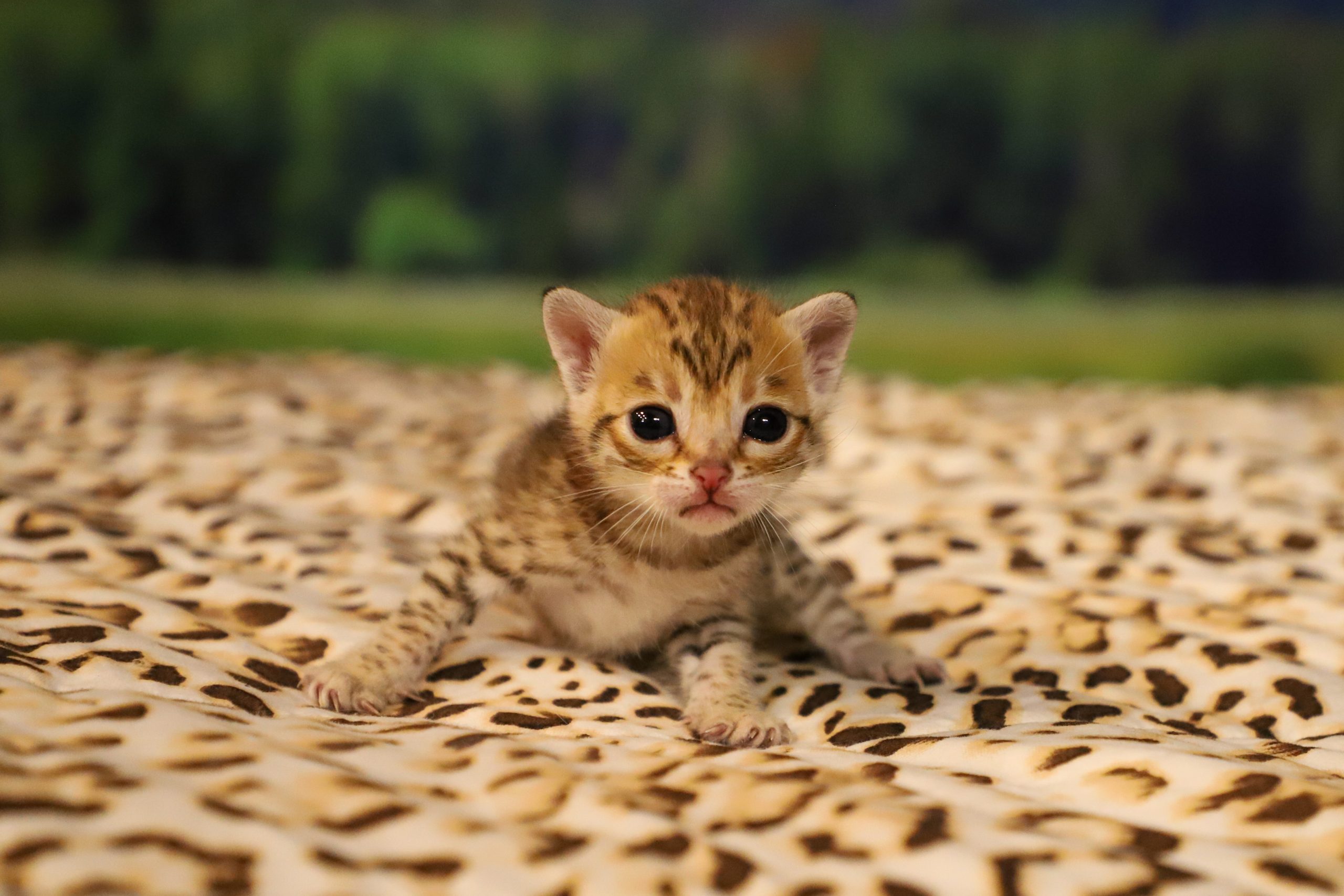

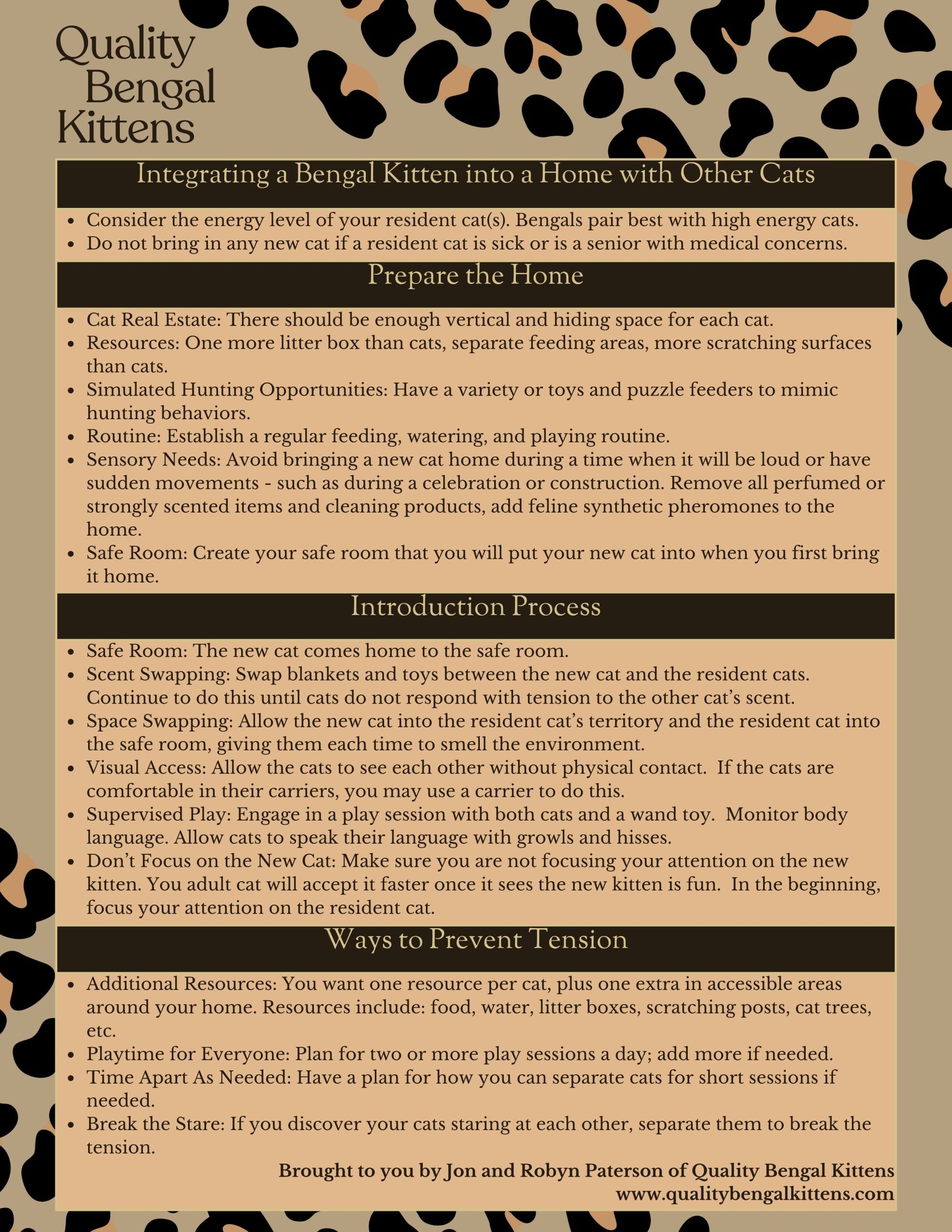
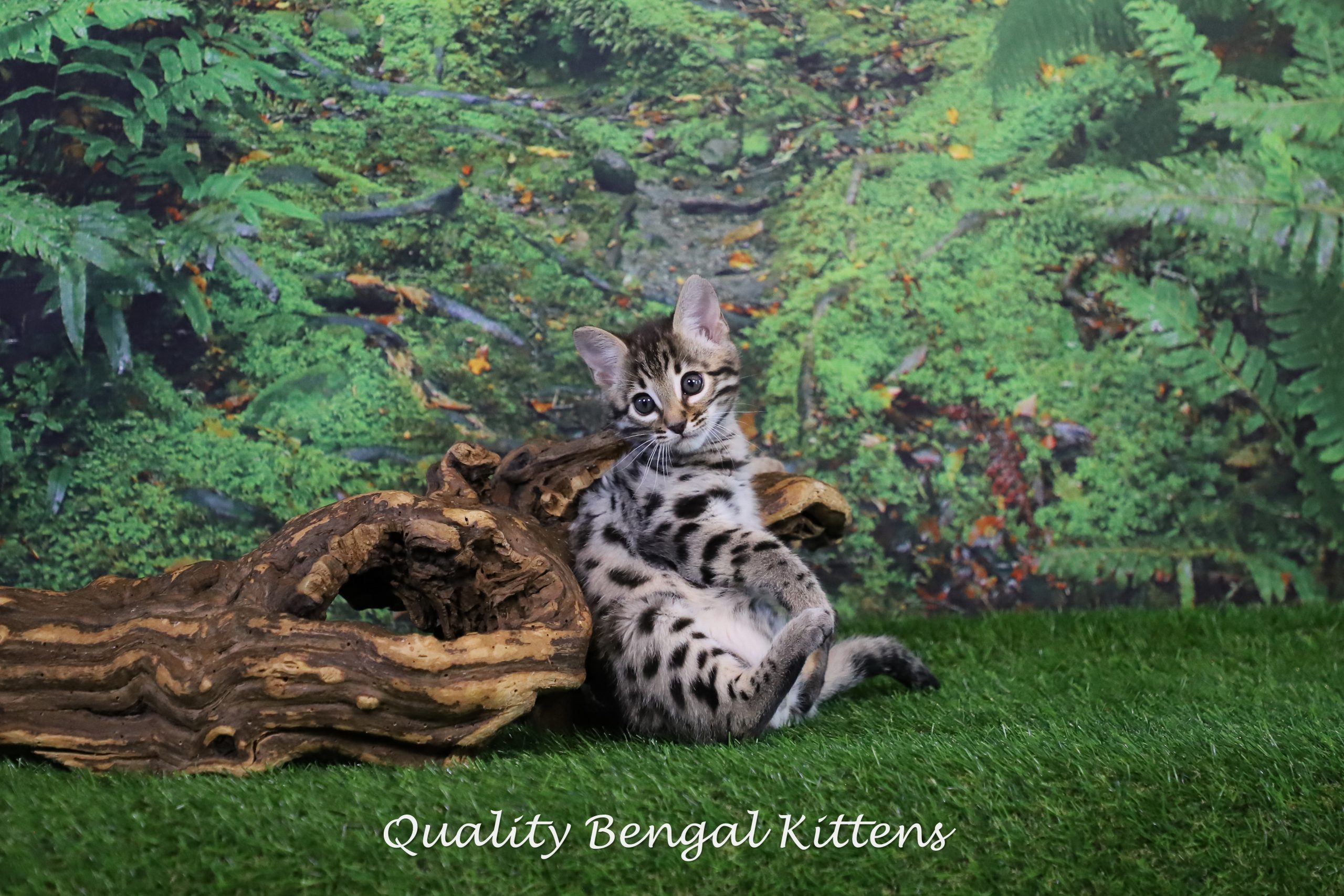
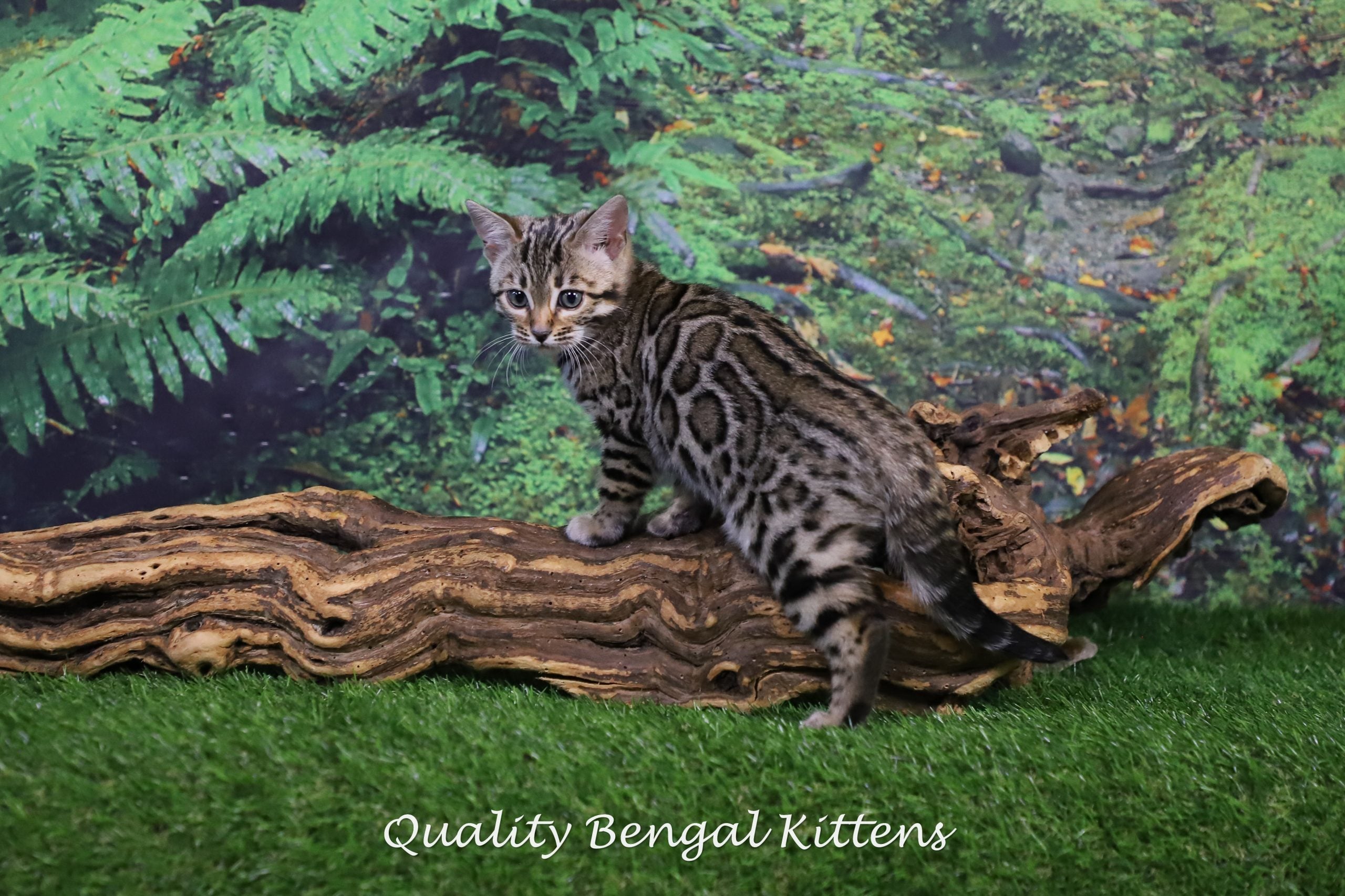
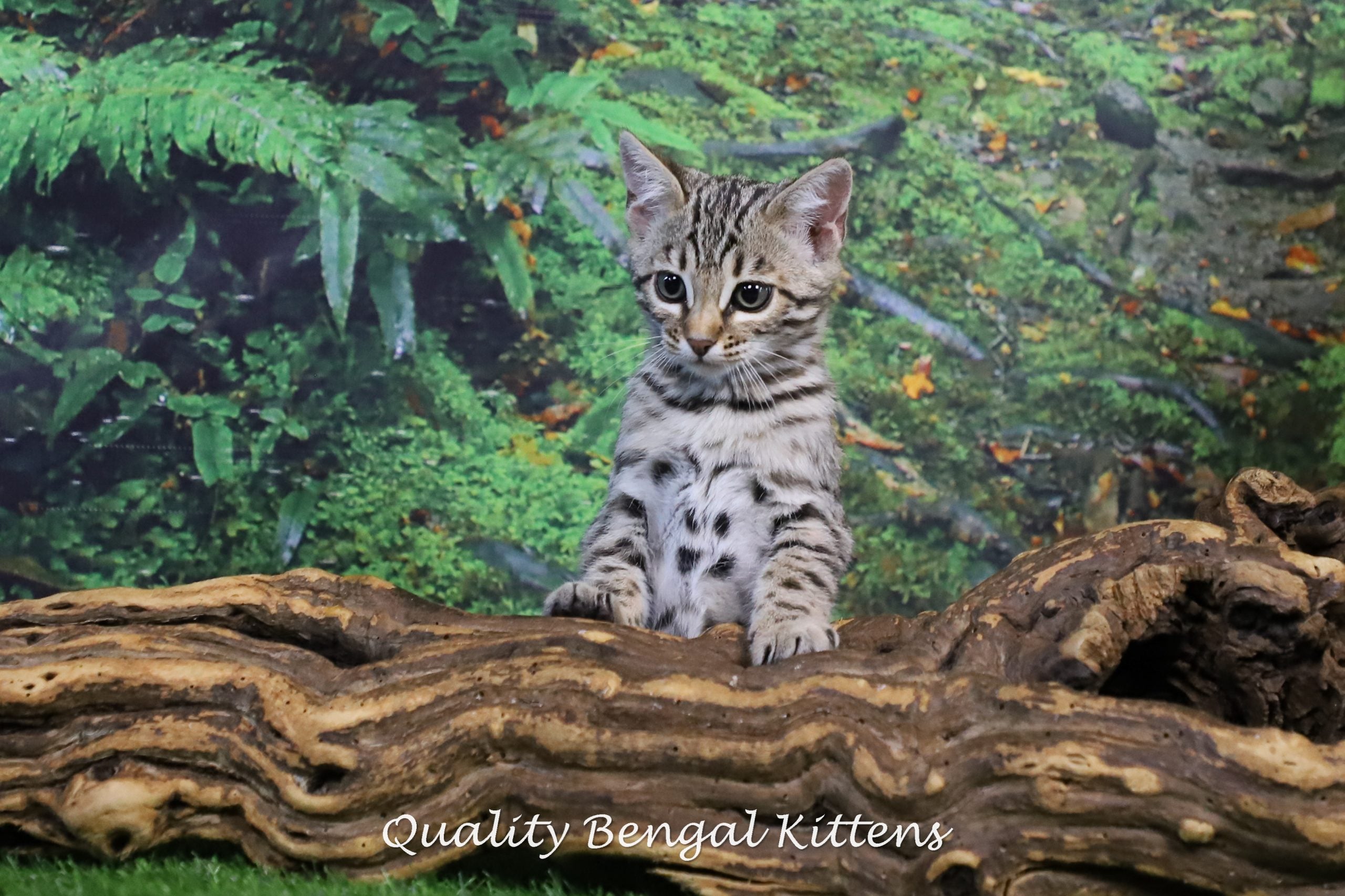

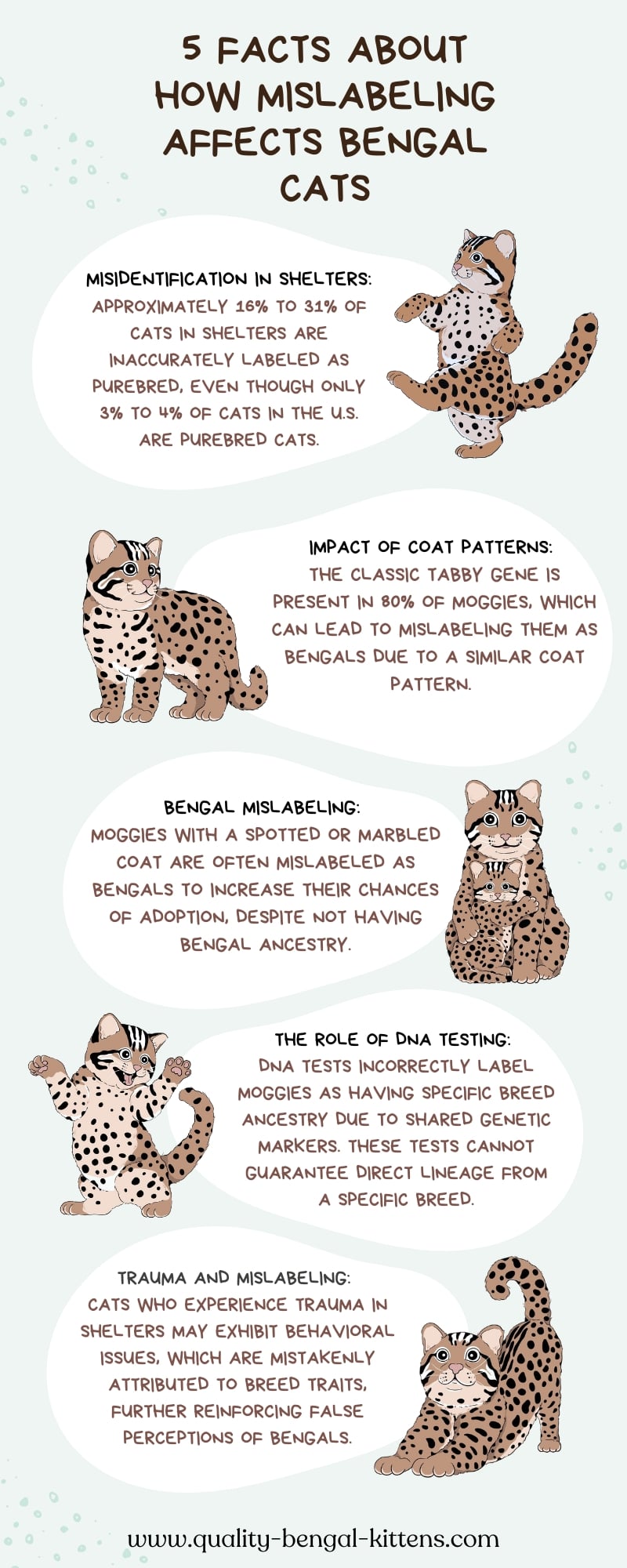
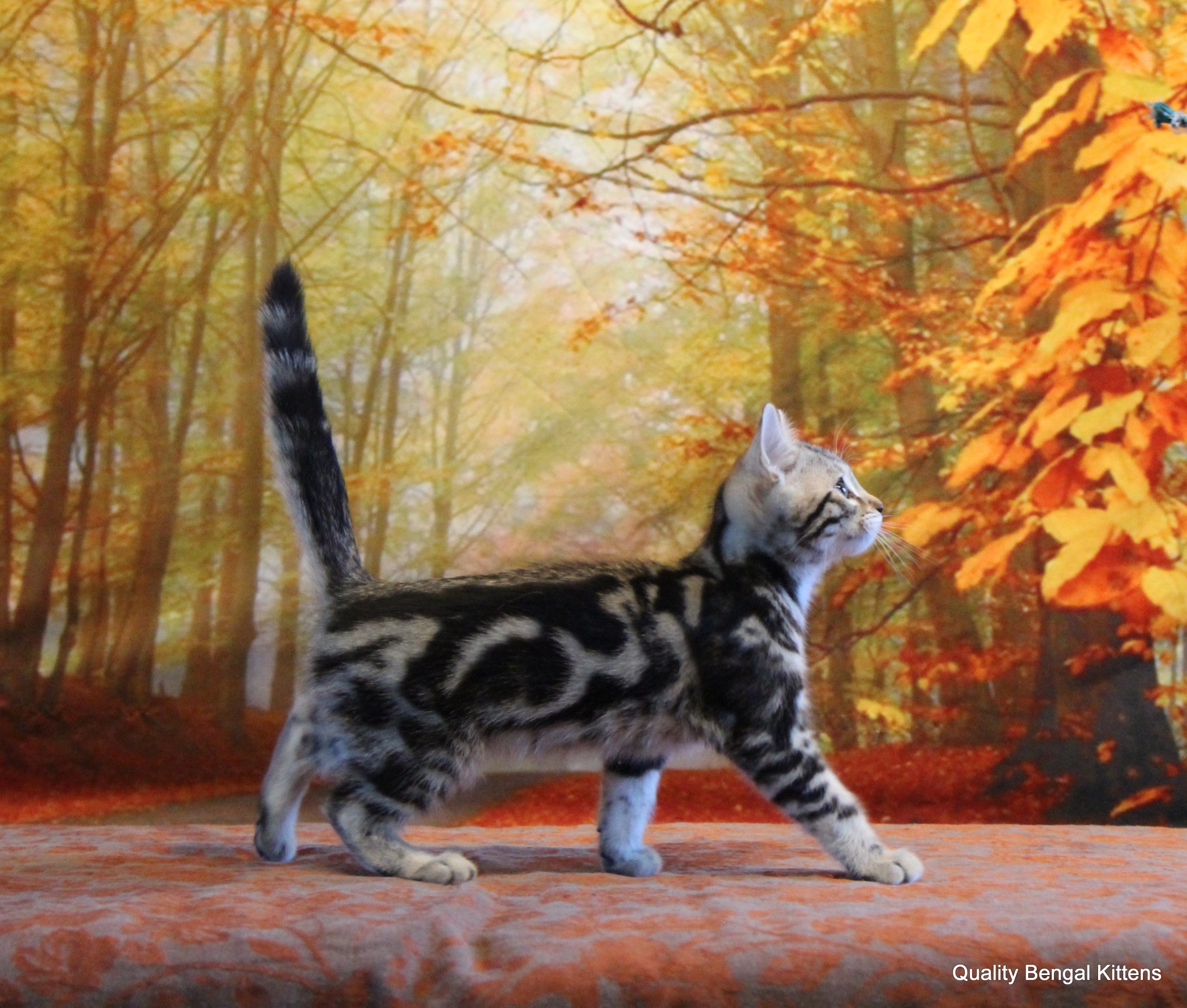
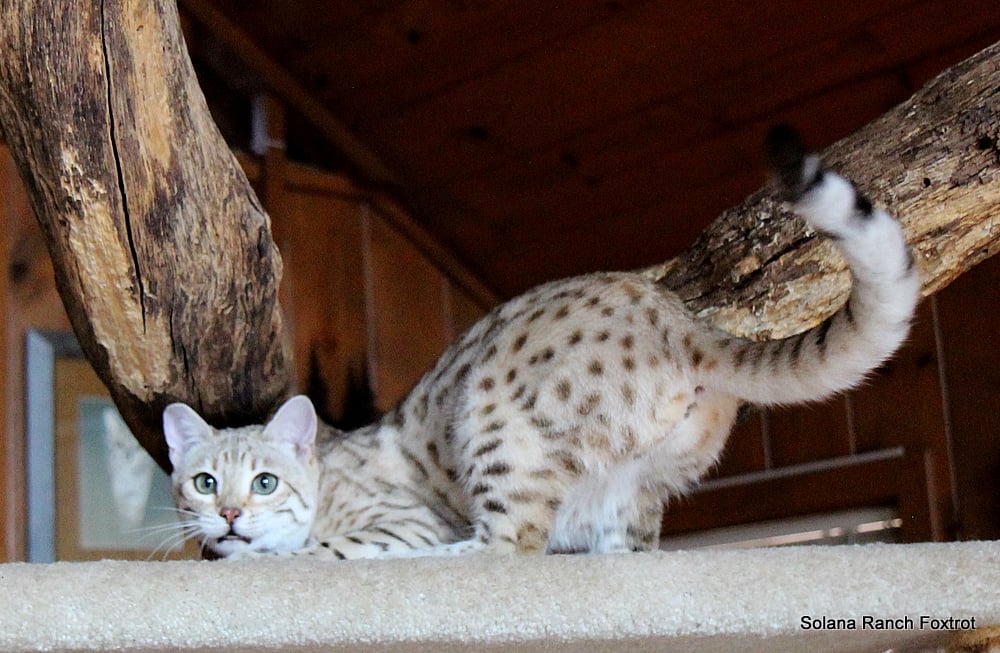
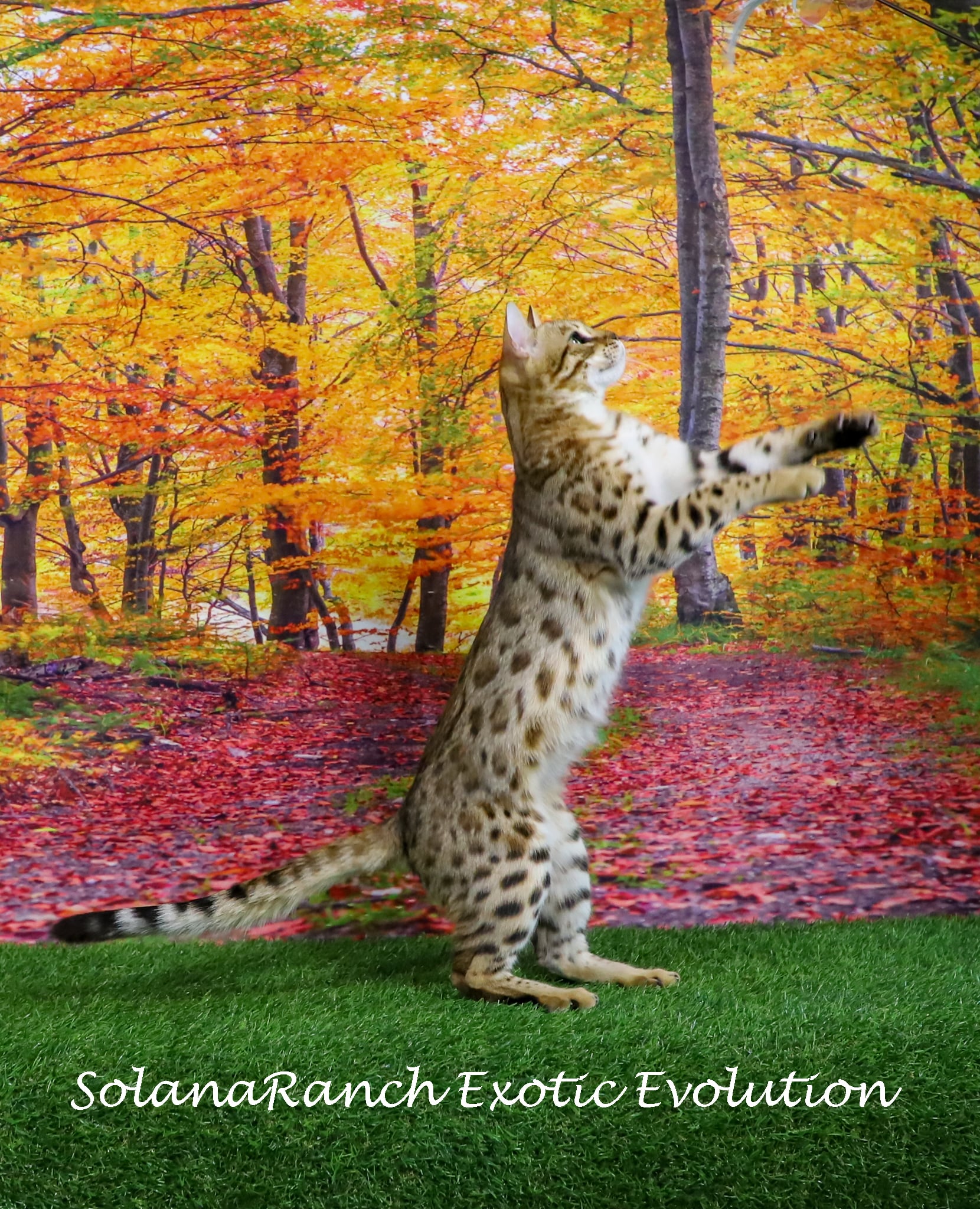
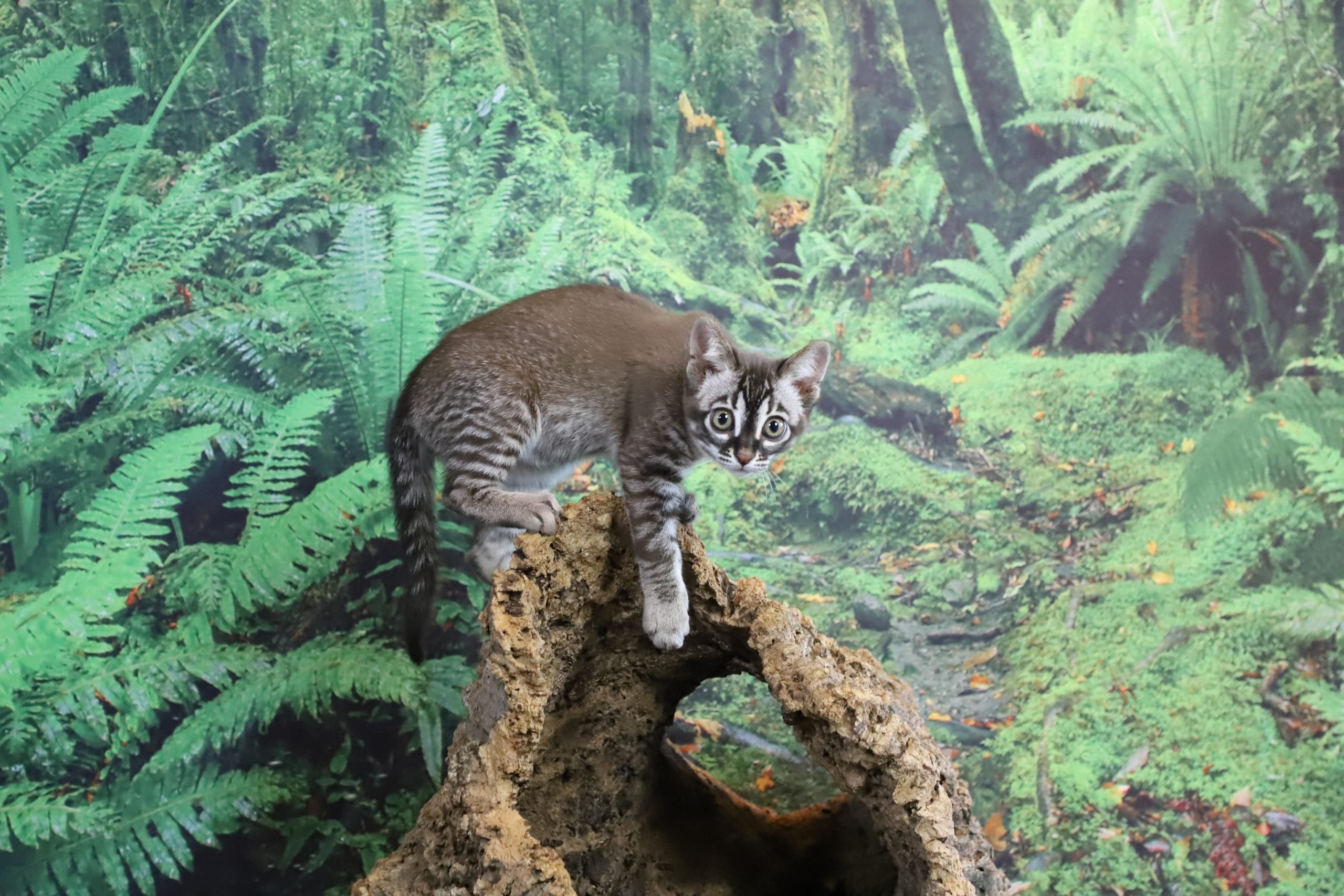

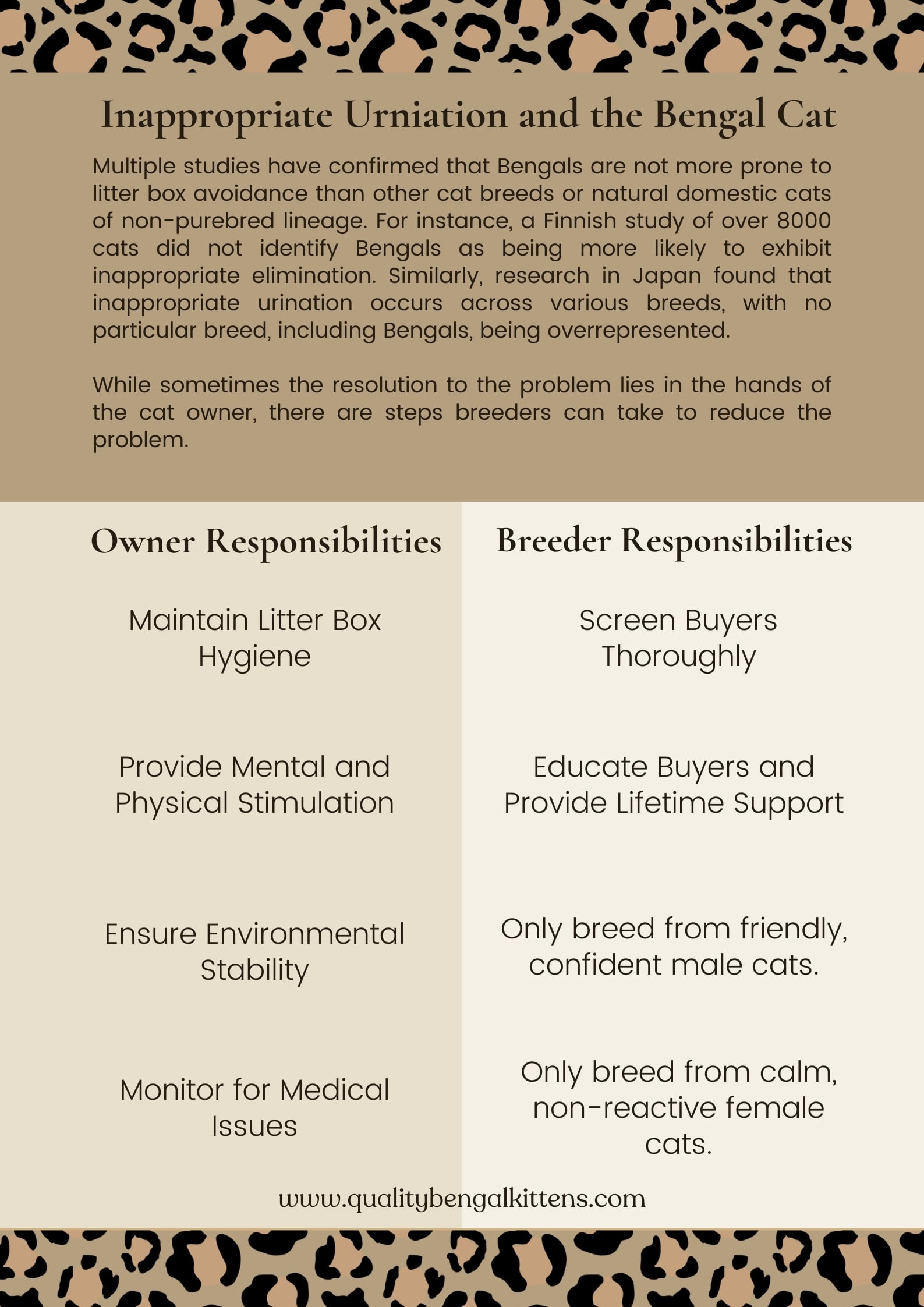
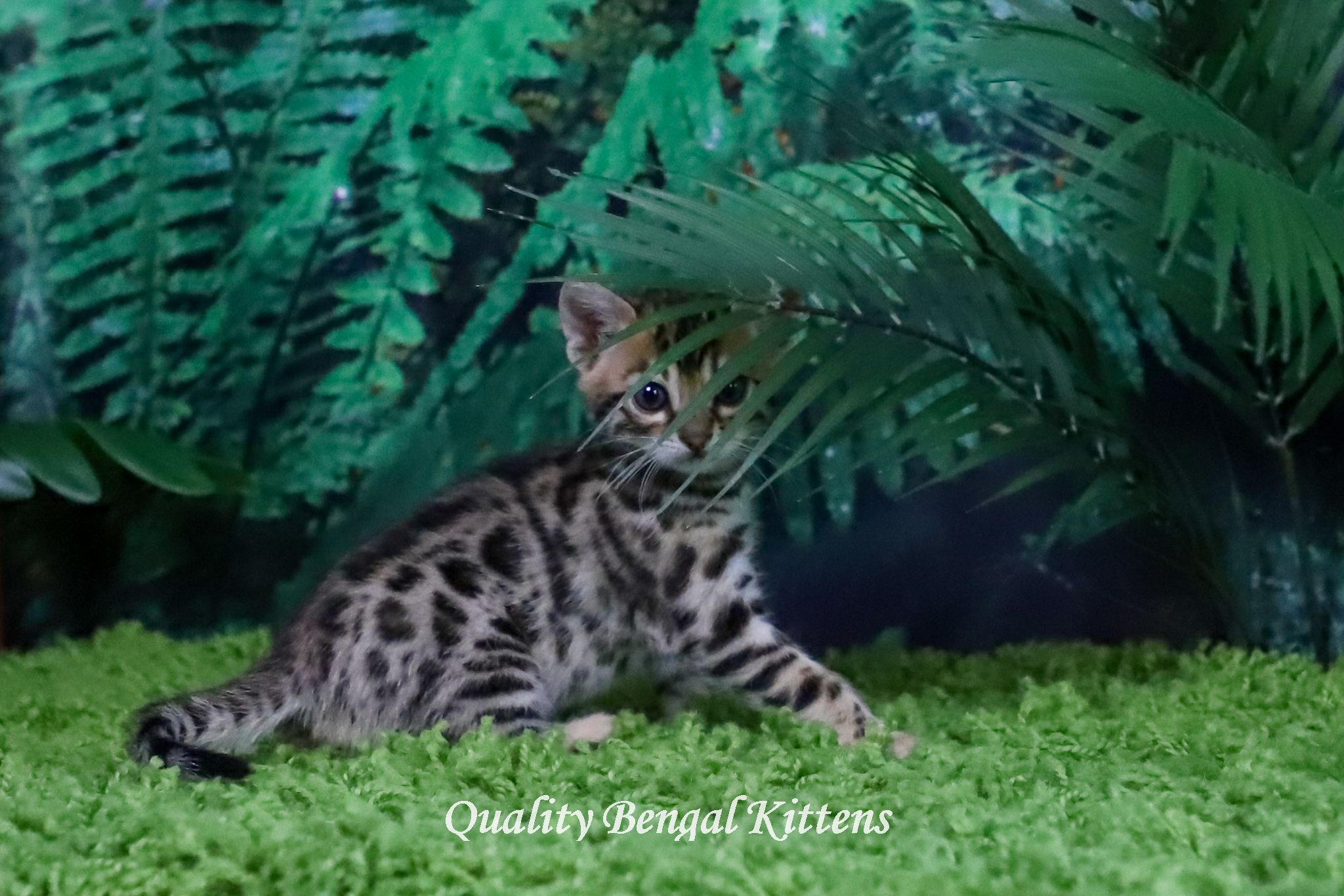

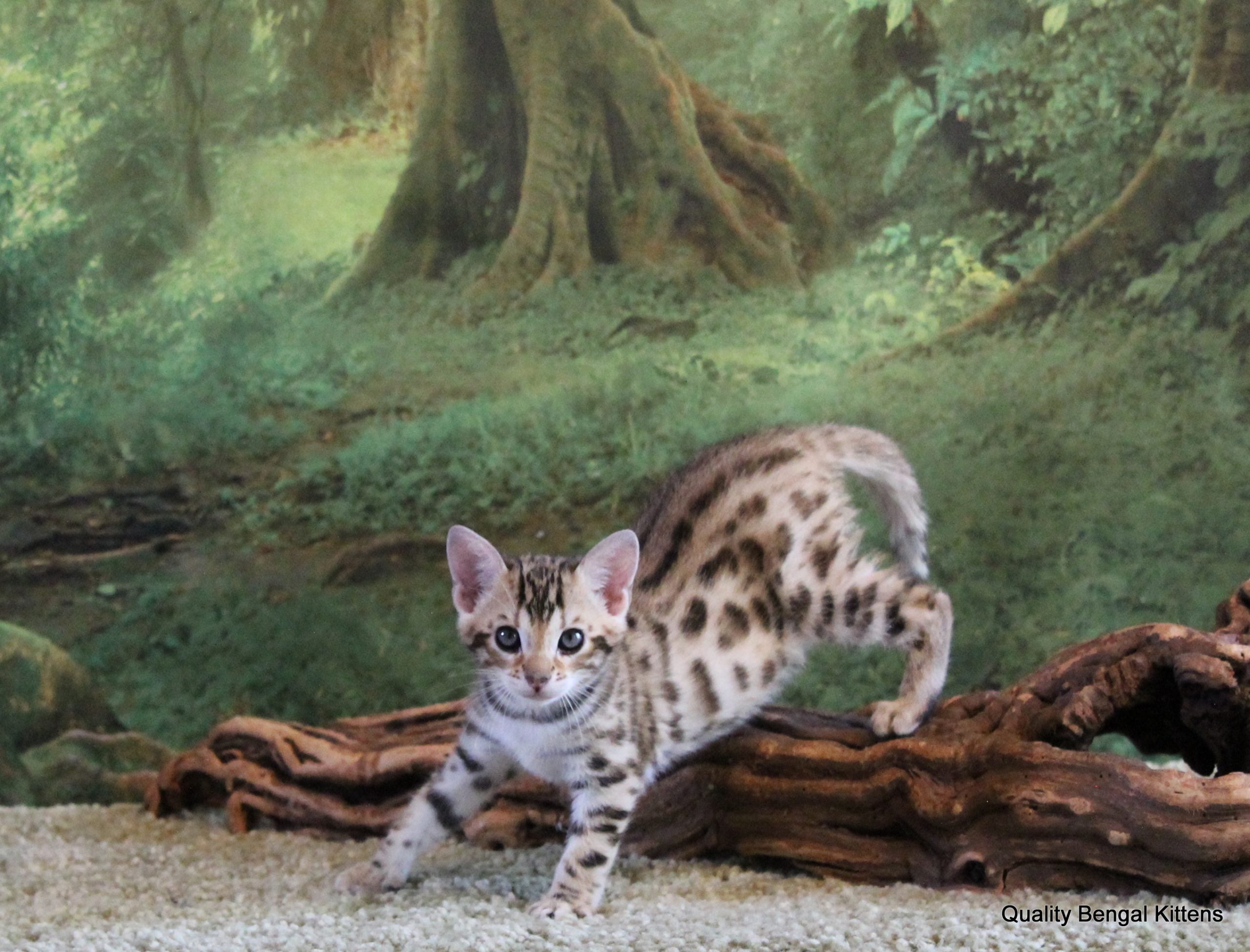
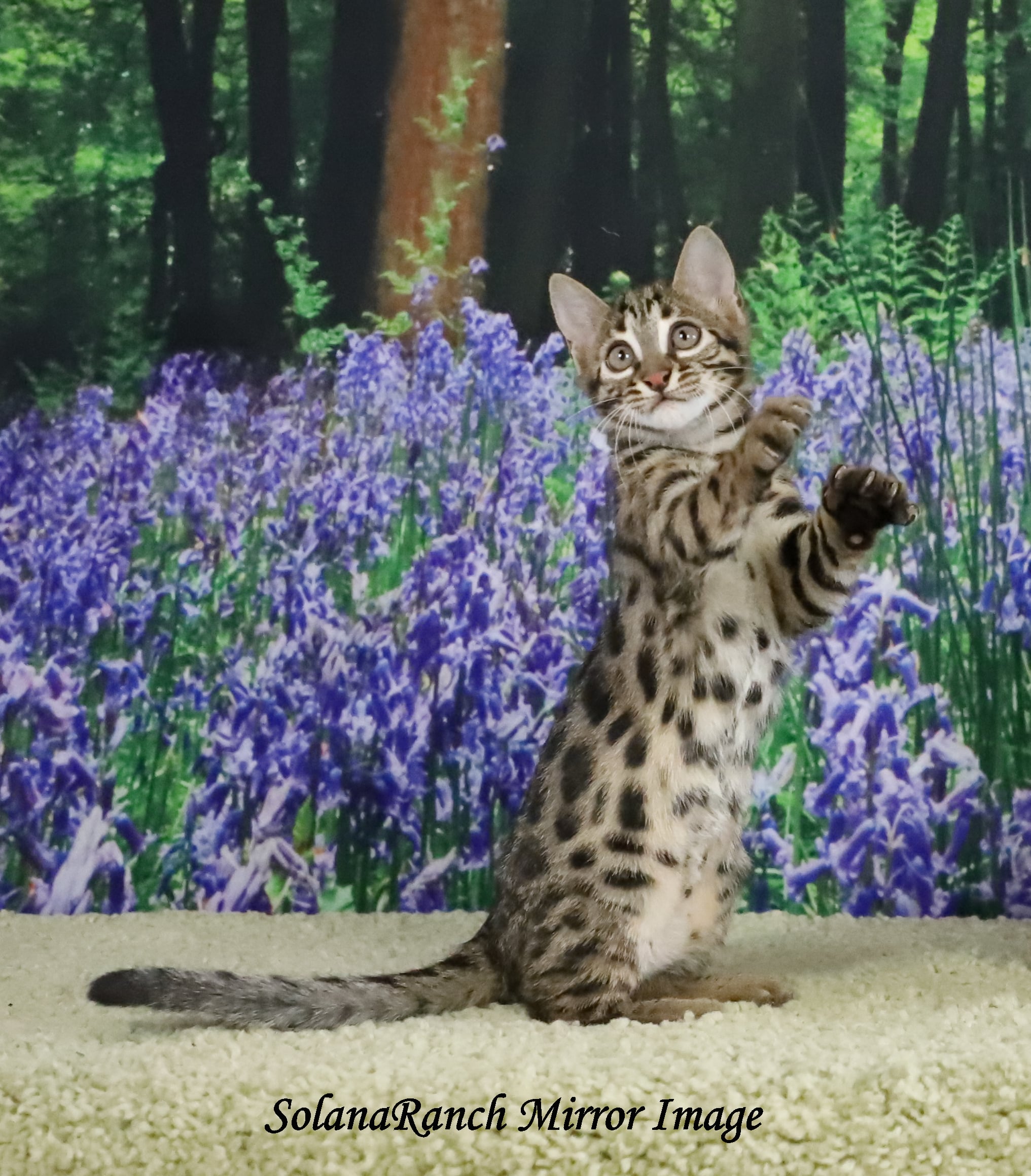
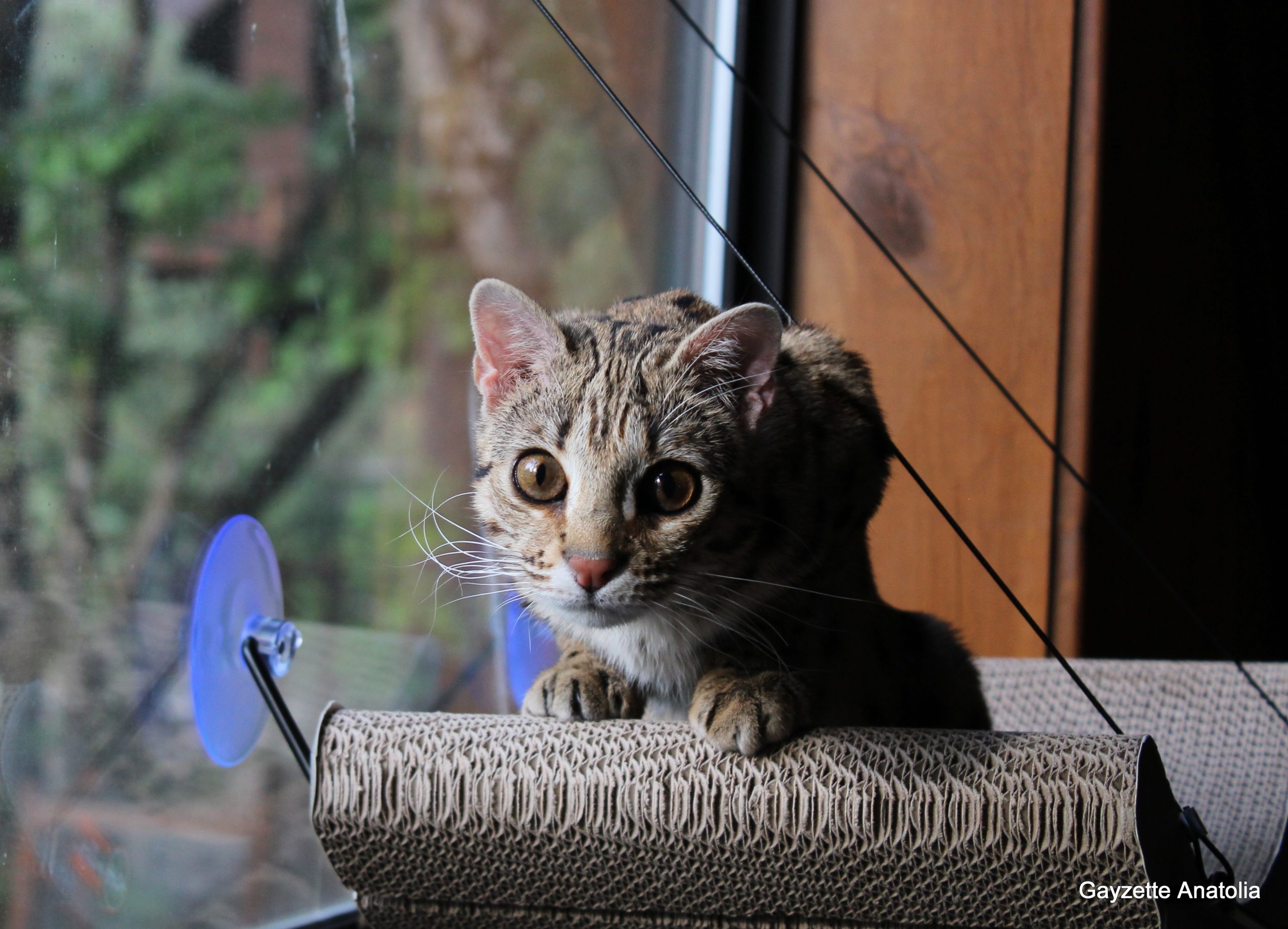
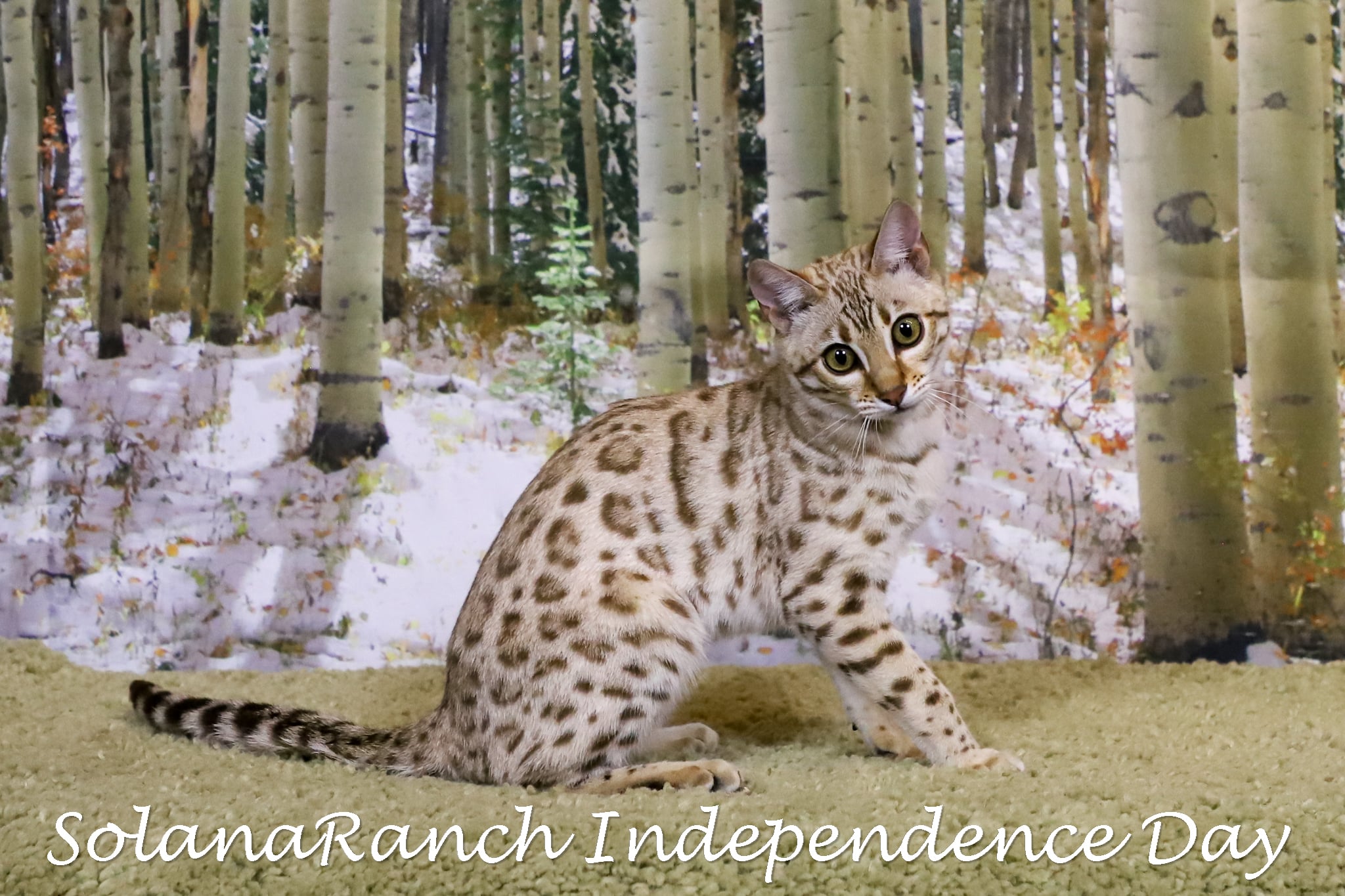

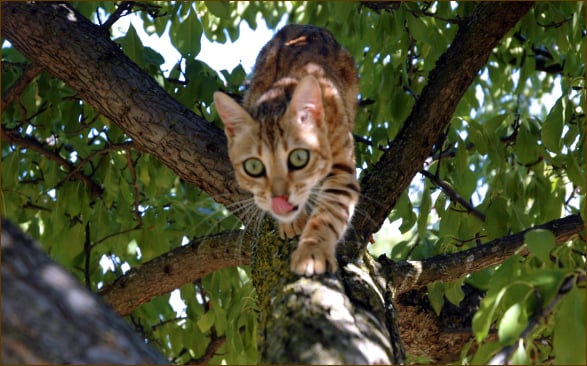
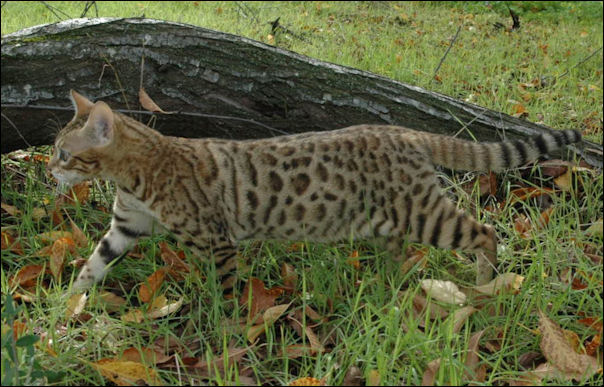
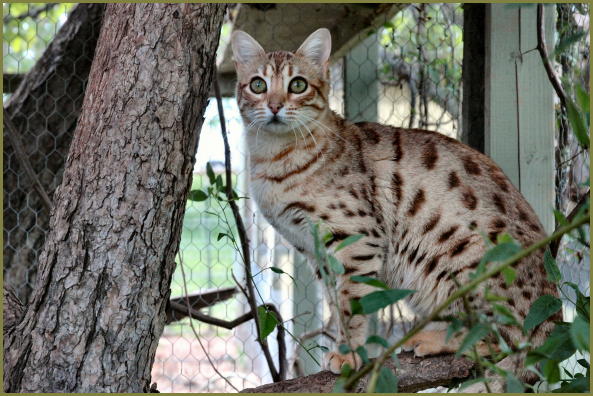
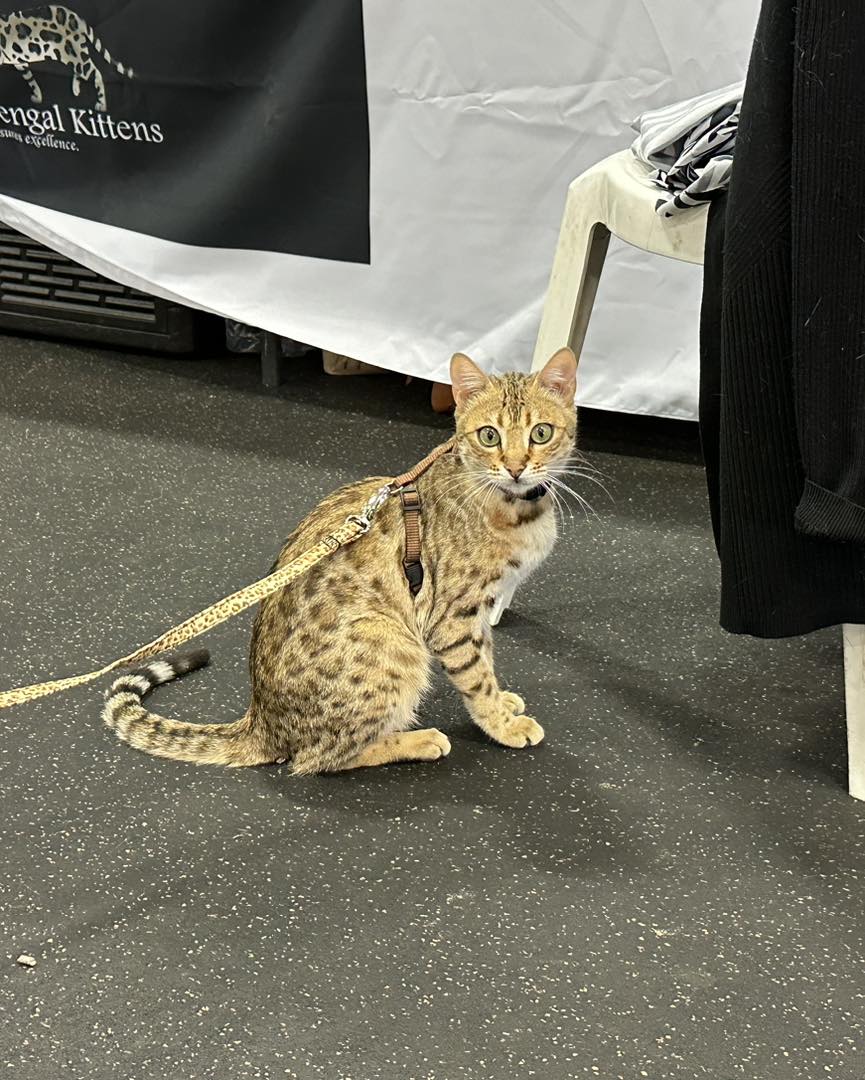
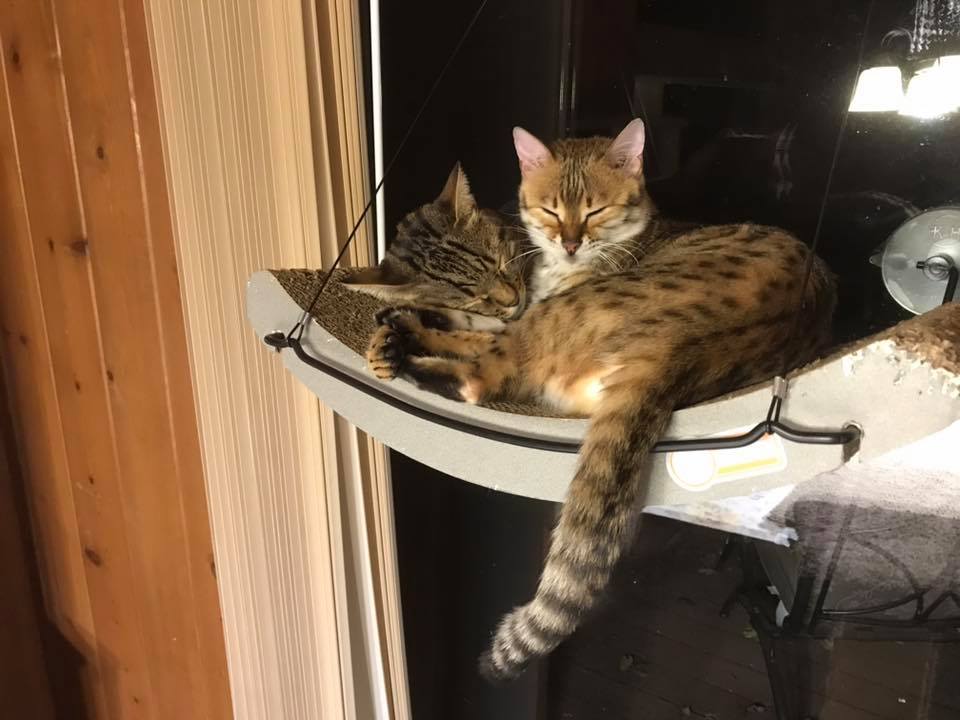
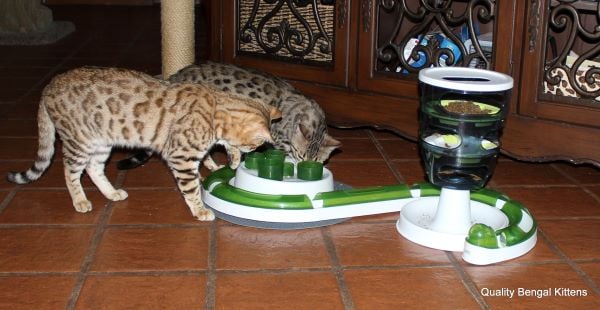

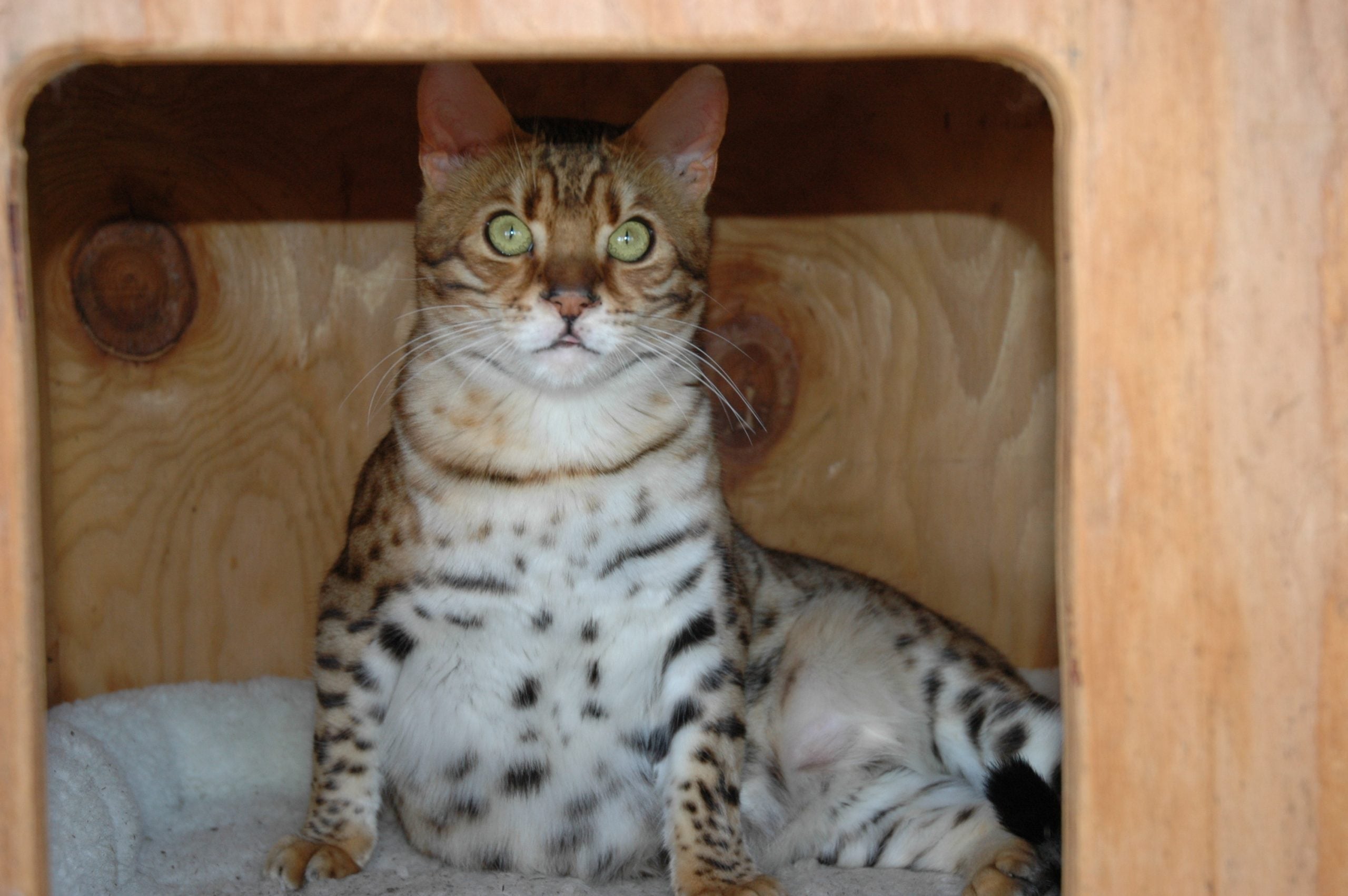
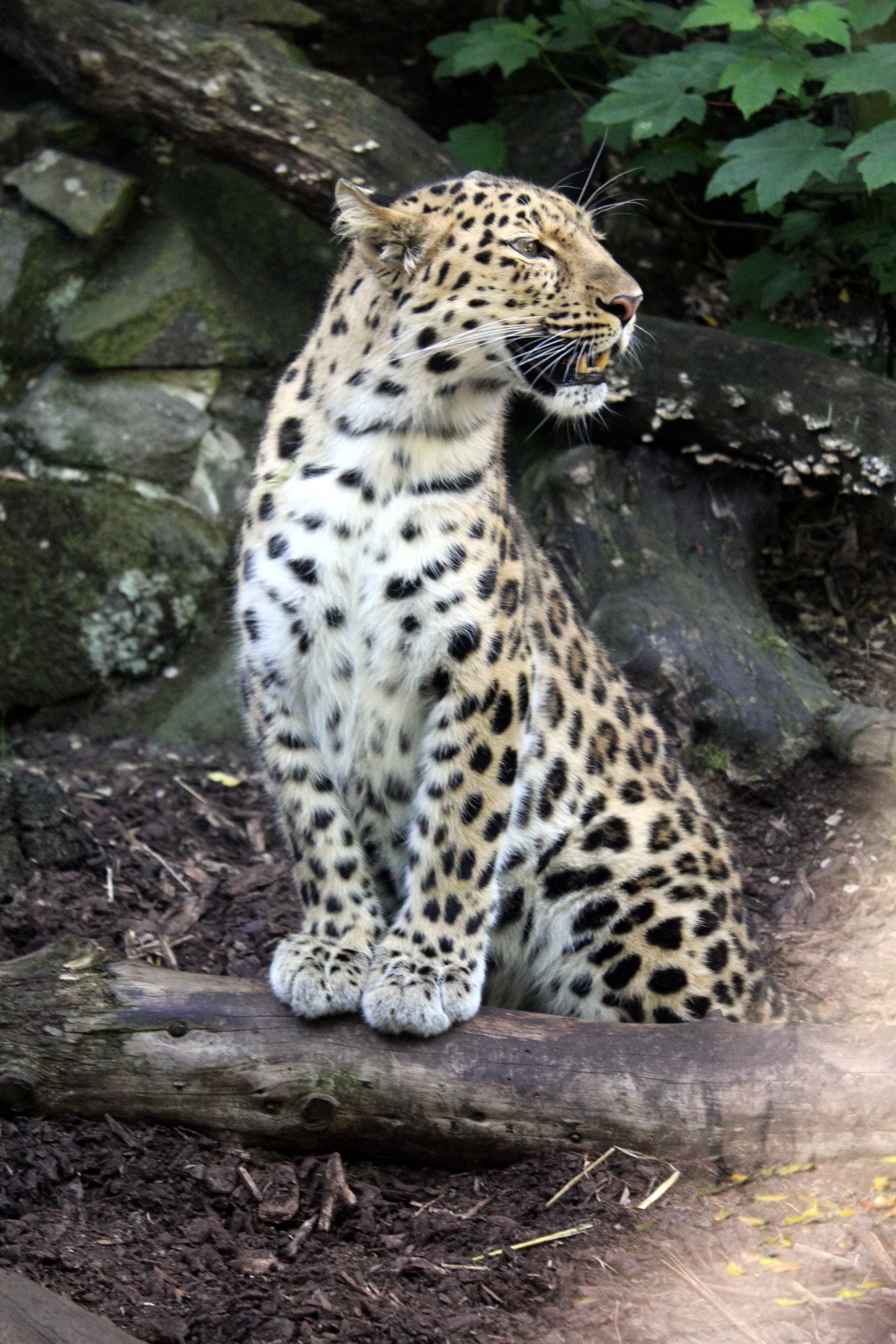
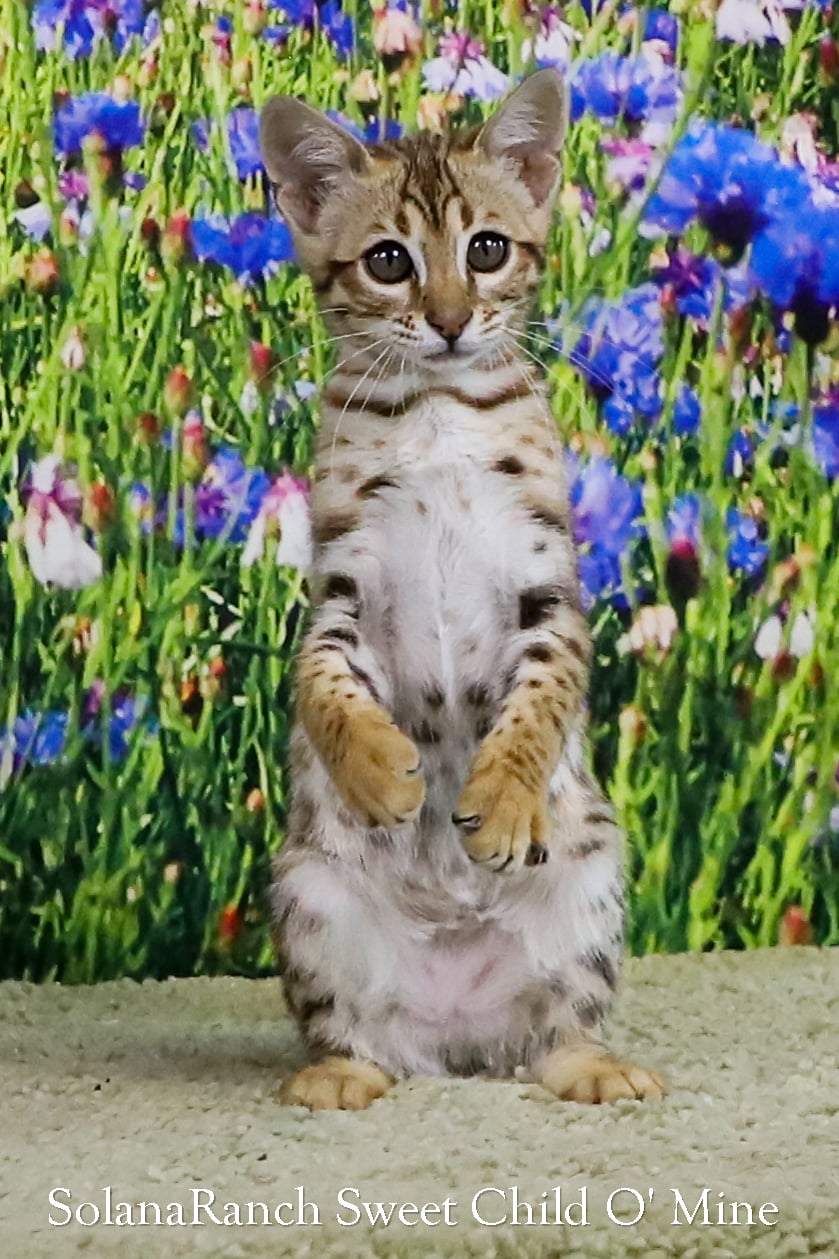
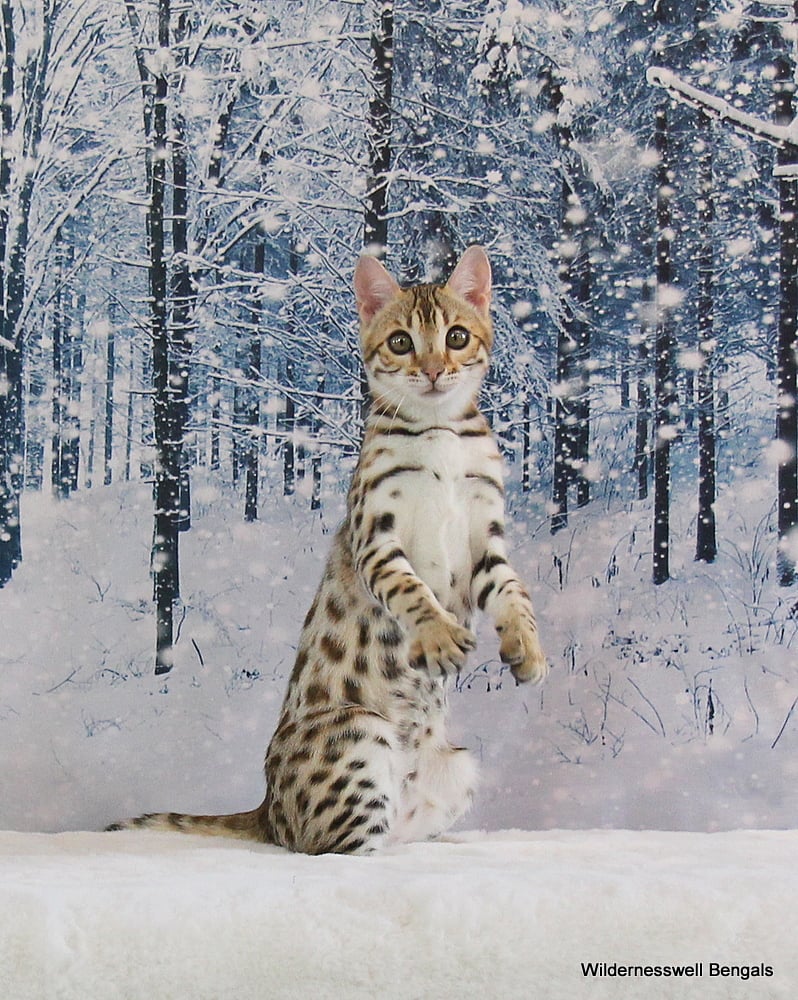

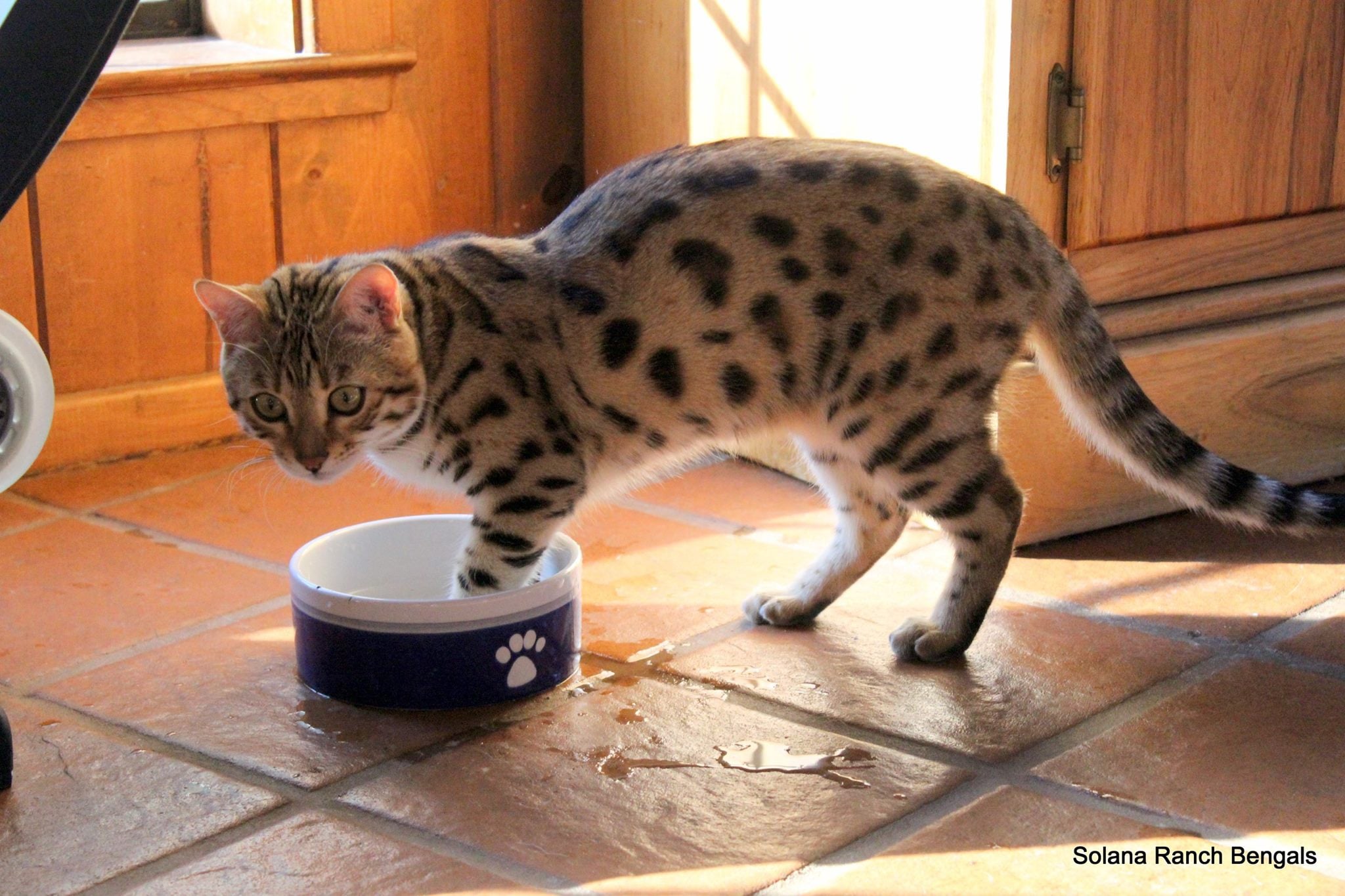 “Are Bengal cats aggressive?” is one of the most common search phrases placed into Google about Bengal cats. Plug it in, and you will read stories. But stories are just that, stories. A handful of anecdotes should not result in a conclusion regarding the Bengal breed. In 2020 the
  In the Journal of Veterinary Behavior’s study, the most frequent behaviors often classified as problematic by the owners were
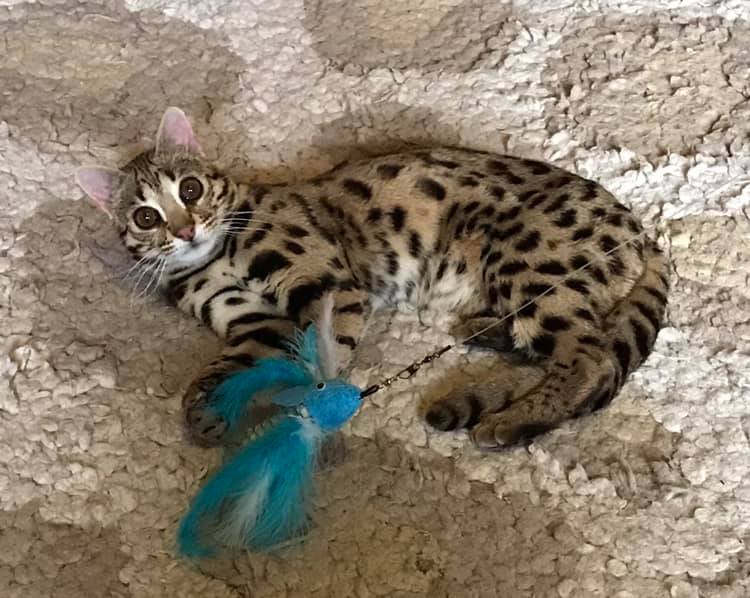 While breeder selection benefits cat behavior, a breeder’s responsibility does not stop there. The environment they create for their kittens affects behavior as well. Raising a kitten in a secure and comfortable environment results in more confident, less anxious adult cats. This security involves when kittens wean, how long they are raised around their Mom and other supportive adult cats, how much play they engage in while growing up, and how they are introduced to everyday household activities. Please read our article on
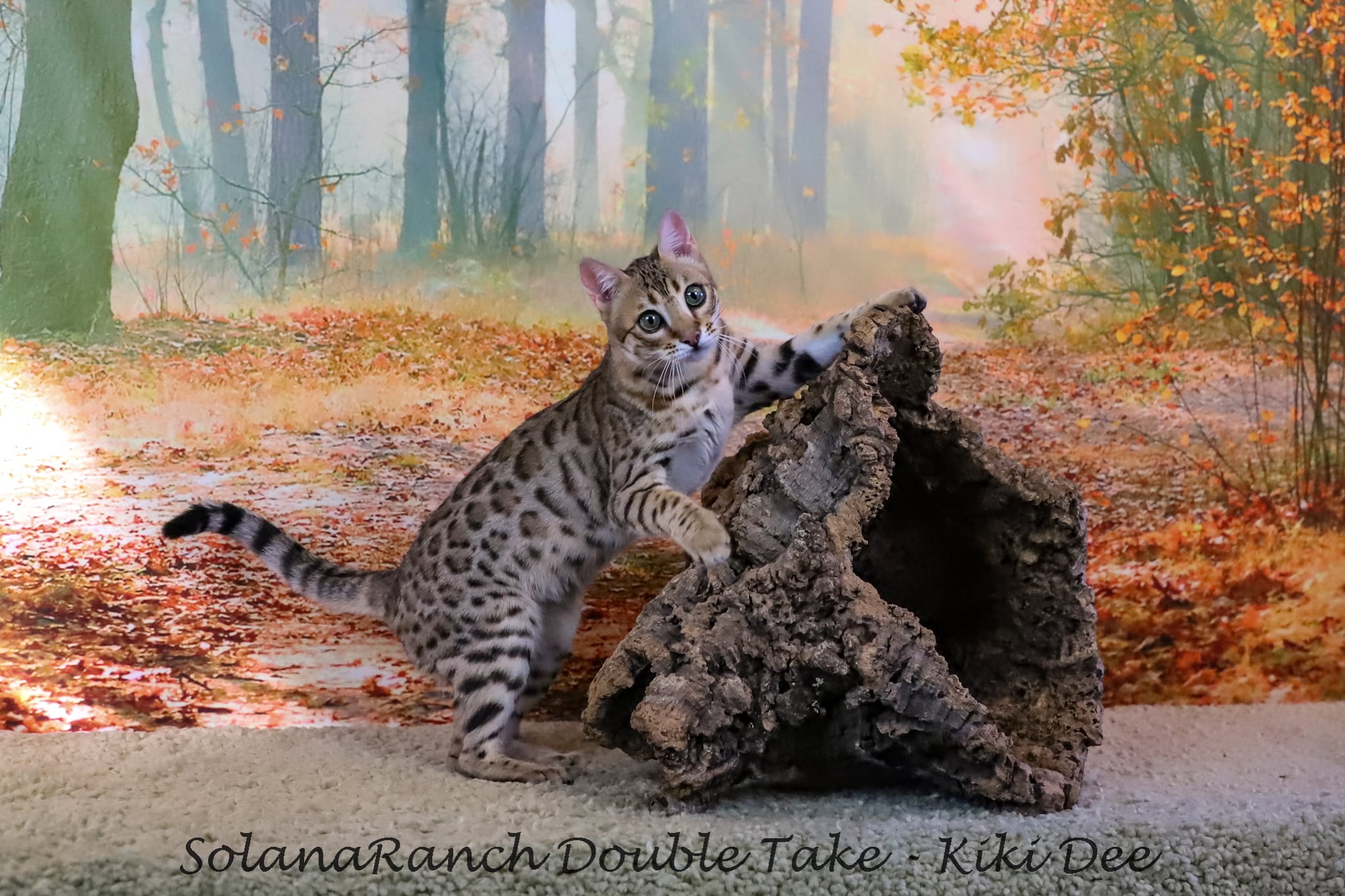 In the summer of 2022,
  Why A Variety of Proteins are Important
  Why We Recommend Viva Raw Pure (even though it is labeled incomplete)
  Why We Recommend NuVet Plus Feline Powder
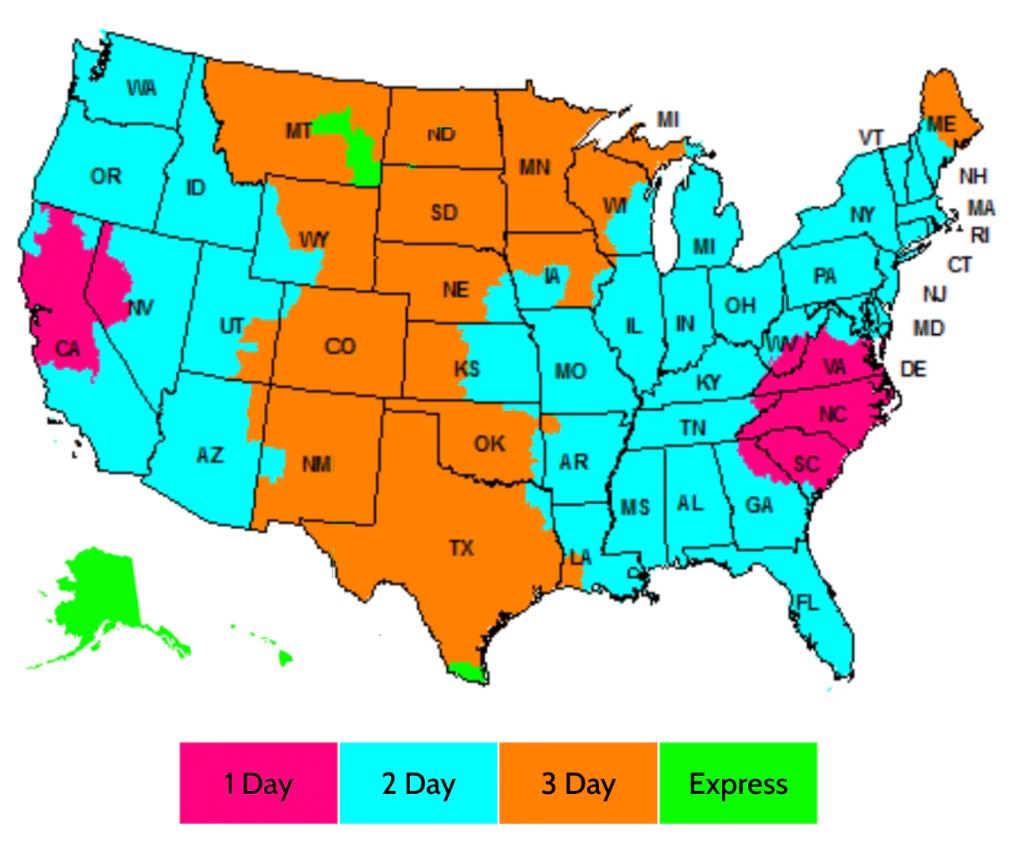 Viva Raw’s Shipping

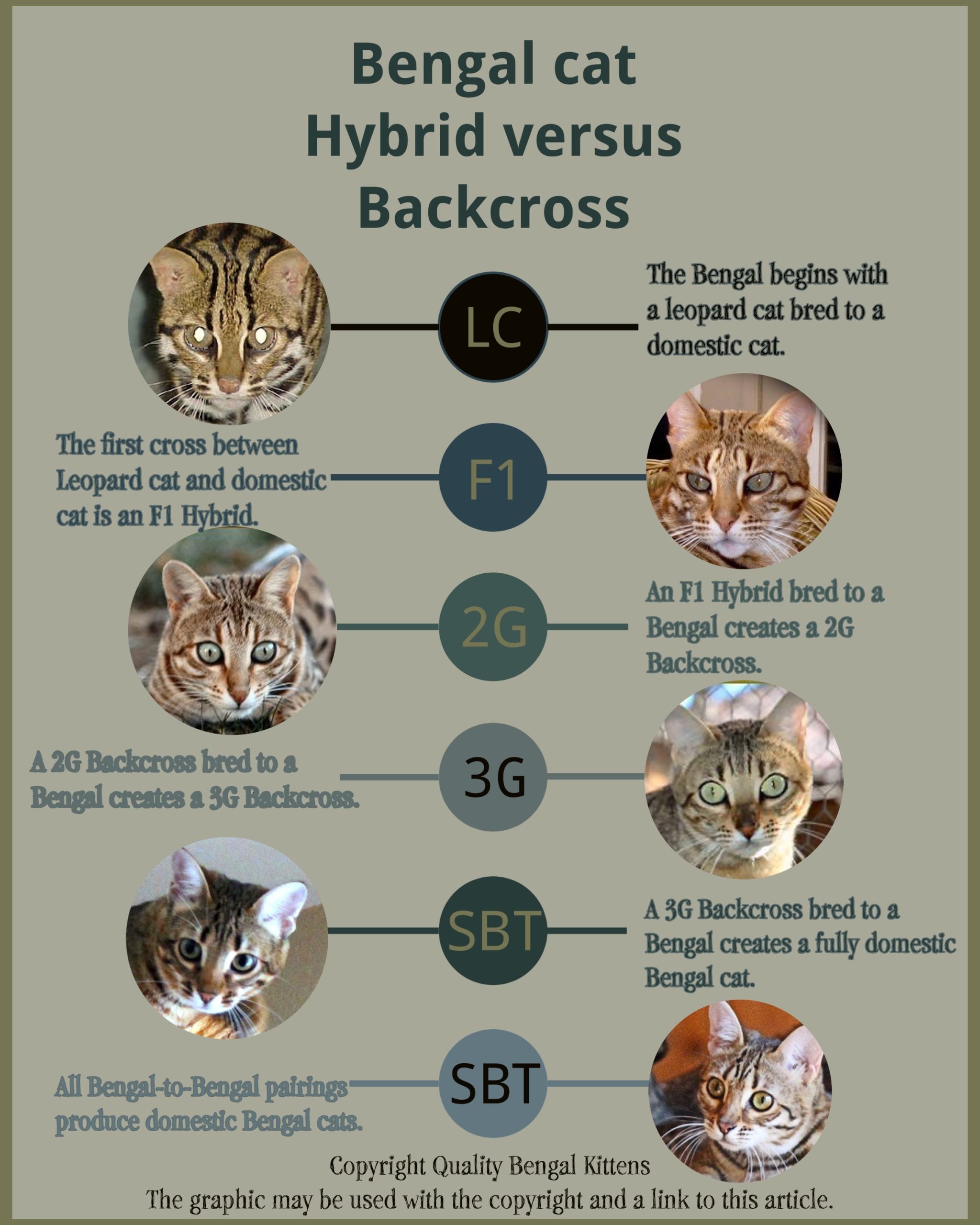 Hybridizing is when two different types of animals (species or breeds) are bred together. Hybridizing aims to combine the desirable characteristics of both types into a single offspring. The F1 Bengal is a hybrid; one parent is a leopard cat, and one parent is a domestic cat – often, but not always – a Bengal. To continue a line of hybrids, both genders must be fertile. F2 hybrids come from two F1 hybrids breeding together. This is not possible with the F1 Bengal hybrids.