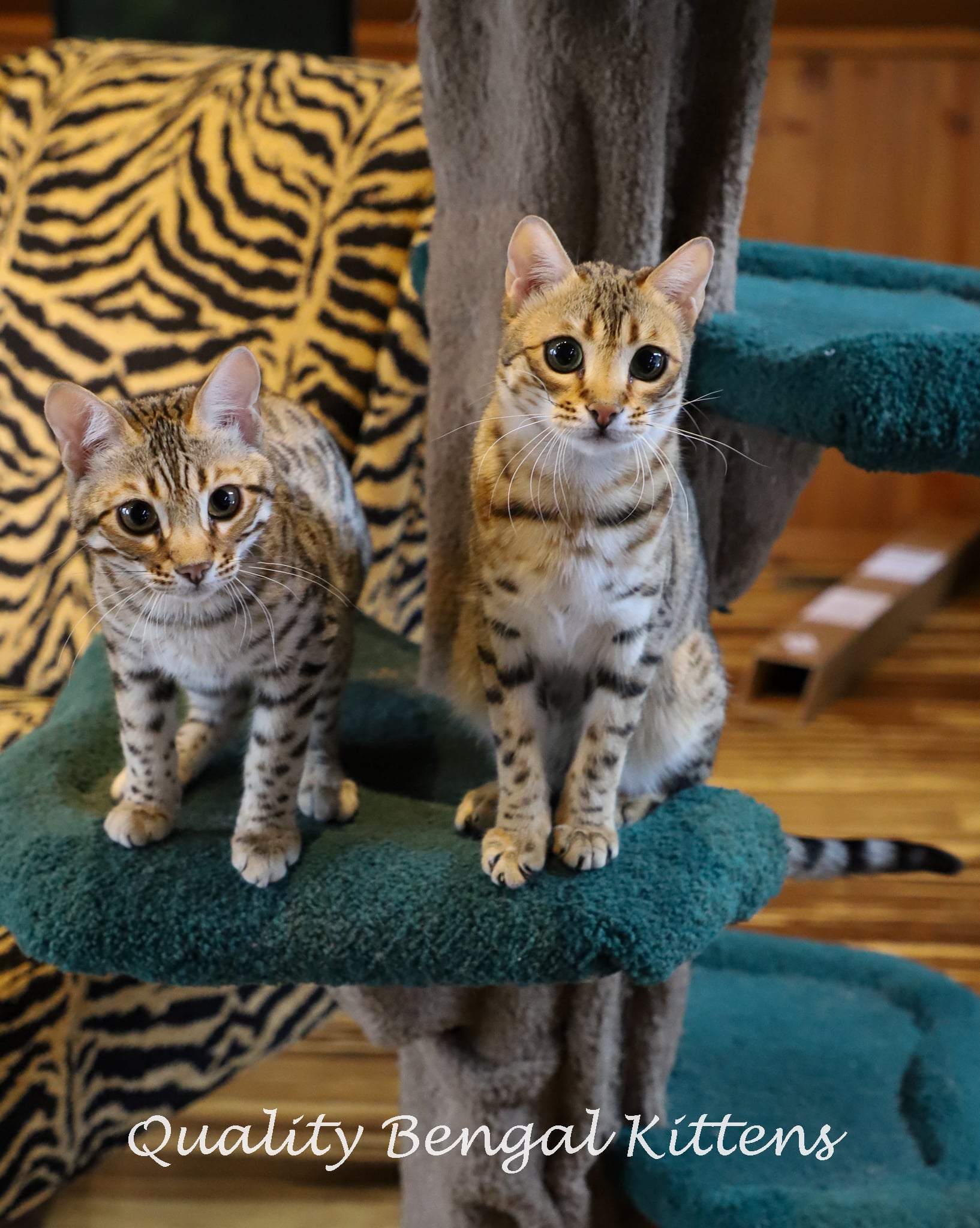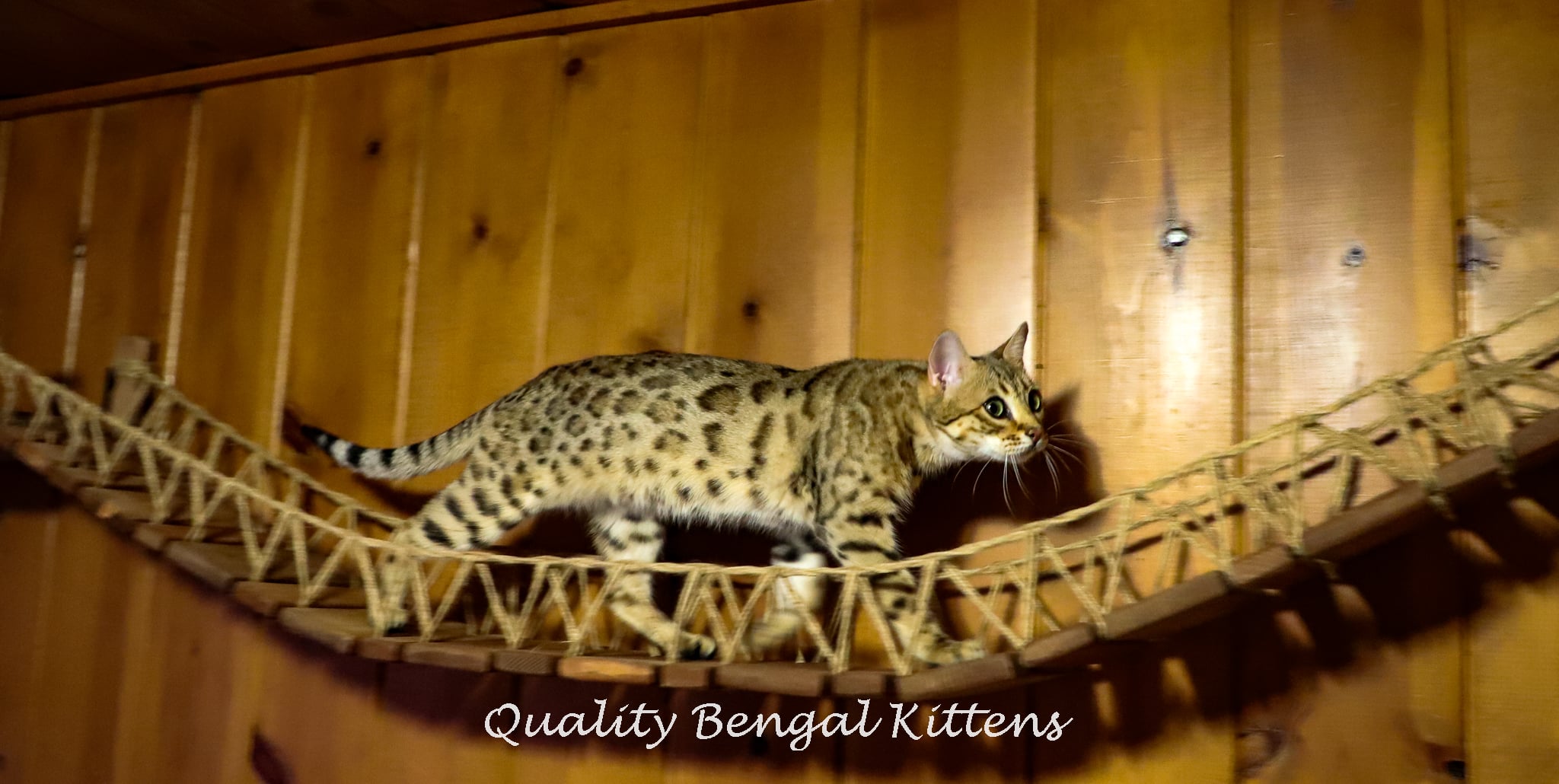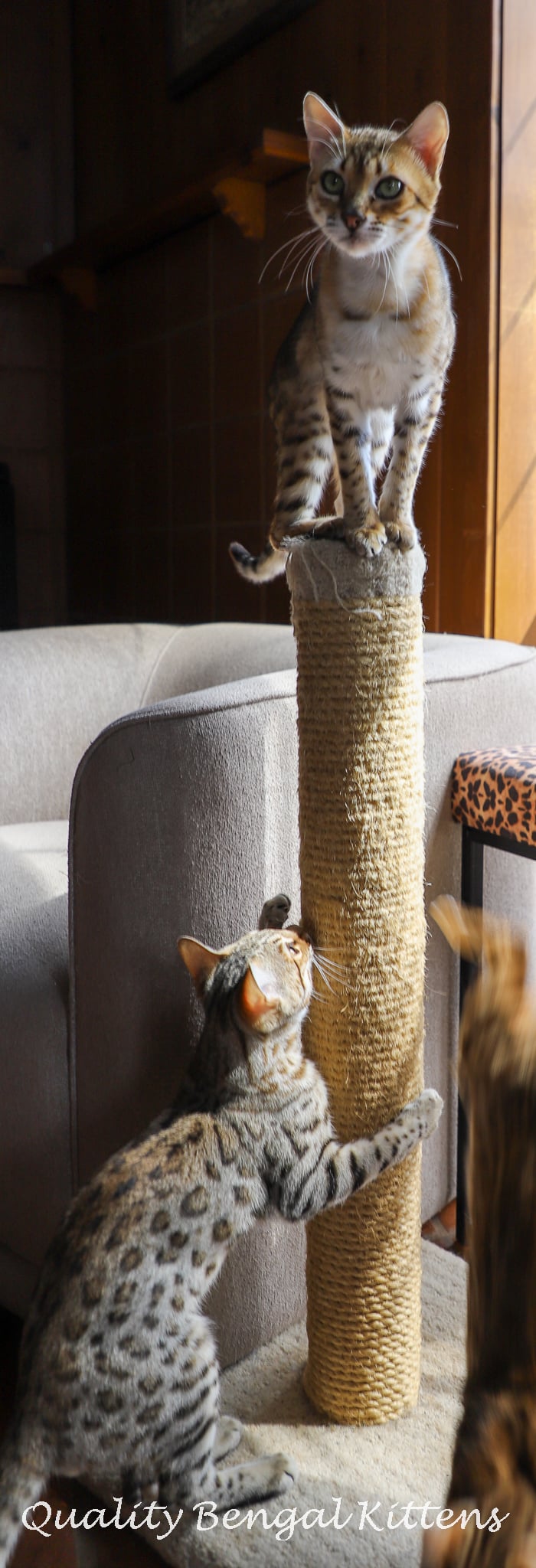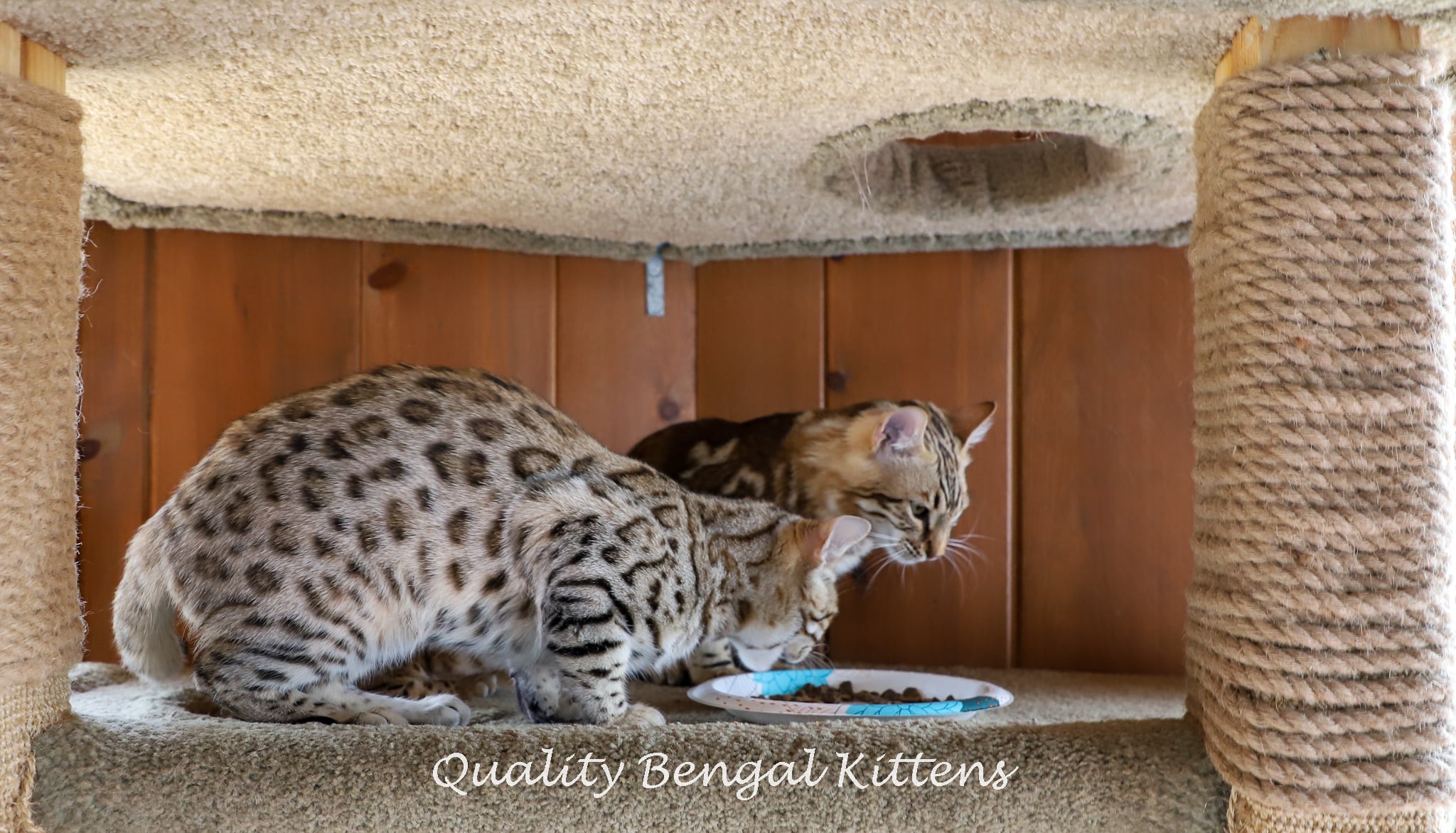
How to Create an Enriched Environment for Bengal Cats

by Robyn Paterson

The cause of most Bengal cat behavior problems is rooted in the cat’s routine, food, and environment. People often dismiss this as the cause because they play with the cat, but if it exhibits undesirable behaviors, the cat has a need that is not being met. Because Bengals are high-energy and intelligent, they require more attention than the average cat. Their needs are not different from other high-energy, intelligent cats, but not every cat in the world is a high-energy, intelligent cat. With the Bengal, these are breed-specific traits.

Domestic cats have not been domesticated long enough for their bodies to evolve to the luxury lifestyle. The same is true for humans. Humans are still designed for a hunter, gatherer lifestyle. The less our lifestyle emulates one of a hunter/gatherer, the more stress, anxiety, and depression humans experience. A cat’s body is built to hunt several hours a day over a relatively large territory. When we bring them inside and provide for them, we reduce the size of the territory; therefore, we must enrich that territory to make it mentally and physically stimulating for a cat. 

There are many different elements that create a cat’s environment and impact the cat’s physical and emotional well-being. The location and number of resources play a significant role in the willingness to use them. Having these resources is not enough; they must be positioned in a location that a cat would choose. Resource scarcity leads to competition in multi-cat households and creates territorial stress. Even in single-cat households, similar issues can arise; therefore, the environment must be rich in resources.
 
Does your home have enough vertical space for a Bengal?

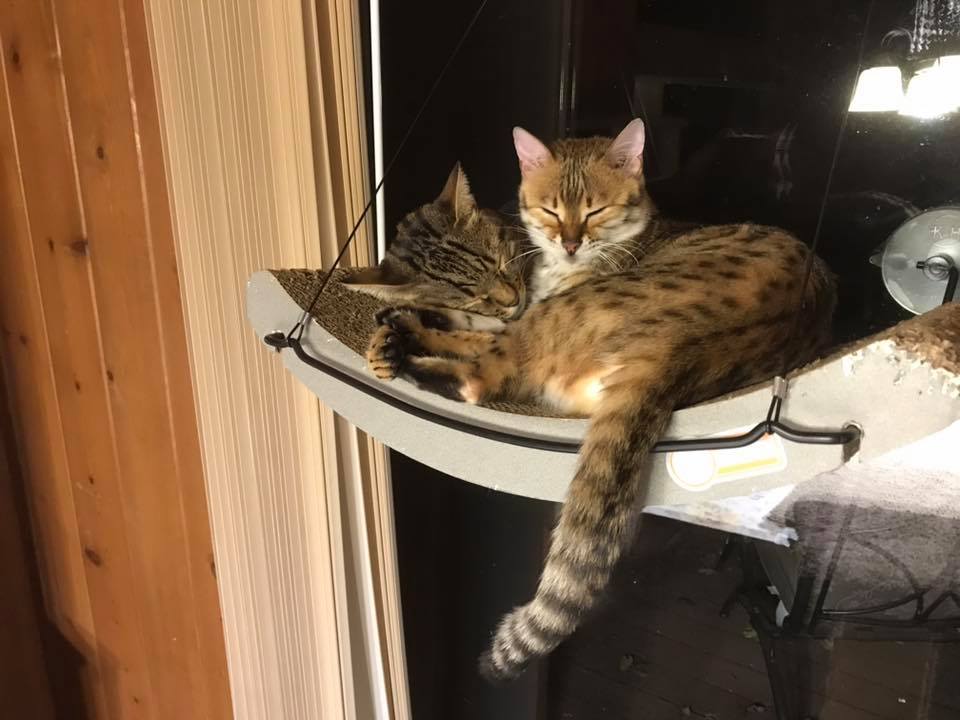
Because Bengal cats descend from a tree-dwelling cat, their need for vertical space may be higher than the average cat. A few short cat trees will not do. They need tall cat trees – to the ceiling or up to ten feet tall if you have the ceiling space. In addition, there should be shelving that helps them move around vertically. Pre-existing cupboards, bookcases, and other tall furniture can help you create a pathway in the sky for your cat. Window perches also make for great vertical space. 

The vertical space must be located in the rooms where the family spends the most time. Vertical space back in a laundry room where people go in for ten minutes to load or unload the laundry does not work—Bengals like to be where the action is.

There will be an increased need for vertical space if there are children or dogs in the house that the cat needs a break from.  

Do you have enough scratching posts for your Bengals?

When it comes to scratching posts, the more, the better. Experimenting with a few different types is important to see what your cat likes best.

Some cats like vertical scratching posts. They should be 2.5 to 3 feet tall, so the cat can stretch up and scratch. The base must be solid so the post does not move around much when the cat scratches. Cat trees can double as scratching posts, but having some stand-alone posts around the house is also good. Mobile scratching posts are necessary if your cat is scratching somewhere you do not want it to. You can place the scratching post near the object you do not wish to be scratched to give the cat an acceptable option.  

Other cats prefer horizontal scratching surfaces. Many horizontal scratching posts are made from different materials, such as cardboard, carpet, and sisal. It is essential the cat can stretch fully out while scratching. 

Do you have toys for your Bengal cat to play with on its own?

Toys are a must-have, but finding out what toys engage your cat is important. You want to keep interactive toys locked up tight so your Bengal cat does not get them out and destroy them when you are not around to play. With other cat toys, you must experiment to see what your cat likes. Many Bengal cats like toys made of natural fibers such as rabbit fur, deer hide, wool, and leather. Others want to chase a ball or a spring. Get an eclectic mix of toys and see which one are used the most. Then rotate the toys, so your Bengal does not becomes bored with them.

In addition to the standard cat toys, you should consider the following to enrich your environment.

Cat Wheel – Cat wheels allow your cat to walk or run as much as they want within a confined space.

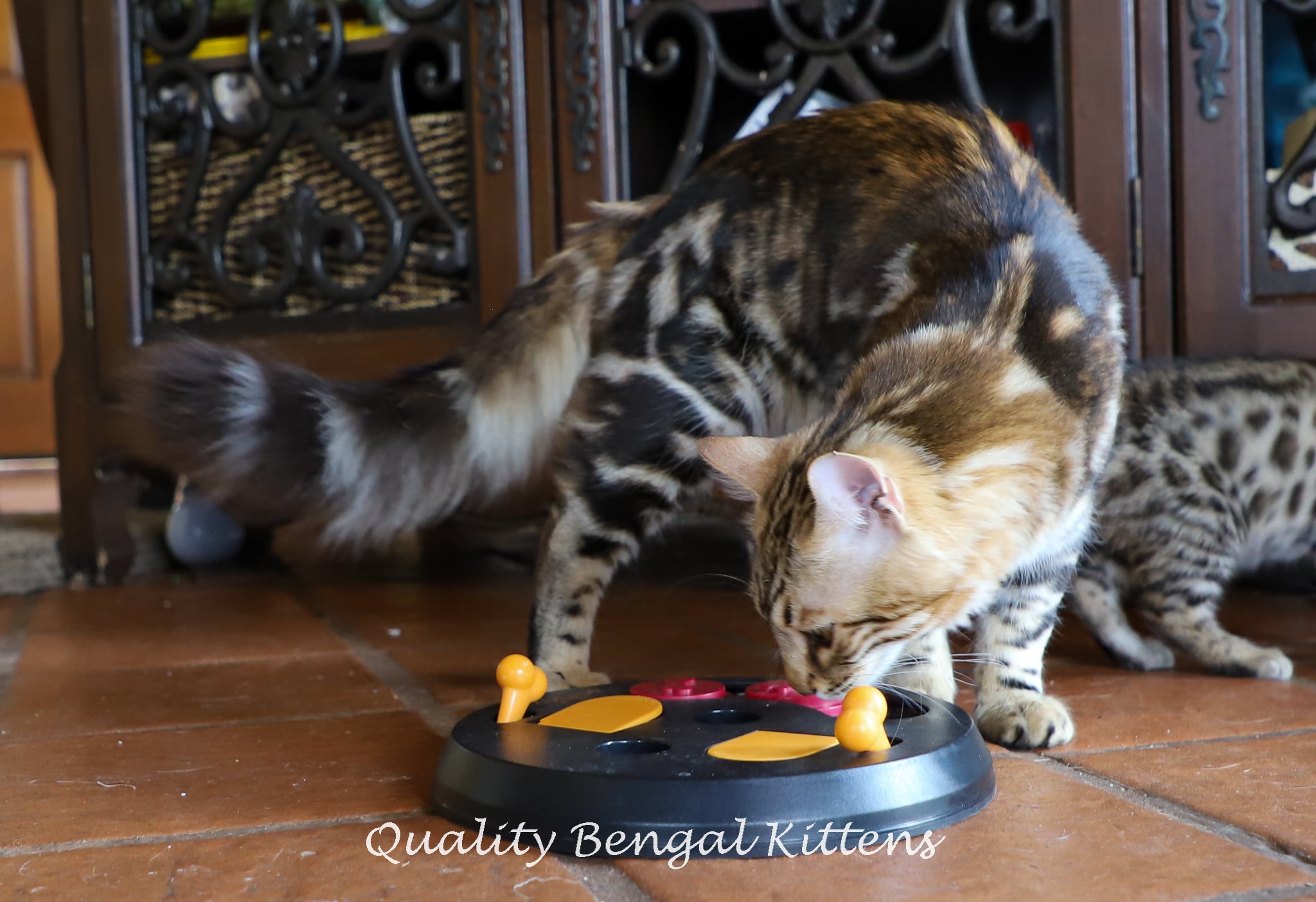
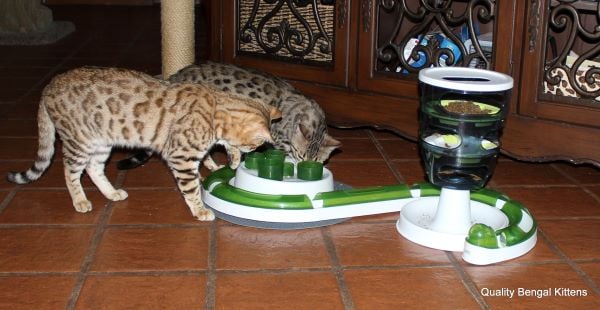
Puzzles – Puzzles provide a way to exercise a cat’s mind. When the mind is worked, the cat is content. Remember, rotating the puzzles, so your cat doesn’t become bored with them is important.

Cat Grass – Cat grass is a mental stimulant for your cat. Cats are attracted to the texture of grass and enjoy chewing on it. 

Aquarium or Outdoor Bird feeder – Aquariums and bird feeders also exercise the mind. Watching birds or fish safely separated from the cat stimulates the cat’s mind while keeping the birds or fish safe. 

Are your cat’s resources plentiful and in suitable locations?

Every cat needs a clean place to eat, drink, and deposit waste. The locations for all of these things are very important to a cat. 

First, all three locations must be separate from one another. Sometimes you’ll see an under-stairs closet transformed into a cat lounge with food, water, and a litterbox. While this looks cool, it is horrifying for the cat. Cats want all three of these items to be separated from one another.  

Most people know the basic litterbox location rules, but food and water locations are less universally understood. The layers of large cat trees make great food locations because they keep the food out of reach of children and dogs. Because cats are naturally individual feeders, use the different tiers of a cat tree to separate your food dishes for your cats, giving them the individualized space they prefer when eating. Keep the food away from any direct light or heat and air vent. This is also the case for water. Water is best located on the floor on waterproof flooring or with a waterproof mat underneath it.

Water needs to be kept separate from food because cats instinctively do not drink water that is near a food source to avoid potential contamination. While they will often tolerate the water bowl near the food bowl, it is just tolerance. This is not ideal. 

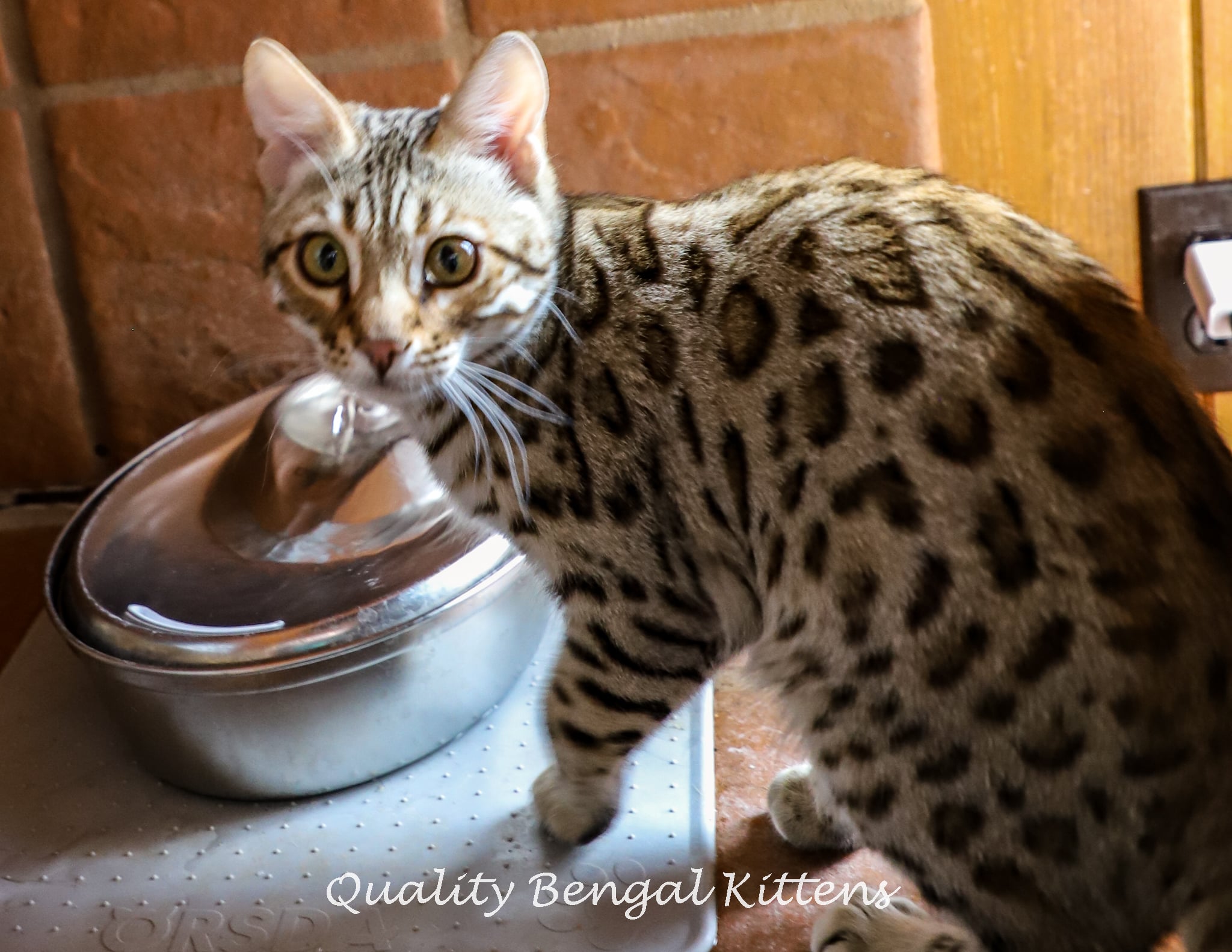
Bengal cats create a few challenges with water bowls because some like to play in them, and others want to pee in the water.   We have successfully prevented playing and peeing with the Orsada water fountain. The players don’t seem to be drawn to it because it is shallow, and the pee-ers aren’t attracted to it because they would get their privates wet in the process. 

Use food and water dishes that do not touch the cat’s whiskers as they eat or drink. Shallow dishes are better; any deep dish will force the cat’s whiskers to make contact. Some cats experience whisker fatigue, a sensory overload when their whiskers feel surfaces too often.  

In conclusion, creating a stimulating home environment for your high-energy, intelligent Bengal cat is important. This, however, is only one of the three most influential factors in Bengal cat behavior. You will also want to consider how and what you feed and establish a daily routine to eliminate unwanted behaviors. This article links to several other articles in our BLOG. If you are trying to resolve behavioral issues, you must read all the linked articles and follow all the advice to expect a behavior change. 


Are you thinking of getting a Bengal cat and want it to come with a lifetime of expert advice? Check out our available Bengal kittens.  
 

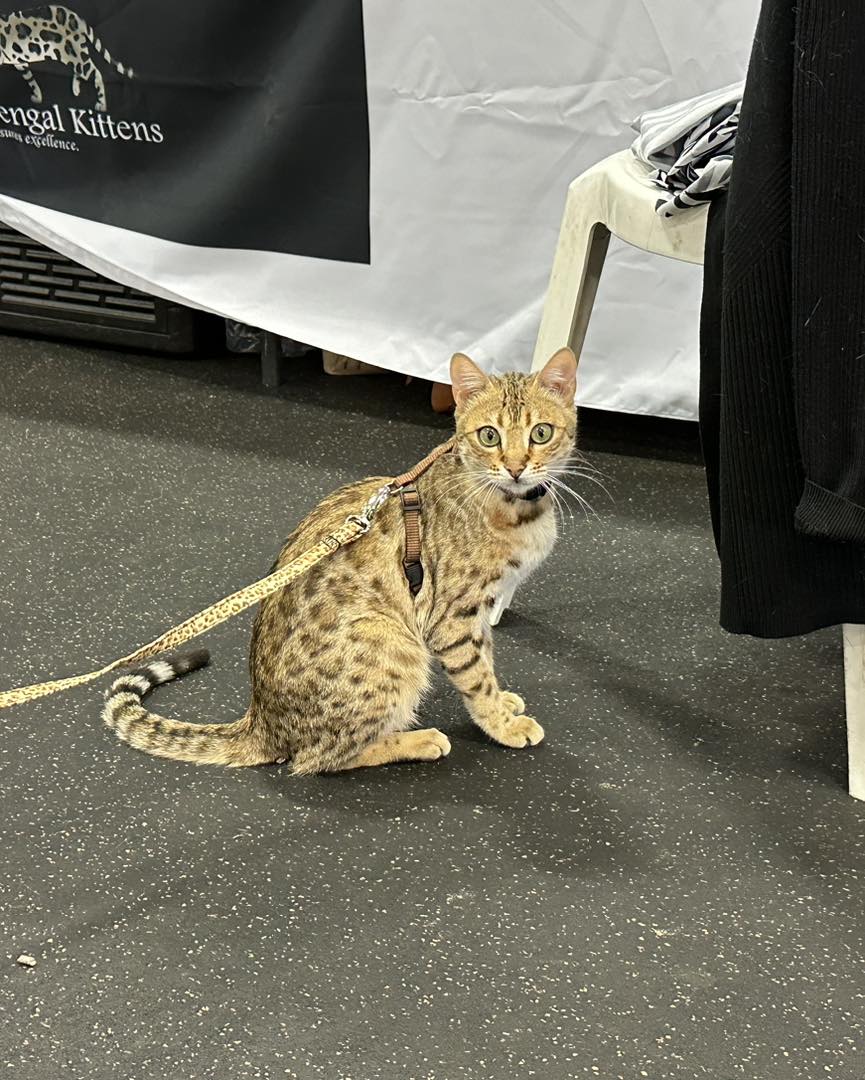
Are you looking for a Bengal to Harness Train? Here is what you need to know first.

How does one meet the needs of this type of cat?  
The easiest way to meet the needs of this type of cat is to have a high-energy, intelligent companion.  The companion does not have to be a Bengal, but getting another cat is the safest choice for a companion. The second cat must be cat-friendly and play-driven with an energy level to match your Bengal. In addition, a stimulating environment must be provided to keep the two entertained throughout the day. There is a lot of truth to the statement that two Bengals are easier than one.  They keep each other entertained, so you do not have to be the sole source of entertainment.

A small dog who is cat-friendly and who can be left out inside the home when the family is away can also work as a companion to your Bengal.  It needs to be a dog who will run around and rough and tumble with your Bengal for it to be a suitable companion.  If you are searching for a dog who will do this, you should work with a breeder who raises their dogs with cats and will be honest with you about their puppies’ personalities. 

Having a companion takes the pressure off of you to be the companion. 


How does one meet the needs of this type of cat without a companion pet? 
If you do not want a second pet but still want a confident, non-reactive, curious kitten who seeks human interaction to join you on your adventures, you must be committed to being the companion – the constant sidekick. You must put the recommended scheduled play on super drive.  When working with one of our cat parents on how to satisfy her cat, she ultimately landed on the following schedule:
5:30 – 6 AM: Play followed by breakfast
8:30 – 9 AM: Walk outside
10 AM: Treat puzzle toy
12 – 12:45 PM: Play followed by food on a lick mat
3 PM: Treat puzzle toy
6 – 7 PM: Outside time/play followed by dinner
Scattered play in between!

Before using this schedule, the Bengal, which is the only pet, was disconnected from its human, bored, and destructive.  Following this schedule resolved the problem. A cat cannot turn on and off its desire to be active and to interact at the will of its human family. A highly interactive cat who will joins in on adventures needs an abundance of daily interaction. Intense mental and physical stimulation cannot be limited to a weekend outing. 

Can I choose a kitten that is less needy for attention and still harness-train it? 
Yes, you can.  Picking a more independent kitten will alleviate some of the daily demands but requires more patience with harness training. It will take longer to achieve the ideal dream of walking our cat through the forest like one would walk a dog.  More independent cats tend to be more cautious of their surroundings.  These cats will move slower and want to assess their environment longer before becoming comfortable.  Independent cats will require more patience on your part and regular trips in the great outdoors before they can relax.  Plan to have a backpack, so the cat can be scooped up and placed in the backpack at any given time throughout the walk.


I still want a harness-trainable cat what do I do?
Weigh the pros and the cons and decide what is the best choice for you.  Is it easier and more fun for you to get two cats and create a stimulating environment and a routine schedule to interact with your cat, or would it be easier to remove all expectations and accept the slower pace of the cat’s training? 


Your family should also be a factor in this choice.  A family with young kids needs a cat with a dependent, people-centered personality, as it will put up with child antics as long as it is getting attention.  However, a home with one or two adults often has the patience and desire for a more independent cat – which often bonds very deeply with one or two people. 

What is really important is that you can determine which personality is best for you, so we can help you pick the right kitten.  Getting a Bengal cat is a 15-20-year commitment; we want to send you home with the right kitten for you when you make such a big commitment. 

When people are interested in harness training, we send The Zen of Cat Walking by Clifford Brooks home with your kitten. This gives you expert guidance on how to work with your cat – regardless of its personality. 

Whatever you decide, we work to match you with the best fit.  Let us know your preference on the dependency scale in your Bengal Kitten Application.  Are you leaving towards dependent or independent? This will help us help you pick out the right kitten for your home. 


Choosing the Right Breeder Helps You Find the Perfect Bengal: How Breeders Impact Personality.

A fellow Bengal breeder faced a dilemma.  She raised Bengals because she wanted to share the joy of these beautiful cats with others.  As usual, her clients picked out their kittens while they were young. As the kittens developed, she noticed that one of the boys was not developing the personality she prided herself in offering her clients.  She diligently worked to bring the shy kitten out of his shell – having him play with her children, around the dogs, with the littermates, household visitors, and extended family members, but the kitten never became bold.  His personality was, by nature, shy. As the kittens’ departure date approached, she grew weary.  This kitten did not epitomize what she wanted to provide for her clients. So she did what every well-intentioned breeder would do.  She offered the family her sweet-natured keeper kitten and kept the shy one for herself, not realizing how the selfless act would affect all of her future kittens when using the shy male as her sire. 

Undesirable cat behavior adversely affects the owners’ satisfaction with their cats and their cat’s welfare (Powell et al.). Several factors, including genetics and in-utero stress, affect physical and psychological development long before a kitten is born (“Kittens”). Once a kitten is born, there are learned behaviors that kittens pick up on from their mother’s reactions to all the stimuli inside of a home – food, other cats, dogs, humans, and everyday household activities.  Because personality and behavior significantly influence a cat’s quality of life and one’s relationship with one’s cat, when searching for a new kitten, you want to find out just how each breeder you inquire with makes the right choices to have the personality you want. 

Before Kittens Are Born

Breeders’ selection of breeding stock directly affects their future kittens’ personalities and behavior. To begin with, both the mother and the father establish the kittens’ emotional capacity, which is their ability to manage their reaction to new situations and even to the body language of other cats, dogs, and humans. While research has not yet determined whether or not cats have self-awareness of emotions, they have a spectrum of abilities to manage and understand the feelings of others, which has been directly connected to the parent’s ability. Breeders should be breeding adult cats who demonstrate emotional resilience – the ability to dissipate emotions (Cats.com Editorial Team). It is best to work with cats that observe without reacting and ultimately avoid danger or conflict. When the parents pass down emotional resilience, their kittens have the emotional capacity to become well-adjusted house cats. Kittens who do not inherit a large enough capacity for emotional resilience cannot learn to become good house cats. Dr. Sarah Heath compares a cat’s emotional capacity to a sink.  Sinks come in different sizes. The parents of each cat determine what size sink they are born with.  If their sink is too small, no amount of training can build a cat’s emotional resilience beyond what the sink can hold, which is why some feral cats are domesticable and others are not. They have different sink sizes and different capacities to build emotional resilience. 

The sire strongly influences his kittens’ personalities, demonstrating a vital genetic component. While a fellow breeder had told Jon about the male’s influence on behavior, we experienced it firsthand around 2014.  In 2013, we borrowed our friend’s stud – the one kept because he was too shy to go to a pet home.  We used this boy with a few of our girls while our two new studs matured. We found that the kittens took a lot of work to socialize because they lacked confidence.  The following breeding season, our new boys – BeauxMondes Home of the Brave and Vividcats Deuces Wild – were ready to breed.  When the two bred with the same females, the kittens were naturally confident and easy to socialize. Having this back-to-back experience of working with a male who ended up being a breeding cat because he was not considered friendly enough to be a pet cat, followed by breeding two males who were both confident and friendly, opened our eyes to just how much the sire affects the personality of the kittens. 

We have since learned that research backs up our experience.  Sires influence the boldness trait in kittens (Heath). Boldness is defined as “The genetic contribution to friendliness towards people in cats…; a general response to unfamiliar or novel objects irrespective of whether or not the objects are people” (McCune 109). Boldness determines not only a cat’s friendliness level but also a cat’s reactions to new experiences. In a study on friendliness in cats, “cats from the friendly father were quicker to approach, touch, explore and remain in close contact with the novel object than were cats from the unfriendly father” (McCune 109). We have seen this correlation in the males we have used over the years.  However, friendliness and reactivity are not necessarily connected.  For example, we have one male who predominantly produces very friendly kittens, but they are not comfortable in new environments. Quality breeding requires being aware of and documenting traits that are passed down so one does not inadvertently layer up on less desirable characteristics. If, for example, a sire creates kittens who are uncertain in new situations, it is not advisable to breed his daughter to another sire who produces kittens with a similar trait.   

Both parents determine emotional capacity – or size sink the kittens must work with.  The sire predominantly controls personality – where the kittens fall on the shy-to-bold spectrum. However, the mother cat has the most decisive influence on behavior. During pregnancy, the queen’s stress level affects the kittens’ hypothalamic-pituitary-adrenal (HPA) axis, which, in turn, affects the sensitivity of the kittens’ HPA axis and their ability to manage stress (Smith and Vale). This clarifies just how the female contributes to her kittens’ emotional resilience. If a mother cat feels safe, she will produce appeasing pheromones both in utero and after birth (Heath). Recalling Dr. Health’s analogy of the parents determining the size of each kitten’s sink of emotional resilience, the kitten will receive a smaller sink if the mother is stressed during pregnancy. In addition, if a fetus is exposed to a stressor after adrenocortical maturation occurs, “subsequent adrenocortical responses to stress might… increase” (Bain and Buffington). Therefore, the mother contributes to a kitten’s emotional health by affecting both the capacity for emotional resilience and the quality of the kitten’s HPA axis. 


After the Kittens Are Born

Once the kittens are born, the mother continues to affect their behaviors. From the queen, kittens learn essential aspects of behavior, such as food acceptance, toileting habits, and fear responses to other species – including people and dogs (“Kittens”). In feral situations, the kittens need a mother to demonstrate protective emotions to increase their chance of survival. Kittens need to learn to fear the unknown for their safety.  However, we want the exact opposite in domestic cats.  We do not want a mother to exhibit protective emotions when exposed to situations they will experience in a typical home, including the presence of humans, dogs, and everyday household noises. The kittens will mimic their mother’s behavior in new situations.  Ideally, breeders work with mothers who model good behavior and do not release stress pheromones. If a breeder works with a mother who will not exhibit desirable behavior, the mother should not be present when the kittens are introduced to new experiences. 

Trauma in early life can affect a cat’s emotional and physical health later in life. Unfortunately, the full effect of this trauma is not seen until cats are typically two years of age.    All experiences the kittens have in their breeders’ homes factor into the cat they will grow up to be. To begin with, it is essential that kittens live inside of a home so they are exposed to ordinary domestic experiences. We want the dishwasher, vacuum, TV, kid noise, the existence of dogs, and strangers coming in and out to be typical experiences for kittens before they join the home of their new family (Heath). 

Ideal kitten socialization is a lot of work.  Cats are not naturally social; they are obligatorily social (Heath).  If the cat is not in control, it does not feel safe; thus, it is the breeder’s job to slowly alter this instinct within the kittens. Kittens need to be touched all over, lifted frequently, and gently restrained, all of which are unnatural for a cat (Heath). Before the kittens are seven weeks of age, they must be handled by a minimum of five different people, not just their breeder (Heath). This presents a challenge as kittens do not typically receive a vaccine before eight weeks of age, so the breeder must be able to trust the cleanliness of those handling the kittens.  They should not be people who work with large populations of cats. Breeders should expose the kittens to new situations that allow them to grow their emotional resilience.  However, this must happen in ways that encourage the kitten to engage with the new stimuli instead of fleeing or fighting. For example, the kittens should meet new adult cats, dogs, people, etc., but they need to do this in a way that they learn to face new experiences, not flee from them. Establishing and maintaining a correct feline environment for kittens’ first 14 weeks does wonders for their emotional development, making the cats happier and healthier throughout their lives. 


What Does This All Mean?

When looking for a new kitten, select the breeder first, then the kitten.  People typically choose their pets based on appearance and availability without considering how the breeder’s choices affect the kitten’s ability to form a relationship. While appearance is important, personality and behavior affect a cat’s quality of life, particularly whether it is rehomed. One advantage of buying a pedigree pet is that it is bred for purpose.  What is a cat’s purpose? To be a lovable household companion. When rescuing a kitten, it is expected to accept the risks of not knowing the parents’ genetics or how the upbringing will impact behavior, but pedigree cats should not have the same risk.  

When interviewing breeders, ask how they prepare their kittens to be well-adjusted, happy pets.  Listen to their answer.  Does their answer explain:

  • How their choice of parents increases the kittens’ capacity for emotional resilience
  • How the sire increases the boldness factor
  • How the dam models positive reactions to stimuli
  • How the breeders raise kittens in a home (not a garage, shed, cattery, etc) so the kittens experience home life
  • How the breeder exposes the kittens to unnatural experiences that house cats must learn to enjoy: being touched, held, restrained

Even well-intentioned breeders can make mistakes that affect the entire lives of kittens when they do not understand how genetics and socialization shape the confidence and behaviors of cats. 

Works Cited 

Bain, Melissa, and Tony Buffington. “Stress and Feline Health – PMC.” National Library of Medicine, Veterinary Clinics of North America: Small Animal Practice, 27 April 2020, https://www.ncbi.nlm.nih.gov/pmc/articles/PMC8801065/. Accessed 27 December 2023.

Cats.com Editorial Team. “Do Cats Have Emotions?” Cats.com, Cats.com, 14 April 2023, https://cats.com/do-cats-have-emotions. Accessed 27 December 2023.

Heath, Sarah. Preparing Kittens for the Domestic Setting. Online Breeder Conference. Crazy Cat Vet, 16 December 2023.

“Kittens.” AAHA, American Animal Hospital Association, 2023, https://www.aaha.org/aaha-guidelines/life-stage-feline-2021/behavior-and-environmental-needs/kittens/. Accessed 27 December 2023.

McCune, Sandra. “The impact of paternity and early socialisation on the development of cats’ behaviour to people and novel objects.” Applied Animal Behaviour Science, vol. Volume 45, no. Issues 1–2, 2000, pp. 109–124. Science Direct, https://www.sciencedirect.com/science/article/abs/pii/016815919500603P?via%3Dihub.

Powell, Lauren, et al. “Understanding feline feelings: An investigation of cat owners’ perceptions of problematic cat behaviors.” Applied Animal Behaviour Science, vol. Volume 266, no. September, 2023. Science Direct, https://www.sciencedirect.com/science/article/abs/pii/S0168159123001971. Accessed 27 Dec 2023.

Smith, Sean, and Wylie Vale. “The role of the hypothalamic-pituitary-adrenal axis in neuroendocrine responses to stress.” National Library of Medicine, Dialogues in Clinical Neuroscience, 8 Dec 2006, https://www.ncbi.nlm.nih.gov/pmc/articles/PMC3181830/. Accessed 27 December 2023.


Bringing a Bengal Kitten into a Home with Other Cats: What You Need to Know

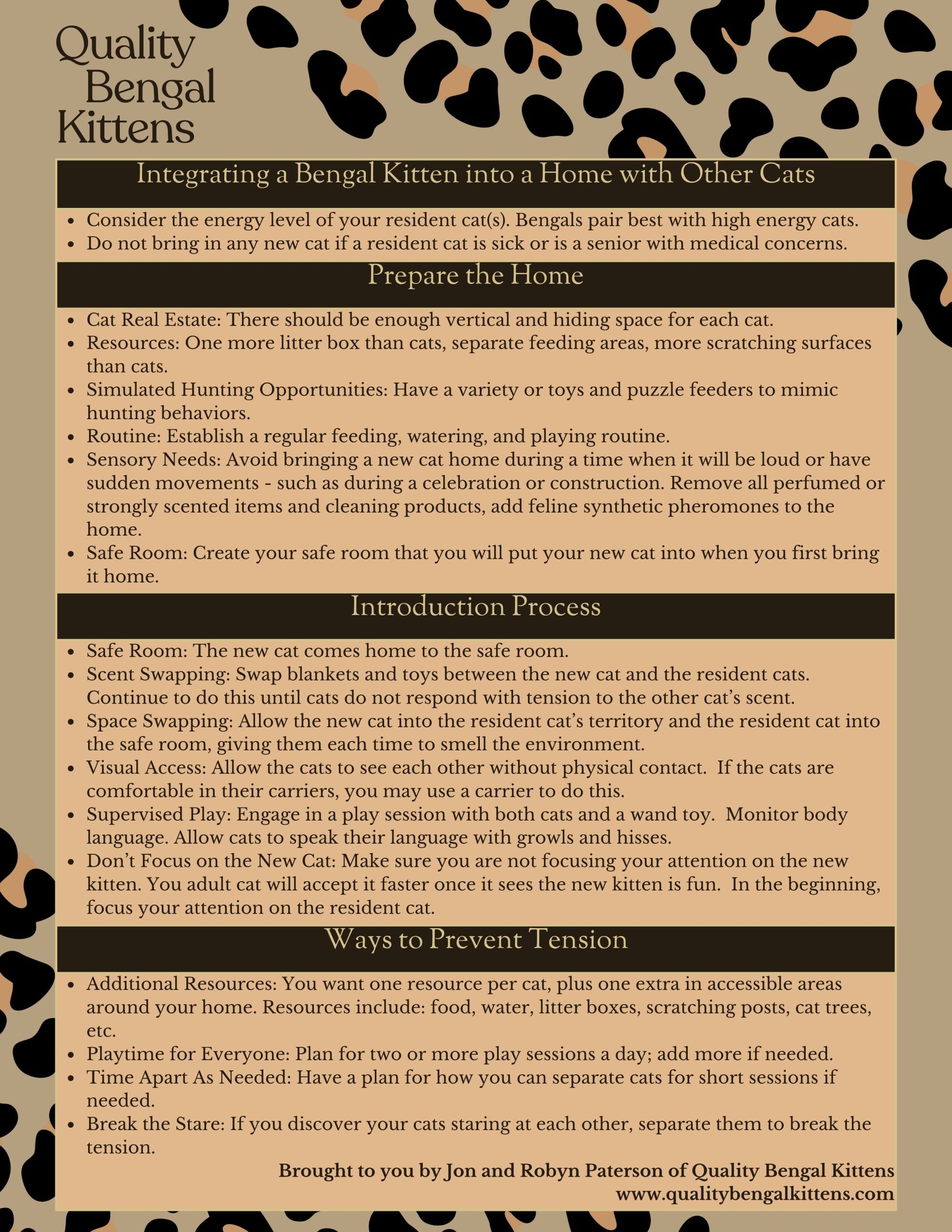
Bringing home a new Bengal kitten is exciting. Careful preparation is essential for a smooth transition when you already have resident cats at home. Like other high-energy and intelligent cats, Bengals thrive when introduced with the right knowledge and approach.

Before Bringing A Kitten Home

Before deciding to bring a Bengal into your home, you must ensure your existing cats are healthy and active enough to interact positively with a high-energy companion like a Bengal. Bengals thrive on play and mental stimulation and generally do best with other cats that can keep up with their active lifestyle. Introducing a Bengal to a low-energy or senior cat may lead to frustration for the Bengal and discomfort for the more laid-back or senior cat. According to certified cat behaviorist, Pam Johnson-Bennett, it’s important to consider the energy levels of cats in a multi-cat household to avoid stress and potential conflicts. Cats with differing activity levels often struggle to harmonize because their play and social needs are incompatible. For Bengals, having a companion with a similar energy level helps meet their social and physical needs, preventing boredom.

Preparing Your Home for a Bengal Kitten

When preparing your home for a Bengal cat, space is key—not just physical space, but mental stimulation too. Bengals thrive in environments where they can explore, climb, and play. Ensure your home has vertical spaces like cat trees or shelves to allow them to exercise and satisfy their curiosity. Interactive toys and regular play sessions are essential for engaging their intelligent and active minds. Bengals love to climb, so creating height is just as important as floor space when preparing for their arrival. For further details on how to set up your home for a Bengal, please read “Do I have enough space for a Bengal cat?”.

Like any new cat introduction, setting up a safe room is key. This gives your Bengal kitten a dedicated space to adjust without feeling overwhelmed by the presence of resident cats. In this room, provide resources such as food, water, a litter box, scratching posts, and toys. Before your kitten comes home, you must create your Safe Room by following the guidelines in The Safe Room and the Integration of Your New Bengal Kitten.

Removing potential hazards such as toxic plants, exposed electrical cords, and heavily scented items is crucial when preparing your home for a Bengal cat. Many common household plants like lilies, philodendrons, and pothos are toxic to cats and should be kept out of reach or removed entirely. Being naturally curious, Bengals will likely chew on things they shouldn’t. Secure electrical cords with covers or hide them behind furniture to avoid accidents. Additionally, strongly scented items, such as air fresheners or cleaning products, should be avoided as cats have sensitive respiratory systems.  

Synthetic feline pheromones can greatly ease your Bengal’s transition into a new environment. These pheromones mimic the natural ones cats produce, helping them feel calm and confident during stressful situations. According to certified cat behaviorist Rachel Geller, synthetic pheromones can be particularly helpful in reducing stress and anxiety during the transition to a new home when cats are bound to feel insecure. 

Introducing Your New Bengal Kitten to Resident Cats

The introduction process should always start with scent, not sight. Begin by swapping bedding or soft toys between the new kitten and the resident cats, allowing them to become familiar with each other’s scents. As the “Step-by-Step Guide” explains, this gradual introduction reduces stress and builds familiarity. Before progressing to more direct interactions, ensure no signs of tension, like hissing or growling.

Visual access is an excellent next step. Use barriers like screens or baby gates to let the cats see each other without direct interaction. Positive reinforcement through treats and toys will help the cats associate each other’s presence with good experiences. Supervised playtime, where the Bengal and resident cats can engage separately but within sight of each other, helps diffuse tension. Final integration should involve short, supervised visits in a large room where the cats can interact freely. Play with them with a wand toy so they have something to focus their attention on other than each other. Monitor body language closely; any signs of aggression or fear should prompt you to slow the process down. 

When introducing two cats, it’s important to remember that vocalizations, such as hissing or growling, are normal and part of the process. These sounds are the cats’ way of communicating their feelings of uncertainty or establishing boundaries. While these vocalizations may seem concerning, they don’t necessarily indicate aggression and are often a natural part of cats getting to know each other. Do not intervene if the cats are vocalizing to one another. 

Maintaining Harmony in a Multicat Household

Contrary to the common belief that cats are solitary creatures, research has shown that many cats enjoy companionship and thrive in social environments. While cats may have a reputation for being independent, they are highly adaptable and can form strong bonds with other cats and humans. For instance, cats living in groups often engage in social behaviors such as grooming each other, playing together, and sharing spaces, which contribute to their overall well-being (“Are cats Solitary”). Cats do enjoy the company of other cats. 

However, maintaining harmony in a multi-cat household requires providing sufficient resources and managing play and interaction. One of the most common causes of tension between cats is competition for resources, such as litter boxes, food, water bowls, and hiding spots. Ensuring that there are enough resources for each cat—ideally one of each per cat, plus one extra—and spreading them out throughout the house helps prevent territorial disputes and stress.

Daily play sessions are another important tool for reducing tension. Playtime allows high-energy cats to release their energy healthily, preventing them from redirecting their frustration onto other cats in the household. Make sure to break up any staring contests by placing a barrier or using distractions such as toys. Staring often results in aggression; preventing conflicts before they start is best. If tension occurs, temporarily separating the cats with access to their own resources can help them calm down and reset​.

In conclusion, bringing a Bengal kitten into a home with other cats is most successful when there is preparation and a gradual introduction process. By using the proper introduction techniques, you can ensure a smooth transition for all your pets. With the right balance of patience, knowledge, and attention to each cat’s needs, you’ll create a peaceful and harmonious multi-cat household where your Bengal can thrive.

Works Cited

“Are Cats Solitary? Debunking Myths about Feline Social Behaviors.” Isaac Mewton, https://isaacmewton.net/feline-social-behavior/. Accessed 29 Sept. 2024.

Geller, Rachel. “Feline Pheromones: The Science Behind Them.” Fear Free Happy Homes, 2024, https://www.fearfreehappyhomes.com/pheromone-science/. Accessed 29 Sept. 2024.

Johnson-Bennett, Pam. “Introducing a New Cat or Kitten.” Cat Behavior Associates, https://catbehaviorassociates.com/introducing-a-new-cat-or-kitten. Accessed 29 Sept. 2024.

“Step-by-Step Guide: How to Introduce a New Cat to Other Cats in Your Home.” American Association of Feline Practitioners, 2024, https://catvets.com/resource/2024-intercat-tension-guidelines/  Accessed 29 Sept. 2024.

Bengal Breeders: Know the Facts About How Mislabeling Affects Shelter Statistics

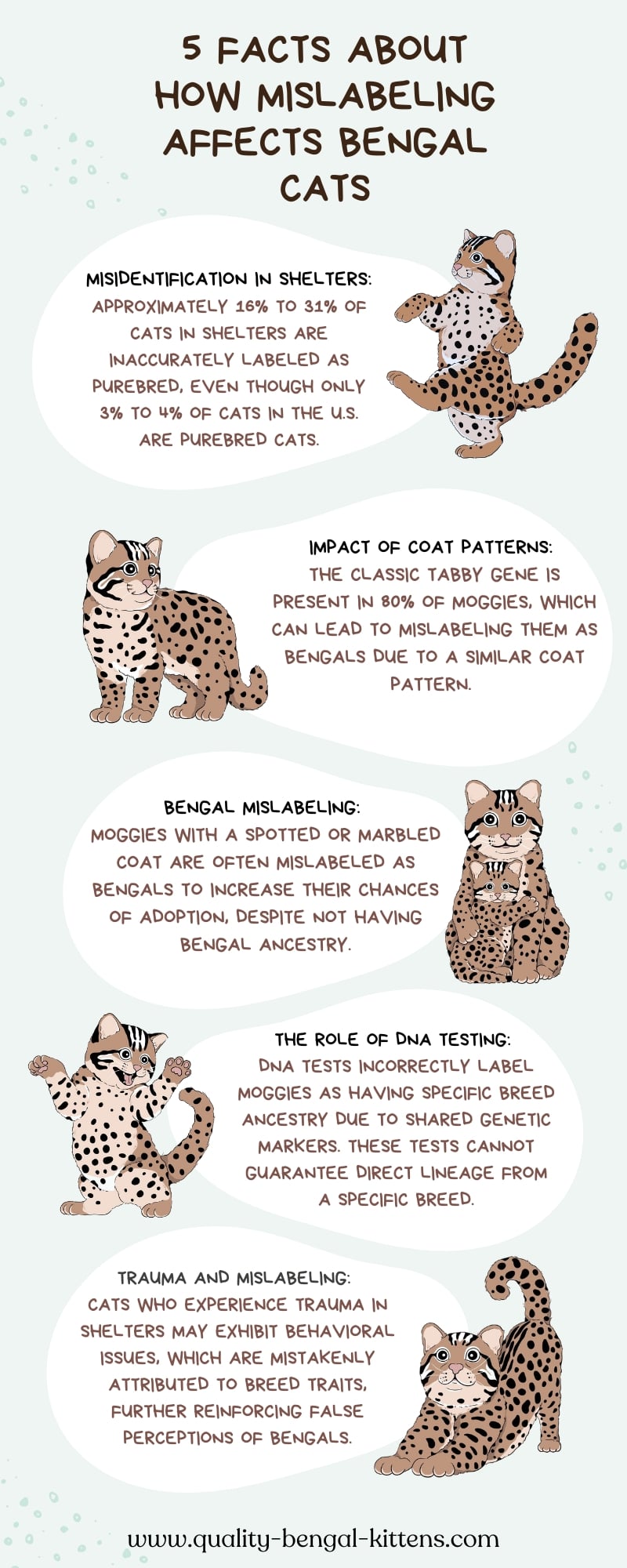
Regarding Bengals, there’s a persistent and misguided belief circulating that Bengals frequently end up in shelters due to behavioral issues, making them poor pets. This assumption, however, is based on a series of misunderstandings. One of the most significant contributors to this misconception is the frequent misidentification of cats in shelters. As a result, statistics about purebred cats, including Bengals, are often wildly inaccurate, leading to the false perception that Bengals are commonly abandoned. Misidentification, along with flawed DNA testing, has distorted the reality of how many Bengals truly end up in shelters. This misconception needs to be addressed so Bengal breeders are armed with facts.

Misidentification of Pedigree Cats in Shelters

To address this misconception, it’s essential to first understand the actual proportion of cats purchased from breeders. In the United States, only 3% to 4% of cats are purchased from breeders, according to both the American Pet Products Association and the AVMA. Globally, this percentage is only slightly higher, hovering between 3% and 6% (“Pets by the Numbers”). Despite the small proportion of cats that are purebred, shelters often report a high percentage of “purebred” cats. So, how do these numbers make sense? The explanation lies in how shelters identify cats, where misidentification plays a considerable role.

One of the most significant issues is that 16% to 31% of cats in shelters are labeled as purebred (“Pets by the Numbers.”). This is an obvious discrepancy when compared to the small percentage of breeder-purchased cats. As Smithsonian Magazine points out and The Humane Society confirms, shelters frequently misidentify the breed of cats and dogs based on appearance alone, significantly overestimating how many purebred animals are in shelters (“Pets by the Numbers”). With Bengals being a popular breed known for their appearance, the chances of misidentification are even higher. From 1993 to 2021, Bengal cats were The International Cat Association’s most registered breed. This popularity increases the likelihood of a domestic shorthair with no pedigree cats in its genetics being mislabeled as a Bengal. 

The Bengal’s coat patterns play a significant role in why they are frequently misidentified. While Bengals are known for their coats, which can be spotted or marbled, these coat patterns aren’t exclusive to Bengals. Many domestic shorthairs or mixed-breed cats naturally develop spots. Shelters that rely on visual traits alone often categorize any cat with spots as a Bengal, even if they don’t have Bengal ancestry. This mislabeling is even more likely when it comes to the classic tabby gene, which is present in approximately 80% of mixed-breed cats (“Tabby Cat”). This gene, responsible for the circular pattern on many tabby cats, can resemble the marbled patterns of a Bengal, further complicating accurate identification. The assumption is that potential adopters are often attracted to specific breeds, especially purebreds, which are seen as more desirable. According to Fear Free Happy Homes, “shelters often attribute breed names to feline residents to make them more appealing,” resulting in a faster adoption (Bahner)​.


In addition, the Best Friends Animal Society indicates that adoption trends of younger adults favor pedigree pets ​(“2023 National Data Report”); therefore, cats labeled as pure breeds boost adoption rates due to the perceived value of purebred pets. This mislabeling practice can significantly improve a cat’s chances of finding a home, with many adopters mistakenly believing they are getting a specific breed when, in fact, the cat most likely has no pedigree cats in its lineage at all.  Unfortunately, cats with no known ties to being a Bengal other than a similar coat pattern are labeled as Bengals to get them a home faster. 

When a cat is inaccurately labeled as a Bengal, the initial misidentification can create a mismatch cycle between the cat and its adoptive family. Often, adopters take home a cat expecting breed-specific behaviors, only to be surprised when the cat’s temperament or needs differ from their expectations. For instance, a mislabeled Bengal might not display the high energy levels or playfulness that people associate with the breed. This disconnect can lead to frustration, and the cat is sometimes returned to the shelter. The problem is further compounded when the cat re-enters the system with the same inaccurate label, making the cycle more likely to repeat. Returned pets are already at a disadvantage, and the continued mislabeling can reduce their chances of finding a permanent home. Not only does mislabeling cause initial adoption issues, it can lead to repeated shelter stays, ultimately hindering the cat’s chances of finding a suitable and lasting home.

Furthermore, shelter cats may experience various forms of trauma, such as abandonment, neglect, or being shuffled between multiple homes. This trauma can manifest in behaviors like insecurity, anxiety, or even aggression. The adopter may become frustrated when the cat acts out. These behaviors, stemming from trauma, are then seen as “Bengal problems,” further cementing the misperception of the breed. When the cat is returned to the shelter, this can exacerbate the issue. Trauma-related behaviors are mistaken for breed traits on a mislabeled cat. If those mislabeled cats are repeatedly returned, it perpetuates the myth that Bengals are difficult or aggressive pets. This creates a compounding issue, where breed labels are incorrectly tied to trauma-induced behaviors, distorting the reputation of Bengals.

Breed Identification DNA Testing: A Flawed Tool

While DNA testing may seem like a good solution for accurately identifying a cat’s breed, it, too, comes with its own set of problems. DNA breed identification tests compare a cat’s DNA to a reference database of known breeds. However, these tests often produce inaccurate results because their accuracy depends on how comprehensive the reference database is. Smithsonian Magazine explains, “the reference database may not cover all the possible genetic lineages” (Solly). This means that DNA tests can indicate that a cat belongs to a particular breed even if it has no direct lineage to that breed. For instance, a moggies cat may share some genetic markers with a Bengal, but that doesn’t necessarily mean it has Bengal ancestry. 

DNA tests were initially developed for use with pedigree animals, which have well-documented lineages. However, most cats worldwide are “moggies”—naturally occurring mixed-ancestry cats with no specific breeds in them. Unlike dogs, where mixed breeds sometimes have pedigree breeds in their background, most moggies don’t come from recognized breed lines. As Cats Protection explains, pedigree cats are rare, and most cats don’t belong to a lineage that would be recognized by breed registries (“Getting a Pedigree Cat”). DNA tests identify breed markers, but that does not mean that moggies have a cat with that breed in their ancestry. Many breeds of cats share similar genetic markers due to common ancestors or traits not exclusive to one breed. For example, coat colors or patterns, like tabby markings, are present in multiple breeds and moggies. 

Pedigree cats – all of which originated from moggies – share genetic markers with modern moggies due to common ancestry before the creation of pedigree cats.  Modern breeds have existed for less than 150 years (“Domestication of the Cat”).  Domesticated cats, in general, have less genetic variation compared to dogs. As a result, moggies may show genetic similarities to multiple breeds, even if they don’t have a direct lineage from those breeds. If a test finds that a moggie has markers resembling a certain breed, the DNA test will report a “match,” even if that breed is not part of the cat’s actual lineage. The test essentially finds similarities in the genetic code, which can happen by chance or due to distant genetic overlap. So, a DNA test might pick up a marker associated with a particular breed, but this does not guarantee that the cat has a purebred ancestor from that breed. For the millions of moggies, these DNA tests produce misleading results that imply a moggie is created from pedigree cats when it is not.  Pedigree cats were created from moggies, and the ancestry is so close that the DNA markers are shared.

While some Bengals do end up in shelters, they are not disproportionately represented compared to other breeds. The perception that Bengals are overrepresented in shelters due to behavioral issues is not grounded in accurate data. Mislabeling of mixed-breed cats as Bengals, along with flawed DNA breed testing, has inflated the number of supposed “Bengals” in shelters. Bengals are not inherently problematic pets—they, like all other high-energy cats, need a family that will engage with them to provide mental and physical stimulation. Bengal breeders must take the time to educate their buyers on the needs of a high-energy cat and ensure the buyer has the time and dedication to meet the cat’s needs before placing a Bengal in their home. As breed identification becomes more accurate and shelters move away from unreliable visual assessments, the myth surrounding Bengals in shelters can be dispelled.

Works Consulted

“2023 National Data Report.” Best Friends Animal Society, Best Friends Network, 2023, https://network.bestfriends.org/research-data/national-dataset. Accessed 6 Oct. 2024.

“Adopter Handout: Breed Labeling.” HumanePro, Humane Society of the United States, 6 Oct. 2024, https://humanepro.org/magazine/articles/adopter-handout-breed-labeling. Accessed 6 Oct. 2024.

“The American Pet Products Association (APPA) Releases 2024 Dog and Cat Owner Insight Report.” American Pet Products Association, www.americanpetproducts.org. Accessed 6 Oct. 2024.

Bahner, Sally. “Want a Pedigree Cat? Here’s What to Know.” Fear Free Happy Homes, Fear Free, www.fearfreehappyhomes.com. Accessed 6 Oct. 2024.

“Cat Coat: Tabby and Genetics.” The Little Carnivore, 2024, www.thelittlecarnivore.com. Accessed 6 Oct. 2024.

“Cat Genetics: A Progressive Look at Coat Colors & Patterns.” Liz’s Kitty Boot Camp, Tails & Tips, 2022, www.lizskittybootcamp.com. Accessed 6 Oct. 2024.

“Decoding the Tabby Cat: Purebred or Mixed?” Cat Breeds List, 1 Feb. 2024, www.catbreedslist.com. Accessed 6 Oct. 2024.

“Domestication of the Cat.” Wikipedia, en.wikipedia.org/wiki/Domestication_of_the_cat. Accessed 6 Oct. 2024.

“Getting a Pedigree Cat.” Cats Protection, www.cats.org.uk/advice/getting-a-cat/getting-a-pedigree-cat.

“Pets by the Numbers.” Humane Society of the United States, https://humanepro.org/pets-by-the-numbers.

“Pet Statistics.” American Society for the Prevention of Cruelty to Animals, www.aspca.org/animal-homelessness/shelter-intake-and-surrender/pet-statistics. Accessed 6 Oct. 2024.

Solly, Meilan. “Genetic Testing Shows Animal Shelters Often Misidentify Dogs’ Breeds.” Smithsonian Magazine, August 27, 2018, www.smithsonianmag.com.

“The State of U.S. Animal Sheltering, 2022.” Best Friends Network, Best Friends Animal Society, network.bestfriends.org/research-data/state-us-animal-sheltering-2022. Accessed 6 Oct. 2024.

“Tabby Cat.” Wikipedia, en.wikipedia.org/wiki/Tabby_cat. Accessed 6 Oct. 2024.


Shared Responsibility: How Breeders and Owners Can Address Inappropriate Elimination to Counter False Claims

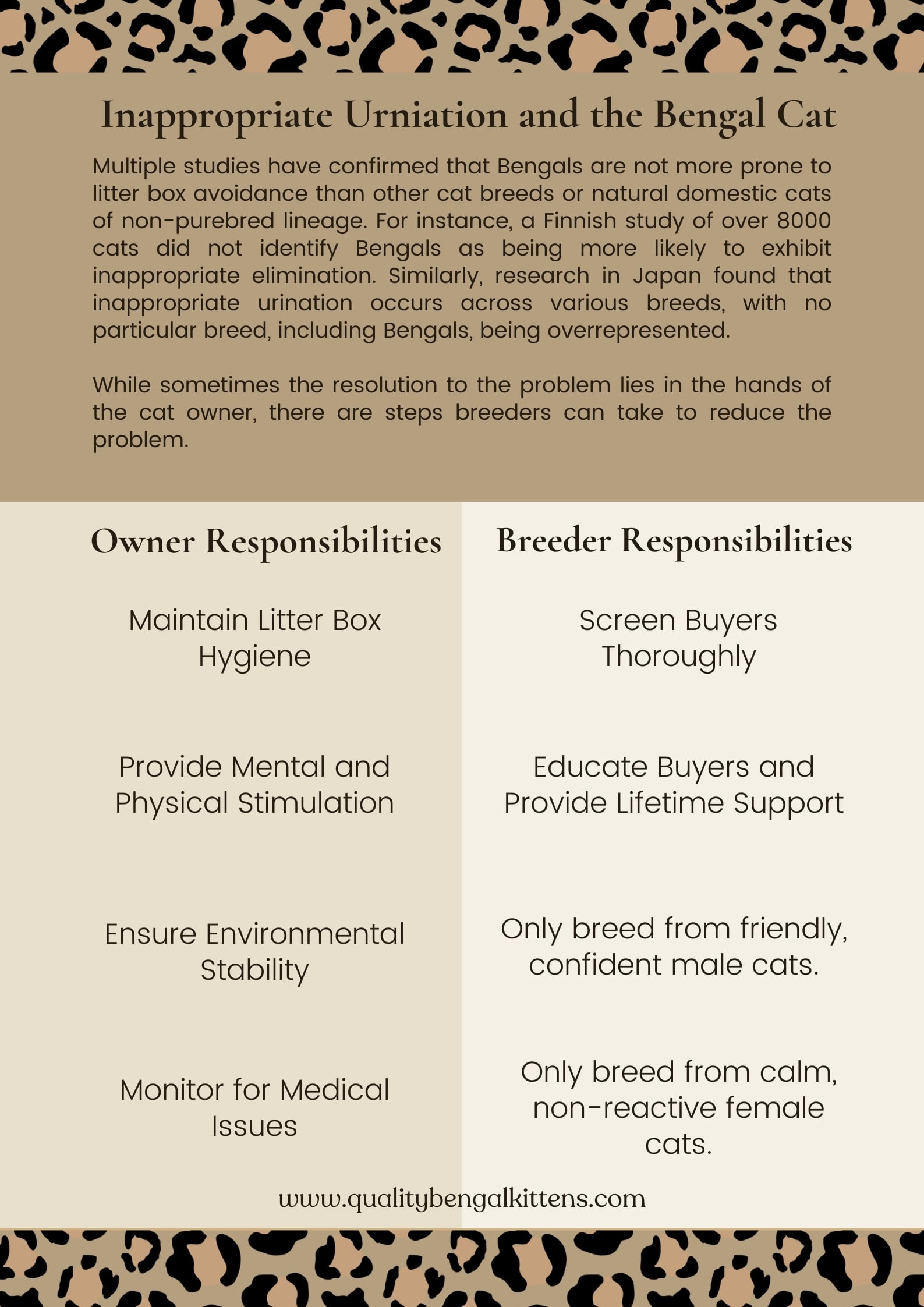
Bengal cats are noted for their intelligence, energy, and appearance, all of which contribute to their popularity. However, like all cats, Bengals can develop behavioral issues, including urinating outside the litter box. Contrary to what some believe, multiple studies have confirmed that Bengals are no more prone to litter box avoidance than other breeds or moggies (naturally formed domestic cats with no purebred heritage). For instance, an extensive study of over 8,000 Finnish cats did not identify Bengals as more likely to exhibit inappropriate elimination (Ahola et al.). Similarly, the “Prevalence of 17 Feline Behavioral Problems in Japan” found that inappropriate urination occurs across various breeds, with no particular breed, including Bengals, being overrepresented (Yamamoto et al.).

Litter box avoidance occurs among all domestic cats, typically stemming from stress, poor litter box hygiene, or medical conditions. Environmental stressors, such as multi-cat households, can trigger this behavior in any cat, not just Bengals (Salonen et al.). Veterinary experts confirm that inappropriate elimination is one of the most frequent reasons for surrendering cats, including Bengals (Herron et al., Yamamoto et al.). While environmental stress is the number one cause of litter box avoidance, breeders should avoid placing all the blame on pet owners for not providing the correct environment, just as owners should not attribute the issue solely to the breed. A balanced understanding of how environment and genetics play a role is crucial. 

Breeders have the most power to improve the likelihood of inappropriate urination behavior by ensuring proper breeding practices, proactively educating pet owners, and offering ongoing support. With this behavior often cited as a reason Bengals make poor pets, Bengal breeders who want to protect their breed will take steps to mitigate inappropriate urination in Bengals. 
Environmental Causes of Inappropriate Urination

With environmental issues being the top cause of litter box avoidance, the owner of a cat urinating inappropriately needs to investigate extensively to pinpoint the cause. Owners should start by observing their cat’s behavior around the litter box. If the cat approaches the box but hesitates or quickly leaves without using it, it could indicate that the box is unclean, poorly placed, or not to the cat’s liking in size or litter type. 

Additionally, owners should assess whether there have been recent changes in the household, such as new furniture, pets, or people, as these can create stress and lead to avoidance. With their high sensitivity and intelligence, Bengals are particularly susceptible to stress caused by environmental changes. Minor alterations, like furniture layout changes or daily routine adjustments, can trigger stress-related behaviors, including litter box avoidance (Harvey et al.). Like all cats, Bengals thrive on consistency, and disruptions to their environment—such as changes in their owner’s schedule or the introduction of new people—can lead to anxiety-driven urination. Maintaining stable routines, providing gradual introductions to changes, and offering ample enrichment can help mitigate the impact of stress on Bengals. 

It’s also important to watch for signs of territorial behavior, especially in multi-cat households, where one cat might be preventing another from accessing any cat resources (food, water, litter box, sleeping spaces, etc). Cats may mark their territory through urination when they feel their space is threatened or perceive another cat as an intruder. Monitoring feeding schedules and interactions with family members can also provide clues, as disruptions in routine can trigger anxiety-driven behaviors.  Stress from territorial disputes, such as blocking other cats from accessing resources like food or litter boxes, can lead to anxiety-related marking (Herron et al., “Are Bengal Cats Territorial?”). Addressing these issues through proper management of space and understanding a Bengal’s territorial instincts can reduce the occurrence of stress-induced urination.

If an owner, with the guidance of their breeder, cannot identify the cause of the issue, consulting a behaviorist is essential to determining the root of the problem and developing a targeted solution.

The Breeder’s Role in Preventing Environmental Issues

Breeders play a crucial role in ensuring that Bengal cats are placed in homes capable of meeting the needs of a high-energy, intelligent cat. Thoroughly screening potential buyers is essential to this process. Breeders should ask specific questions about the buyer’s readiness to provide adequate litter boxes, engage with the cat regularly, maintain consistent routines, and understand a Bengal’s territorial instincts. Additionally, the breeder must confirm that the buyer possesses the knowledge and skills to care for a high-energy, intelligent breed. It would behoove breeders to equip the buyer with a reliable resource, such as a book on caring for active and highly intelligent cats, to ensure the new owner is well-prepared and to reference when offering guidance down the road. Breeders who place Bengals in homes that are ill-equipped for intelligent, high-energy cats increase the likelihood of them being surrendered, which is a blemish on the breed. Critics of the breed often attribute the consequences of irresponsible breeding to the breed itself, using these mistakes as leverage in their efforts to call for the breed’s elimination. Breeders must prioritize the well-being of the breed over personal profit by conducting a thorough screening process for potential buyers. Selling kittens without properly vetting the clients puts the breed at risk. By screening applicants carefully, breeders can ensure their cats are matched with responsible owners, thus safeguarding the breed’s future.
To assess how well a potential buyer understands the importance of engagement, breeders can ask about their plans for physical and mental stimulation for their Bengal. Bengals are intelligent and active cats, and buyers should demonstrate knowledge of enrichment tools like climbing structures, interactive toys, and daily play sessions. Inadequate engagement often leads to stress-related behaviors, including inappropriate urination. Research shows that bored cats, particularly high-energy breeds like Bengals, are more prone to behavioral issues when not appropriately stimulated (“Enrichment and Mental Stimulation in Cats”). Breeders should stress the need for regular interactive playtime, the use of puzzle feeders, and environmental enrichment to satisfy a Bengal’s high activity level. When Bengals feel mentally and physically fulfilled, they are less likely to develop stress-related litter box problems (Turner and Bateson).

Breeders must ask potential buyers about the structure of their daily routines, especially regarding feeding and playtime, to assess if they can provide the consistency Bengals need. Buyers who lead unpredictable lives may not be ideal candidates, as lacking routine can cause stress in Bengals. Research suggests that cats thrive on predictability, and deviations from a stable environment can lead to behavioral issues, including inappropriate urination (“Feline Medicine and Surgery”). Breeders should explain to buyers that Bengals benefit from set meal times, consistent play, and regular sleep schedules. By keeping routines predictable, buyers can create a sense of security for their Bengals, reducing the likelihood of territorial marking or other stress-related litter box issues (“Stress and Cats”).

In addition, breeders should inquire about how the buyer plans to set up their home to give their Bengal expanded territory, especially the use of vertical space.  Bengals stem from a cat who lives in trees, so many of them are genetically wired to enjoy being up high. Buyers must be prepared to meet this need.  Research shows that Bengal cats, like other territorial breeds, can become anxious if their space feels threatened, leading to behaviors such as marking (“Territorial Behavior of Domestic Cats”). Providing Bengals with high perches and ample territory to explore can help satisfy their territorial needs and prevent inappropriate urination caused by stress or competition (“ISFM Guide”).

Medical Causes of Inappropriate Urination
Medical issues are a common cause of inappropriate urination. However, it is not unusual for a cat to be tested for urinary issues, only for the results to return as normal. At this point, Feline Lower Urinary Tract Disease (FLUTD) must be considered if a cat exhibits inappropriate urination and no other cause is found. FLUTD can be a baffling condition, often driven by stress and anxiety, especially in Bengals. Affected cats may associate the litter box with pain, leading them to avoid it in search of relief elsewhere. Bengal Rescue stresses that FLUTD is curable with veterinary care, particularly with the use of Amitriptyline Transdermal, a medication that reduces bladder discomfort and tones down the anxiety that fuels FLUTD in Bengals (“Litter Box Issues”). Bengal Rescue has saved hundreds of cats using Amitriptyline, turning around even extreme cases with this affordable treatment. They have found it to be more effective than alternatives like Prozac or Gabapentin. In all of the cats Bengal Rescue has worked with over many years, they never had a urination problem that was not resolved, and for many of them, the solution was often Amitriptyline (“Litter Box Issues”). These resolutions are not temporary; their longest-lasting case has remained resolved for eight years.

Temperament as a Cause of Inappropriate Urination

Temperament plays a critical role in a cat’s likelihood of urinating outside the litter box, as this trait impacts the animal’s ability to manage stress and environmental changes. 
Breeders are crucial in reducing these behaviors by selecting cats with stable temperaments. Research shows that the sire significantly influences kittens’ boldness, sociability, and overall temperament (Salonen et al.). The sire’s temperament impacts how kittens respond to stressful situations, such as new people, other animals, or routine disruptions, all of which can trigger anxiety-driven behaviors like inappropriate urination. Resilient cats handle these changes better, reducing the likelihood of stress-related issues. A confident and social sire interacting positively with humans and other animals is more likely to produce less fearful and more adaptable kittens (McCune). Confident and resilient sires pass on traits that help their offspring cope better with stress, reducing anxiety-driven behaviors such as inappropriate urination. This makes it essential for breeders to choose sires with non-reactive, confident personalities to help produce kittens that are better equipped to handle stress and exhibit fewer behavioral problems (McCune). Ultimately, breeders should not be flexible when choosing their sires. They must prioritize friendly, curious, confident sires to produce better-equipped kittens to handle stress and environmental changes.

The dam’s temperament is equally important – both genetically and through early socialization. A calm and nurturing mother provides emotional security to her kittens, modeling positive stress management behaviors (Yamamoto et al.). Kittens are highly sensitive to their mother’s emotional cues, and a calm, resilient mother can model positive stress management behaviors. Research shows that kittens exposed to a low-stress environment during early development are more likely to develop well-balanced, confident temperaments (McCune). Additionally, a calm mother is more likely to provide consistent care, ensuring the kittens receive adequate nutrition and emotional security during their crucial early weeks (Ahola et al.). Therefore, breeders should prioritize selecting calm, non-reactive female cats and avoid breeding anxious or overly territorial females.
Inappropriate urination in Bengal cats is a complex issue influenced by environmental, medical, and temperamental factors, but it is not an inherent trait of the breed. Bengals require dedicated owners who understand their high intelligence, energy, and sensitivity. Owning a Bengal means more than admiring its appearance; it requires a commitment to providing consistent mental and physical stimulation, a stable environment, and proper care. Breeders play a crucial role in shaping these animals’ well-being by selecting sires and dams with stable temperaments and educating buyers on how to meet a Bengal’s needs. By doing so, they can reduce the risk of stress-related behaviors like inappropriate urination. 

Ultimately, both breeders and owners share the responsibility of ensuring Bengals thrive as well-adjusted pets. That starts with addressing the underlying factors contributing to behavioral issues and maintaining a high standard of care throughout the cat’s life.

Works Cited

Ahola, M. K., et al. “Health and Behavioral Survey of over 8000 Finnish Cats.” Journal of Veterinary Behavior, vol. 16, 2016, pp. 26-34. PubMed, https://pubmed.ncbi.nlm.nih.gov/27622188/.

“Are Bengal Cats Territorial? Exploring Their Marking Behavior and Territory Protection.” ThePetFAQ, 26 Sept. 2023, https://thepetfaq.com/are-bengal-cats-territorial-exploring-their-marking-behavior-and-territory-protection/.
 

“Enrichment and Mental Stimulation in Cats.” Pet Behavior Science, petbehaviorscience.org.
 

“Feline Environmental Needs Guidelines.” American Association of Feline Practitioners (AAFP) and International Society of Feline Medicine (ISFM), 2013.
 

“Feline Medicine and Surgery.” Journal of Feline Medicine and Surgery, 2020.
 

Harvey, N. D., et al. “Companion Cats: Behavioral and Welfare Considerations in the Multi-Cat Household.” Journal of Veterinary Behavior, vol. 29, 2019, pp. 47-56.
 

Herron, M. E., et al. “Feline Behavior Problems: Inappropriate Elimination.” Today’s Veterinary Practice, 2020, https://todaysveterinarypractice.com/feline-inappropriate-urination/.

“ISFM Guide to Multi-Cat Households.” International Society of Feline Medicine, 2019.

“Litter Box Issues in Bengals.” Bengal Rescue, https://bengalrescue.org/resources/litter-box-issues/.

McCune, Sandra. “The Influence of Maternal Behavior on Kitten Development.” Animal Behaviour Journal, 1995.
 

Salonen, M., et al. “Breed Differences in Behaviour of Cats: A Study of the Finnish Domestic Cat Population.” Scientific Reports, vol. 9, no. 1, 2019, doi:10.1038/s41598-019-52277-z.
 

“Stress and Cats: Behavioral Reactions to Environmental Changes.” Journal of Feline Behavior, 2020.
 

“Territorial Behavior of Domestic Cats.” Animal Behavior Journal, 2018.
 

Turner, Dennis, and Patrick Bateson. The Domestic Cat: The Biology of Its Behaviour. Cambridge University Press, 2014.
 

“Welfare Implications of Feline Inappropriate Elimination.” International Cat Care, 2016.
 

Yamamoto, M., et al. “Prevalence of 17 Feline Behavioral Problems and Relevant Factors of Each Behavior in Japan.” Journal of Feline Medicine and Surgery, vol. 22, no. 5, 2020, pp. 411-417. PubMed, https://www.ncbi.nlm.nih.gov/pmc/articles/PMC7118490/.

Indoor Bengals Make Happier Cats: How Breeders Can Lead Change

Concerns about Bengal cats’ predatory instincts and their impact on wildlife, notably birds, raise questions about their suitability as pets. While it is true that outdoor cats impact wildlife, particularly birds and small mammals, this truth is not exclusive to Bengals. The real problem all cat owners face is that studies estimate that domestic cats kill billions of animals annually, contributing to population declines in species already vulnerable due to habitat loss and climate change (Carrington). Birds are particularly at risk.

Several countries have implemented laws restricting outdoor cat roaming in response to these concerns. In Australia, some regions have enacted curfews requiring cats to stay indoors at night. Similarly, the EU and UK have introduced legislative efforts to minimize cats’ environmental impact. These measures include requiring bells or other warning devices for cats, mandating cat-proof fencing in new housing developments, and restricting outdoor access in ecologically sensitive areas (Stephens). These actions reflect a growing recognition of the need to balance pet ownership with environmental stewardship.

Despite this broad issue, some legislators have unfairly targeted Bengals and other hybrid breeds, claiming their hunting skills are more advanced than those of other domestic cats. This perception lacks evidence and stems from biases that place undue blame on Bengals. Hawaii’s ban on Bengals exemplifies this misplaced fear rooted in past ecological missteps. The mongoose was introduced to Hawaii in the 1800s as a biological control method to curb the population of rats in sugarcane fields. However, the introduction turned disastrous. The mongoose, a diurnal animal – active during the day – had zero impact on the nocturnal rat population. Instead, the mongoose began preying on native species, particularly ground-nesting birds – who have no natural defenses against this new predator. This led to a significant decline in native bird populations, many of which were already vulnerable or endangered due to predation by rats and through habitat loss. While Hawaii still battles the problems caused by the mongoose, the Hawaii Department of Agriculture has banned Bengal cats due to potential threats to the state’s unique ecosystems.  In essence, the Bengal is being punished for the past mistakes of humans who introduced a daytime predator to eradicate a nighttime pest, which was an epic failure. 

The Truth about the Bengal’s Hunting Skills

Hunting behaviors are common to all felines, and studies on domestic cats do not single out Bengals as having an unusually high predatory impact. Research from the Smithsonian Conservation Biology Institute underscores that domestic cats, regardless of breed, tend to stay close to their home base, impacting local wildlife populations similarly. This is precisely why humans domesticated cats in the first place. On average, each outdoor cat is responsible for the deaths of about 130 animals per year, including birds and small mammals (Loss et al.). Furthermore, other studies confirm that breed does not notably influence hunting habits in cats. Domestic cats generally have a strong predatory instinct, which manifests in similar patterns across breeds, as shown in multiple studies examining hunting behavior and the environmental impact of all cats (Cecchetti et al.; Loss et al.). 

How can Bengal Breeders help with this problem?

Even though Bengals are no more a threat to wildlife than other breeds, Bengal breeders still need to be aware that this claim will be made against our breed. By educating buyers about responsible pet ownership, Bengal breeders play a crucial role in addressing the issue of outdoor cats contributing to bird population declines. By equipping owners with the knowledge and tools to meet a Bengal’s physical and mental needs indoors, breeders can help minimize the environmental impact of Bengals and ensure a harmonious relationship between these energetic cats and their ecosystems.

Breeders should proactively inform potential Bengal owners about

  • The ecological impact of allowing any cat to roam outdoors
  • The benefits of keeping Bengals indoors

    • Increased lifespan
    • Reduced risk of injury
    • Decreased predation on wildlife 
  • Techniques to create an enriching indoor environment

    • Climbing structures
    • Puzzle feeders
    • Interactive play sessions 
    • Clicker training
    • Appropriately sized cat wheel
  • alternatives to unsupervised outdoor access

    • Leash training
    • Catios
    • Cat fencing 


Breeders Can Evoke a Shift in Cultural Norms

Attitudes toward keeping cats indoors vary globally. Around 70% of cat owners in the United States keep their pets indoors (Carrington). In contrast, only about 30% of cat owners in the UK keep their cats indoors, as outdoor roaming is a traditional practice, and the EU is likely to align with the UK (Stephens). Australia has begun shifting toward indoor-only cat ownership, particularly in urban areas, due to the devastating impact of cats on native wildlife (Carrington). 

Cat owners let their cats roam freely outside because they feel they cannot be truly happy unless they get to roam outside. However, this is not actually true. A study by the University of Lincoln found that indoor cats with access to controlled outdoor environments, such as enclosed gardens or “catios,” exhibited improved welfare indicators, including reduced fearfulness and health issues, compared to those with unrestricted outdoor access (“Indoors, Outdoors, and the Lifestyle of Pet Cats”). Thus, cats with access to a limited outdoor space are ultimately the most satisfied. 

Screening Buyers: A Crucial Step for Bengal Breeders

Bengal breeders are responsible for ensuring their kittens are placed in homes fully prepared for owning an intelligent, high-energy cat. Screening potential buyers is essential, not only for the welfare of the cats but also for preventing behaviors that could lead to rehoming or outdoor living—both of which contribute to the broader problem of cats impacting wildlife.

Breeders should ask detailed questions to gauge a buyer’s knowledge, preparedness, and long-term commitment. Examples of critical screening questions include:

  • Living Arrangements: “Do you plan to keep your Bengal indoors, and how will you manage their energy levels?” Buyers must understand that Bengals thrive in enriched indoor environments, and outdoor living poses significant risks to both the cat and local wildlife.
  • Lifestyle: “How much time can you dedicate daily to interactive play and enrichment?” Bengals require significant mental and physical engagement, and a buyer who cannot commit to this may not be the right fit.
  • Problem Solving: “How would you address unwanted behaviors such as scratching, excessive vocalizing, or litter box issues?” This will indicate any proactive steps pet owners will make and the effort they will put into problem-solving. 

Placing a Bengal in a home unprepared for the breed’s needs can lead to unwanted outcomes, including behavioral issues, rehoming, or outdoor access that threatens the Bengal’s safety and that of local wildlife. These questions help assess whether the buyer is willing to address challenges proactively instead of letting their Bengal roam outside freely as an easy way to meet the Bengal’s needs. Breeders must recognize that improper placements not only affect the individual cat’s well-being but also contribute to the misconception that Bengals are unsuitable pets. Every Bengal placed in an ill-prepared home risks reinforcing stereotypes about the breed’s behavior and impact. By carefully screening buyers and educating them about the responsibilities of Bengal ownership, breeders can ensure their cats are placed in loving, capable homes. This proactive approach not only enhances the cats’ quality of life but also reduces the likelihood of problems contributing to broader issues, such as the impact of outdoor cats on wildlife. Through responsible placement, breeders can help protect both the reputation of the Bengal breed and the natural environment.

Conclusion

Domestic cats undeniably impact wildlife populations, but the narrative unfairly targeting Bengals as particularly harmful is both misplaced and unsupported by research. Studies show that the hunting behavior of Bengals is no different from that of other domestic cats. However, the responsibility for mitigating this impact falls squarely on human shoulders. By embracing indoor enrichment, catios, leash training, and responsible ownership practices, Bengal owners can ensure their cats live fulfilling lives while safeguarding local ecosystems.

Bengal breeders have a unique role in this process, as they are responsible for educating buyers on how to meet the breed’s needs within an enriched indoor environment. Through careful buyer screening, education, and support, breeders can evoke a shift in cultural norms, encouraging indoor lifestyles for cats that protect both the pets and the environment. With commitment and care, Bengals can thrive as indoor pets, debunking the myth that they are unsuitable companions due to their hunting instincts. Ultimately, responsible ownership and proactive measures ensure that Bengals—and all domestic cats—can coexist harmoniously with wildlife.

Works Consulted

American Veterinary Medical Association. “Household Cat Lifespan and Risks of Outdoor Access.” Journal of Feline Medicine and Surgery, 2021.

Carrington, Damian. “Cats Kill Billions of Animals Each Year so Should They Be Kept Indoors?” The Guardian, 14 Aug. 2022, https://www.theguardian.com/environment/2022/aug/14/cats-kill-birds-wildlife-keep-indoors. Accessed 25 Nov. 2024.

Cecchetti, M., et al. “Provision of High Meat Content Food and Object Play Reduce Predation of Wild Animals by Domestic Cats.” Current Biology, 2020.

Hawaii Department of Agriculture. “Administrative Rules.” Hawaii Department of Agriculture, https://hdoa.hawaii.gov/admin-rules/. Accessed 25 Nov. 2024.

“Indoors, Outdoors, and the Lifestyle of Pet Cats.” International Cat Care, https://icatcare.org/indoors-outdoors-and-the-lifestyle-of-pet-cats/. Accessed 25 Nov. 2024.

“The Indoor Pet Initiative: Enriching Indoor Environments for Cats.” Ohio State University College of Veterinary Medicine, The Ohio State University, 2020, www.indoorpet.osu.edu/cats/basic-indoor-needs. Accessed 22 Oct. 2024.

“The Indoor Pet Initiative: Understanding Your Cat’s Needs.” Ohio State University College of Veterinary Medicine, https://indoorpet.osu.edu/cats/understanding-cats. Accessed 22 Oct. 2024.

Loss, S. R., et al. “The Impact of Free-Ranging Domestic Cats on Wildlife of the United States.” Nature Communications, 2013.

Rosenberg, K. V., et al. “Decline of the North American Avifauna.” Science, vol. 366, no. 6461, 2019, pp. 120–124.

Stephens, Thomas. “Feline Felons: What to Do with Switzerland’s Killer Cats?” SWI swissinfo.ch, 7 Sept. 2024, https://www.swissinfo.ch/eng/swiss-abroad/feline-felons-how-to-fix-switzerlands-killer-cats/87475848. Accessed 25 Nov. 2024.

My Bengal Cat Wakes Me up at Night

by Robyn Paterson

You awaken from a peaceful slumber to the sound of your Bengal cat’s loud yowl. Stumbling out of bed, you nearly trip over the Bengal to determine the cause of your feline friend’s distress. Nothing appears to be wrong. You must get back to sleep, so the cat must be silenced. You do the first thing that comes to mind – fill the food bowl with food. Over the next few nights, the same cycle repeats itself. You awaken to your cat’s yowling, tend to its needs, and try to return to sleep. This is no way to live life. How can you make it stop?

Your Bengal cat is awakening you in the middle of the night because it needs something. You must determine what it needs and provide for it at a more appropriate time. If this is a change of behavior, the first thing is to rule out any health issues that could be underlying. 

Being that we are talking Bengals, the cause of the midnight meowing is likely to be rooted in either food or boredom. For high-energy cats, these are the most common causes of behavioral problems. All Bengals are high-energy cats. 

Why Food a Likely Cause of Midnight Meowing
As high-energy cats, Bengals have a higher-than-average metabolism. This means their body burns more fuel than the average cat. Bengal cats need more than the daily recommended dosage on all food packaging. 

This is especially true for young male Bengal cats. Male Bengals between the ages of 6 to 18 months are growing like weeds. During this timeframe, they may eat up to twice the food they will eat as adults. If you are experiencing behavioral problems with a male Bengal within this stage of life, increase the food you are offering.

How and when you feed your cat may be contributing to the problem. Cats should not be free-fed or fed first thing in the morning. Free-feeding disrupts their natural body rhythm, which is to hunt (and expel energy) before they eat. Ideally, you want to feed your cat after a play session several times a day, with the largest portion being fed before you go to bed at night. By feeding the largest portion before you go to bed, your Bengal cat will be satisfied and more settled throughout the night. 

In addition, you never want to make feeding the cat the first step in your morning routine. When you get up in the morning, make coffee, eat breakfast, shower, etc. Do just about everything that you do daily BEFORE you feed the cat. This way, the cat does not associate you’re getting out of bed with it receiving food. 

For a more detailed explanation of why food is a likely candidate for causing the midnight meowing, please read What and How You Feed May Affect Your Bengal Cat’s Behavior.

Why Environment is a Likely Cause of Midnight Meowing
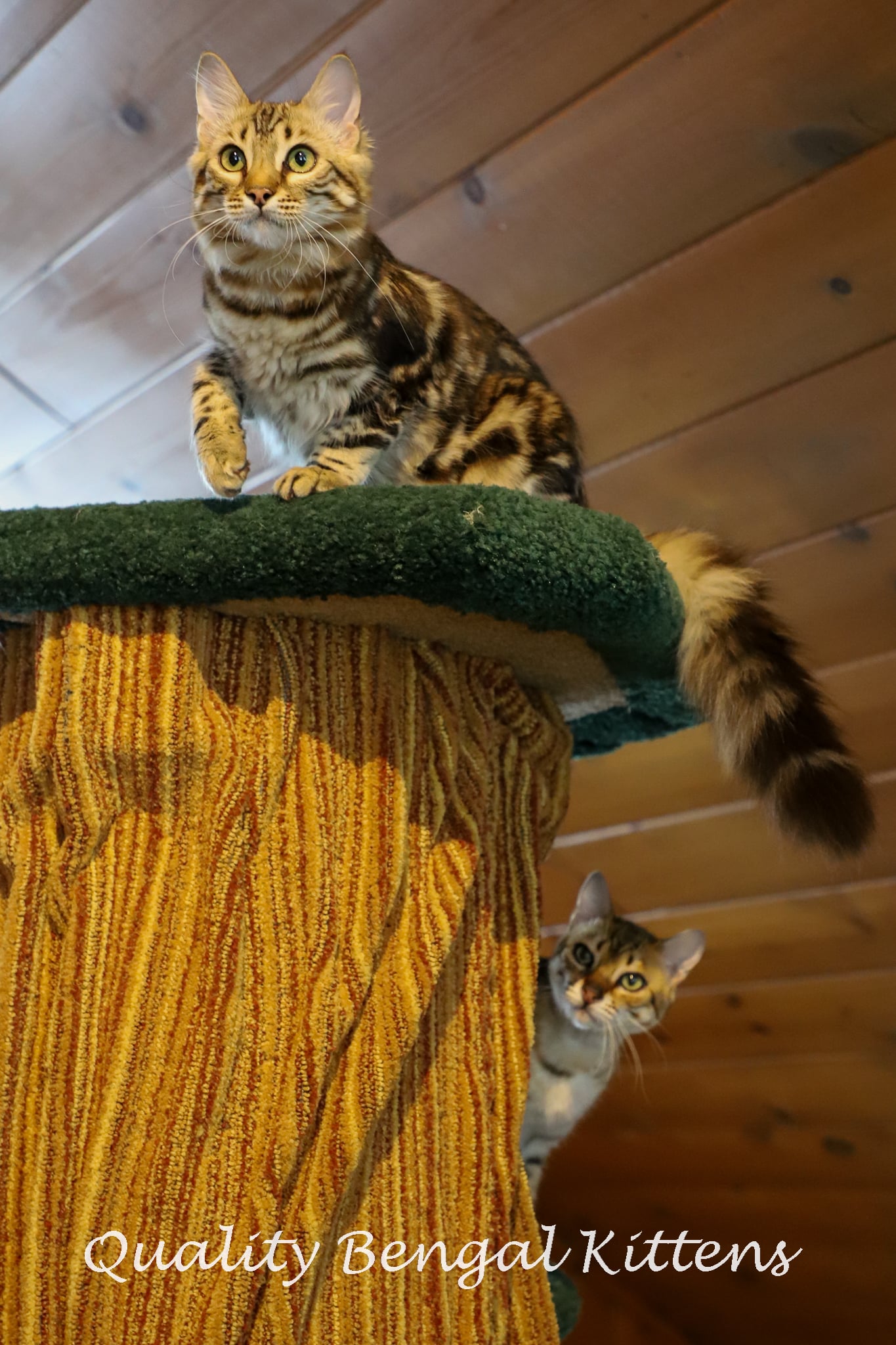
Bengals are high-energy cats. Most of their behavioral problems are rooted in the environment and the amount of stimulation the cat receives. Most people think this can’t be the problem because they play with their cats daily. You may, indeed, play daily, but if the cat is exhibiting behaviors you are not happy with, it likely needs more stimulation than what you are currently providing. A cat’s natural territory is many times larger than a house. A cat living outdoors will patrol, hunt, and climb all throughout its territory. If we do not provide enough things for our Bengals to do in our homes, they will likely exhibit unwanted behaviors. 

Every Bengal needs an enriching indoor environment. For a Bengal, this means lots of vertical space with sturdy, tall cat trees. It is best to create a walkway around the upper level of your home with a combination of cat trees and cat shelving. Because Bengals descend from the leopard cat, which lives in the tree canopy of Asian forests, they tend to need an enriched vertical habitat. A window perch strategically set in a window where there may be wildlife to watch provides not only additional vertical space, but also the mental stimulation of watching for wildlife, which utilizes a Bengal’s mental energy. 
 

A Bengal cat needs both vertical space and mental stimulation. You should have a set of Mind Puzzles that you rotate, so your Bengal cat has something to challenge its mind regularly. It is amazing how intensely exercising the mind alleviates behavioral problems in intelligent cats. If you are up for it, daily clicker training will help eliminate the midnight meowing and create a very satisfied cat. 

A cat wheel provides the outlet for how much patrolling a cat would naturally do outdoors. Cats can walk over 5 miles daily if needed, and feral cats patrol an average of 5 acres. Cat Wheels help take the burden off you to ensure your cat gets the daily physical energy outlet it needs. 

Adding a catio allows your Bengal cat to be in nature, which can help to reduce his stress levels and promote relaxation. Bengals are curious creatures and love to explore their surroundings. A catio provides them with a stimulating environment that they can explore, climb, and play in. It stimulates the mind, and if there is an ample enough enriched space, the body also. 
                                                                                
The last and most crucial aspect of creating an enriching environment is playtime. As a Bengal owner, you should consider daily playtime necessary for your cat’s care. It is as essential as it would be for a dog owner to walk a dog daily. Bengal cats do best with a play routine. Then they know what to expect each day, so they won’t ask for playtime at times that are inconvenient for your schedule, especially in the middle of the night. You must be playing with your cat to the point of panting during your play sessions.  

To review, creating an enriching environment for your Bengal includes the following:

If you are experiencing behavioral problems with your Bengal cat, you cannot pick and choose what enrichment you wish to provide; you need to go all-in.

Ignoring Unwanted Behavior

The final step in eliminating the midnight meowing is to ignore the behavior. This step is the hardest for many pet parents. Stick in a good set of earplugs and let the peaceful night of sleeping begin. You should expect your cat’s behavior to get worse before it gets better. If you live in an apartment or condominium, you may want to let your neighbors know that you are working on behavior modification with your cat, and he is likely to make noise for the next week to ten days. The persistency and volume commonly escalate during the first week the behavior is ignored. This is when many people make the mistake of giving up. It will get worse before it gets better. Giving in to them once will set you back to the start again. You must not reinforce their unwanted behavior by responding to it. Within two weeks of ignoring the behavior, the midnight meowing should be reduced by 75%. If you are not reaching the mark of a 75% reduction rate by the two-week mark, you need to re-evaluate your food quantity, daily routine, and environmental enrichment. Remember, ignoring the behavior will not work if you have not provided enough food and enrichment. If you tried some of the enriching tips but not all of them, you need to do more. 

Are you thinking of getting a Bengal cat and want it to come with a lifetime of expert advice? Check out our available Bengal kittens.   

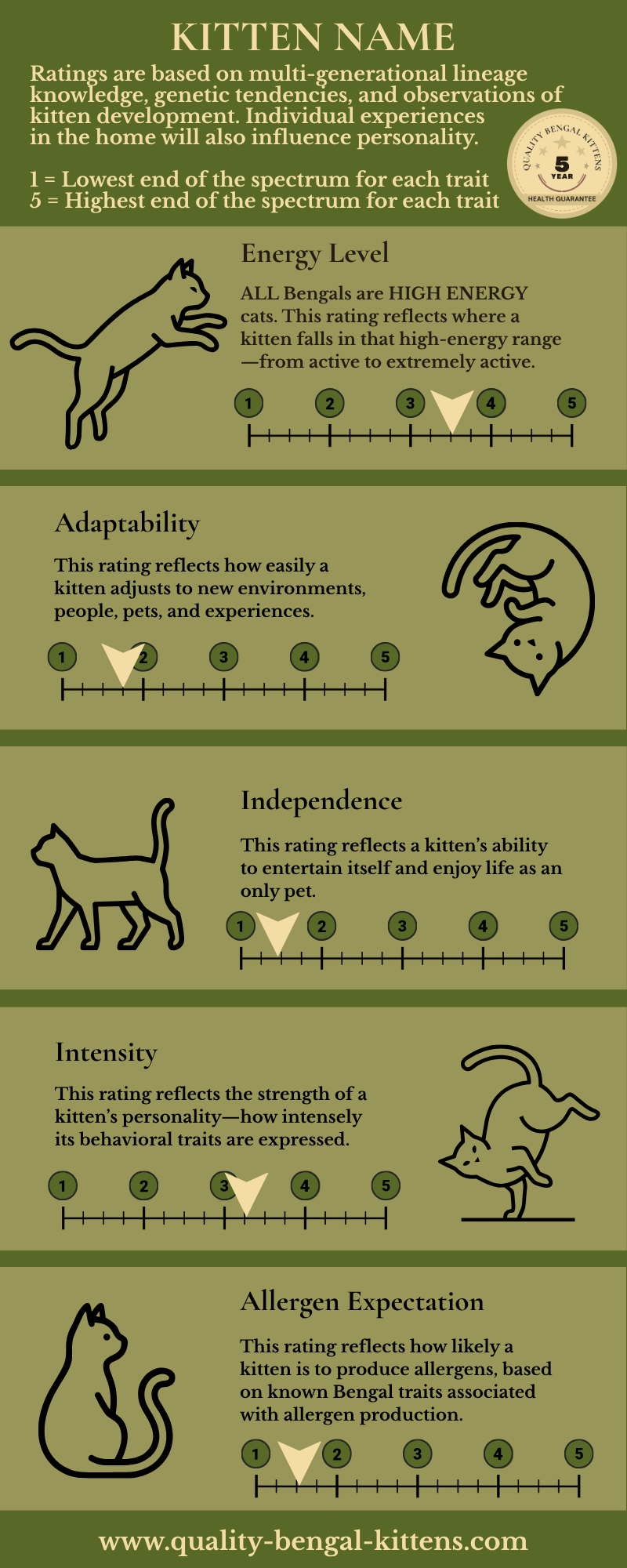
How to Read Our Kitten Profile Charts

Bengal Kitten Personality Traits

April 6, 2026
by Robyn and Jon Paterson

People often ask us to describe our kittens’ personalities. It sounds like a simple question, but in reality, it’s one of the hardest to answer well.

A Bengal kitten’s personality isn’t just what you see in a single moment. It’s shaped by genetics, development, and how the kitten responds to its environment over time.

Because of that, we developed a rating system to help families better understand what to expect—so they can choose a kitten that truly fits their home and lifestyle. Our ratings are built from three layers of knowledge.

First, we rely on multi-generational lineage knowledge. Some of the lines in our program go back over 25 years and span five or more generations. Because these cats have been part of our lives for so long, we start to see characteristics of parents, grandparents, and great-grandparents emerge as the kittens develop. 

Second, we understand how traits are passed down genetically. Not every kitten will mirror its parents exactly. Sometimes we see a kitten whose personality clearly reflects a grandparent or even a great-grandparent. Because of that, we do not assume. We observe.

Third, we evaluate each kitten’s development. We begin assigning ratings after six weeks of age, when the kittens are interacting more fully with their environment. We watch how they respond to change, how they engage with people, how they interact with other cats and dogs, and how they play. We look at whether they seek attention or prefer independence, whether they confidently enter new situations or take time to assess them.

Allergen expectation is evaluated differently. That rating is based on known Bengal traits that influence allergen production, including gender, coat length, density, texture, pigmentation, and whether the kitten is glittered.

These ratings are thoughtful and experience-based, but they are not guarantees. A kitten’s personality will continue to develop in its new home, shaped by environment and daily interaction.


There Is No “Best” Rating

One of the most important things to understand is that there is no good end or bad end of any scale. Every trait exists on a spectrum, and every home has different needs. Our goal is not to produce one “ideal” type of cat. Our goal is to match the right kitten to the right home.

For example, a highly interactive, very dependent cat can be an incredible companion for someone who wants constant engagement. That same cat may struggle in a home where people are busy, frequently on calls, or away for long periods. In the same way, some families want a cat that is always with them, while others want a cat that is present but not constantly underfoot.

We often see people drawn to certain traits without realizing what those traits require. A good example is harness training. People love the idea of a cat that hikes with them. What they do not always realize is that this kind of cat requires consistent, daily interaction. That personality is not something you turn on for the weekend. It is something you commit to every day.

The charts exist to help set realistic expectations, so both the cat and the home are set up for success.

Understanding Each Trait

Energy Level

All Bengals are high-energy cats. This scale reflects where a cat falls within that range. A cat on the higher end of the scale wants to play throughout the day. If it is the only cat, it may need multiple structured play sessions daily to stay happy. These cats often do best in homes with another high-energy companion. A mid-range cat still has plenty of energy, but its needs are more manageable. A couple of intentional play sessions each day is often enough. A lower-energy Bengal is still active compared to most breeds, but it is more moderate in activity. These cats may be satisfied with a single consistent play session each day.

Adaptability

This scale reflects how easily a cat adjusts to new environments, people, pets, and experiences. We evaluate this by watching how cats respond to real changes in our home. They are born in our bedroom and are later moved to our main living area, where there is more activity, more space, and interaction with our dogs and daily household life.

Highly adaptable cats settle in quickly. They explore, engage, and become comfortable without needing extended time to assess every change. These cats are often a better fit for homes that plan to travel with their cat or pursue activities like harness training.

Lower adaptability is not a flaw. It is very normal cat behavior. These cats tend to observe first and engage once they feel secure. They are thoughtful and aware of their surroundings. These cats are homebodies and enjoy the stability and familiarity of home.


Independence

This scale reflects a cat’s ability to entertain itself and enjoy life as an only pet. A cat on the lower end of the scale seeks frequent interaction. It wants to be involved in what you are doing and will actively pursue your attention. These cats thrive with companionship and dislike social isolation. On the high end of the scale, a more independent cat is comfortable spending time alone and does not rely on constant interaction. These cats will enjoy you while you are around, but they are okay when you are otherwise engaged with life. These cats are often better suited to homes with busy schedules or those who prefer a more balanced level of interaction.

Neither end is better. The key is alignment. Some people want a cat that is always by their side. Others want a cat that shares their space without constant engagement. 

Intense Bengal Kitten

Intensity

Intensity reflects how strongly a cat engages with the world. Higher intensity cats tend to respond quickly and expressively, while lower intensity cats are more measured and consistent. A high-intensity cat feels like a strong personality in every area. A high-intensity cat expresses each trait exuberantly. A lower-intensity cat still shows clear personality traits, but in a more subtle way. The tendencies are there, just not as strongly expressed.

This trait often has the biggest impact on daily life. Two cats may both be high energy, but the one with higher intensity will feel much more demanding. When energy needs are not met, Bengals do not simply become quiet. They become frustrated. That frustration can show up as destructive behavior or withdrawal. Their intensity score will affect how they express their frustration, with more intense cats more likely to display destructive behavior and less intense cats more likely to withdraw into depression. 

For example, a high-intensity, high-adaptability cat is more likely to take on new experiences with gusto, whereas a low-intensity, high-adaptability cat will walk in with calm confidence. As another example, a high-intensity, low-independence cat will demand attention non-stop; whereas, a low-intensity, low-independence cat will quietly sit on your lap the minute you sit down. 

seal lynx and charcoal Bengal kittens

Allergen Expectation

This scale reflects how likely a cat is to produce allergens based on known Bengal traits. Several factors influence this. 

  1. Females tend to produce fewer allergens than males. 
  2. Darker, more heavily pigmented coats produce fewer allergens than lighter coats, such as snow or silver. 
  3. A shorter, tighter coat holds fewer allergens than a longer or looser one. 
  4. Glittered coats also tend to hold fewer allergens than non-glittered coats.

These factors guide our expectations, but no cat is truly free of allergens. Individual sensitivity will affect a person’s reaction. Individual reactions will always vary.

Our Role in the Process

Our goal is not simply to place kittens. Our goal is to place them well.

We have spent over 25 years working with these lines, studying how traits are passed down, and continuing to educate ourselves on behavior, health, and development. That experience allows us to look at a kitten and understand not just who it is today, but who it is likely to become.

We take that responsibility seriously because the outcome matters. We want our cats to stay in their homes for life. That only happens when the match is right from the beginning.

Every rating, every conversation, and every recommendation is made with that goal in mind.

What to Do Next

Understanding how to read our kitten profiles is the first step in finding the right match—but it’s only part of the process.

If you’re still in the early stages and want to better understand how we approach breeding, health, and placement, you can start here:
Why Buy from Quality Bengal Kittens

If you’re ready to begin thinking about timing and how selection works, we recommend learning more about our process here:
Advisory Membership

And if you’d like to see the kittens we are currently working with, you can explore them here:
Available Bengal Kittens