Is grain-free bad for cats?

by Robyn Paterson
Picking the right cat food can be confusing and sometimes asking the vet makes it even more confusing.  If you were to go to a vet and ask, “Is grain-free bad for cats?” the answer you are likely to hear is, yes.  However, that is a simplified version of the correct answer.

Many of the top-name pet food companies use the term grain-free to appeal to pet buyers, but it is deceiving.  The ingredient cats need in their diet is meat, but grains are often added as a filler because meat is expensive.  Therefore, when pet-food companies saw public demand to remove grains from a cat’s diet, they replaced those grains with vegetable proteins such as peas or soy.  This can have a double positive appearance to some buyers as not only is it grain-free, but it also shows a higher protein level.  The problem is that the type of protein – plant-based protein – is not one that cats can utilize.  Thus, some of these grain-free diets actually have less protein that is bio-available to a cat, even though the overall protein level is high.

People, unfortunately, tend to anthropomorphize and believe that a cat can utilize just as many nutrients from plant-based proteins as they can from meat-based proteins.  Given that cats do not have the same number of enzymes to break down plant material as humans do, this is unlikely to be the case, but as of yet, there have not been any in-depth studies to determine how much nutrition a cat can absorb from plant-based proteins. 
Why do Digestive Enzymes matter?

There are four types of digestive enzymes.

1. Protease breaks down proteins into amino acids. 
2. Amylase reduces carbohydrates into sucrose, lactose, and maltose. 
3. Lipase breaks down fats into beneficial fatty acids. 
4. Cellulase breaks down vegetables and fibers.

Most mammals produce amylase – the enzyme to break down carbohydrates – in their saliva, but cats do not.  A cat does produce this enzyme in its pancreas, but the fact that it is not in a cat’s saliva suggests that nature did not intend for cats to extract nutrients from plants. In addition, cats do not have cellulase at all.  Typically this is an enzyme created in the gut of mammals to break down vegetables and fibers, but it does not exist in cats unless it is given to them through their food or supplementation. 

In sum, cats do not have the enzyme to break down vegetables, and their pancreas has to make the enzyme to extract nutrients from carbohydrates instead of it naturally being in their saliva as it is with most other mammals.  

Whether it be grains or the plant-based proteins that are used to replace grains, neither is good for cats.
Plant-based ingredients are not helpful, but are they harmful to a cat?

In addition to grains and plant-based proteins, some other common ingredients in cat food are plant-based starches such as potato, tapioca, sweet potato, and carrots. Too many carbohydrates in your cat’s diet may have the following negative effects on your cat.

1. Decreasing protein utilization by slowing down the rate at which the food digests.
2. Reducing the fecal pH by altering the microbial fermentation, which increases the production of organic acids.  
3. Inhibiting normal intestinal flora’s ability to survive in the intestinal tract.

When a cat is struggling with a diet high in carbohydrates, the initial signs are vomiting, diarrhea, and/or gas. Later in life, the effects of a high carbohydrate diet can manifest through food intolerance, diabetes, kidney disease, and inflammatory bowel disease. 

It is important to remember that these plant-based ingredients are cost-saving fillers. They do not provide a nutritional benefit to your cat and can, in the long term, be detrimental to its health. 
Why does my cat appear healthy on its plant-based diet?

In a study done on fruit flies, it has been discovered that young flies fare well on a diet they have not evolved to eat. However, in middle age, the health significantly declines at a rapid rate in comparison to flies that were fed on a diet they evolved to eat. 

How does this translate to cats?  Cats were not designed to eat plant-based foods.  However, as young animals, they can adapt and live healthy lives.  Once they hit middle age, however, the health problems begin to take effect, and cats who have eaten plant-based foods which they have not evolved to eat will decrease in their health more rapidly than cats who have been fed meat-based foods their entire life.

The good news coming out of this research study is that switching to an evolutionarily appropriate diet at any point in an animal’s lifetime will benefit the health of the animal. It is never too late to switch to an evolutionarily appropriate diet. 
Is grain-free bad for cats?

Ultimately the answer is no; grain-free is not bad for cats when it is also vegetable and carbohydrate-free. If the food has replaced the grain with another plant-based ingredient, then grain-free may be the worse of two evils – depending on the grain it replaced and the vegetable used as the replacement. What you are looking for in cat food is one that is less than 10% carbohydrate. Most cat foods do not list the carbohydrate content because there is no minimum level of carbohydrates that are required in cat food, so you will have to do some math to figure it out. Add up the crude protein, crude fat, crude fiber, moisture, and ash.  Then deduct that total from 100%.  What you are left with is the percentage of carbohydrates. 

What should you feed your cat?

We recommend a premade, balanced raw diet that is composed of muscle meat, organs, bones, and supplements.  If you are going to make your own food, you have to be very exact with your ingredients to keep it balanced. Most people are not detail-oriented enough to do this successfully, which is why buying raw food that is already balanced is best for most.   If you cannot feed raw, the next best choice is canned food.  Some decent choices are as follows:

1. Ziwi Peak – at 2.5% carbohydrate  
2. Hounds and Gatos Pork – at 0% carbohydrate
3. Cats In the Kitchen Lamburger-ini  – at 2% carbohydrate
4. Tiki Cat After Dark Chicken and Duck – at 3.3% carbohydrate

It is not recommended that you feed your cat dry food.  As a treat, Vital Essential Mini Nibs fit the low-carbohydrate necessity, but because there is no moisture in the food, we recommend it is only used as a treat. 

Works Cited

Davidson, Seana K. “The Truth About Dog Digestive Enzyme Supplements.” AnimalBiome, AnimalBiome, 1 Mar. 2021, www.animalbiome.com/blog/the-truth-about-digestive-enzyme-supplements-for-your-dog.

“The Four Digestive Enzymes in Pets.” Thomas Labs, 2021, www.thomaslabs.com/product/article-four-digestive-enzymes/articles-digestive.

Heinze, Cailin R. “Digestive Enzyme Supplements: Breaking Down the Evidence.” Clinical Nutrition Service at Cummings School, Cummings Veterinary Medical Center at Tufts University, 30 Oct. 2017, vetnutrition.tufts.edu/2017/10/digestive-enzyme-supplements/.

Hofve, Jean, DVM. “Digestive Enzymes.” Innovative Veterinary Care, IVC Journal, 20 Feb. 2013, ivcjournal.com/digestive-enzymes/.

Rutledge, Grant A., et al. “Evolutionary Biology of Diet, Aging, and Mismatch.” Journal of Evolution and Health: A Joint Publication of the Ancestral Health Society and the Society for Evolutionary Medicine and Health, Journal of Evolution and Health, 7 Nov. 2019, escholarship.org/uc/item/738828jj.

What is the best cat food to feed a Bengal?

by Robyn Paterson

Sometimes it feels like you need a degree in Animal Nutrition to pick the best cat food for your Bengal cat.  The pet food recalls, lack of supplies, and raw debate make picking the best cat food a challenging choice. Not to worry, we are here to provide some inarguable facts to help you determine what cat food is best and why.  

Cats are not created to eat plant-based foods.
When looking around for the best cat food, the biggest factor to consider is the ingredients.  We hear over and over that cats are obligate carnivores.  But what does this mean?  It means a cat’s body is designed to get its nutrients from meat, organs, and bone.  It also means cats do not easily extract nutrients from plant-based ingredients. How do we know that cats struggle to get nutrients from plant-based foods?  We know because they do not have the enzymes that break down plant matter. 

There are four common types of enzymes in the digestive tract.  Two break down animal matter, and two break down plant matter.  Cellulase is an enzyme in the gut of many mammals that breaks down vegetables and fibers. Cats do not have cellulase. It can be given to cats in their food, but cats do not make their own cellulase.  In addition, most mammals produce amylase in their saliva.  Cats do not.  Cats produce small amounts of amylase in their pancreas.  The complete absence of cellulase and the absence of amylase in the saliva, where most mammals produce it, are clear indications that cats are not designed to eat plant-based ingredients. 
 

Why do cats who eat plant-based proteins appear healthy?

If it is true that cats were not created to eat ingredients that come from plants, then one automatically should wonder why all of these cats who eat food filled with vegetables, grains, and starches appear healthy. They are healthy for the same reason children fed McDonald’s appear healthy.  When we are young, our bodies compensate. 

In 2019 The Journal of Evolution and Health published a study on fruit flies in an article titled “Evolutionary Biology of Diet, Aging, and Mismatch.”   Fruit flies make a good case study because their lifespan is 40-50 days.  In this study, some flies were fed an evolutionarily appropriate diet – the diet fruit flies evolved to eat in the wild. Others were fed on a different fruit.  Ultimately, the study showed that young flies adapted to the new diet and were just as healthy as their counterparts on the evolutionarily appropriate diet. However, at older ages, the flies’ health on the new diet failed more rapidly than the flies on the evolutionarily appropriate diet.

What does that study mean for cats?  While young, a cat is likely to adapt to a diet with plant-based ingredients temporarily, but as it ages, its health will decline more rapidly than a cat being fed a diet of animal-based ingredients. 

Are cats who eat plant-based ingredients getting sick?
If you consider that most cats are fed kibble, then most cats are fed food with plant-based ingredients.  Nearly half of cats aged 6-9 years old demonstrate kidney deterioration.  For indoor cats over the age of five, Kidney disease is the number one killer. 

Cat’s bodies cannot compensate for plant-based diets for too many years without it taking its toll. 

It is important to remember that plant-based ingredients provide no nutritional benefit to a cat over animal-based ingredients.  Plant-based ingredients are fillers.  They are used because they are cheaper than meat-based ingredients. 

Why is water a factor?

Kidney disease is so prevalent in cats because cats on a kibble diet live in a state of constant low-grade dehydration. Today’s housecat cat was domesticated from an African wildcat. The African wildcat does not have access to a reliable water source, so its body is designed to get much of its hydration through food. Cats do not have a natural thirst drive. When you feed a cat a dry diet with plant-based ingredients, you are doubling the damage to the cat’s body. 

Did domestication make cats more tolerant of plant-based ingredients?
Cats are obligate carnivores, and dogs are simply carnivores.  How did that happen?  Domestication.  The domestication of dogs started over 30,000 years ago. In contrast, the first cats are thought to have been domesticated 3,600 years ago. Give cats a break.  They need another 24,000 years to catch up. In addition, cats did not move inside people’s homes until after the invention of cat litter in the 1940s.  Furthermore, people domesticated cats so they could eat the rodents that were stealing their food.  Domestication did not change the cat’s diet until we started keeping them exclusively indoors. 
 

Why does this matter?  The longer a carnivore has been eating human-created foods, the longer its digestive tract has evolved to be.  Because humans have not fed cats for very long – evolutionarily speaking – their digestive systems have not had time to evolve to handle the plant-based ingredients that humans tend to put in commercial cat foods. Some cats will do better than average because their ancestors’ digestive systems adapted to withstand more plant-based ingredients. But when you compare 3,600 years of evolution to 30,000 years of evolution, you can see there is a long way to go before cats make the switch from obligate carnivores to carnivores. 

What is the best cat food?

The best cat foods contain water and animal-based ingredients – meat, organs, and bone.  The best cat foods have minimal to no plant-based ingredients.  The best cat foods have less than 5% carbohydrates – ideally, it is 0% carbohydrates.

Because carbohydrates are not necessary for a cat’s diet, pet food companies do not list what percentage of the food is carbohydrates.  You’ll have to do a little math to figure it out. Add up the crude protein, crude fat, crude fiber, moisture, and ash.  Then deduct that total from 100%.  What you are left with is the percentage of carbohydrates.

Furthermore, the best cat foods have minimal to no processing.  In short, this means the best cat foods are not cooked.  Cooking changes the bioavailability of nutrients, meaning cats cannot utilize the nutrients from cooked food as easily as they can from uncooked food.  Again, this goes back to the short length of time cats have been eating manmade diets.  

Go cat food shopping.

Head down to your locally-owned, Mom and Pop, brick-and-mortar pet food store with this article pulled up on your phone.  We have found the people working in these stores to be much more knowledgeable about cat foods.  Share what you learned in this article, and ask if they have any recommended foods with low to no carbohydrate contents. First and foremost, consider a pre-made, balanced raw diet.  

For the reasons explained in this article, a raw diet is best for all cats.  Many vets disapprove of raw diets because they see all the sick cats from people who pick up chicken drumsticks at the grocery store and think that is a balanced raw diet. It is not. Feeding an unbalanced raw diet is the worst way to feed a cat, but feeding a balanced raw diet is the best way to feed a cat.  For a balanced raw diet, we recommend Viva Raw along with the NuVet supplement for the reasons explained here. 

If you are not willing to feed raw, then you will have to feed food that is cooked.  Canned foods with minimal to no plant-based ingredients are the second-best food choice. While this is not our recommendation, feeding canned foods with less than 5% carbohydrates is better than feeding a kibble diet. You can find an updated page of canned foods that we’ve deemed less harmful than the majority in the Quality Products section of our website. 

You are not recommended to feed your cat dry food unless you use it as a treat


Are you thinking of getting a Bengal cat and want it to come with a lifetime of expert advice? Check out our available Bengal kittens.  

Why We Recommend Viva Raw along with NuVet for Bengal Cat Food

by Robyn Paterson

In the summer of 2022, Viva Raw opened up a warehouse in the west, cementing our decision to recommend Viva Raw to our clients seeking convenience. We had previously admired Viva Raw’s product from afar, but with its headquarters in North Carolina, it was unrealistic to recommend it due to shipping. Making raw food by following a balanced recipe or buying locally, as we do for the bulk of our food, is cheaper. However, the convenience of buying food that comes directly to your doorstep is a priority for many with busy lives. For those wanting the convenience of raw food that comes to their doorstep, we switched our recommendation from Darwin’s to Viva Raw because of the variety of proteins they consistently offer, their chunked food selection, and their high-quality, limited ingredients. 


Why Raw? 

To summarize, raw feeding is best for cats because “cats are strict, obligate carnivores with characteristic dentition and a short digestive tract. They rely on animal tissue for nutrients and require a high protein diet and a dietary source of taurine” (Craig). We have discussed how this affects the Bengal in our article “What is the best cat food to feed a Bengal?” 

Why A Variety of Proteins are Important 
Consider how a cat would eat in the wild. When the opportunity to catch a meal presents itself, the cat takes it. Cats do not limit themselves by hunting only mice, only birds, only lizards. They will catch what they can. Therefore, cats are biologically created for protein diversity. Diversity in protein sources allows the cat to get a variety of nutrients. Different proteins offer different nutrients.  When you offer the cat protein variety, it gets a better balance of nutrients over a week’s feeding. If you only provide one protein, it will always be high in some nutrients and low in others.  

In addition, cats who are fed a single protein over long periods can develop an allergy to that protein. When studying cats who developed food allergies later in life, it was discovered that “Before the onset of clinical signs, the animals have been fed the offending food components for at least two years” (Verlinden et al.). This has become quite common with chicken because it is the most commonly fed protein. It is important to offer a variety of proteins to reduce the likelihood of food allergies. Viva Raw consistently offers turkey, chicken, beef, duck, and rabbit. In the time we have been purchasing from them, they have never claimed to be out of stock of any protein source, so they have proven reliable. We purchase the Variety pack and encourage others to do so to reduce the risk of creating a food allergy and offer various nutrients.  

In addition to its consistent selection of proteins, Viva Raw has offered novelty proteins when they are available. For example, in the fall, they offered venison and elk. Their seasonal offering of additional proteins allows a pet owner to increase the protein selection even more. 

Why We Recommend Viva Raw Pure (even though it is labeled incomplete) 
While Viva Raw offers a complete diet for cats, we also recommend that you buy their Chunked Pure Recipe even though it is not considered complete for two reasons. The diet is not certifiably complete because Viva Raw cannot control the variety of proteins you feed your cat, and it is not entirely clear how many nutrients are lost in the freezing and thawing process. 

Viva Raw’s Pure recipe is balanced at an ideal ratio for most cats: 80% muscle meat, 10% bone, and 10% secreting organ. All recipes include liver; the beef includes liver and kidney; the rabbit includes liver, kidney, and lung. Hearts are in all recipes. All poultry recipes include hearts and gizzards; hearts and gizzards are appropriately considered muscle meat, not organs. The variety of all the recipes in combination provides a good balance. Viva Raw cannot control what recipes individuals feed. In addition, some pet owners are restricted in what proteins they can offer due to pre-existing food allergies; therefore, Viva Raw cannot legally call their food 100% balanced.   

Furthermore, some nutrients, such as taurine, degrade in the freezing and thawing process and are inadvertently at risk of being thrown out when the owner feeds. Because taurine is water soluble, “most of the taurine contained in tissues will be dissolved into water if exposed” (Spitze et al.). Because Viva Raw cannot predict whether or not each pet parent will offer the pet the juices from the meat that appear once it is thawed, they cannot guarantee that the pet will be provided all of the available taurine. Not getting enough taurine is extremely dangerous for a cat’s health as they cannot make their own. 

For these reasons, we recommend that people add a full teaspoon of the NuVet supplement to Viva Raw Pure Chunked Recipes. Thus, adding the NuVet supplement ensures that the cat gets the necessary amount of taurine and other trace elements that may be lost or damaged by the freezing process. Because taurine is water soluble, it will not hurt a cat to get too much taurine as the excess will be expelled through urine.  

Why We Recommend NuVet Plus Feline Powder
There are many supplements on the market. Years ago, we happily used a different supplement, but it changed its base ingredient to rice flour. Rice binds to taurine and removes it from the body before absorption. Consequently, we discovered multiple cats with thinning hearts when doing our annual heart scans. The switch to a rice base within the supplement was the only change in our diet. Once we switched supplements, our cats’ hearts returned to normal. Our experience was a lesson on how ingredients affect nutrients and their absorption. We searched for a new supplement with this at the forefront of our minds.

Our supplement search ended with NuVet as our choice for one significant reason: “NuVet Plus ingredients and nutrients are compounded to maintain their integrity and bio-digestibility for complete cellular infusion” (“NuVet Plus Feline Powder”). Comparing supplements can be challenging because they can appear equal when looking at the nutrients offered, yet not every ingredient is bioavailable to a cat because it is an obligate carnivore. Cats’ bodies cannot utilize the nutrients the same way dogs or humans can because they cannot metabolize the ingredient that contains the nutrients. A simplistic example is that cats cannot live off plant-based proteins like peas or other legumes. It must be animal-based protein. The same is true for the ingredients used to offer nutrient supplementation. The ingredients must be bioavailable for the cat to utilize them.

Bioavailability depends not only on the ingredients themselves but how they are processed. For example, heat alters and often destroys the bioavailability of nutrients.  The NuVet company ensures that all of the ingredients used in their feline powder come from ingredients that cats can metabolize. 

Because NuVet considers the bioavailability of its ingredients, cats can benefit from the nutrients. In addition, the NuVet supplement contains ingredients meant to build their immune system and protect them from unnatural chemicals, toxins, and pollutants in the modern world. Cats’ bodies have evolved very little, if at all, from their natural, wild ancestors. The NuVet supplement helps them thrive in a world that has evolved much faster.  

By adding the NuVet Supplement to the Variety pack of Viva Raw meats, your cat is getting the most bioavailable nutrients to fill in the gaps of any nutrients that may not be complete due to lack of variety in proteins and those that may have degraded in the freezing and thawing process. In addition, Nuvet offers additional nutrients that boost the immune system to help the cat’s body properly function in a modern world that has evolved faster than the cat’s body.   

Why We Recommend the Chunked Meat 

One of the primary reasons we recommend Viva Raw is that they offer their foods in a chunked variety. If your cat is new to raw, you may want to stick with the ground varieties, to begin with, but for those who are regular raw eaters, the chunked varieties offer an opportunity for teeth cleaning. Cats’ teeth are not designed for chewing. They rip and tear meat. As they pull the chunks of meat into sizable bites to swallow, the friction of the meat rubs against the teeth and gums like a toothbrush. The chunked variety does not replace feeding meaty bones once a week to keep your cat’s teeth and gums in prime condition.  

Viva Raw’s Shipping 

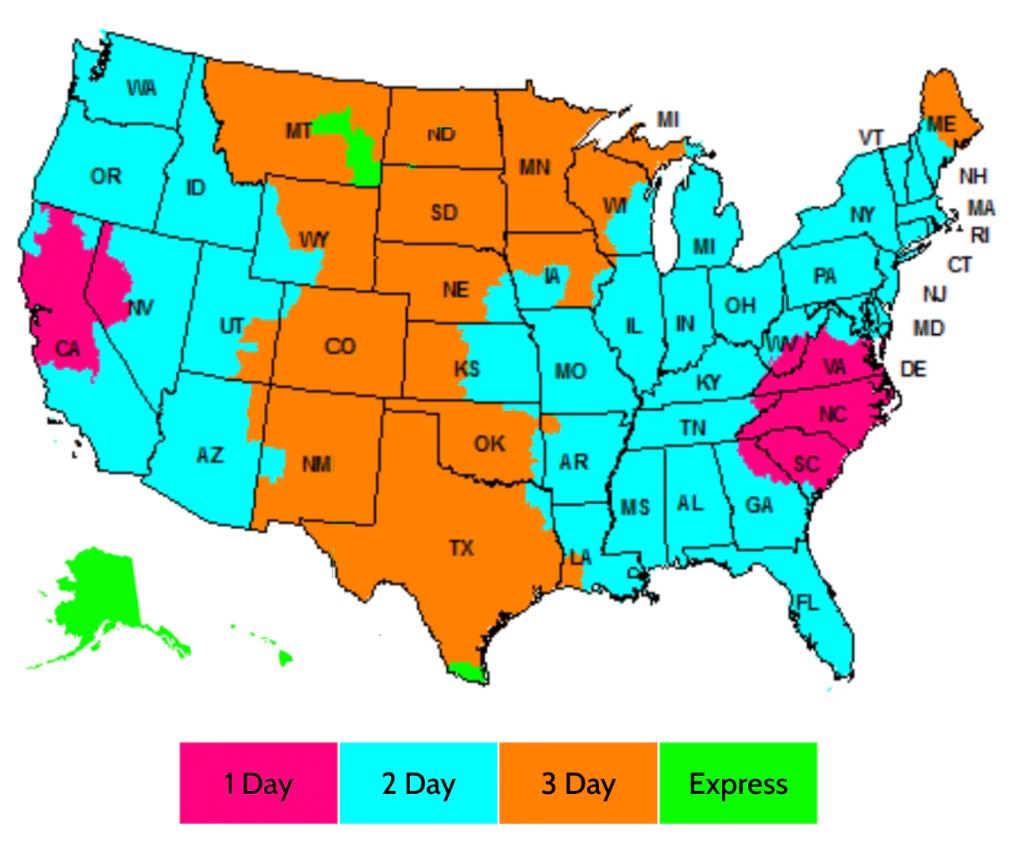
When raw food companies decide to ship their product, they are taking a risk. They must trust that their product will maintain quality in the shipping process. Viva Raw anticipates shipping complications in advance and makes modifications based on what is realistic. Their standard shipping procedure is only to ship out Monday through Wednesday. This is done to ensure that their product never gets delayed by a weekend. With their headquarters in North Carolina and their warehouse on the west coast, they can reach most parts of the United States within three days. Their product only takes one day to ship to Northern California locations, where most of our pet parents live.  

Furthermore, Viva Raw knows how the holidays affect shipping and does not ship during the riskiest weeks of the year, such as Thanksgiving and Christmas. They are very proactive about warning their customer in advance about when a break in shipping is coming, so people know to preorder their food. Viva Raw and Nuvet are relatively small businesses and therefore take considerable pride in their customer service.  

Disclosure of Affiliate Programs 

Because we never attempt to deceive people, we disclose that we do receive a benefit when you purchase Viva Raw and NuVet through our links. With Viva Raw, we get credit towards our purchase of their product. With NuVet, we receive an affiliate payment. However, we do not recommend products because of a kickback. We use both of these products and believe in them for the above reasons. The reason for writing this article is to explain WHY they are our recommendations. 

If you purchase Viva Raw through our link, you will get 20% off of your purchase. You get free shipping if you order over $250 worth of food. This is the most cost-effective way to purchase Viva Raw if you have the freezer space to store the food.  

Works Cited  

Craig, J.M. “Raw feeding in dogs and cats.” MAG Online Library, Companion Animal, 18 December 2019, https://www.magonlinelibrary.com/doi/full/10.12968/coan.2018.0068. Accessed 27 November 2022.  

“NuVet Plus Feline Powder.” NuVet Labs, NuVet Labs, 2022, https://www.nuvetlabs.com/order_new2/nuvet-plus-feline.asp. Accessed 27 November 2022.  

“Pure Recipes for Cats & Dogs.” Viva Raw, Viva Raw, 2022, https://vivarawpets.com/pages/pure. Accessed 27 November 2022.  

Spitze, A.R., et al. “Taurine concentrations in animal feed ingredients; cooking influences taurine content.” UC Davis School of Veterinary Medicine, Department of Molecular Biosciences, School of Veterinary Medicine, University of California, Davis, CA, USA, 20 January 2003, https://www.vetmed.ucdavis.edu/sites/g/files/dgvnsk491/files/aal/pdfs/spitze.pdf. Accessed 27 November 2022.  

Verlinden, A., et al. “Food Allergy in Dogs and Cats: A Review.” Taylor and Francis Online, Critical Reviews in Food Science and Nutrition, 18 Jan 2007, https://www.tandfonline.com/doi/full/10.1080/10408390591001117?scroll=top&needAccess=true. Accessed 27 November 2022.

How to Keep Your Bengal Cat Litter Box Smelling Fresh and Clean

by Robyn Paterson


When people visit a cat breeder’s home, the automatic expectation is that it will stink. We have visitors frequently as people come over to pick out and pick up their kittens. It always makes our day when people ask, “how come it doesn’t smell here?” Here is our secret. 

Cat poop should not stink. Period. End of story. If it stinks, something is not right.

Several medical reasons may cause an unpleasant odor in cat feces: parasites, bacterial infections, medication, IBD, and liver or gallbladder disease. When the cause of the smell is medical, other symptoms often accompany the foul-smelling poo: weight loss, butt scooting, separated hair, fever, or overgrooming. If your cat is experiencing any accompanying symptoms, you should consult your veterinarian about potential causes. 

The most common cause of offensive-smelling cat poo is diet. Cats are obligate carnivores with no dietary need for plant-based ingredients. Many plant ingredients pass through the cat without being digested, fermenting as they go through the digestive tract. 


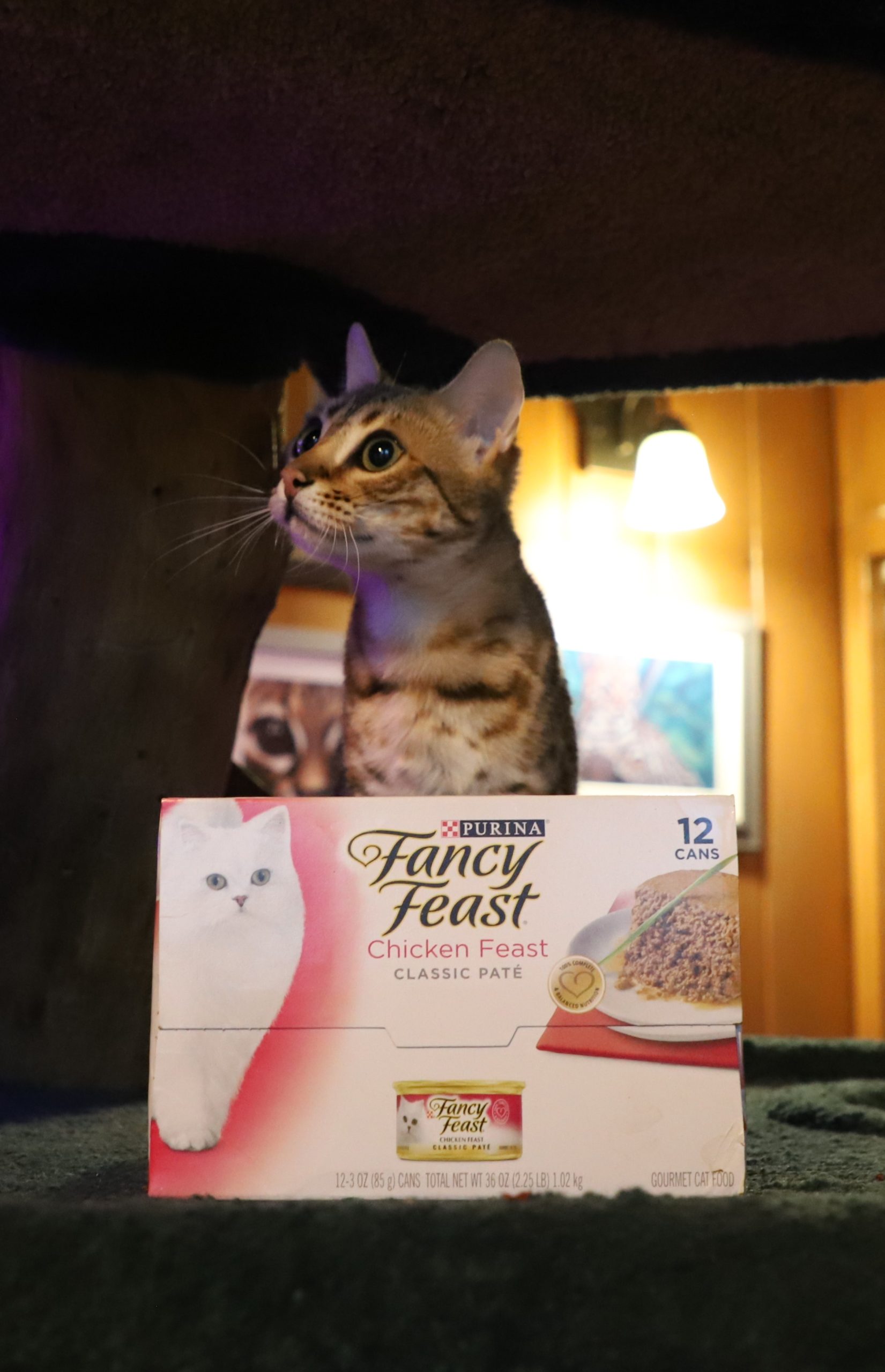
The most effective step you can take to eliminate odors is to switch your cat over to food with ingredients that are all animals based. To switch a cat from its current diet to raw food, we recommend you first switch to an all-canned diet. We have successfully used Fancy Feast Pate Varieties to switch cats to raw food. Once the cat is happily eating the Fancy Feast, add raw food. Start with a quarter of raw food with three-quarters of canned food. If the cat eats this, add a teaspoon more raw food the next day. If the cat rejects the food at some point, revert to the previously successful ratio for a couple of days, then move forward. Continue in this manner until the cat has fully transitioned.  

Most people prefer to purchase raw food before venturing out to make their own. We like Viva Raw’s protein variety and shipping reliability and recommend people start with it along with the NuVet Supplement. For an explanation of why we recommend these products, please read Why We Recommend Viva Raw along with NuVet for Bengal Cat Food.


Another contributing factor to unpleasant smells is cat litter itself. Many have perfumes added, which don’t always mix well with cat urine. The fragrances added to cat litter are added for people’s benefit; cats do not like fragrances. They intend to mask order, but they are rarely successful. We recommend using unscented litter, but not all unscented litters are the same. We use Cat Butler litter in our house. Cat Butler litter is made from pea fiber, a natural byproduct of gluten-free food production. The starch in the peas absorbs liquid quickly, forming tight clumps that stay separate and lift easily from the box. Because the clumps stay intact, the box remains fresher and drier, which helps control odor more effectively. The dense structure of the pea pellets also produces very little dust, so the litter doesn’t break down into fine particles the way clay can. In addition, the pellets are shaped to resist sticking to paws, which reduces tracking and keeps both cats and floors cleaner. When you keep the box filled to the proper depth, Cat Butler locks in waste and odor just as well as clay—without the residue, weight, or environmental impact.

It takes two simple steps to have an odor-free house – feed raw food and use Cat Butler cat litter.  

Works Referenced


Addie, Diane D. Ph.D., BVMS, MRCVS. “Dr. Addie – How to prevent FCoV transmission.” Feline Infectious Peritonitis and Coronavirus Website, 14 May 2019, https://www.catvirus.com/PreventionS1.htm#CatLitter. Accessed 27 December 2022.


Are you thinking of getting a Bengal cat and want it to come with a lifetime of expert advice? Check out our available Bengal kittens.