Bengal-Proof Your Easter

March 7, 2021

by Robyn Paterson

We all look forward to the holidays when we can get together with family and friends, but Easter, in particular, invites some dangers for Bengal cats into the home. Some careful planning can prevent these dangers while still engaging in all the fun.

Easter Decorations

Easter grass and Easter eggs can be dangerous for cats. Most cats love the plastic grass that fills Easter baskets. Some cats, in particular, are drawn to chewing on plastic. But these fine pieces of plastic wreak havoc on a cat’s digestive system and may result in a trip to the emergency vet over the holiday weekend. Avoid plastic grass by using paper grass or edible grass alternatives. While it is not great for a cat to eat dyed paper or strands of potatoes and corn starch, a small amount of biodegradable material is more likely to be dissolved by a cat’s highly acidic stomach and pass through the digestive system without landing the cat in the emergency room. 
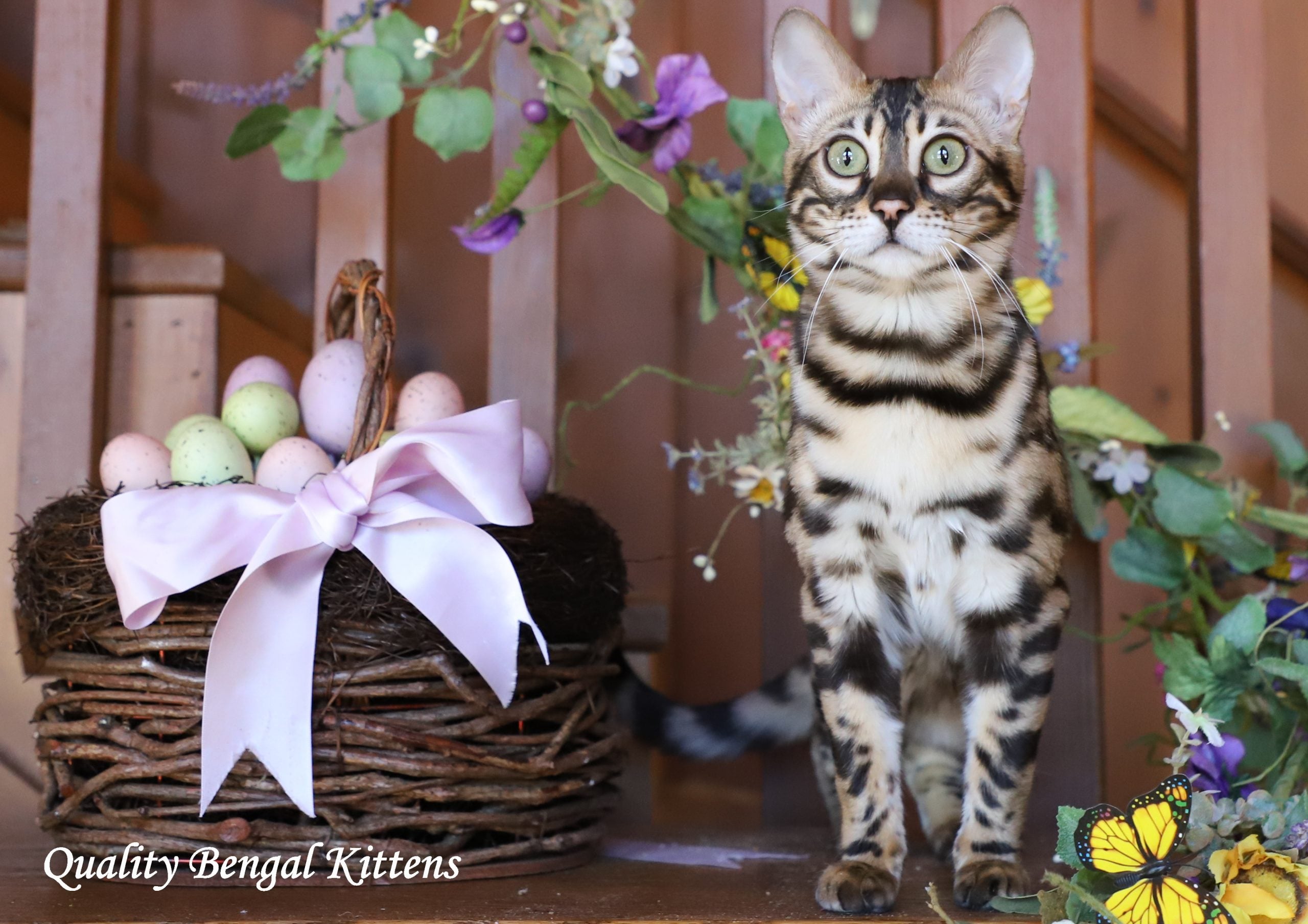
Like plastic grass, plastic eggs can present a problem if they are broken and eaten by the cat. If you have been using the same eggs for multiple years, it may be time to replace them before they become brittle and break. Eco Eggs sells non-toxic, reusable Easter eggs that are less likely to shatter. Because they are non-toxic, they are safer if a cat turns them into a toy. When wanting to avoid plastic altogether, consider hollow wooden Easter eggs. These eggs are completely safe for cats and will last for years. Buy them early, have the kids paint them, and keep these decorated treasures for years to come. They can be used repeatedly to hide Easter treasures.

Easter Foods 

Chocolate and baked goods can both cause digestive upsets for cats. The caffeine and theobromine found in chocolate can cause seizures, heart failure, and death. The amount consumed increases the likelihood of these side effects. Likewise, baked goods can contain carbon dioxide; alcohol released from the dough while rising can cause alcohol poisoning. Keep uncooked dough out of your cat’s reach while it is being left to rise, and make sure the Easter chocolate is not left within the cat’s grasp. 
Easter Flowers

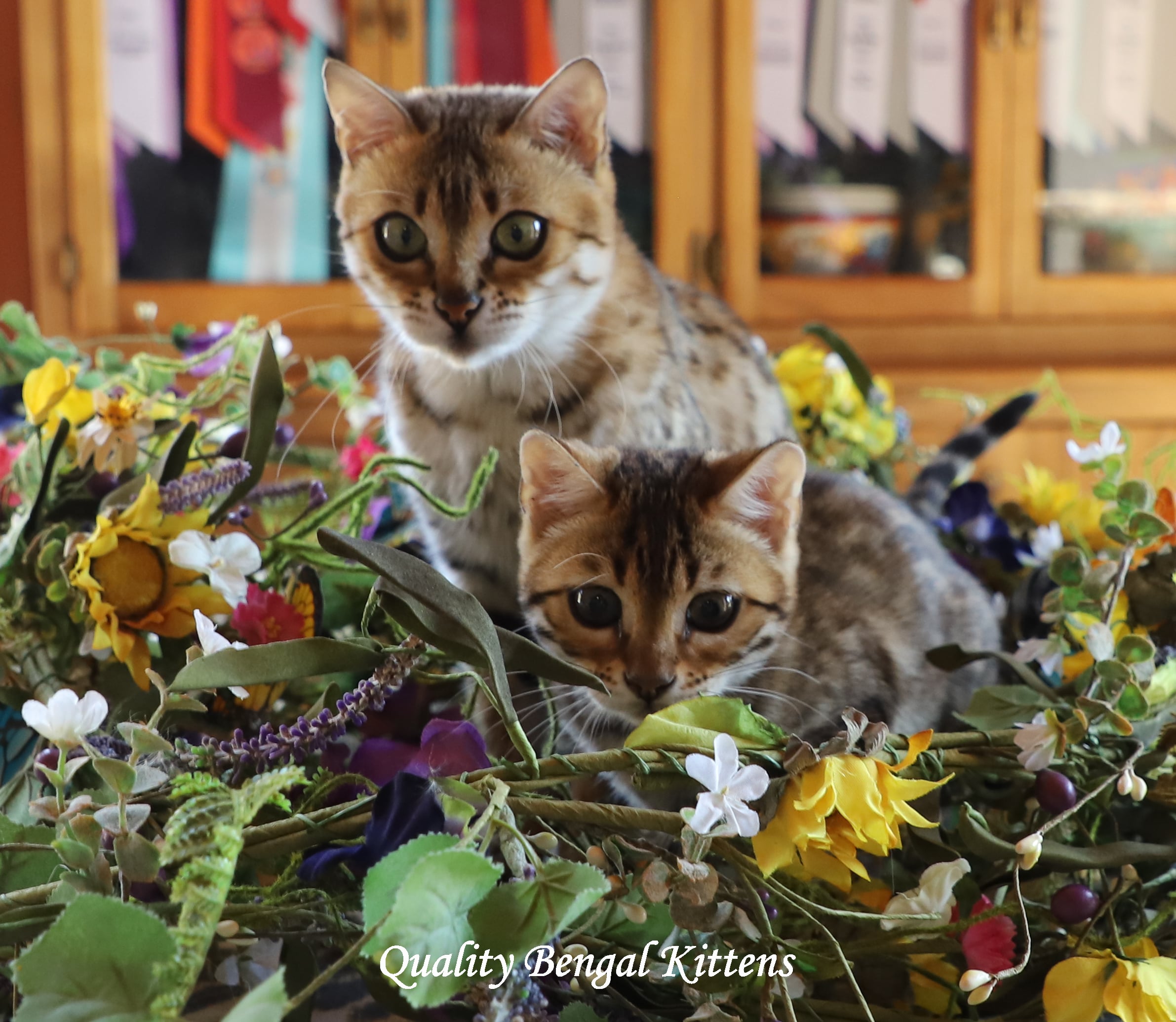
As a cat owner, it is common knowledge that Lilies are toxic to cats; this includes Easter and Day Lilies. The flowers, the leaves, the pollen, and even the water from a vase holding these plants can cause kidney failure in cats. Cat owners must forgo bringing Lilies into the home and growing them in the garden. If a thoughtful guest brings you a bouquet, thank them graciously, educate them on Lilies’ toxicity, and kindly send the flowers back home with them. 

In addition, it is essential to note that all plants that grow from bulbs are toxic to cats. This includes many spring favorites: Daffodils, Paperwhites, Snowdrops, Hyacinths, and Amaryllis. As long as a cat does not have access to these plants, it is safe to have these in your garden. Unlike Lilies, the pollen on these plants is not as severely toxic or as likely to spread onto shoes and clothing and then be transferred to a cat.

Alstromeriaoften called Inca Lily, makes beautiful bouquets as an alternative to true Lilies. They have a lily-look, but they are not in the lily family. Orchids create color inside the home without the fear of poison. Pansies, Freesias, Iris, and Snap Dragons are early bloomers and bring brightness to a spring garden without fearing the flowers being toxic to your cat.

It is good to have Thuja Occidentals 30c on hand if your cat ingests a toxin. You can place a couple of pellets inside the cat’s mouth to help remove the toxins from the body while you are on the way to the vet. 
Easter Escapes

If the family is meeting at your house for Easter, it may be best to put your Bengal cat in a backroom – especially while guests are coming and going. Easter typically focuses on little ones, and little ones tend to be forgetful when so much excitement is in the air. A Bengal cat may dash to join the Easter egg hunt if a door gets left open. Assess the flow of people going in and out of your home during your Easter celebration. While your Bengal cat may have a great time playing and greeting everyone during the day, you may want to keep it contained while everyone arrives and departs. If doors are opened throughout the day, it may be best to leave your Bengal cat carefully contained. 

Include your Bengal in the Easter celebration as much as possible, but remember to take a few precautions to ensure your celebration does not include a trip to the vet. 

We wish you and your Bengal cats a safe and very Happy Easter from all of us at Quality Bengal Kittens.

What is the best cat food to feed a Bengal?

by Robyn Paterson

Sometimes it feels like you need a degree in Animal Nutrition to pick the best cat food for your Bengal cat.  The pet food recalls, lack of supplies, and raw debate make picking the best cat food a challenging choice. Not to worry, we are here to provide some inarguable facts to help you determine what cat food is best and why.  

Cats are not created to eat plant-based foods.
When looking around for the best cat food, the biggest factor to consider is the ingredients.  We hear over and over that cats are obligate carnivores.  But what does this mean?  It means a cat’s body is designed to get its nutrients from meat, organs, and bone.  It also means cats do not easily extract nutrients from plant-based ingredients. How do we know that cats struggle to get nutrients from plant-based foods?  We know because they do not have the enzymes that break down plant matter. 

There are four common types of enzymes in the digestive tract.  Two break down animal matter, and two break down plant matter.  Cellulase is an enzyme in the gut of many mammals that breaks down vegetables and fibers. Cats do not have cellulase. It can be given to cats in their food, but cats do not make their own cellulase.  In addition, most mammals produce amylase in their saliva.  Cats do not.  Cats produce small amounts of amylase in their pancreas.  The complete absence of cellulase and the absence of amylase in the saliva, where most mammals produce it, are clear indications that cats are not designed to eat plant-based ingredients. 
 

Why do cats who eat plant-based proteins appear healthy?

If it is true that cats were not created to eat ingredients that come from plants, then one automatically should wonder why all of these cats who eat food filled with vegetables, grains, and starches appear healthy. They are healthy for the same reason children fed McDonald’s appear healthy.  When we are young, our bodies compensate. 

In 2019 The Journal of Evolution and Health published a study on fruit flies in an article titled “Evolutionary Biology of Diet, Aging, and Mismatch.”   Fruit flies make a good case study because their lifespan is 40-50 days.  In this study, some flies were fed an evolutionarily appropriate diet – the diet fruit flies evolved to eat in the wild. Others were fed on a different fruit.  Ultimately, the study showed that young flies adapted to the new diet and were just as healthy as their counterparts on the evolutionarily appropriate diet. However, at older ages, the flies’ health on the new diet failed more rapidly than the flies on the evolutionarily appropriate diet.

What does that study mean for cats?  While young, a cat is likely to adapt to a diet with plant-based ingredients temporarily, but as it ages, its health will decline more rapidly than a cat being fed a diet of animal-based ingredients. 

Are cats who eat plant-based ingredients getting sick?
If you consider that most cats are fed kibble, then most cats are fed food with plant-based ingredients.  Nearly half of cats aged 6-9 years old demonstrate kidney deterioration.  For indoor cats over the age of five, Kidney disease is the number one killer. 

Cat’s bodies cannot compensate for plant-based diets for too many years without it taking its toll. 

It is important to remember that plant-based ingredients provide no nutritional benefit to a cat over animal-based ingredients.  Plant-based ingredients are fillers.  They are used because they are cheaper than meat-based ingredients. 

Why is water a factor?

Kidney disease is so prevalent in cats because cats on a kibble diet live in a state of constant low-grade dehydration. Today’s housecat cat was domesticated from an African wildcat. The African wildcat does not have access to a reliable water source, so its body is designed to get much of its hydration through food. Cats do not have a natural thirst drive. When you feed a cat a dry diet with plant-based ingredients, you are doubling the damage to the cat’s body. 

Did domestication make cats more tolerant of plant-based ingredients?
Cats are obligate carnivores, and dogs are simply carnivores.  How did that happen?  Domestication.  The domestication of dogs started over 30,000 years ago. In contrast, the first cats are thought to have been domesticated 3,600 years ago. Give cats a break.  They need another 24,000 years to catch up. In addition, cats did not move inside people’s homes until after the invention of cat litter in the 1940s.  Furthermore, people domesticated cats so they could eat the rodents that were stealing their food.  Domestication did not change the cat’s diet until we started keeping them exclusively indoors. 
 

Why does this matter?  The longer a carnivore has been eating human-created foods, the longer its digestive tract has evolved to be.  Because humans have not fed cats for very long – evolutionarily speaking – their digestive systems have not had time to evolve to handle the plant-based ingredients that humans tend to put in commercial cat foods. Some cats will do better than average because their ancestors’ digestive systems adapted to withstand more plant-based ingredients. But when you compare 3,600 years of evolution to 30,000 years of evolution, you can see there is a long way to go before cats make the switch from obligate carnivores to carnivores. 

What is the best cat food?

The best cat foods contain water and animal-based ingredients – meat, organs, and bone.  The best cat foods have minimal to no plant-based ingredients.  The best cat foods have less than 5% carbohydrates – ideally, it is 0% carbohydrates.

Because carbohydrates are not necessary for a cat’s diet, pet food companies do not list what percentage of the food is carbohydrates.  You’ll have to do a little math to figure it out. Add up the crude protein, crude fat, crude fiber, moisture, and ash.  Then deduct that total from 100%.  What you are left with is the percentage of carbohydrates.

Furthermore, the best cat foods have minimal to no processing.  In short, this means the best cat foods are not cooked.  Cooking changes the bioavailability of nutrients, meaning cats cannot utilize the nutrients from cooked food as easily as they can from uncooked food.  Again, this goes back to the short length of time cats have been eating manmade diets.  

Go cat food shopping.

Head down to your locally-owned, Mom and Pop, brick-and-mortar pet food store with this article pulled up on your phone.  We have found the people working in these stores to be much more knowledgeable about cat foods.  Share what you learned in this article, and ask if they have any recommended foods with low to no carbohydrate contents. First and foremost, consider a pre-made, balanced raw diet.  

For the reasons explained in this article, a raw diet is best for all cats.  Many vets disapprove of raw diets because they see all the sick cats from people who pick up chicken drumsticks at the grocery store and think that is a balanced raw diet. It is not. Feeding an unbalanced raw diet is the worst way to feed a cat, but feeding a balanced raw diet is the best way to feed a cat.  For a balanced raw diet, we recommend Viva Raw along with the NuVet supplement for the reasons explained here. 

If you are not willing to feed raw, then you will have to feed food that is cooked.  Canned foods with minimal to no plant-based ingredients are the second-best food choice. While this is not our recommendation, feeding canned foods with less than 5% carbohydrates is better than feeding a kibble diet. You can find an updated page of canned foods that we’ve deemed less harmful than the majority in the Quality Products section of our website. 

You are not recommended to feed your cat dry food unless you use it as a treat


Are you thinking of getting a Bengal cat and want it to come with a lifetime of expert advice? Check out our available Bengal kittens.  

How to Keep Your Bengal Cat Litter Box Smelling Fresh and Clean

by Robyn Paterson


When people visit a cat breeder’s home, the automatic expectation is that it will stink. We have visitors frequently as people come over to pick out and pick up their kittens. It always makes our day when people ask, “how come it doesn’t smell here?” Here is our secret. 

Cat poop should not stink. Period. End of story. If it stinks, something is not right.

Several medical reasons may cause an unpleasant odor in cat feces: parasites, bacterial infections, medication, IBD, and liver or gallbladder disease. When the cause of the smell is medical, other symptoms often accompany the foul-smelling poo: weight loss, butt scooting, separated hair, fever, or overgrooming. If your cat is experiencing any accompanying symptoms, you should consult your veterinarian about potential causes. 

The most common cause of offensive-smelling cat poo is diet. Cats are obligate carnivores with no dietary need for plant-based ingredients. Many plant ingredients pass through the cat without being digested, fermenting as they go through the digestive tract. 


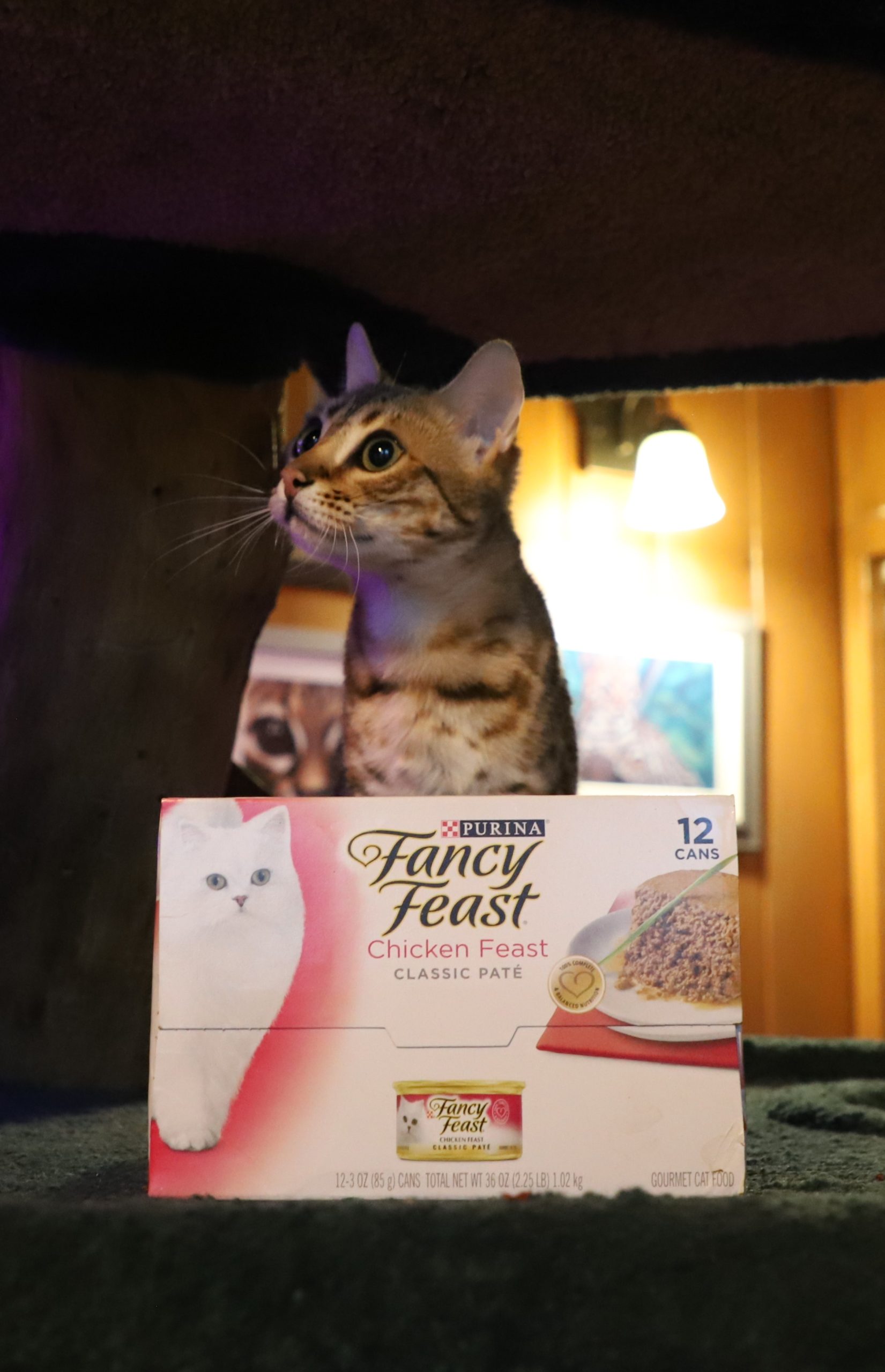
The most effective step you can take to eliminate odors is to switch your cat over to food with ingredients that are all animals based. To switch a cat from its current diet to raw food, we recommend you first switch to an all-canned diet. We have successfully used Fancy Feast Pate Varieties to switch cats to raw food. Once the cat is happily eating the Fancy Feast, add raw food. Start with a quarter of raw food with three-quarters of canned food. If the cat eats this, add a teaspoon more raw food the next day. If the cat rejects the food at some point, revert to the previously successful ratio for a couple of days, then move forward. Continue in this manner until the cat has fully transitioned.  

Most people prefer to purchase raw food before venturing out to make their own. We like Viva Raw’s protein variety and shipping reliability and recommend people start with it along with the NuVet Supplement. For an explanation of why we recommend these products, please read Why We Recommend Viva Raw along with NuVet for Bengal Cat Food.


Another contributing factor to unpleasant smells is cat litter itself. Many have perfumes added, which don’t always mix well with cat urine. The fragrances added to cat litter are added for people’s benefit; cats do not like fragrances. They intend to mask order, but they are rarely successful. We recommend using unscented litter, but not all unscented litters are the same. We use Cat Butler litter in our house. Cat Butler litter is made from pea fiber, a natural byproduct of gluten-free food production. The starch in the peas absorbs liquid quickly, forming tight clumps that stay separate and lift easily from the box. Because the clumps stay intact, the box remains fresher and drier, which helps control odor more effectively. The dense structure of the pea pellets also produces very little dust, so the litter doesn’t break down into fine particles the way clay can. In addition, the pellets are shaped to resist sticking to paws, which reduces tracking and keeps both cats and floors cleaner. When you keep the box filled to the proper depth, Cat Butler locks in waste and odor just as well as clay—without the residue, weight, or environmental impact.

It takes two simple steps to have an odor-free house – feed raw food and use Cat Butler cat litter.  

Works Referenced


Addie, Diane D. Ph.D., BVMS, MRCVS. “Dr. Addie – How to prevent FCoV transmission.” Feline Infectious Peritonitis and Coronavirus Website, 14 May 2019, https://www.catvirus.com/PreventionS1.htm#CatLitter. Accessed 27 December 2022.


Are you thinking of getting a Bengal cat and want it to come with a lifetime of expert advice? Check out our available Bengal kittens.  

Five-Year Health Guarantee from Quality Bengal Kittens

We’ve Extended Our Health Guarantee to Five Years!

We invest so much into the health of our kittens. We have twenty years of heart testing behind our cats. We have tested more of our breeding cats to older ages than any other breeder. When your kitten has SolanaRanch or Wildernesswell parents, it often has two to three generations of heart-tested cats behind it. Many of these ancestors have been tested beyond the age of five, with several reaching the critical milestone of eight years.

In addition, we feed our cats, including our kittens, a raw diet. This approach ensures they receive bio-available nutrients directly from their food, without the need for synthetic additives often found in processed feeds.  When people adopt our retired, adult breeding cats, they are amazed at their health and energy level. We credit our cats’ long-term health to the all-natural diet.  

Additionally, we maintain a toxin-free environment in and around our home to protect our cats from potential carcinogens. We abstain from using pesticides and poisons, both indoors and outdoors. Living in a residential forested area, we are surrounded by more trees than cell towers, minimizing their exposure to harmful agents and promoting a healthier, cleaner lifestyle.

Understanding the importance of long-term health for your new family member, we have decided to increase our health guarantee from three years to five years. This enhanced guarantee reflects our confidence in our breeding program and our ongoing commitment to the health and happiness of our kittens.

Why the Extended Guarantee?

Peace of Mind: Enjoy greater peace of mind knowing that your Bengal kitten is covered for a wide range of genetic health issues for up to five years.

Commitment to Quality: Our extended guarantee underscores our commitment to the highest breeding standards and health practices.

Support and Guidance: Gain ongoing support and guidance as you raise your Bengal kitten, knowing that we are here to help every step of the way.

Secure Your Future Kitten with Confidence
Choosing  Quality Bengal Kittens means more than just welcoming a new pet—it’s about adding a healthy, joyful companion to your family. With our extended five-year health guarantee, you can feel even more confident in choosing one of our kittens.

See Our Current Kittens At
Quality Bengal Kittens – Available Kittens
Facebook Page Photo Albums