Author: Robyn

Are Bengal Cats Vocal Cats?

Bengal cats are known to be vocal, but this is not necessarily a consistent breed trait, nor is it something from their hybrid ancestry. In over 20 years of breeding Bengal cats, we have had some vocal Bengal cats and many not-so-vocal Bengals cats. Regardless of whether you want a vocal Bengal, you are likely to find one that suits your wishes – talk to the breeder about the parents’ vocal tendencies. As long as you do your part in mentally and physically stimulating the cat, your Bengal should be quiet if you seek one from a quiet lineage. For clarification, this article focuses on spayed and neutered pet Bengal cats. Unfixed cats of both genders are vocal, without a doubt, as they must make their presence known to potential mates and rivals.

First, let’s dispel the myth that Bengals are vocal because they come from wild ancestry. That isn’t true. Think about it, are wild cats vocal when they are not searching for a mate? No. Noise attracts predators, and leopard cats are a potential prey species to many larger predators. Small cat species fall into the category of being both a predator and a prey species, and due to this, it is not in their nature to make any unnecessary noise. When they call during mating season, they put their life at risk by revealing their location. We own a couple of first-generation Bengal hybrids; these cats rarely vocalize unless they are in heat. In addition, most of their infant baby kittens do not vocalize. Kitten vocalization can be one of the most confusing experiences for an early-generation mother. Her instinct is that silence is necessary for survival. Sometimes a second-generation mother can become distressed and confused if her third-generation offspring make more noise than she is comfortable with. Our experience has been that the earlier the generation of the kitten, the quieter they are. This makes sense when you consider the importance of silence for survival in the wild.  

However, we believe that excessive vocalization is hereditary, but it comes from the domestic side of a Bengal cat’s heritage, not the leopard cat side. Through observation, we know that our cats down from the cattery Rosettea tend to be a bit more talkative than our cats that do not have Rosettea lineage. We’ve worked with two different Rosettea-line stud cats over the years. Our direct offspring of those Rosettea sires tended to be more chatty than their quieter mother. That extra level of talkativeness can be bred back out by selecting a non-talkative partner for them, but it can also continue to pass down to the next generation. If one were to breed two talkative cats together, the result would likely be more consistency in the verbose nature of the offspring.

The majority of our cats, however, are not excessively talkative. Most of our cats, not all, will talk back when we talk to them and engage in a brief conversation. The cats will undoubtedly talk about when food is being prepared or when they think it should be prepared. Some will give a meow if they want to greet you when you return home or get up in the morning, but typically this is paired with physical contact. So the cat will stand up to greet us and say hello. Sometimes they chatter while watching the birds outside. 

How can you stop your Bengal Cat from talking so much?

Even if you have a Bengal genetically prone to talking more than average, you can control their talking. The first thing you may want to do is rule out any medical reasons for a talkative cat. Assuming that there is no medical condition causing the talking and considering that the Bengal is a high-energy, highly-intelligent breed of cat, it is likely the cause of its excessive and inappropriately timed taking has its roots in boredom. Cries out of boredom or loneliness are the “constant cat meowing or crying [that] usually starts after you go to bed and continues until you respond or she gets tired of calling out for attention” (Kelley).   This means you can modify and adjust this behavior to your liking, but it will take some effort. Because Bengal cats are highly-intelligent and high-energy, they are more likely to become bored, increasing their chances of meowing too much out of boredom.

How Feeding affects Meowing

If you free-feed your cat, the first thing you must do is stop. Secondly, if you feed your cat first thing every morning, you must stop doing this. Free feeding or feeding-first-thing are two everyday habits of humans that can contribute to excessive talking. When you free feed, the cat controls his energy spikes, which likely means he will want to play when you do not want to play – such as at night when you are trying to sleep (Galaxy). When you feed first thing in the morning, your cat associates your getting up with him getting food, so he figures that all he needs to do to get his food is wake you up. Make your cat’s morning feeding take place after you have had your breakfast.

If your cat’s meowing is bothering you, one of the first steps you may try is to control your cat’s energy spikes. You can do this through a play-then-feed routine. Follow the steps in our article on play to get your cat into a routine. Play, then feed your cat 2-5 times a day based on the cat’s needs. We suggest the most extended play session and the most substantial feeding portion be as late into the evening as your routine schedule allows. We also recommend that your first play-then-feed session is as late into the morning as your routine allows. Mornings are often busy and short on time, but if your cat’s meowing is problematic, then you need to make it a priority to play for at least ten minutes before you run out of the house to start your day.

Reducing Meowing through Training

Training a cat to do anything and actively engaging the cat in that training is an excellent way to decrease the meowing resulting from boredom and or loneliness. You can decide what type of training you want to do with your cat. However, your first task will be to find a treat your cat likes enough to work for. Once you have a treat, what would you like to train your cat to do? Would you like to clicker train it? Harness train it? Or teach it a few noise-reducing tricks? Working your cat’s brain will make it more tired at night and rest easier. If you have a busy day and don’t have time for a training session, you can leave out a puzzle for your cat to solve, but the more persistent the meowing is, the more work you will need to put into tiring your cat out both mentally and physically. 

Reduce Meowing by offering a Cat Wheel

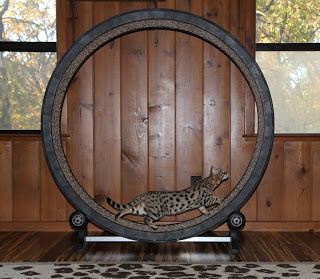
Nighttime would be your cat’s most active time if it lived out in the wild. While you can influence their energy spike by establishing a play-then-feed routine throughout the day, you may also want to offer your cat a Cat WheelFeral cats would naturally walk a territory of five acres throughout the night, but it is not safe to let your cat go out roaming. We have multiple cat wheels in our house, and the wheels are often reasonably quiet during the night but go nonstop throughout the night. For more information on our experience with different brands, please read our article on Cat Wheels. 

Stop Responding to your Meowing Cat

If you have done your work at creating a normal body rhythm for your cat using the play-then-feed method and exercising its mind through training or puzzles, then the last step is to ignore the cat’s meowing. While this may be the hardest of all steps, it must be done (Galaxy). Once you’ve worn your cat out to the point of panting, then feed him his last meal of the day and go to bed – with earplugs if necessary and do not respond to any meowing. When you get up in the morning, go through your routine, remembering to feed the cat toward the end of your morning routine. 

While it may take a few weeks to eliminate meowing caused by loneliness and boredom, it will happen. The work you put into it will pay off. You will be happier, your cat will be happier, and everyone will sleep better. 

Work Cited

Galaxy, Jackson. “Train Your Cat to Let You Sleep.” Jackson Galaxy. 2019, www.jacksongalaxy.com

Kelley, Jane A. “Cat, Won’t Stop Meowing? 7 Reasons For All That Cat Meowing.” Catster. 8 Oct. 2019. www.catster.com

Learn More about Bengal cats in our BLOG. 

Learn what makes Quality Bengal Kittens different

Check out our currently Available Bengal Kittens.

The Role of Play in the Quality of a Cat’s Life

Bringing a new pet into the family is an important step, and you want to do all you can to ensure the pet you bring home will be a good fit. Cats can have some classic behavioral problems. Can you do anything to reduce the risks of your next kitten developing these problems? The more you know about your cat’s early life, the more accurately you can predict the chances of behavioral issues. 

The time between weaning and puberty is a critical developmental stage for any animal. What should a kitten be doing in this time frame? It needs to be engaging in play with other kittens and cats. In the wild, play is a reasonably risky behavior. It increases the opportunity to get hurt; it makes those engaged in play conspicuous to potential predators; it expends a lot of energy. Yet, “play has persisted in numerous species through centuries of evolutionary change. And many animals spend much of their time in play. So if play has its costs, it should also have benefits that help animals survive” (Flanagan).

It turns out that play has a few benefits. Sergio Pellis, a neuroscientist at the University of Lethbridge in Alberta, Canada, who has been researching rats – one of the most playful animals on earth – since the 1990s, discovered that engaging in unsupervised free-play affects the prefrontal cortex of the brain. The brain’sprefrontal cortex has been linked to planning complex cognitive behavior, personality expression, decision-making, and moderating social behavior. Pellis’s study found that “the rats raised in a play-deprived environment . . . had a more immature pattern of neuronal connections in the medial prefrontal cortex” (Henig). But what exactly does this mean? Pellis concluded that play-deprived brains “will be less able to make subtle adjustments to the social world” (Henig). Essentially, the more an animal plays, the brain grows (Sharpe).

In addition to affecting the brain’s mental capacity, play affects emotional development, which may have the most significant impact on the quality of life of your cat. When animals play, they are often engaging in hunt-like behaviors. Prey species will often enjoy being chased. Predators want to be the ones doing the chasing. Cats – who are both predators and prey – engage happily in either role. This rough play will have moments of stress. As humans overseeing these kittens engage in stressful play, it is counterproductive to interrupt it. Since its brain is developing, “when a baby animal experiences stress, its brain changes so that it’s subsequently less sensitive to stress hormones” (Sharpe). Through the engagement of rough play, the kittens “prime or fine-tune their own stress response” (Sharpe). This will enable the kitten to endure a higher level of stress as an adult without negatively affecting the cat. A cat that doesn’t have these opportunities to play roughly grows into a more sensitive, emotionally fragile adult.

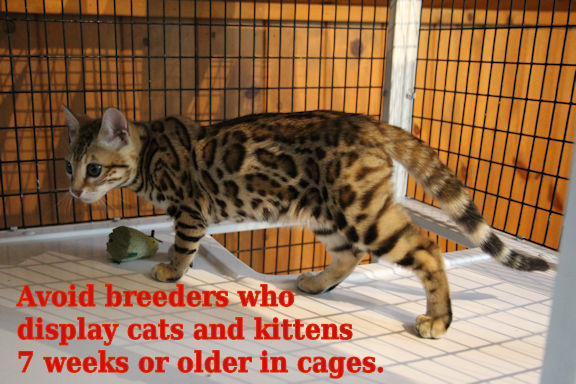
What does all this mean for your cat? To have the best chances of owning a well-adjusted, intelligent, social cat, it needs to engage in a lot of play as a kitten. Kittens raised in cages cannot participate in expansive play for optimal brain development. Caged kittens are in a restricted environment that doesn’t provide challenges or a mixture of other cats with whom to interact. Kittens need to have a riskier environment with other friendly kittens and cats around them while they partake in the activity of play. It will help them make both physical and social mistakes. When a kitten falls off a cat tree, it learns to be more careful when climbing. When it gets too rough with another household cat, it learns how to read body language better. When it bites too hard in roughhousing, it receives a hard bite and learns to lighten up.

The more restricted the environment, the fewer opportunities to engage in the free play necessary for intellectual, social, and emotional development. Unfortunately, most behavioral disorders don’t surface until the cat is around a year old, so you won’t see the results of an improper beginning until your cat is an adult. Make sure your future family member has the best possible start by growing up in a home with places to climb, buddies to rough house with, and fun to be had around every corner.

For more information on what your kitten is learning within the first 12-14 weeks, please read our article on Why Kittens should stay With their Mom in a Home Environment for 12-14 weeks.

Works Cited

Flanagan, Ruth. “Scientists Work on Learning Why Many Animals are Beasts of Play: NORTH SPORTS FINAL, CN Edition].” Chicago Tribune (pre-1997 Fulltext), Nov 15, 1991, pp. 1. ProQuest, https://search.proquest.com/docview/283203253?accountid=176169.

Henig, Robin Marantz. “Taking Play Seriously.” The New York Times, The New York Times, 17 Feb. 2008, www.nytimes.com/2008/02/17/magazine/17play.html. 

Sharpe, Lynda. “So You Think You Know Why Animals Play…” Scientific American Blog Network, 17 May 2011, blogs.scientificamerican.com/guest-blog/so-you-think-you-know-why-animals-play/.

Do Bengals like to be Touched or Held?

The Bengal personality can run the gamut. In general, they are highly social cats – wanting to be involved in everything you do, but also, in general, they are all-four-on-the-floor cats, meaning they prefer to have their feet on a surface at all times. How much petting and holding Bengals enjoy varies – just like all cats – and here is why.

Cats have not been domesticated for many years compared to many other domesticated animals. Furthermore, the first purpose of cat domestication was not as a pet but as a working animal utilizing its natural behavior to control rodents. While most of us are consciously aware of cats’ predatory role, we must not forget that they have always been prey to many larger animals. But in 1947, cat litter was invented, bringing cats indoors – in some cases – permanently. Having cats as indoor-only pets is a very modern practice. Why does all this matter to the touching and holding of cats? Hopefully, it puts a time perspective on the short number of years cats have lived under people’s protection. Evolution doesn’t change instinct as quickly as humans have altered the habitat of cats, so cats still have the fight or flight instincts of a prey species animal – and this affects how and where they want to be touched and explains their natural resistance to restraint – which feels like being caught for supper.

Once you understand the cat’s instincts as both a predator and a prey animal, you can learn how to touch in a less offensive way to a cat, and you can work with your cat through rewards – or bribery – to encourage her to enjoy cat-appropriate touches.

Let’s start with touch. A cat’s sense of touch is much more magnified than people’s. The final kill move in their hunting process is decided based on what the cat feels with its whiskers – not what it sees with its eyes. This gives some perspective on how important the sense of touch is to a cat. Thus, the whiskers are a cat’s most sensitive area, and they do not like to be touched on their whiskers. Most people are familiar with the whiskers on either side of the cat’s nose and above the eyes, but did you realize cats also have whiskers on their feet and legs? You want to avoid touching the cat’s whiskers on purpose because a firm touch can be very overstimulating for a cat.

Touch is a way that cats spread their scent onto other cats and items. You may see your cat rubbing her cheeks on your favorite chair. That is because she wants to mix her scent with yours. Thus, one of your cat’s favorite places to be touched is just behind the whiskers on her cheek. She loves to get scratched here. She also enjoys scratches behind the ears, at the base of the chin, where it connects to the jaw bone, and sometimes at the tail’s base. All cats are different, and you should observe your cat to discover where she likes to be petted the most.

The difficulty is that cats enjoy brief, short-stroked, frequent interactions. Think of how cats groom one another with short, firm licks. People tend to want more extended, long-stroked interactions once or twice a day. Every cat has a different comfort level for how much petting they enjoy. We need to meet our cat at her current comfort level and increase it through rewards (treats) if we need longer touching sessions with our cat.

It is important not to touch your cat when engaged in hunt-like play. In the cat’s mind, it is out in the wild, stalking its next meal while trying to survive. While cats focus on hunting, they are also vulnerable to attack by larger predators. Touching at this point will likely result in the cat responding with the instinctive fight or flight reaction, so you are more likely to get scratched, or the cat will run away. Neither is a desirable behavior when working to increase the amount of touch-time with your cat.

Following the cat’s lead is the best method of improving your contact with your cat. Allow the cat to come and lay on you by choice. Stick your finger out near its face and allow it to rub itself on your finger. When you initially let your cat control the touching, it builds trust in your relationship, which leads to more human-initiated petting in the future.

Now that we’ve covered where to touch your cat and when not to touch your cat, let’s tackle the issue of being held.

When it comes down to it, cats do not like restraint because it is not natural. Review the second paragraph; it has not been long since cats lived in the wild as both predator and prey. Cats have so many kittens in a litter for the species’ survival. The death rate of cats in the wild is high due to predation. What does being held mimic from the wild? Being caught.

However, cats can be bred to be more accepting of being held. The Ragdoll breed earned its name due to its acceptance of being picked up. If being held for extended periods or carried around is a top priority in your wish for a cat, you may want to consider a Ragdoll or an adult Bengal who is the exception to the Bengal norm. Bengal norm is cat norm; they have an aversion to restraint. In general, Bengal’s higher intelligence and instinct cause them to be in tune with their natural cat status.

You can do a few things to increase your cat’s tolerance for being held. You’ll want to limit the bad experiences that come with restraint and increase the positive ones. Think about all the bad things that happen to your cat – vaccinations, medications, nail trimming, etc. They all happen while being restrained. Anytime you can alter negative experiences while being restrained, do so. Try trimming claws while your cat sleeps. Try hiding medications in food.

Additionally, you can increase your cat’s positive experiences with being restrained. Once you find a treat your cat likes, offer a treat for tolerating being held. Increase the time being held slowly. Cats respond best when there is something in it for them, so you need to reward your cat for being held to convince her it is non-threatening.

It has been 10,000 years since agriculture allowed humans to begin to leave their hunter-gatherer lifestyle behind and form housing and societies. It’s been less than 100 years since the cat moved into our homes permanently. Part of our draw to cats is their independent, instinctual nature. We can’t expect them to turn those instincts on and off as we desire. We have to meet our cats at the touch and holding level they find comfortable and reward them through food to accept a little more gradually. 
 

References

Becker, Marty DMV. “Four Places to Pet Your Cat and One to leave alone.” VetStreet.  21 November 2012. www.vetstreet.com.  Accessed 23 July 2018.

Galaxy, Jackson. Total Cat Mojo. TarcherPerigee. New York City. 2017.

“Understanding Your Cat’s Behavior.” Cats Protection. February 2015. www.cats.org.uk.  Accessed 23 July 2018.


Are you thinking of getting a Bengal cat and want it to come with a lifetime of expert advice? Check out our available Bengal kittens.  


It is Best for Kittens to Stay with Mom in a Home Environment for 12-14 Weeks

The early days of a kitten’s life have lasting effects on a cat’s behavior. Early weaning, fighting for food, having no sense of territory are all events that can alter behavior.  When deciding to bring a new companion pet into your family, it is essential to know how that kitten began its life.  Keeping kittens within their feline family unit in a home environment for 12-14 weeks benefits their lifelong behavior.

Many factors explain why it is essential for a kitten to stay with its family unit for 12-14 weeks.  The first is the negative impact of early weaning.  In 2017 Scientific Reports published a study that discovered “Early Weaning Increases Aggression and Stereotypic Behavior in Cats.”   The effects are rooted in both biological and environmental causes.  Early removal of kittens from their Mom can affect dopamine and serotonin levels, which we know are connected with emotional wellness. Due to the chemical changes in the brain, kittens weaned before eight weeks have an increased chance of being aggressive adult cats, and kittens weaned at 12-14 weeks are “significantly less likely to display aggression towards strangers than early-weaned cats.”  Early weaning affects shyness again, with kittens weaned before 12-14 weeks being shyer than those weaned later. Overall, the risk of developing the most common behavioral problems increases with early weaning. Therefore, the study on early weaning concludes that “delayed weaning [is] a simple means to improve the quality of life in domestic cats.”

Beyond the possible chemical changes in the brain, why does early weaning cause behavioral problems? Kittens have a lot to learn from their family unit, and if they are removed from that family unit at too young of an age, they miss out on these crucial lessons. One of their first lessons is one in communication – how to read and project cat body language.  Their first lesson in communication will be their communication with Mom and her response to their interaction.  But they will also watch Mom communicate with other cats in the family unit, and they too will begin to interact with others in the family unit. Most pet cats will be in a home with another cat – either immediately or at some point in their lifetime. To coexist with other cats, they must learn cat body language.  Body language in the cat world is a make-it-or-break-it skill.  If a cat doesn’t learn to approach another cat correctly, it may never be able to integrate with other cats and be labeled as cat aggressive. Kittens best learn to communicate appropriately with other cats within their homegroup of cats.  We can see how vital these communication skills are when observing kittens that are bottle raised by a human with no other cat in the household.  When these cats try to meet and interact with another cat, they cannot read or display cat body language, making the feline relationship quite tricky.

Body language lessons are essential in learning how to claim and be comfortable in a shared territory.  A cat’s security, and therefore happiness, all hinges upon its ability to claim and retain territory. This lesson has to be learned in a home environment; it can’t be taught within a cage’s confines.  Once the kittens are potty trained, they must begin to explore beyond a restricted environment.  Expanding their environment allows them to observe and smell how cats appropriately claim and retain territory by rubbing their scent glands on their home objects.  The kittens watch adult cats confidently move throughout the home and appropriately place their scent on items through scratching and rubbing; this becomes the norm for the kittens.  Having experienced and lived within a home peacefully shared by other cats can help prevent territory insecurity because it has been established as normal.  Kittens who are caged through their first 12 weeks do not get this experience, so just staying with the breeder for 12-14 weeks isn’t the only factor to consider. When looking for a purebred kitten, one needs to know how the kitten lives within that time frame.  If a kitten spends its first 12 weeks in a cage, it is more difficult for that cat to feel secure in the larger environment.  

Another critical aspect of growing up in a nurturing home is equal access to unlimited quantities of food.  Kittens need a lot of food.  If they grow up in an environment where food is scarce, that teaches them that food has to be fought for and protected, putting them on the defense around other cats.  It can make them food aggressive to the point where they will bite or scratch anyone – human, cat, dog – that comes near their food while eating.

Finally, simply filling a kitten’s life with positive experiences, not negative ones, decreases the likelihood of emotional issues such as PTSD.  If a kitten has a traumatizing occurrence in its early life, that can continue to affect it, causing fear when it hears an associated noise or sees an associated object. 

Unfortunately, most anxieties within cats do not surface until the onset of maturity, so one may not see the effects of a deprived or traumatic kittenhood until the cat is over a year old.  It is entirely possible that one could bring a kitten home and not fully experience the adverse behavioral effects of a poor upbringing until the kitten has grown into an adult cat.  Buying a purebred pet should offer the purchaser some securities, but they need to make sure they are buying from a breeder who offers their kittens the best beginning.  A breeder must keep their kittens for at least 12 weeks, and the kittens must have room to roam and expand their territory once they are potty trained. By having their first territory expansion into a more significant portion of the home within a safe homegroup of cats, they learn to communicate with cat body language and rub their cheeks on objects to claim and retain the territory. When looking for a new kitten, make sure it will stay with its breeder for the first 12-14 weeks and that it will live in a home environment with other cats. 


Cat Food Tips to get through COVID-19

With COVID-19 sweeping us into a different world, raw feeders may have found some challenges.  For one, raw feeding can be expensive when you buy it pre-made and pre-balanced.  Secondly, we are encouraged to have a month’s supply of food on hand, and unless one has an excess of freezer space, it can be a challenge to have a month’s supply of raw food stored away.  We are going to tackle some solutions to these problems.  

Problem Number One – Accessing affordable raw food

While we recommend Darwin’s Natural Raw Food to our kitten buyers, it is not the cheapest food on the market.  We recommend it for its nutritional value; its likeness to our homemade food, and its convenience.  Many people think feeding raw has to be hard, and Darwin’s proves that wrong.  But you do pay for that convenience.  We can also recommend some less expensive options.  Two of our recommendations are only going to be suited for our Sacramento and San Francisco Bay Area family members.  Our first recommendation for those needing cost-saving is the Excel K9 Diet Chicken in a Bag.  Yes, I know it says K9 on the heading, but the ingredients list is chicken, chicken bone, and chicken organs.  There are no supplements, and most importantly, there are no vegetables. When looking at raw food for cats, you need to avoid anything with vegetables in the mix.  The four-pound chub of this food is $7.  That is under $2 a pound for pre-made raw chicken.  Sometimes we cannot make our own homemade ground for this price, so this is an excellent buy.  We add the NuVet supplement to this mix before we feed it. We feed the Special Grind Chicken and Duck from Excel Pet Pantry, and add NuVet supplement to this as well before feeding.  The chicken and duck blend is $7.80 for a four-pound chub, so it costs slightly more than straight chicken, but it provides a different protein source. Look around at what Excel Pet Pantry has to offer.  For those who prefer to make your own, they have great prices on different protein sources and different organs from various protein sources.  What is the catch – they deliver to central locations through our the greater Sacramento and San Francisco areas, but only once a month.  You have to know what you want to order for the month or else take a drive out to Sutter Creek during their store hours.  And yes, pet food is an essential business during Shelter In Place.

For those willing to travel to South Sacramento, we recommend the Mad Butcher Meat Company’s raw food.  We purchase the least expensive option, “Fortified with Bone” at the 80/10/10 ratio.  This is 80% muscle meat, 10% bone, 10% organ, which is the proper balance for cats.  We add NuVet to it as well.  If you do not want to add any supplement, you may purchase the line of food labeled “Complete,” but it does cost more.  Please be sure to avoid their “Bone and Vegetable” line of products.  That is for dogs and should not be fed to cats. The pet food is in the freezer to the right of the door just as you walk into the Mad Butcher Meat Company.  When buying in bulk, please talk to an employee.  They will go to the back for boxes of 36 one-pound packages already boxed up and ready to go. 

Another great buy for those looking to watch their dollars yet still feed raw is whole ground beaver from Simply Rawsome. A two-pound bag of the ground beaver is under $3 per pound.  Beaver is basically a giant rodent, so it is most similar to a cat’s ideal meal of rat or mouse at a much better price.  Simply Rawsome does have a shipping fee, so this is not the most economical option, but it is worth mentioning.

Canned Food Options for Storage and Savings

Unless you are blessed with multiple freezers, it can be hard to store an extra month’s worth of raw food.  Furthermore, as joblessness skyrockets during this pandemic, it may not be financially feasible to feed all raw.  Since the COVID-19 Pandemic, we have been looking around at options of canned foods to have on hand.  If quality is your primary concern, not cost, we still stand by our recommendation on our Canned Food and Treats page. While we do not feed those foods, they have limited ingredients and quality ingredients, and that is why they are our recommendation.  However, in uncertain times people must budget carefully.  In that case, if possible, we recommend Evanger’s Chicken Lickin’, Gone Fishin’, and Beef it Up dinners.  This is a mid-range food, not the best, not the worst.  If you buy a case of the 12.8-ounce cans, it is just over $2 a can.  The filler used in this food is Butternut Squash.  While having it in there is not ideal, it isn’t too bad as far as fillers go. We have chosen to store cases of this food in our garage in case of an emergency situation that prohibits us from accessing raw food. If you are in the Greater Sacramento region, we recommend that you order this from Incredible Pets.  It is a locally owned and operated family business, so you are helping a local business survive the pandemic.  If you are not in the Greater Sacramento area, you may see if you can find a locally owned pet store doing deliveries and support them.  The food is also available at Chewy.

If you have a Tractor Supply near you, we would also suggest their 4Health Grain-Free Variety Pack. Check for this variety pack specifically.  Other 4Health products have rice in them, and rice should be avoided as it reduces taurine absorption.  

Finally, for the cheapest options out there, we do have a couple of recommendations.  Tractor supply sells a very inexpensive food Paws and Claws Turkey and Giblets Dinner.  A 22-ounce can is $1.39.  Walmart sells the same food under a different name Special Kitty Turkey and Giblets; a 22 ounce can sells for $1.08.  These two canned foods may not be perfect, but they are better than feeding dry food, and they are better than feeding anything with rice, soy, peas, lentils, tapioca, wheat, and barley.  If you need to feed your cat at the lowest possible price during this pandemic, Walmart’s Special Kitty Turkey and Giblets is your food.  Do not buy the other Special Kitty foods as they have soy, rice, or other ingredients that are not good for your cat. 

Dry Food Options

Yes, we will give you some dry food options if you feel you need to have dry food in storage.  These options will not be cost-effective.  If you need a cost-cutting food, buy the cost savings canned foods we suggested.  If you must have dry food, or if you like to use dry food as treats in puzzle toys, these are our go-to foods. First, we love Ziwi Peak Lamb and Mackerel.  We use it as a treat to add protein variety.  And we like Vital Essentials line of freeze-dried foods – duck, rabbit, and turkey – which can be reconstituted in warm water.  We have only ever used it as a treat in our food puzzle toys.  If you want to have something that can be stored more efficiently than raw, this is an option.  

Keep in mind that even in a crisis, we do not recommend a quality dry food over a cheap canned food.  Special Kitty Turkey and Giblets is better daily food for your cats than these two top quality dry foods due to their lack of water.  Those who insist upon dry food can try to increase their cat’s attraction to water by getting a water fountain. 

Please stay safe and remember to practice social distancing with your cats.  Do not let them roam outside where they could be exposed to COVID-19. Keep them sheltering in place with your family. 


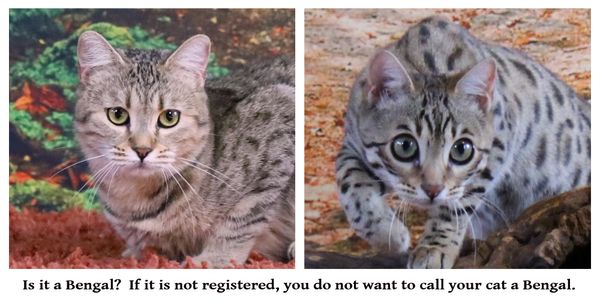
Is it a Bengal?

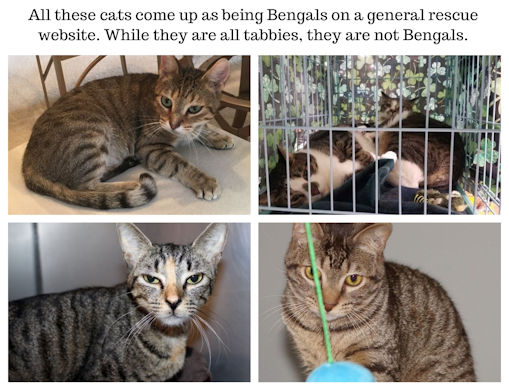
If you were to check any Bengal breeder’s email inbox or hang out in a Bengal cat chat group and you are bound to find the infamous question attached to a picture – is it a Bengal?

First, we have to consider the purpose of pedigreed pets.  Purebred, pedigree cats exist for people to select a cat with a known health history, a breed specific temperament and a desired appearance.  The reality is that knowing whether or not your cat is a Bengal is a dependant upon you purchasing it from a registered Bengal breeder who provides its registration papers.  If you have decided that a Bengal cat is the perfect match for your family and it is important to you to have the known health history, the Bengal personality, and the Bengal appearance, then to get those traits, it must be purchased through a registered breeder or found through a Bengal rescue.

If a Bengal comes without papers or from a general rescue or shelter, there is no way of identifying if it is a Bengal or if it is part Bengal, but it really should not matter.  When I picked out my first dog from the SPCA, it was listed on her pen that she was a German Shepherd mix.  I was using my common sense and saying a bit of a prayer that the SPCA got that wrong – and they did.  I picked my dog because she was what I was looking for in a dog – small, 25 pounds, Brindle and white, with a curly tail, upright ears, and friendly.  That is what I wanted in a dog.  The SPCA, however, knowing that German Shepherds are popular, attached that breed to her description.  Rescues and shelters often attach a breed name to their pets based off the slightest likenesses; in my case, the only thing my dog shared in common with a German Shepherd was upright ears.  But giving the pet a breed helps them find homes faster, and ultimately, that is the goal. If you are going to rescue a cat, you should know what you want out of the cat, and its label – or breed – should not matter.  If it does, adopt through a Bengal-specific rescue.

Some people feel they want to know if their cats is a Bengal because they mistakenly believe that Bengals have different needs than other cats.  Bengals have the exact same needs as any other high energy, highly intelligent cat.  If you think your cat may be part Bengal, but you do not know, it isn’t going to hurt to make the accommodations necessary for high energy cats.  There isn’t a cat on the earth that can be played with too much or provided too many mental exercises.  All cats benefit from using their brain and their muscles, so whether your cat is a Bengal or not, if it has energy, help it exert that energy.

Bengals do not need a vet who knows about Bengals.  The veterinarian care for a Bengal is the same as any other cat. Bengals do not have any special needs.  They do not get any special diseases.  They are just cats; Bengals are not wild.  If you happened to rescue a cat that did not have the proper upbringing, it might behave more like a feral than a home-raised cat, but this is not an indicator that it is a Bengal, or part Bengal, or anything else Bengaly.  This has to do with the cat’s upbringing.  Thus, if you have a cat that is shy, reactive, or aggressive, then it needs to see a vet who has experience with ferals – not experienced with Bengals.

Bengals do not need a special diet.  Yes, Bengals do thrive on a raw, whole prey diet, but any cat would thrive on a raw, whole prey diet.  There is some thought that the Bengal’s intestinal tract may be more sensitive to a processed diet, but since unprocessed food is better for all cats, then why not offer your cat an unprocessed diet  – whether you know if your cat is Bengal, part Bengal, or no Bengal at all.  No matter what your cat is, you want him to live the longest life possible, so feed your cat the best food possible – food that is not processed.

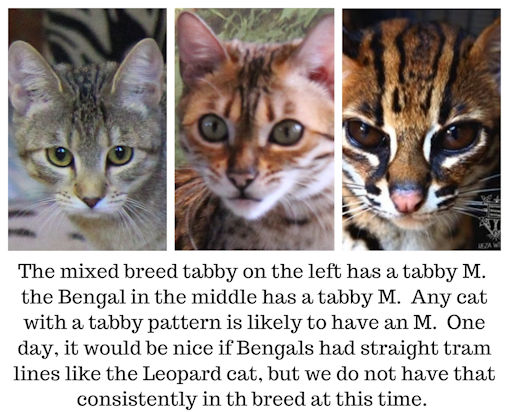
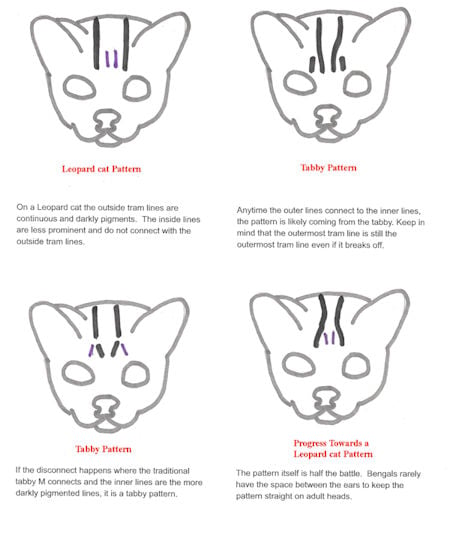
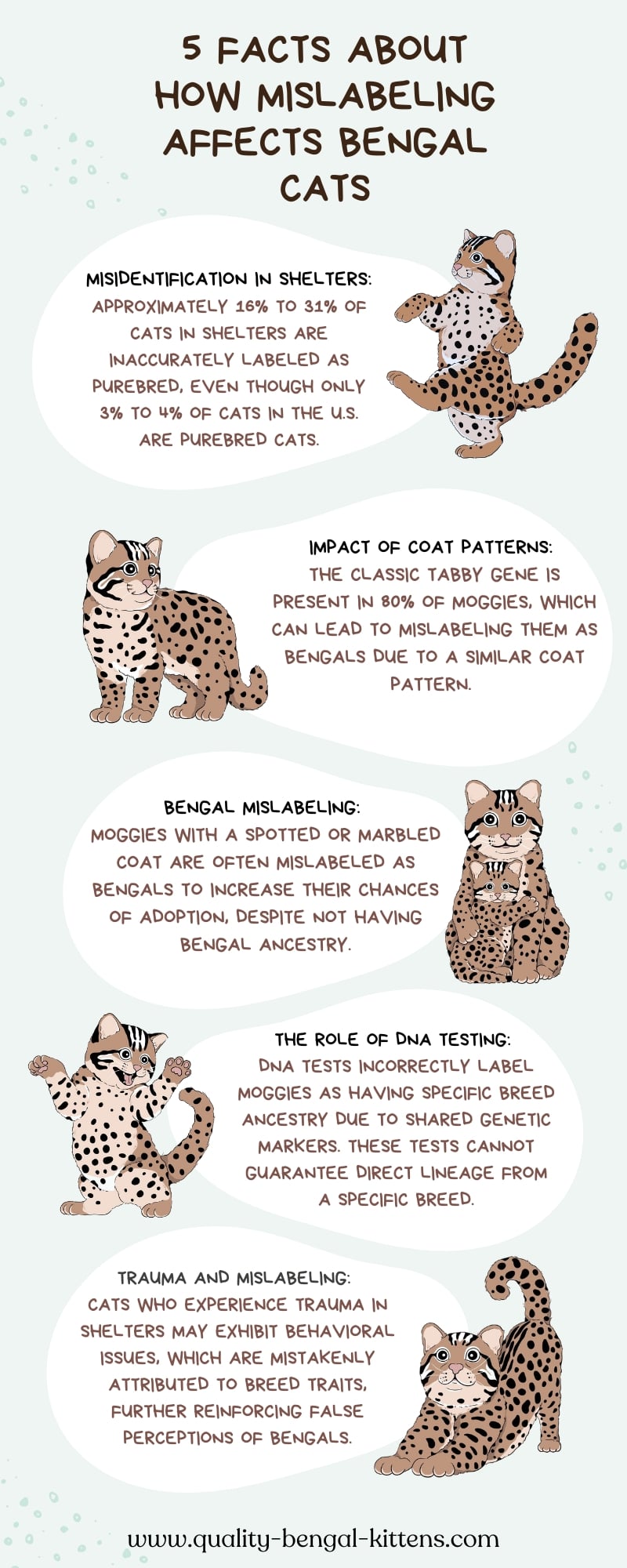
Bengals are not the only cats with spots.  Not only are there several other spotted breeds, but a spotted pattern occurs naturally in domestic tabbies.  Furthermore, the M on the forehead on most Bengals is absolutely not a Bengal-specific pattern; it is a tabby pattern, and Bengals have a tabby pattern.  Ideally, the Bengal will break that M one day and display the Leopard cat tram lines on the forehead instead of the tabby M, but we are a long way off from doing that consistently. Another common misunderstanding is that if there are spots on the belly, the cat must be a Bengal as this is a requirement in the Bengal Standard; however, most domestic tabbies have spots on their bellies, and this trait has been around longer than the Bengal breed has existed.

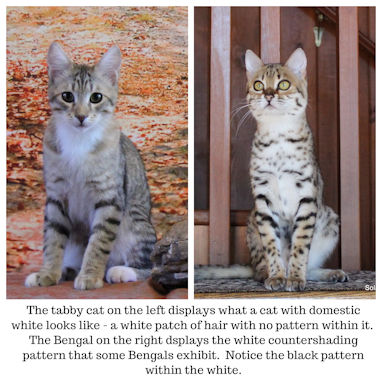
Another pattern confusion is the white tummy.  Some Bengals have a white countershading pattern on their belly with black markings on the white belly – just like a wild Leopard, Tiger, or Leopard cat. This should not be confused with the solid white underside of a tuxedo cat. The white on a tuxedo cat or other white patterned domestic cats is caused by an area of skin which does not produce any pigment. These unpigmented areas can appear anywhere on the body and are not a form of natural camouflage. 

Bengals have higher energy levels than cats with low energy demands, but they do not have higher energy demands than what is possible in all sorts of other cats – including mixed breed cats. In other words, if your cat is high energy, you need to address those needs regardless of whether it is part Bengal or not.  For people wanting a high energy cat, then shopping for a purebred Bengal will ensure that this desire is satisfied, but for anyone who merely finds they have adopted a cat with high energy needs, this does not make that cat a Bengal.  High energy cats need to be played with.   Regardless of whether you have a Bengal or not, if your cat has a high energy level, read our article on how to play with your cat.

If you don’t have your cat yet, but you’ve decided that a Bengal is the right cat for you, then get one that is unquestionably a Bengal from a registered breeder or a Bengal-specific rescue.  If you have your cat already, then you are already in love.  The cat’s label doesn’t matter as Bengals have no special needs beyond those of any other high energy cat. In other words, if the answer to the question “Is it a Bengal?” really matters, you should not have to ask because you should know for sure.  And if you don’t know for sure, there is no reason to ask “Is it a Bengal?” because being a Bengal shouldn’t change the way you treat or love your cat.

Keep Calm about Cats and COVID-19

The COVID-19 Pandemic has thrust us into an unknown world.  We do not know what to expect; we cannot predict the future, and we do not know what sources of information to trust.

When it comes to COVID-19 and the safety of our pets, many pet owners are on edge.  I experienced the rush of panic when California’s first positive COVID-19 case was a resident in the town where I teach at a high school of over 2,200 students.  Since schools are hubs of transmission, my first thought of panic was for my cats.  Some may see that as insensitive due to the layers of people I could have thought about before thinking about my cats, but fellow cat lovers know a different type of coronavirus has been a death sentence for cats up until about two years ago. Hence, the word coronavirus can be a scary one for cat lovers.

The reality is that coronaviruses are not that simple. Still, I am less scared for my cats now than I was the day the first Californian tested positive – even though, as of this writing, both a Bronx Zoo Tiger and a few domestic cats who lived with COVID-19 positive people are infected with COVID-19.  Regardless of these occurrences, there is no need to panic about the health of our cats.

Before discussing COVID-19, lets first understand Feline Coronavirus or FCoV. “Feline Coronavirus (FCoV) is a common viral infection in cats. It generally causes asymptomatic infection but can cause mild diarrhea” (“Feline Coronavirus”). We have to keep in mind that the common cold people deal with each winter is also a coronavirus (“Common Human Coronaviruses”).  As many people contract a common cold as there are cats who contract Feline Coronavirus.  The more people we are exposed to, the more likely we are to pick up a cold over the cold season.   For cats, “it is estimated that 25–40% of household pet cats have been infected with FCoV, but the infection rate increases to 80 – 100 percent for cats kept in multi-cat households” (“Feline Infectious”). In most cases, Feline Coronavirus is not treated. In fact, in most cases, the owner of a cat with Feline Coronavirus doesn’t even know the cat has it.

In approximately 1% of cats, Feline Coronavirus mutates – as coronaviruses are known to do – and it becomes Feline Infectious Peritonitis, otherwise known as FIP. Up until the summer of 2018, FIP has been a death sentence for cats. There was no treatment. That changed in 2018 when Dr. Niels Pedersen discovered a medicine that has since cured 90% of the cats that received the treatment (Murphy). 

It is essential to understand that Feline Cornovirus is NOT the same as COVID-19. When reading an article that claims that an animal tested positive for coronavirus, that statement is meaningless due to the widespread nature of species-specific coronaviruses that are harmless to humans, such as Feline Coronavirus. What you need to look for is a statement specifically regarding COVID-19 or CoV-2. That being said, there are at least two cats, two dogs, and a Tiger who have tested positive for COVID-19. Testing for animals has been done “in a veterinary school laboratory and is not the same test as is used for people” (Martinez). The positive animals tested were in the care of a positive person and contracted COVID-19 from a human, so human to cat transmission is likely.  An early – and thus unreviewed – study on cats from Wuhan, China indicates that human to cat transmission of COVID-19 does happen.  102 cats from Wuhan were tested; 15 tested positive for COVID-19, and of those 15, “11 had SARS-CoV-2 neutralizing antibodies,” meaning they had developed antibodies against the virus (Zhang).  Furthermore, the study found “no serological cross-reactivity was detected between the SARS-CoV-2 and type I or II feline infectious peritonitis virus. COVID-19 or SARS-CoV-2 did not mutate into FIP” (Zhang). 

According to Scott Weese writing for Canada’s Center for Public Health and Zoonoses, we have the following takeaways from this initial study:

  • “antibodies against SARS-CoV-2 were found using an ELISA test in 15 (14.7%) of samples. Eleven of those were also positive on a second type of antibody test (virus neutralization test). 
  • Three of the positive cats belonged to owners known to have had COVID-19, and they had the highest antibody levels. Six were stray cats, and 6 were sampled at veterinary clinics but had no known contact with an infected owner. 
  • None of the cats had positive PCR results, meaning there was no evidence that the virus was still present. 
  • The limited knowledge of the cats’ contact with infected people limits the interpretation of the results, but that’s a pretty high rate of seropositivity, especially among a group of cats that didn’t mainly consist of animals known to have been exposed to infected people.”

Although cats are susceptible to COVID-19, we should not be worried about our cats. Neither the Bronx Zoo Tiger’s “Infection nor early scientific reports from China of infections among domestic cats should make cat owners fear for their pets, or fear that the cats may pass the virus to humans. ‘None of them actually ever acted terribly sick,’ Dr. Calle said on Monday of the zoo’s infected cats” (Gorman).

What do we do with this information? 

It is quite simple.  We treat our pets as we would treat human members of the family. Practice social distancing with your pets by keeping them away from other people. “Anyone sick with COVID-19 should restrict contact with animals, out of an abundance of caution including pets, during their illness, just as they would with other people. . .  If a sick person must care for a pet or be around animals, they should wash their hands before and after the interaction” (USDA).  If your cat or dog has not been exposed to a positive person, then it does not have COVID-19.  If you become positive and your cats or dogs have respiratory symptoms, you may contact your vet and let your vet know your pet has been exposed to a positive person.  Your vet will, in turn, contact their state animal health officials, who will then determine if samples should be taken from your pet for testing.  The reality is that compared to the vast number of COVID-19 positive people in this world combined with the ease of transfer of COVID-19 if cats are catching COVID-19, they are dealing with it much better than we are.  Most may be asymptomatic as we have not seen a worldwide increase in sick cats.  

Can you get COVID-19 from your cat?

No, according to the USDA, “at this time, there is no evidence to suggest that any animals, including pets or livestock, can spread COVID-19 infection to people.” If your pet is sick with it, your pet got it from you or another person.

Works Cited

“Common Human Coronaviruses.” Centers for Disease Control and Prevention, Centers for Disease Control and Prevention, 13 Feb. 2020,
           www.cdc.gov

“Feline Coronavirus (FCoV) RT-PCR.” Cornell University College of Veterinary Medicine, Cornell University, 10 Feb. 2020, www.vet.cornell.edu.

“Feline Infectious Peritonitis (FIP).” International Cat Care, 30 Mar. 2020, icatcare.org

Gorman, James. “A Tiger Is Slightly Sick With the Coronavirus. Your Cats Are Probably OK.” The New York Times, The New York Times, 6 Apr.
           2020,  www.nytimes.com

Martinez, Peter. “Tiger Tests Positive for COVID-19 at New York City Zoo, First Case of Its Kind in U.S.” CBS News, CBS Interactive, 6 Apr. 2020, www.cbsnews.com

Murphy, B.G., et al. “The Nucleoside Analog GS-441524 Strongly Inhibits Feline Infectious Peritonitis (FIP) Virus in Tissue Culture and Experimental
           Cat Infection Studies.” Veterinary Microbiology, Science Direct, 22 Apr. 2018, www.sciencedirect.com

“USDA Statement on the Confirmation of COVID-19 in a Tiger in New York.” USDA APHIS | USDA Statement on the Confirmation of COVID-19 in a
           Tiger in New York, United States Department of Agriculture, 6 Apr. 2020, www.aphis.usda.gov

Weese, Scott. “SARS-CoV-2 in Cats: Wuhan, China.” Worms & Germs Blog, The Centre for Public Health and Zoonoses, 3 Apr. 2020,     
          www.wormsandgermsblog.com

Zhang, Qiang, et al. “SARS-CoV-2 Neutralizing Serum Antibodies in Cats: a Serological Investigation.” BioRxiv, Cold Spring Harbor Laboratory, 1 Jan. 2020, www.biorxiv.org

The Benefits of Outcrossing in a Bengal Breeding Program

Within any purebred breeding program, the breeder should have specific goals in mind.  A primary goal is the one everyone sees – a distinct, recognizable appearance.  After all, this is the number one reason breeders choose to breed a specific breed of cat and why pet owners choose to buy a specific breed of cat.  But when the focus of a breeding program is only on appearance, that isn’t what is best for the breed.  Breeders and pet buyers alike should also remember that buying pedigreed cats is also about having a known, purposefully selected health history.

We have learned through dog breeding that intensive inbreeding can adversely affect the health of an animal.  Yet, nearly all breeds start through inbreeding.  The Bengal breed is no different. Millwood began with three hybrid sisters – Praline, Pennybank, and Rorschach – and they were bred to Tori of Millwood, the domestic male Jean Mill found in India who introduced glitter into the breed, and eventually, those progeny bred back to one another. This close linebreeding was essential in getting the breed started and normal in establishing any new breed. While other people did start new Bengals lines from different hybrids, all Bengals will return to the three sisters and Tori of Millwood multiple times within their pedigrees.

A responsible breeder will be mindful of genetic diversity because if the genetic diversity within a breed of cats becomes dangerously low, “that tends to lead to higher levels of illness” (Stein).  Is the Bengal breed at that dangerously low point? No.  But it is better to address genetic diversity before it gets too low than to sit by and watch it happen.

As a breed, the Bengal is lucky.  Breeders with the ability and patience to work with hybrids (cats that are one to three generations from the Leopard cat) can outcross Leopard cats.  By using Leopard cats that aren’t closely related themselves, breeders can bring multiple new sets of genetics into the breed as it is a species outcross.  As long as those hybrids get worked down into the Bengal breed population, Bengal breeders can then carefully select matings that trace back to unrelated Leopard cats, thus improving their cats’ genetic diversity.  However, there are relatively few breeders who work with hybrids – and even fewer who seek hybrids of varied descent.  Early-generation cats take someone patient and are willing to put the cat’s needs before their own.  Because of this, few breeders are working first-generation hybrids down to SBT Bengals (cats who are four or more generations from an outcross).

Is there another way?  Yes, there is.  One can outcross to other domestic breeds of cats.  While Jon and I will likely always have a hybrid outcross line going, starting in 2017, we also chose to bring in a domestic outcross line.  Why? It is simple – for genetic diversity, thus healthier cats.

From our good friend Kathy Shaw of Kamisha, Jon acquired his first Bengal outcross from a domestic, pedigreed cat.  Kamisha Exotic Origins – otherwise known as Ori – was out of a pedigreed Golden Shaded Exotic Kamisha’s Crumpet and Bengal Kamisha Pantalaimon.  What is the rationale for starting with this crossing?  As seen in the chart showing the genetic distinction of domestic cats, the Exotic Shorthair – one of the green breeds -and the Bengal – one of the purple breeds – have a minimal crossover.  The Exotic was not a breed used to create the Bengal. Therefore, the breeds are distinct from one another.  This helps make the crossing more worthwhile from a genetic standpoint.

Furthermore, the most common health issues of the Exotic Shorthair are caused by their brachycephalic facial structure.  We knew this facial structure would disappear on the first pairing, so that eliminates the Exotic’s most common health ailments from being a concern in our outcross line.  Thus, health-wise the Exotic is a wise choice to cross with a Bengal. Since the primary goal of outcrossing is to improve health through genetic diversity, the health compatibility of the crossing should be the top priority.

Once decisions about the health improvements are made, then we do make decisions on what outcrosses will, at the very least, not damage and may actually help retain the physical goals of the breeding program.  The Exotic has small rounded ears and large eyes – two physical features critical to our breed goals-are very easy to lose.  Small rounded ears are tough to get on the Bengal – tall, triangular ears are regularly seen on even show-winning Bengals.  Large open eyes are also challenging to maintain in the breed – as evidenced by so many Bengals having sunken in smaller eyes that come to a point on the outer edge. Ears and eyes are essential traits in our breeding program, and the Exotic wasn’t going to take away from them.

Furthermore, the cross between the Golden Shaded Exotic and Kamisha Pantalaimon was critical for other physical reasons. Kamisha Pantalaimon is non-glittered.  Glitter is a recessive gene that stems from one single cat – Tori of Millwood.  The vast majority of Bengals display glitter – which means they have doubled up on a recessive gene that comes from a single source – and therefore, they have likely doubled up on other unknown genetics of Tori – some good, some bad.  We are trying to reduce the number of Bengals in our program who have glitter; thus, Kamisha Pantalaimon is non-glittered – and we know the Exotic does not have glitter – was a critical factor for both appearance and health.

The Golden Shaded Exotic also helps us with another visible cattery breed goal.  Many Golden Shaded Exotics display a countershading pattern.  It is clearly a different pattern from the body as there is no ticking on the belly hairs while ticking is present on the Golden Shaded Exotic’s body hairs.  We hypothesize that crossing a Bengal with a domestic that displays the countershading pattern – even if it is not the same as the Leopard cat – may help us retain that pattern on Bengals simply because the belly hairs are a lighter shade of color than the body hairs.

Ultimately, the cross between a Golden Shaded Exotic and a non-glittered Bengal male who returns to a Leopard cat who is not known to be from the same source as the majority of Leopard cats used within the breed – in other words, he is likely to be unrelated to the most widely used Leopard cats – allowed us to add a considerable amount of genetic diversity into our breeding program. 


So, what’s next?  We are breeding Ori to Bengal males who share her strengths in small round ears and large rounded eyes but can add contrast to the kittens as contrast is an area in which Ori lacks.  From there, we plan to keep a female to continue to work down to a full Bengal in two more generations.  And we also plan to hold onto a male who can be bred to our Leopard cat hybrids – thus further diversifying the genetics.  We’ll bring the double outcross line down to be full Bengals as well.

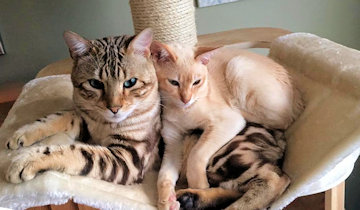
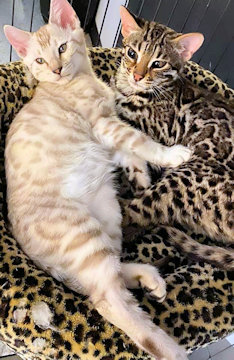
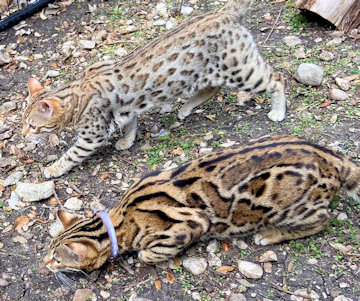
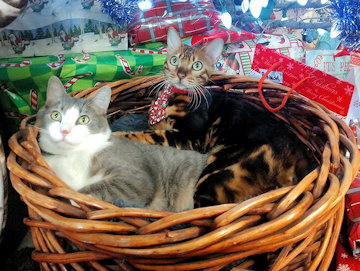
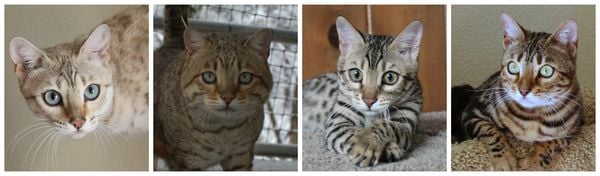
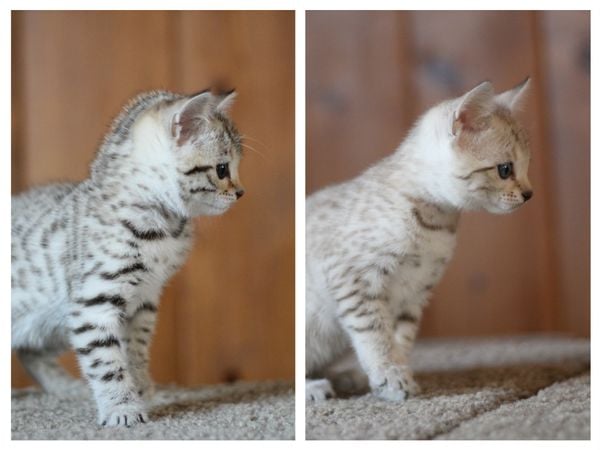
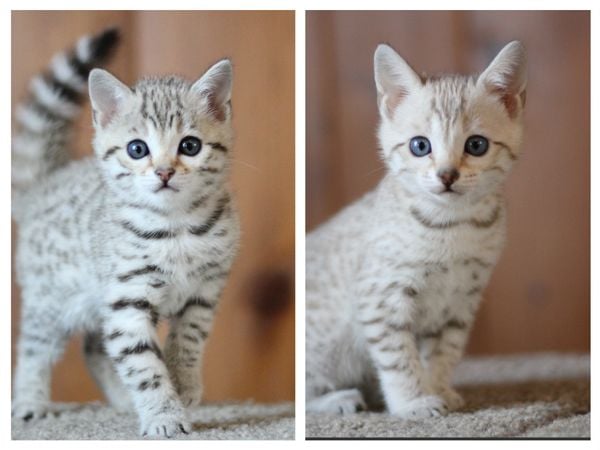
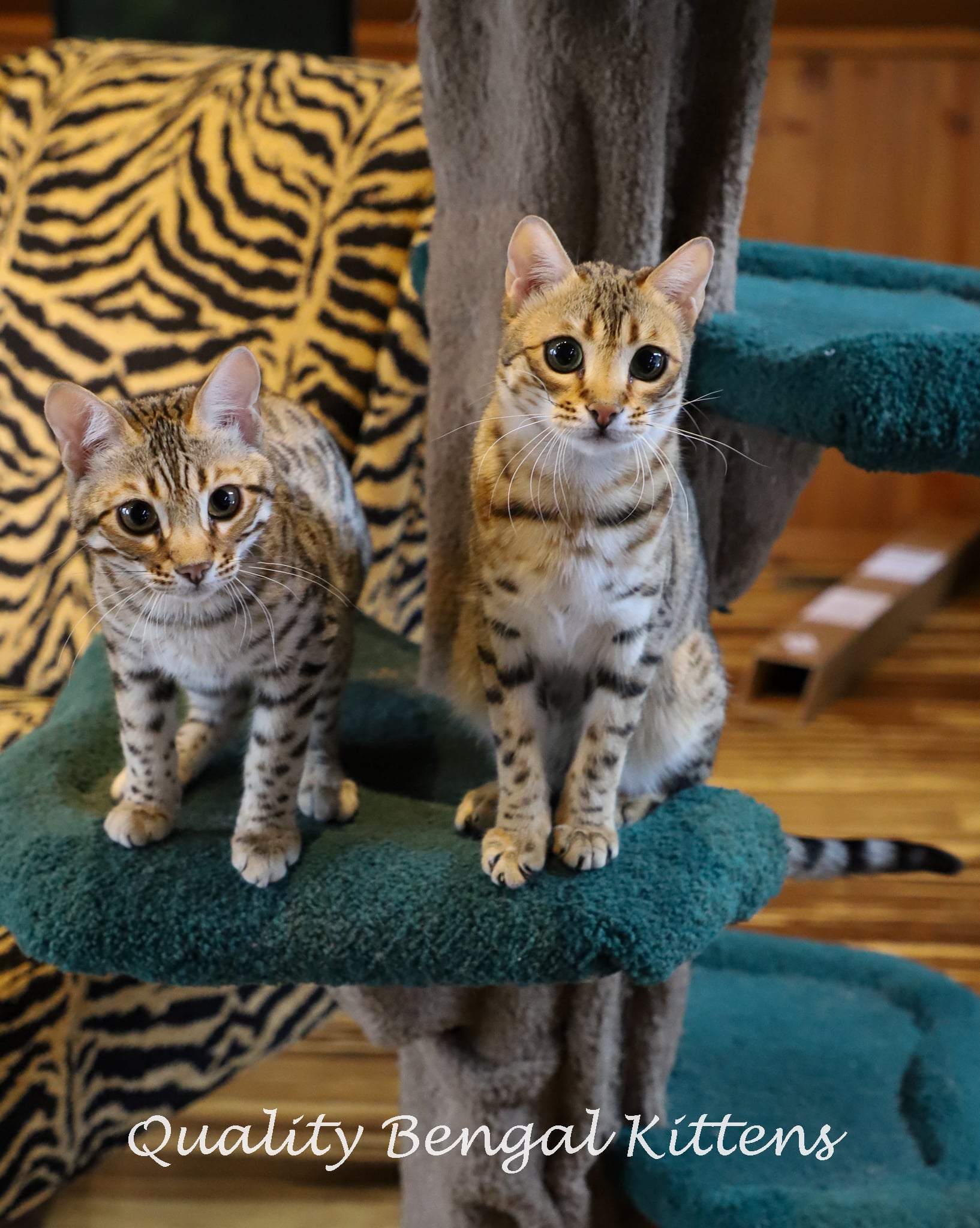
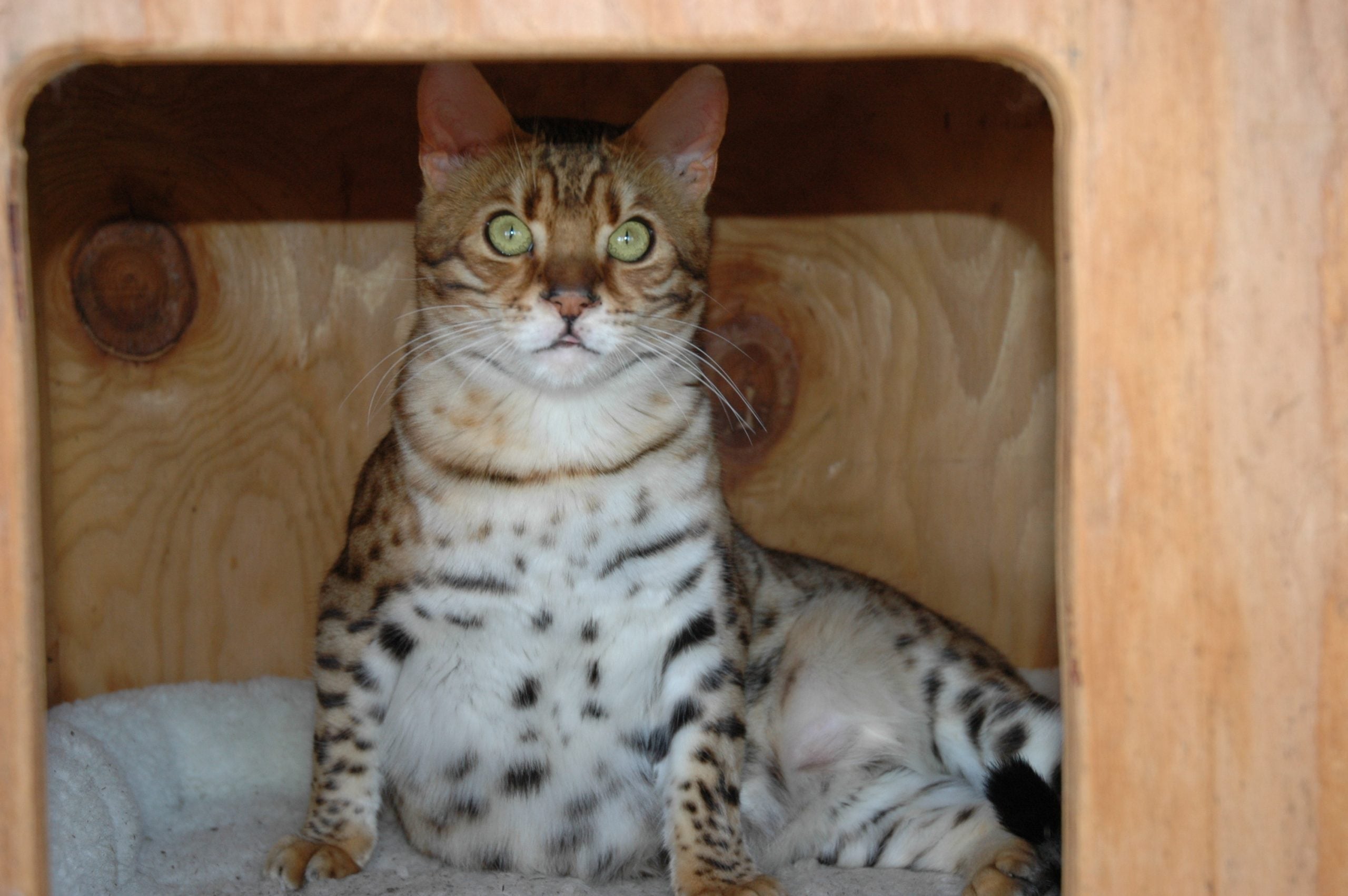
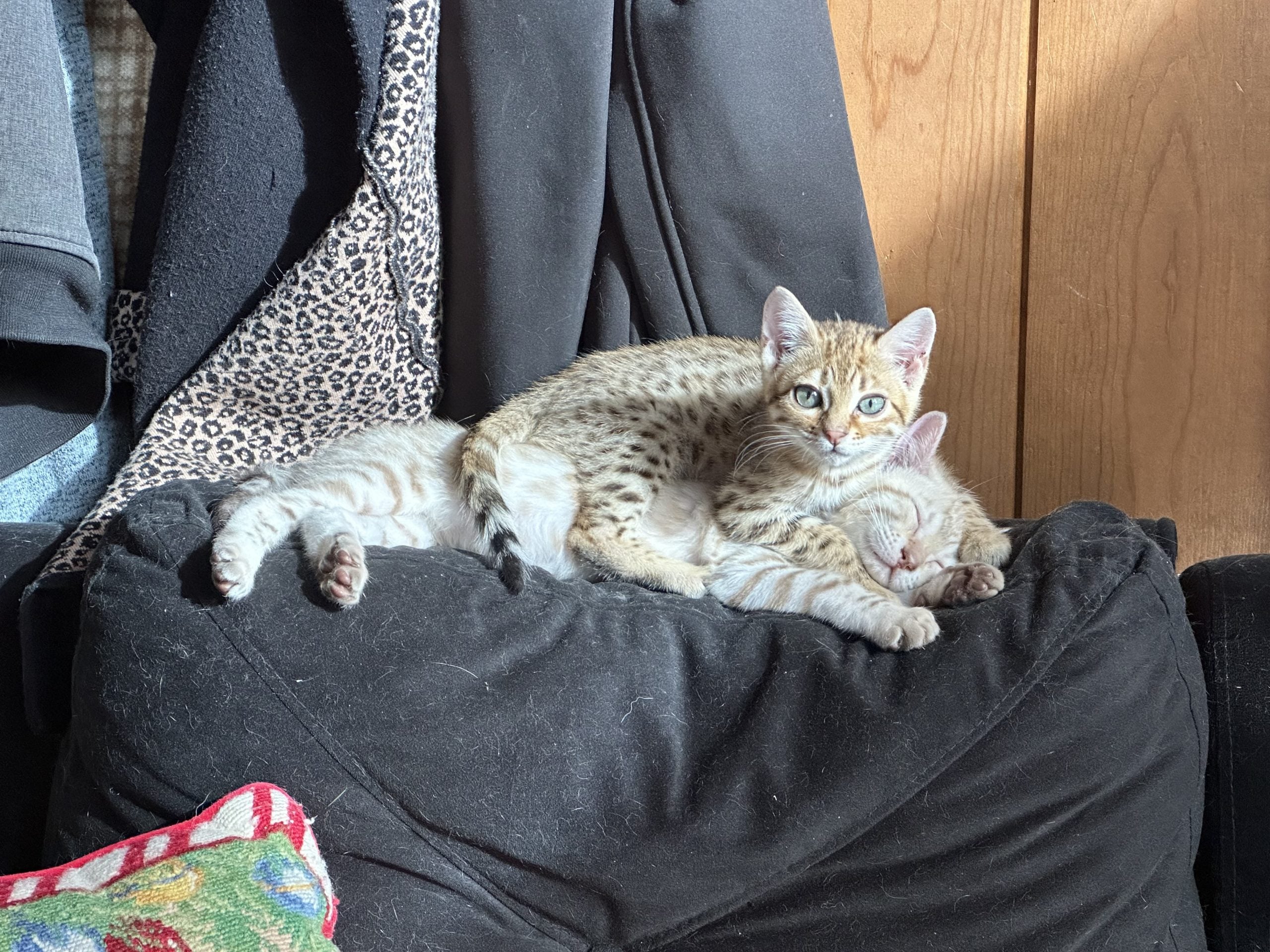
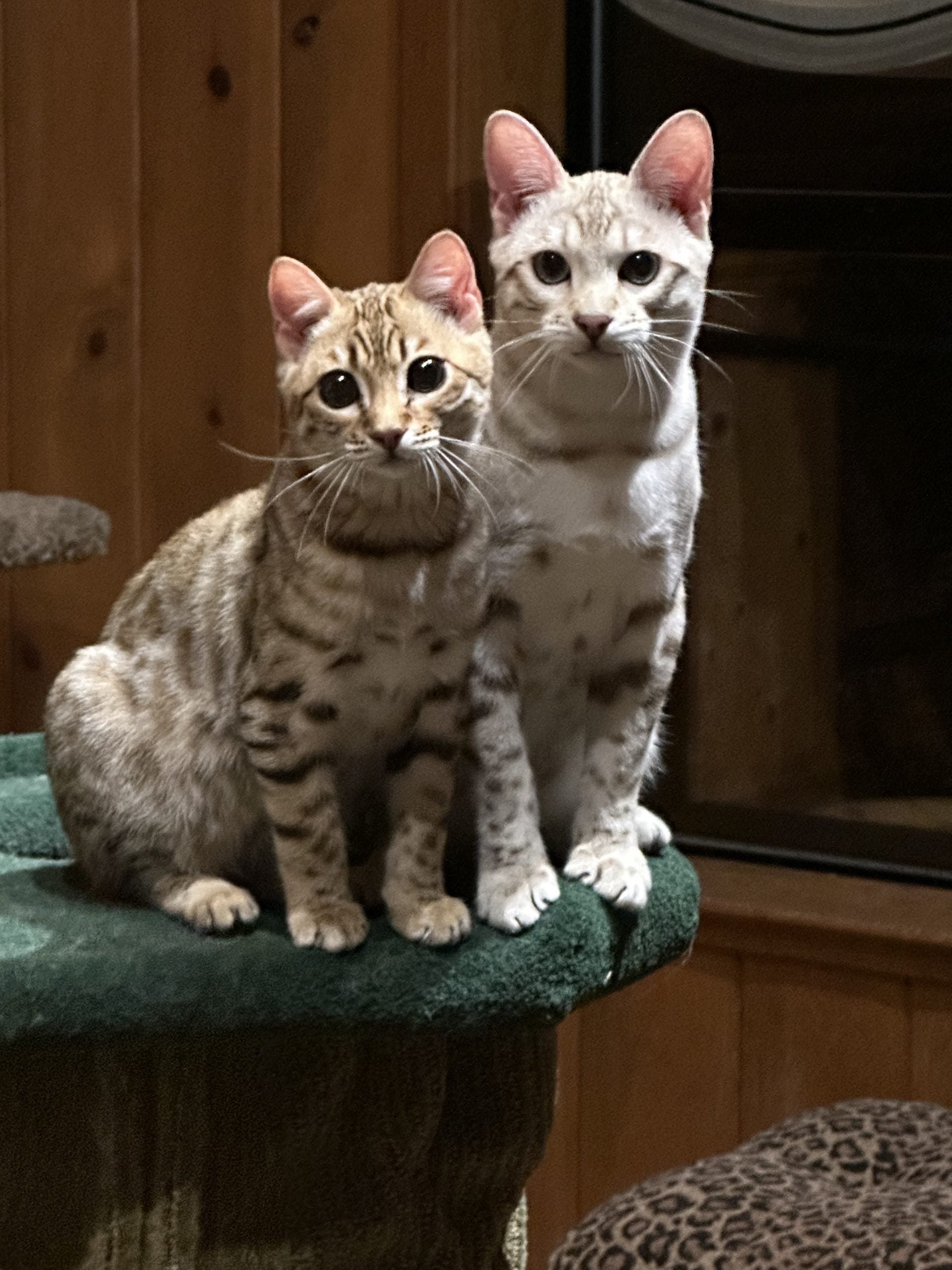
Pictures from top to bottom: 1. Two female kittens from Ori’s first litter with Patman.  2. Chart of Genetic Distinction of cat breeds (Lyons). 3. Kamisha Exotic Origins (Ori) – our first-generation domestic outcross 4. Ori and Patman’s two girls all grown up.

Resources

Lyons, Leslie Ph D. “Genetics of Cat Populations and Breeds: Implications for Breed Management for Health!” Tufts’ Canine and Feline Breeding and Genetics Conference. 2013. https://www.vin.com Accessed 15 September 2018.

Stein, Rob. “On the Trail of the Cat, Scientists Find Surprises.” The Washington Post. 17 March 2008. www.washingtonpost.com. Accessed 15 September 2018.


What to do if your Bengal chews too much

You come home from work to find frayed electrical cords, severed shoelaces, and hole-filled socks.  While the guilty party sleeps comfortably at the top of her cat tree, you begin to pick up the pieces and throw away the leftover mess.  What are you to do when your cat chews your stuff?

While all kittens will chew as they lose their baby teeth and grow their adult teeth, some of them never stop – or they begin this habit later in life. Excessive chewing is known as pica.  While “there is not a single, consistent cause of pica in every afflicted cat, . . . Veterinary professionals have narrowed it down to a few possibilities, including dietary deficiencies, stress, boredom, and underlying medical issues” (“Assisi”).  If you have tried some basic problem-solving techniques that have not been successful, then you want to take your cat to the vet to see if the vet can determine a problem.

The first task in resolving destructive chewing is to provide appropriate toys for cats to chew. If you notice your cat likes to chew on a particular texture, then look for toys that could duplicate that texture.  For example, if your cat likes the plastic of cords, get it some Wiggle Worm toys.  These toys feel like a plastic wire, so they make a safe substitute. If it prefers to chew on fabrics, try the Dental Health Chew toys or combine both plastic or material in the Chew Wheel toy.  If your cat chews on items but doesn’t swallow them, cardboard can be an excellent chew item; however, if your cat eats some of the items, chewing cardboard could cause intestinal damage if too much is swallowed. You may also try Organic Cat Chew Sticks with your cat, but remember to stay away from rawhide as it contains chemicals that are dangerous if consumed.

The next step is to remove what you can from the environment and deter your cat from chewing on those items you cannot remove. Deterrents can come in a couple of different methods.   Spraying a Bitter Apple Spray on the things you do not want to be chewed is an effective way to keep them away. You can also purchase pet-proof electrical cords or a cord protecting sleeve to place around your wires. Another deterrent is to place a motion-activated air canister near the items that you want the cat to stay away from.  For example, if you desire your cat away from your computer while you are gone, place one of these canisters on your desk.  Within ten to fourteen days, the cat will learn not to go to your desk anymore.

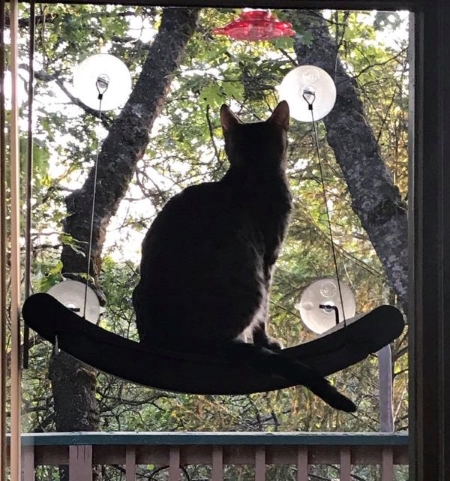
It is important to consider is that “cats also may feed on items due to behavioral compulsive disorders. Boredom and lack of stimulation may drive cats to seek entertainment elsewhere, which may lead to compulsive grooming or eating weird things” (“Recognize”).  What does your cat do all day when you aren’t home?  Bengals are known for being one of the most intelligent cat breeds, and due to their higher intelligence, Bengals are prone to boredom.  If your cat enjoys a cat wheel, that is a bonus as then it will exert its energy.  With Bengals being a high-energy cat, most need a physical outlet for their energy.  But it may need mental stimulation as well.  Having a window perch with a bird feeder outside is an easy way to stimulate your cat’s mind.  You can also have an aquarium – real or artificialFood puzzles work well for many Bengals too.

When you are home, it is crucial to have your cat on a routine play schedule.  Routine brings serenity to any anxious animal.  Since anxiety is a possible cause of over chewing, trying all the simple tricks that may help solve the problem is worth it.  Create a routine play and feeding schedule.  Your cat’s body’s natural cycle is to hunt, catch, eat, groom, and sleep several times a day.  Recreate this cycle in your home.  Play for ten minutes before work, then feed.  Play when you get home from work, feed again.  And play before bedtime and leave out the most abundant feed of the day for overnight consumption.  

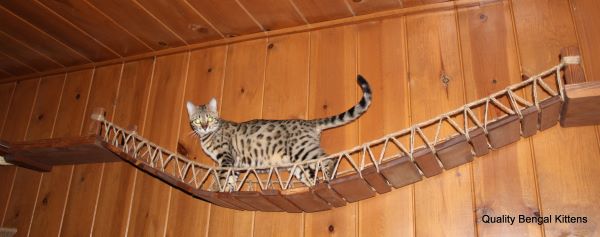
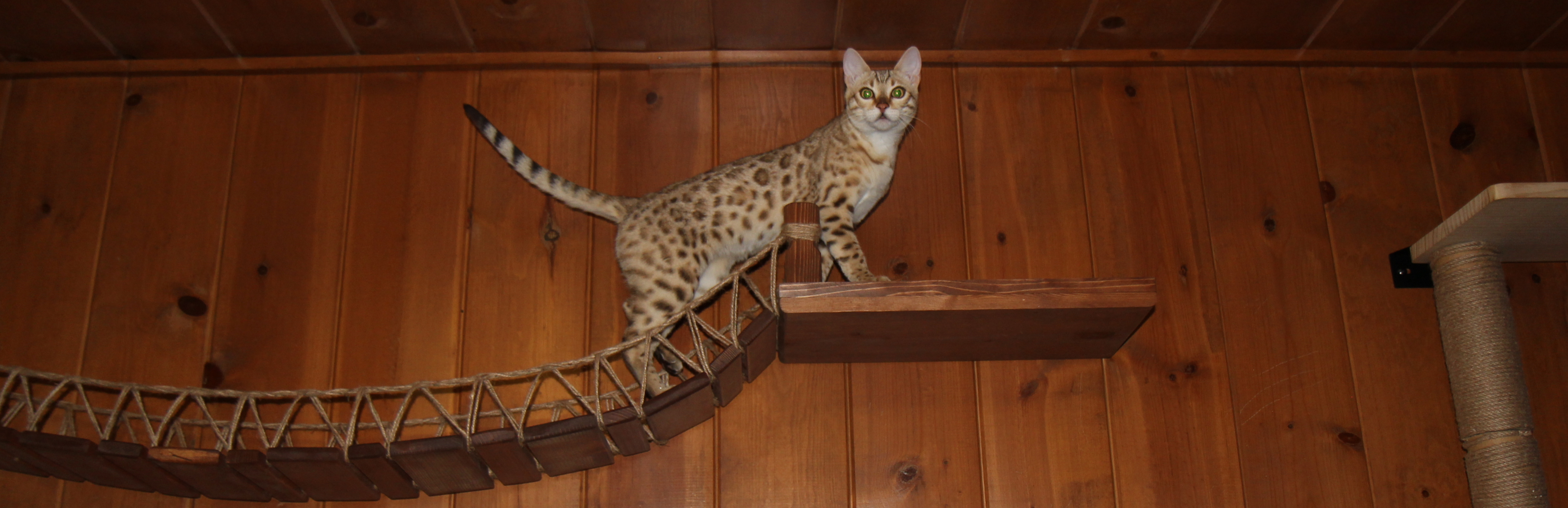
Like boredom, stress can also cause a cat to become a compulsive chewer. “The methodical sucking and chewing may prompt the release of endorphins, stress-relieving neurochemicals. Anxious cats or those exposed to stressful environmental events may use these behaviors as a coping mechanism” (Bollen). Take some time to observe your cat’s relationships and interactions with other animals in the house.  Watch your cat’s body language when it interacts with other animals in the house.  If it is isolating itself from other pets, it is likely stressed.  Stress can also be the result of environmental change, so take a moment to think about whether or not there have been any changes in your home. Stress can be reduced with the routine play schedule mentioned above and by increasing the house’s amount of desirable territory.  Expand your cat’s vertical territory with cat trees, walkways, and perches.  The more cat-desirable real estate you have in your home, the more territory you give your cat to claim.   

There is some thought that excessive chewing could have nutritional causes.  Some veterinarians believe “diets lacking in fat and fiber” (Assisi) could encourage excessive chewing or pica.  A pure raw diet, which we do encourage, is not high in fiber.  One thing you can add to raw food that also adds fiber is pumpkin.  If you suspect this may be the case, adding .5 to 1 teaspoon of pumpkin to your fresh blend daily will add some fiber to the diet.  You can also find some quality cat food with pumpkin in Cats in the Kitchen wet food in pumpkin soup.  Cats need higher fat foods, so when you are making protein choices, consider the fat content.  Chicken thigh, for example, has a higher fat content than chicken breast.  Using proteins with high-fat content will help.  Another way to add some healthy fat into the diet is through salmon oil in the food, which increases the Omega 3, or offering canned sardines in tomato juice or water. In addition, some believe that pica could “stem from mineral deficiencies.”  By adding a supplement with bioavailable ingredients, such as Nuvet, to your cat’s diet, you can make sure that you get all of the trace minerals that your cat needs.  

Of course, you should never ignore that excessive chewing could be indicative of a medical condition. While it is okay to implement some of the above tips before going to the vet, if there is no improvement, the cat needs to see a veterinarian.  “Gastrointestinal disorders (parasitism, inflammatory bowel disease, food allergies) and endocrine disease (diabetes, kidney, and thyroid problems) are among the medical conditions that could contribute to this behavior” (Bollen).  Only a vet can rule out any internal issues that we are not able to see. 


Works Cited

“Assisi Animal Health Discusses the Causes and Dangers of Pica in Cats.” PR Newswire, Feb 02, 2017. ProQuest.

Bollen, Kelley. “Hard to Swallow Behavior.” Animals, Spring 2002. Vol.135, Issue 2. Mas Complete. 

“Recognize Pica in House Cats.” Daily Record, May 26, 2018, pp. 9. ProQuest.


How to Play with your Bengal Cat

December 28, 2018

by Robyn Paterson

“You’ve got to be kidding me – how to play with your Bengal? Everyone knows how to play with a cat. Besides, my cat plays by itself. I bought it a bunch of toys, and it can just chase those around, and it will be fine. Right?”

Wrong. Bengals are high-energy, highly intelligent cats, and the expectation that it won’t need to be played is unrealistic. Are there exceptions? Yes. Should you stake your cat’s happiness in the hope of it being an exception? No.

There are wrong ways to play with a cat. The first wrong way is not at all. With high-energy, highly intelligent breeds, such as a Bengal, the expectation is that you will play with your cat every day – just as one would expect to walk a dog every day. The second worst way to play with your cat is with your hands. Hands are not toys. Toys are objects a cat can hunt, pounce on, kick with its feet, and bite with its teeth. Hands are for affection; toys are for play. Do not send your cat mixed messages by playing with your hands, then getting upset when the cat plays with your hands in cat-appropriate ways that result in scratches or teeth marks. The third worst way to play with your cat is to be disengaged. You may be bobbing a toy up and down, but your focus is on the TV, laptop, or phone – not your cat.

Interactive play with your cat means you are at one end of the toy, and the cat is at the other. This type of play must happen daily. Depending on your cat’s needs, it may occur multiple times daily. The first item you need is the right toy. There are some retractable wand toys with a variety of attachments that are budget-friendly. Still, the wand’s retractable feature makes them a bit delicate, and the ends are all artificial materials. They work well for kittens, but as your cat becomes an adult, you must be prepared to remove the cat from the toy once it catches it, or you’ll replace these toys frequently. A sturdier option is the Da Bird toy. The Da Bird comes with the feline favorite, bird feathers, but be sure to purchase a few different attachments for the Da Bird to give your cat some variety in its hunts. The mouse or bee are favorites in our house. In addition, the attachment made from rabbit is an excellent choice. Have fun with your preferences, but don’t neglect what is ideal for your cat. The bird, the mouse/bee, and the rabbit provide three different textures and three realistic prey species to make your play hunts more fulfilling. While the mice attachments are made from deer hair or buffalo hair, which are technically not prey species for small cats, they are still more realistic, and, therefore, more mentally stimulating than hunting cotton or mylar. Finally, the DragonFly Cat Toy is the best option if you have small children. It is easier for small children to control – or perhaps I should say, it still moves around nicely without much control. Furthermore, because there is no string on it, it can be left out without being a choking hazard to the cat, and the mylar dragonfly withstands a lot more abuse once caught by the cat.

Now that you have your interactive toy of choice, what do you do with it? Quite frankly, you mimic a hunt. Playing with your cat means taking your cat on a hunt around your living room. It is climbing cat trees, leaping from perch to perch, doing backflips in the air, and running like a mad cat. Your goal is to get your cat panting. Exhaust your cat. If you are short on time, playing hard for ten minutes is better than not playing at all. Once you reach the end of your play session, allow your cat to catch the toy. Using one of the sturdier attachments, such as the mouse or rabbit, let your cat chomp on it a bit and kill their catch. If you use a more delicate attachment, such as the Da Bird, have another toy – such as a catnip-infused kicker – that you can offer your cat for a good rough, tumble, and kill at the end of your hunt.

So what comes next? Next, you feed your cat. This continues your cat’s natural body rhythm. It will eat its “catch,” then bath itself, and nap – just like a cat in the wild. In a home where all family members leave the house for a typical work or school day, this play session should be done once in the morning and once in the evening. The more you can stick to a routine, the more your cat will know what to expect and the more stable it will be. How much your cat needs stability will vary from cat to cat. Some cats don’t need it at all. Other cats must have stability, but stability in a cat’s routine will never hurt it.

What if two play sessions aren’t enough, but that is all your schedule allows? Various toys can inspire your cat to hunt while you aren’t home. A cat wheel is one of the best options for a high-energy cat. Our Bengals have never needed much training on using a cat wheel, but if yours does, you will find most Bengals fairly easy to train using one of the interactive toys, a laser toy, or treats. We have some obsessive cats over their wheel time, and, quite honestly, if they didn’t get that wheel time, these cats would be less comfortable in our multi-cat home as they visibly relax while they run on the wheel. For some cats, the wheel is the best indoor toy that allows a large energy release.

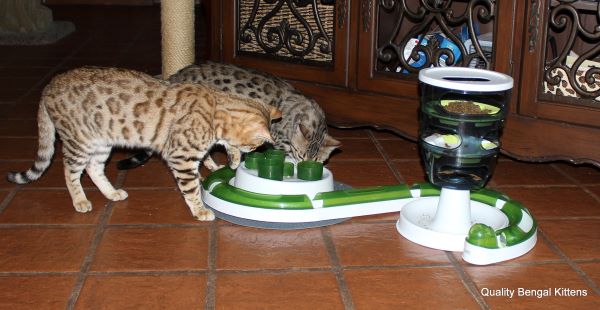
Another great option is to use Indoor Hunting Feeder Toys where you hide dried treats in different areas around the house. Try to create spots that emulate a hunt, such as inside a tunnel or Ripple Rug. When you place the Feeder Toy someplace fun, your cat will play around for a bit – as if it has caught its prey – when it finds the toy. Hiding the Feeder Toys in different spots of a cat walkway on your walls created through a combination of cat shelvingwindow perches, cat trees, and traditional furniture sends your kitty on an adventure when you aren’t home to lead it through a play session.

Using these tips will help you release your cat’s energy appropriately, so the cat does not release its energy in inappropriate ways. For anyone struggling with behavioral problems, such as inappropriate elimination, destructive actions, play aggression, excessive vocalization, or depression, establishing a regular play routine may alleviate these issues.

Learn More about Bengal cats in our BLOG

Learn what makes Quality Bengal Kittens different

Check out our currently Available Bengal Kittens.

Mind Games for Bengal Cats

There is an age-old argument to determine which are more intelligent – cats or dogs. But comparing interspecies intelligence becomes futile as it changes based on the tested skill, as pointed on in PBS’s 2018 feature “Which is Smarter, Cats or Dogs? We asked a Scientist.”  “Consider hunting abilities, for example. Cats sit on the skilled end of the spectrum, while dogs sit in the middle and humans near the low end. But if we test the three on math, humans shift toward the intelligent side while dogs and cats move away.”  In other words, if we measure the skill of hunting, cats would come out as being most intelligent, but if we assess the ability of math, cats come out at least capable.  The cat species survival is evidence of their intelligence.  Of the three species – cats, dogs, and humans – cats are the only one who is both predator and prey.  It is this role within the food chain that drives their intelligence.

Because “Cats display a lot of individual variation and have distinct personalities,” it makes “it hard for researchers to understand them” (Shivni).  It also makes it hard for cat owners to fully predict the level at which their cat will need to express its keen hunting skills to live a satisfying life. But we do know that animals do get bored.  Researchers discovered that “animals in confined, empty spaces avidly seek stimulation, which is consistent with boredom” (Meagher).  How bored will your cat be in an unstimulating environment?  That will depend on the cat.  Stereotypically, Bengals get bored more easily because they tend to have higher-than-average intelligence.  Lack of stimulation can lead to depression (Ingber).  While veterinarians will treat depression with medication, many ways exist to stave off boredom and depression.

One of the most important ways to keep boredom and depression at bay is through interactive play.  However, most people cannot spend the majority of every day playing with their cats.  While exercising the body is essential, with highly intelligent cats, like the Bengal, it is equally important to stimulate their minds. There are a lot of toys available today that will help you exercise your cats’ brains.

All of these mind puzzles do require treats.  As species-appropriate raw feeders, choosing the right treat is essential. A treat should not add carbohydrates into the cat’s body and alter its metabolic rate or stomach acid balance.  We have a few go-to treats.  First is Ziwi Peak’s air-dried cat food.  While we do not recommend this as a food because it lacks water – a necessary ingredient in cat food – it makes an awesome treat.  We use the Lamb or Lamb and Mackeral varieties because they offer the cats protein sources (lamb and mackerel) that are different from their most frequently fed food, and they include a variety of organs in the food.  These bits of organs are like vitamins for cats.  However, treat variety is the spice of life, so we do not stop at the Ziwi Peak foods.  We offer various freeze-dried meats, focusing on liver and heart or on proteins that are different from what we typically feed: shrimp, salmon, duckor any other meat that is different from the typical proteins we feed for meals. By making smart choices, the treats are healthy and not something you need to consider limiting the frequency of use.

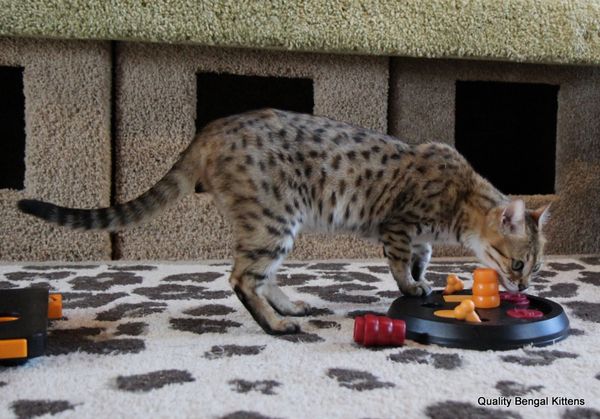
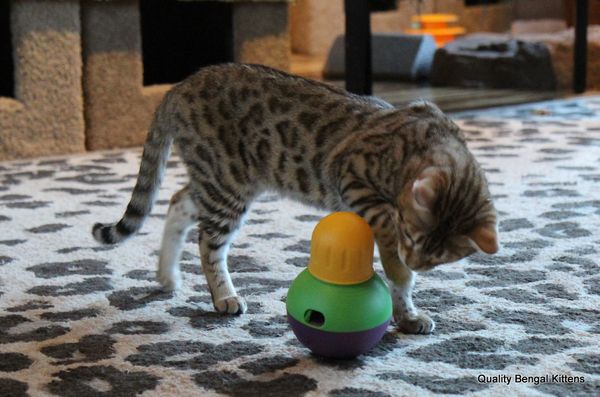
One of the most creative things you can do is hide treat-filled toys in different spots throughout your house. Once your cat figures out that hidden treat toys are somewhere out there, it will spend some time looking for them.  This engages your cat’s brain in the activity of hunting.  While the cat’s hunt is not likely to be physically strenuous, it will be mentally challenging, which will help keep your cat satisfied.  The cat-made treat dispensers are great for hiding in small spots.  However, the dispenser will not likely hold up to a dog’s chewing if you also have a dog in the house.  We learned this the hard way.  No problem, though.  Just buy treat dispensers that are made for dogs, and hide them.  If the dog finds it – after the cat, of course – it won’t be destroyed by their chewing.

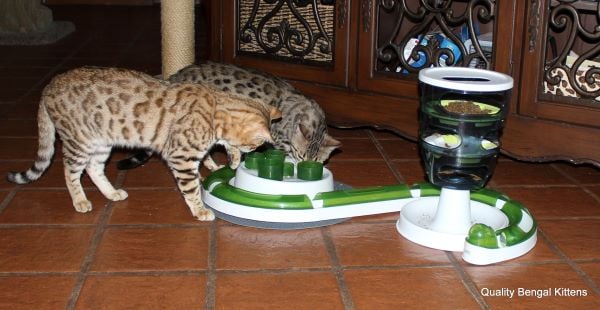
Our cats also enjoy the tower-type puzzle and the digging puzzle.  The tower seems to be the easiest for them.  Our cats will crowd all around and let the big guy bat the treats down from the top while they move in and grabs the bits that fall to the bottom.  This aspect of the game is more fun than stimulating.  But at some point, they need to get the treats that have fallen to the intermediate levels, and that is when the brain must work out to stick their paws in through the slots.  If thinking about getting the food tree, we find it helpful to have the ball circuit around the bottom for stability.  The digger toy tends to take them a while to figure out initially.  We discovered that putting more odiferous treats down in the bottom helped them figure out how to get to the treat. Once they know how to do it, they don’t forget. 

Of all the puzzles we’ve offered our cats, they have to work the most for the one that spins to release the treat.  Not all of our cats have figured out how to spin this.  They capitalize on the profits produced by those in the know.  We like this toy a lot because of its complexity.  

The puzzles with movable trays and parts are great for the cats, but they become routine once they figure it out.  It didn’t take our cats too long to have all the puzzle pieces figured out.  However, in our multi-cat home, some still benefit from the brains of others.  In a home with just a few cats, it will take longer to figure the puzzles out as they won’t learn from others.  Puzzles are great toys to use sporadically.  Fill it up before you go to work, set it out and leave it.  Once the cat has it all figured out, put it away for a while.  When you bring it back out, perhaps, you can hide it.  Even if the puzzle is completed faster the second time, it is still exercising your cat’s brain to figure out how to get into all the slots, which helps keep your cat happy and healthy.

There are great mind and health benefits to creating opportunities for your cat to watch live prey species while ensuring the prey species are safe.  The easiest way is to set up bird feeders outside your windows and provide a window perch for your cat to sit on.  Their brain’s mental activity will spike while watching the birds and wishing they could get to them for a hunt.  The birds will quickly learn that the cat is safely behind the glass window, and soon, they won’t bother about the cat’s movement.  Similarly, if you get an aquarium and ensure the top is secure and cat-proof, the aquarium provides quite a bit of mental exercise for your cat.

Most behavioral or depressive problems can be solved through proper diet and proper physical and mental stimulation.  If you are experiencing any unwanted behaviors in your cat, try enriching its environment to see if this changes the behavior.  While physical play is an absolute, exercising the mind is equally important.  Creating mind games through these toys will give you a happier, healthier Bengal.

People wanting a quick link to the different toys and treats we use with our cats, please see our page Quality Products – Mind Puzzles for Cats.

Are you thinking of getting a Bengal cat and want it to come with a lifetime of expert advice? Check out our available Bengal kittens.  

Do I have enough space for a Bengal cat?

One of the most common questions from people researching Bengals is whether they have enough space to make a Bengal happy. The answer is as simple – or rather complex – as the old cliche. It’s not the size that matters; it’s how you use it. A Bengal can be happy in any size space as long as the area has been adequately prepared and the person is genuinely committed to daily play.

The first step to making your home Bengal-ready is creating many places for a Bengal to leave its scent appropriately. Bengals like to feel secure in their territory. When cats feel territorially insecure, they are likely to leave their scent inappropriate ways, such as through urination. Therefore, the first step is to create places for Bengals to scratch their claws and rub their cheeks. One way to accomplish this is by having cat trees – which will also provide high spots – but if you don’t have room for a bunch of cat trees around the house, scratching posts and scent soakers serve this purpose well. Scent soakers do not have to be significant in size. Having multiple smaller scent soakers for different places in your home is more beneficial than one large cat tree. Place these scent soakers in positions of importance to the cat by watching where your cat likes to be and placing scent soakers in those spots. Also, place scent soakers near entryways and pathways. Scent soakers that hang on doors are beneficial as they create a natural boundary. The more places you provide for your cat to scratch its claws and rub its cheeks, the more secure it will be.

The next step in making Bengal-approved space is to provide high spots for your cat to play on and rest in. Bengals descend from tree-dwelling ancestry, so their drive to be up high can be pretty strong. For some Bengals, if you don’t make them high spots in your house, they will claim the existing ones. If you are open to using your pre-existing furniture and cabinetry, go for it. Make a pathway via cat trees and cat shelving that will allow your cat to get to those high spots. You must provide an alternative if you don’t want your cat on pre-existing tall furniture or cabinetry. Put your cat shelving in an area where you want them to go. However, remember that your Bengal will want to be where you are. So if you put your cat shelving in an unused guest bedroom, the shelving is not likely to be used. It will need to be in the rooms of the house where you spend your time.

Make sure your cat has some cat real estate in sunny spots in your home. Cats love the sun, so as you place your cat tree and shelving, see how many hours of sun those places get. Having a window perch that doubles as a scent soaker, which is also placed up high, is a real winner in our house as it ticks all the boxes for a cat; it is full of their scent, up high, and in the sun. For more tips on preparing your home, read Ryan Castillo’s article “Bringing Home a Kitty? 14 Expert Tips to Prepare Your Home.”

Preparing the space is essential for your Benga, but so is your planned play routineThe less space you have and the less your Bengal can play on its own or with a friend (another cat or small dog) who shares the same energy level, the more planned playtime you must commit to. For most Bengals, having a cat wheel is a great energy outlet. Our multi-cat household has multiple cat wheels, which are used constantly throughout the night. Cats with high energy – a known Bengal breed characteristic – must have a way to expel this energy. 

But you can’t rely on a wheel alone. Anyone who brings a Bengal into their home needs to be committed to exercising it daily. Not every Bengal will need daily exercise from their human, but to bring a Bengal home, hoping that it won’t need regular exercise, is to set the cat up for failure. The key to keeping a Bengal happy is consistency. One would not buy a high-energy breed puppy without having a daily exercise plan, and the same must be considered for a Bengal. One way to exercise your Bengal is through rigorous playRigorous play means you have your cat running and leaping in the air. Play the cat hard to the point of panting and beyond at least once a day, but possibly more – it really depends on the cat and the other ways it expels energy.

Another way to meet the cat’s energy needs is a daily walk. The Bengal’s natural energy and intelligence make it a great candidate for harness training. The book The Zen of Cat Walking, written by hybrid owner and friend Clifford Brooks walks people through the steps of harness training their cats. Taking a cat outside is a double benefit as it exercises the body and the brain. Feel free to interchange walks with rigorous play based on what suits your time frame and the weather conditions.

In summary, it is not the amount of space offered to a Bengal that determines its quality of life and happiness level. The key factors lie in completing three critical tasks. One, prepare the space appropriately for an intelligent cat by placing cat trees and scent soakers around their favorite spots and around doors and passageways. Two, create lots of high spots for cats with tree-dwelling heritage, so they can play and sleep up high. Three, consistently follow a daily physical exercise routine tailored to your cat’s needs.
 

Learn More about Bengal cats in our BLOG.  

Learn what makes Quality Bengal Kittens different.  

Check out our currently Available Bengal Kittens.

What and How You Feed May Affect Your Bengal Cat’s Behavior

February 20, 2021

by Robyn Paterson

A client recently contacted us with some questions regarding behavior issues – jumping on the counter, stealing food, avoiding positive human interaction, and vocalizing obnoxiously.  After having conversations with the family, we discovered that the cause of these behaviors was rooted in food. How much you feed your Bengal, when your feed your Bengal, and what you feed your Bengal impact its behavior.

How Much Food Does Your Bengal Cat Need?

Bengal cats have a higher energy level than the average cat – which means they have a higher metabolism.  Regardless of what you feed, if you are determining the amount of food based on the generalized weight-based recommendations, it is not likely to be enough. Cats with a higher metabolic rate burn more calories, so they need to eat more to fuel this metabolism.  The feeling of hunger can cause unwanted behaviors.  In addition, hunger leads to stress and anxiety – which we know leads to unwanted behaviors. 

A Bengal cat is still maturing for the first eighteen months to two years.  Feed a food with less than ten percent carbohydrates and allow it to eat as much as it wants during this time. The lower carbohydrate content allows the cat to eat its fill without as much risk of unhealthy weight gain. No single recommendation works for every single cat. Some cats will eat too much, but those cats are the exception, not the norm, in the Bengal breed. It is important to compare your cat’s appearance to a  Body Condition Score Chart.

Once a Bengal cat is fully grown, he will eat less than he eats in the growth phase.  The amount, however, will vary based on the cat’s size and metabolism.  One cannot expect every cat to eat the same amount.  In addition, how much a cat eats will often vary with temperature – eating more in the winter and less in the summer.  Observe his eating habits and behavior to figure out how much a cat needs.  Do not limit his food if he is not overweight. 

When Should You Feed your Bengal Cat?

A cat would eat ten or more small meals a day in its natural setting.  Due to this, some people resort to free-feeding dry food, disrupting a cat’s natural body rhythm. In a natural setting, cats hunt, then eat. Cats need to expel energy before they eat.  People must balance a cat’s ideal ten meals a day and a maintainable human schedule.  Many cats do fine with two meals a day – especially if one is left out longer.  However, larger cats or cats with a higher metabolic rate may need to eat more frequently. 

In more than one instance, we have seen that adding a third meal within the day completely resolves undesirable behaviors. If you are experiencing any behavioral problems, one of the first solutions is adding a third meal within the day – even if this means keeping the same quantity but spreading it across more meals.  When trying to problem solve, increasing the quantity should be tried as long as the cat is not overweight. 

It is equally important to feed after your cat has expressed some energy when resolving behavior issues.  Some cats adjust to eating without expelling energy, but the natural body rhythm should be established for cats exhibiting behavioral problems. Take your cat through a rigorous play session before each meal.  If you are not home throughout the day, offer a third and fourth play and feeding session through a toy that can be operated remotely, along with a time-released feeder with an ice pack. Another option is to hide a puzzle toy with a treat inside, but this method’s downfall is that the food must be dry.  Dry food should not be the primary diet, but it will suffice as a snack or smaller meal. 

What Should You Feed Your Bengal Cat?

Centuries of domestication have resulted in lengthening the intestinal tract in carnivores.  Dogs have been domesticated longer than cats. Living alongside humans during the domestication process and eating plant-based food scraps caused dogs to adapt to make the most of this resource. The dogs that thrived best on this diet produced more offspring, and the adaptations passed on. This has allowed dogs’ digestive systems to handle more carbohydrates than cats.  Some cats do okay on higher carbohydrate diets because their ancestors’ bodies made these adaptations to the change in diet.  Some cats have not adapted as efficiently.

Bengal cats originate from the Leopard cat, which has not been domesticated.  Bengals vary in how much the Leopard cat influences their digestive system.  The variation is not necessarily associated with the number of generations removed from the Leopard cat; it varies based on inherited genes.  If a Bengal cat has inherited a shorter intestinal tract, it will have a harder time tolerating processed foods high in carbohydrates.  If your Bengal cat feels hungry all the time, even when being fed large quantities of food, it indicates his body cannot extract the nutrients it needs from that food.  If the food is one or more of the following – carb-filled, cooked, processed, dry – and the cat exhibits behavioral problems, a diet change is necessary. 

The first change to make is with ingredients. Good cat food should have less than 10% carbohydrates. The second change is the processing and preservation of food.  Look for foods with minimal processing and minimal preservatives. And the all-important third change is – except for treats or small meals – to avoid feeding dry food.  Cats are designed to get their water through their food.  When given dry food, they frequently live with low-grade dehydration because they do not have a high thirst drive. Please read more about this in Are you Killing your Cat with Kibble. 

At the bottom of our page on raw feeding, we have a limited list of decent canned and dry foods.  Keep in mind that these are not actual recommendations.  This is our best-of-the-worst list.  We believe balanced raw is best, and it is our feeding recommendation.  That being said, unless you are meticulous, we strongly encourage buying pre-made raw over making your own.  Our favorite pre-made raw is Viva Raw, for reasons explained in this article. 

Feeding balanced raw food is best for all cats.  It is unnatural for a cat to eat processed, dry, high-carbohydrate foods.  Some cats have adapted; others have not.  If your cat seems hungry even though he eats a lot of food, it may be that his body cannot utilize the food he is being fed. 

Changing how much, when, and what you feed is the answer to many Bengal cat behavioral problems. On more than one occasion, we have seen issues resolved by adding a third meal into the day.  People do not often associate food with behavior, so they do not consider it a resolution to a behavioral problem.   But food has a huge impact on behavior – especially if a cat is constantly feeling hungry because it is not eating enough, often enough, or enough food that has bio-available nutrients. 


Are you thinking of getting a Bengal cat and want it to come with a lifetime of expert advice? Check out our available Bengal kittens.  

Navigating the Cat World in a Call-Out Culture

February 8, 2020

by Robyn Paterson

Polarization among people is incredibly high and continuing to rise.  The Cat World is no different.  It has long been known that one must be thick-skinned to interact within the breeding world regardless of species – cat, dog, horse, bird, reptile – but the Cat World has always been known to be extra “catty.”

While we are fighting within our circles – whatever those circles may be: breed, cat club, region, registry – we lose sight of our real problem; there are well-funded, activist organizations working the legal systems around the world in an organized effort to eliminate pedigree pets.

Perhaps we should take a lesson from our cats and learn how to build up our relationships with those in the Cat Fancy who we see as different from us.  After reading “Choosing Compassion In A Callout Culture” by Aaron Rose, I could see how we could follow some of his steps to build better relationships within the Cat World.  I’ve condensed his steps down a bit and offered a Cat-World perspective.

Step One – “Heal yourself to heal the world. Your work starts with you – owning your story, and releasing the blocks that stand between you and truly recognizing yourself in another. . . For those of us (read: all of us!) who have felt minimized or unsafe because of who we are, leaning into even more discomfort can feel scary. But the more we connect with our own sense of humanity, the more we can extend that to others.”

Take some time to reflect on your journey in the cat world.  When have you felt slighted, wronged, scared to speak up? Own that story and recognize that it affects how you interact with others.  It is hard to prevent our previous experiences from shaping our actions, but we must try.  A lot of people do get burned in the cat world, but if you treat every new breeder you meet as if they are going to burn you, you won’t make any friends; furthermore, you pass on that attitude, and it becomes normalized.  You need to build good relationships – people with whom you can celebrate and cry.

Step Two – “Redefine how you love. We are all called to love each other now as if our lives depended on it. . . Reverend Dr. Martin Luther King Jr spoke often about. . .  love as the driving force behind all his work.  He said, ‘There are a lot of people that I find it difficult to like. I don’t like what they do to me. I don’t like what they say about me … But. . .  love is greater than like. Love is understanding, redemptive goodwill for all men.'”

When my sister was mean to me as a child, my Grandmother would say, “You don’t have to like your sister, but you do have to love her.” I can’t think of stronger words of wisdom for us in the Cat World.  Are we going to like everyone that we meet? No.  But we can love them.  Loving people means offering empathy – understanding.  A person may not breed cats you like; you can understand their vision without wanting it.  A person may not have the same approach to animal husbandry, kitten rearing, breed selection. We do not have to like their methods, but we can try to understand why they do things the way they do them. 

All of us are the products of what we have experienced in the past.  If there is a concern for another person’s animal husbandry, befriend the person, and offer that person a different experience from which to build a new understanding. You’ve heard the adage, be the change you want to see.  Loving people is understanding the experiences that shape who they are. Instead of calling out their wrongness to the world, show them a different experience and allow them the opportunity to make a change.

Step Three – “Know our history, know yourself. We make it a lot easier for others to trust us and give us room to grow when we show up fully. In the context of identity and social change, this means understanding our world’s historical patterns of exclusion and violence. Acknowledge your part and make amends. . .  Understand both your access and power, as well as your history of pain and struggle. Recognize that we all have inherent biases, and be prepared to acknowledge them as they surface.”

Know your history of both the pedigree cat world and the forces working to destroy the pedigree cat world. Know your breed history.  Know the struggles previous breeders faced, conquered, and lost.  

This step is so crucial for the Bengal breed in particular.  The people wanting to end the existence of pedigree cats will take down the breeds with hybrid roots first.  It is vital that every single Bengal breeder understands this and understands the battles that have been fought for the breed already.  Know where and how those battles have been lost – where Bengals are illegal to own. Know how your words and actions could come back to bite you.  For example, I used to think it was a good thing to connect the uniqueness of the Bengal cat to its Leopard cat ancestry, but now I understand how that could be used against the breed by those trying to eliminate hybrids and breeds with hybrid ancestry.  That understanding shapes how I speak and write about the breed now.  

It is also important for breeders of cats who aren’t coming from hybrid roots to understand that protecting the “low hanging fruit” protects the whole cat fancy.  If the cat fancy has a unified voice against eliminating hybrid breeds, then it sets a precedent for when the forces are turned against pedigree pets in general.  When we divide among ourselves and create a polarized community within the cat fancy – within the world of pedigree pets – then we are easily picked apart one by one by our common enemy. 

Step Four – “Release perfection, embrace integrity. We will all make mistakes along the way. Doing this work is about integrity: staying in alignment with your values and maintaining your sense of wholeness in the process. . . .  none of us will have the perfect word every time.”

Accept that cat breeders are human, and all humans make mistakes.  Don’t hold people to a mandate of perfection, and be accepting – even encouraging – of change.  Know that people often come into the fancy with ideas of big profits.  Accept that this is their vision based on the experiences they have had.  Trust that new experiences will teach otherwise. 
 

Make a plan for how you will respond when you hear the classic mistakes being made on social media.  Is your response an attack? Does your response invite the person to learn through a new experience?  Share your story of how you learned the lesson you’d like to teach to offer a new experience.  

Allow people the opportunity to change, to grow, to reflect, to develop new values.  Perhaps someone started breeding valuing the fantasy of profit.  Give them a chance to fall in love with and value the cats.

Step Five – “Reframe callouts as opportunities for connection. When someone tells you your words were offensive, it’s easy to get defensive and push back. . . Humans don’t often take the time to let somebody know they feel hurt. . . Framed this way, each callout is a gift in service of our collective healing and evolution.”

When somebody lets you know that your words hurt them, let them know that you heard that message.  This does not mean you have to agree.  This does not mean you were wrong.  It means you listened.  Part of our problem today is that we respond without listening.  We go on the defense without genuinely knowing if there is anything to defend.  We all make mistakes, and in this tenuous world, something we say is likely to hurt another at some point in time.  If we get called out for that, have a planned response such as, “Thank you for letting me know how you feel.”  You may not have meant the words as they were received. The receiver’s experiences differ from yours; you have no control over that.   If your intentions were truly good, you might try a different way to communicate.  If – while taking a pause – you realize your intentions were not entirely good, then having that planned phrase that stops the momentum of the conversation allows you to either shift your message to be something well-intended or back out of the conversation before you cause more hurt.

We need to interact within the cat world as if no one inside of our world is trying to take us down.  It does not mean that there aren’t people within the cat world who are hurting one another.  It means we change how we interact with those people in a conquest to unify the world of pedigree pets. We share something in common – cats. We need to build upon our commonality to form relationships that can’t be torn down, so we can work together for the betterment of pedigree pets. 

Work Cited

Rose, Aaron. “CHOOSING COMPASSION IN A CALLOUT CULTURE.” The Numinous. 5 Nov. 2018. www.the-numinous.com.

Bengal cats and Kids can be Best Buddies

February 14, 2021

by Robyn Paterson

Kids love kittens. If you have kids and do not already have a kitten, you are unlikely to escape the plea for one. Lots of people want to get their children a pet. Bengals tend to be a popular choice due to their desire to play. But is a Bengal kitten the right choice for your family? It depends on what your children expect from a cat. Do they want a cat to play with and train? Then Bengals are a great choice. Do they want a cat to dress up like a doll? Then a doll is a better choice than a Bengal.

Before Deciding to Get a Kitten

Before getting a Bengal kitten, you want first to take some time to see if your children are the right children for a Bengal kitten. One of the first assessments is how well your child listens. Kids go through stages, and sometimes they exhibit their need for power by not listening. You want to take some time to observe your child’s listening skills. While talking to your child about a kitten, frequently pause and ask your child to repeat information you have recently covered.  

Teach your child how to read a cat’s body language by getting them to focus on the tail. Explain that all animals, including people, communicate their emotions through their body language. There are many charts like this one by Alley Cat Allies that you can use to teach children about cat body language. If your kids are relatively small, you can even make a Memory Game out of these charts by pasting pairs of the different pictures on note cards. 

Next, teach your children how Bengal cats like to be held. Bengals are an all-four-on-the-floor breed. This means Bengals do best when their feet are on a hard surface, such as a lap. They are not keen on being held up in the air with their feet free. Teaching children the phrase four-on-the-floor helps with proper holding techniques and putting the cat down. Ensuring that all four paws are on the floor when the cat is released prevents the child from dropping the cat mid-air, which may disintegrate trust. Practice holding a kitten by using a stuffed animal before the Bengal kitten comes home. Show the child what all-four-on-the-floor looks like by immediately placing the stuffed toy in your lap and showing them what it does not look like by holding it in the air with all four legs dangling. During this process, it is essential to assess how desperately and in what manner your child wants to hold the kitten. If holding the kitten tight is a stronger desire than playing with it, it may be best to postpone acquiring a Bengal kitten. Bengal cats want to play chase, fetch, and hide and seek, but expecting them to tolerate being dressed like dolls and sitting at a tea party is unrealistic. Some Bengals can sit in a costume at a tea party, but that should not be the expectation.

Picking a Kitten

When picking a kitten, working with a breeder who cares about placing the right kitten in the right home is crucial. Not every single kitten was born to handle children’s quick movements and loud noise. You want a kitten who is confident and non-reactive. When looking for a breeder, try to know if they wish to send you home with the next available kitten or if they are willing to help you pick a kitten that will be good for a family.

If you can pick in person, it is good to do so, and it is good to bring your children with you. When watching how the kittens react to little people, observe how your children interact with them. Holding back at strangers’ first approach is normal, but the kittens should start to lose the hesitancy and play with the toys once the toys come out as long as the children are not moving too quickly or making too much noise. When picking a kitten up, remember the four-on-the-floor technique. Expect the kitten to squirm, but it should not bite or hiss.

If you cannot pick a Bengal kitten in person, select your kitten through a live video call. With modern technology, a responsible breeder should be willing to do a live video call if they do not want strangers in their home. Live calls are better than videos, as there is no editing opportunity. During the call, observe kittens playing with each other. See that they are unafraid. Observe the breeder reaching a hand toward the kitten. The kitten should not be shy or fearful of its breeder’s hand. If the breeder does not naturally show you the kitten’s response to the approach of a hand without a toy, it is important to ask. 

Finally, never work with a breeder who wants to send a kitten home before 12 weeks. Kittens are not puppies. They need to stay in the cat community where they were born for at least 12 weeks to learn how to interact with other animals and people. Research has concluded that removing a kitten from its home environment before 12 weeks can increase aggressive tendencies once that kitten becomes an adult. For further information, please read our article “Why Kitten should stay in their Home Environment for 12-14 Weeks.”

Before Bringing the Kitten Home

Prepare your home before the kitten arrives. First, you want to establish a Safe Room – the room your kitten will move into. Your kitten may spend a few days in the Safe Room or a few weeks. It is important that there are not many hiding spots in the Safe Room and that there are many scent soakers in the Safe Room. The Safe Room should be where family members can sit quietly and read a book or watch TV while the kitten learns to adjust to its new home. Here are detailed tips on creating a Safe Room and determining when the kitten can leave the Safe Room. 

Next, you must determine where the litter boxes will be in your home. It is important to remember that litter boxes are set up based on the cat’s needs, not the people’s. If you have a toddler at home, this is not an excuse to put all the litter boxes in the garage and install a cat door. Instead, you can use baby gates or cat cubes to block the litter box off from the toddler and still allow free, uncovered access to a litter box that is a cat-desired location. Read “Set up Litter Boxes your Bengal will Love” for detailed information on litter box setup. 

Finally, perhaps most importantly, you must make your home cat-kid friendly. When you have kids in the house, you must provide vertical space for the cats that allows the cat to get away when he has had too much. This also allows the cat to be in the family-centered rooms of the house without being forced to come into direct contact with the kids. How you arrange your home will have an immediate effect on the happiness of your kitten. Please read our article on creating a cat-friendly real estate in your house.

Bringing the Kitten Home

It is important not to rush your kitten out of the Safe Room.  One factor in determining when the kitten is ready to leave the Safe Room is its confidence level with the whole family. Having children hang out in the Safe Room while playing a game, watching a video, or reading a book is critical as this allows the kitten to assess the children without being forced to interact. Children have different levels of patience. The parent’s role is to prevent the child from forcing too much too quickly onto the kitten. If the kitten becomes overwhelmed by the child, the child will need to be removed from the Safe Room. Short, frequent sessions in the Safe Room will be more successful than long, infrequent sessions. If the cat shows any nervousness or aversion to interacting with children, make sure to offer it a treat after each cat/child interaction. 

All cat-child interactions with toddlers and babies must be supervised at all times. Children need initial supervision to understand how the cat wants to be touched. Review with your child the strategies we cover in our article “Do Bengals Like to be Touched and Held.” Let your child choose a game to teach the cat. As mentioned, chase, fetch, and hide and seek are favorites. Save all the cardboard boxes from your newly purchased cat supplies and set your children to work building a cat castle. The Bengal will join in to help with the construction. We send our families home with a dragonfly cat toy because it is excellent for children, allowing the cat to play at a comfortable distance for those initial interactions. When looking for good toys for kids and cats, choose ones with a wire that cannot wrap around the cat’s neck. 

While it is important to include your children in the cat’s care, it is best not to give the child the responsibility of litter boxes. Litter box duty can be equated to reading a daily health check on your cat and is best done by an adult. Kids are great at helping feed the cat, participating in its established play routine, and hiding a puzzle daily for the cat to find and solve.

If your child is super keen to become the cat’s number one best friend, we recommend your child work on clicker training your cat. Start with a clicker training kit with a target stick, and watch Cat School videos to learn the basics. The more videos watch, the more advanced training you can do. Clicker Training is one of the best methods of keeping a Bengal cat’s mind working, which keeps the cat out of trouble. 

Bengals cats are great for kids who want to interact with and train a cat. Ultimately, never get a pet for a child that you are not prepared to keep yourself once your child leaves home. One of the most painful returns we have had was from a mother who returned two cats she purchased for her ten-year-old son. When he went off to college, she returned the cats. Bengal cats should outlive a childhood. College life, young adult life, is often not the best environment for a cat. Only get a Bengal for your child if that cat has a forever home with you.


 Are you thinking of getting a Bengal cat and want it to come with a lifetime of expert advice? Check out our available Bengal kittens.  

Bengal Cats and the Law: Should I register my new Bengal Kitten?

October 11, 2020

by Robyn Paterson

Many people want to rescue a cat. This is wonderful as it provides a home for a cat in need, but unfortunately, many people also want that cat to be a specific breed. Most rescue cats contain no pedigree breed in their lineage.  This is not a problem; the cat should be loved for the individual it is.   

The desire for a rescue to be a breed may come from people’s experiences rescuing dogs.  Rescue dogs are typically composed of one or more recognizable dog breeds.  However, this is not the case for rescue cats.  Rescue cats are typically from feral populations or unfixed domestic cats.  To appeal to people’s desire for a breed, they are often labeled with a breed.  Longhairs are often labeled Maine Coons.  Colorpoints are called Siamese.  Blue cats are labeled Russian Blue.  And spotted or classic tabbies are, of course, labeled a Bengal.

In most cases, the labels are a harmless attempt to move the cat into a home faster.  But carrying the label of Bengal without having the registration papers to prove it can be devastating.

Not long ago, we received an email from a TICA judge asking if she could connect us with her vet. Her vet was trying to help a client move to Australia with a fifteen-year-old domestic shorthair mixed breed cat labeled a Bengal by their original vet over a decade before. The label of “Bengal” has become an unsolvable problem because it cannot be proven or disproven. Being a rescue cat of unknown origins, the cat does not have registration papers.

There are places worldwide and inside the United States that only allow Bengals of certain generations. The laws vary. Some places allow first-generation hybrids and beyond; others allow Bengals once they are four generations from the Leopard cat; others yet (like Australia) allow Bengals five generations or beyond. But without registration papers, the generation of a Bengal cannot be proven. 

The couple moving to Australia is in a difficult position. Their tabby has been mislabeled a Bengal. Now that they need to move to a place where only certain Bengals are allowed, that label is a curse. The cat in question has borne the brand of Bengal its whole life simply because it has a spotted tabby pattern, but now the owner is searching for a way to get rid of that label. Unfortunately, there is no way to prove a negative. The DNA breed test one can purchase online is a farce. Out of desperation to get Australia to accept the cat, one was run on their domestic shorthair. But the test is not recognized by the Australian authority. No governing body recognizes it as a legitimate test.  

The mixed-breed domestic shorthair tabby cat cannot rid itself of the Bengal label. Non-pedigree cats should never be labeled a Bengal by rescues or by veterinarians.  And pedigreed Bengal cats should always be registered.

When purchasing a Bengal kitten, it is essential to register your kitten – regardless of your current situation. Yes, you may live somewhere without laws restricting Bengal ownership, but you cannot predict the future. You cannot say with 100% certainty that you will never move. Nor can you say with 100% certainty that the laws where you live will not change.   

Why do laws differ on Bengal cats?

Laws differ for different reasons, of course. 

Sometimes the laws result from complete ignorance on the part of legislators. “Following an incident wherein someone had a tiger in their apartment, Bengals became heavily regulated within New York State and New York City” (Alessio). There is a big difference between having a Bengal Tiger in a New York apartment and having a Bengal cat. Nevertheless, people may not own a Bengal cat of any generation in any of New York City’s five boroughs.  

Some island locations are worried about Bengals getting out, naturalizing, and then destroying the natural habitat. In Hawaii, Bengal cats are not allowed because state officials are afraid “they threaten [the] native birds” (“Exotic”). However, Hawaii is ultra-sensitive regarding what they allow onto their island after their experience with the mongoose. The Hawaii Department of Agriculture photographed this silver cat as one of several Bengals denied entrance into the state of Hawaii. 

Other states and some cities (Denver and Seattle) have redefined what constitutes domestic. On page 35 of the Animal Welfare Act, the United States Department of Agriculture states that “crosses between wild animal species and domestic animals. . . are considered to be domestic animals” (USDA APHIS). Despite this, Animal Rights activists have pushed legislation through in different states and cities to redefine what constitutes a domestic animal.  

Why do people want to redefine domestic animals? It makes them easier to abolish. According to PETA, in a perfect world, “all animals would be free from human interference and free to live their lives the way nature intended. . . as they were before humans domesticated them” (“Companion Animal”). The long-term agenda of animal rights activists is to end companion animal ownership.  They will slowly work away at this goal of removing legal ownership of companion animals.

Ending ownership of exotic animals is relatively easy. Most people agree that tigers do not belong in a New York City apartment, so a law prohibiting exotic ownership passes through the legislative channels without much opposition. However, suppose the word “domestic” is redefined to exclude cats down from a species outcross. The word hybrid is redefined to include an infinite number of generations from the initial cross. In that case, the Animal Rights movement can more easily eliminate the right to own a cat with a species outcross in its lineage – such as what has happened in New York City. It is a game of semantics that allows extremists to inch closer to their goal. 

What can you do to protect yourself? 

If you want a Bengal, buy a Bengal from a registered breeder who will supply you with registration papers. It costs the breeder less than $20 to register a litter of kittens. Complete the kitten’s registration as soon as you have selected a name. You can complete the registration papers by mail or by the website – follow the directions on the form. Registering your cat provides legal proof that your cat is a Bengal. If required, a certified pedigree could be ordered to determine the number of generations away from the species outcross.  

If you adopt a tabby cat, do not allow the rescue or a veterinarian to label that cat as a Bengal on any paperwork. Do not publicly (on Social Media) refer to your cat as a Bengal. This decision could haunt you in the future. Even if your cat looks undeniably Bengal, you do not ever want to refer to it as such if you do not have the registration papers to prove its generation from the species outcross. Otherwise, where you live may be determined by your cat’s legality because the alternative means giving up your cat. 

Protect your purebred Bengal by completing the registration papers. 

Works Cited 

Alessio, Kristine C. “Legislation and Your Cat.” The Bengal Cat, The International Bengal Cat Society, 2010, www.bengalcat.com/flier.pdf. 

“Companion Animal Frequently Asked Questions.” PETA, 5 May 2020, www.peta.org/issues/animal-companion-issues/companion-animals-faq/.* 

“Couple’s 3 Bengal Cats Denied Entry to Hawaii.” Https://Www.hawaiinewsnow.com, 16 Nov. 2018, www.hawaiinewsnow.com/2018/11/16/couples-bengal-cats-denied-entry-hawaii/. 

“Exotic Bengal Cats Confiscated in Honolulu.” KHON2, KHON2, 16 Nov. 2018, www.khon2.com/local-news/exotic-bengal-cats-confiscated-in-honolulu/. 

“USDA APHIS: Animal Welfare Act.” USDA APHIS | Animal Welfare, May 2019, www.aphis.usda.gov/aphis/ourfocus/animalwelfare. 

*The link to this article is purposely left off as not associating with an organization that kills more animals than it helps.

Are you thinking of getting a Bengal cat and want it to come with a lifetime of expert advice? Check out our available Bengal kittens.  

How to Avoid Bengal Cat Scams

May 12, 2020

by Robyn Paterson

You want to buy a Bengal, but you do not want to be scammed? Purchasing a pet online can be unnerving, but it does not have to be.  Scams are out there, but with this guide, you will avoid them.

Too Good To Be True Scam
These websites promise to sell you a kitten and have it delivered to your door all for one ridiculously low price, such as $500.  These people do not have a kitten to sell you.  They will show you pictures of kittens and claim they are selling you one.  Once they get into the delivery stage, they will ask for money for this, that, and the other.  With this type of scam, there is no actual kitten to sell.  Go to a Website Age Checker, type the web address, and see how old the website is. Fraudulent websites do get taken down with some regularity, so they need to keep making new ones.  Their sites are often relatively new.  Another critical giveaway on these websites is the awkward use of terminology compared to other websites.  Breeders use breeder jargon, which does not always translate accurately.  People outside of the cat breeding world use awkward words because they do not understand their real meaning. 

Most importantly, the glaring red flag all relates to shipping.  Scam sites often say free same-day delivery or shipping to your doorstep.  None of that is possible with a live animal, as pets need a Health Certificate to travel via cargo.  Shipping costs are several hundred dollars at the cheapest.  People who have taken the first step to purchasing a kitten from this type of scam website tell us that special shipping costs keep getting tacked on as they continue through the process.  All of a sudden, they need more money for a crate.  Then they need more money for special shipping needs.   

Finally, you should never see a button on a website that allows you to send in money without an approval process. Any responsible Bengal breeders will want to screen you to determine if your home is suited to a Bengal’s needs. 

The Used-Car-Salesman Scam
This scam is a little more challenging to identify because you actually walk away with a kitten, but you pay top dollar for bottom dollar quality.  These breeders are the ones who know that psychologically people are trained to think that more expensive equals better quality, and they market to that belief.  These breeders do have cats, and you will get a kitten, but they will be deceptive in their advertising.  In their sales pitch – and you will be blown away by a sales pitch of used car salesmen quality – you will be told everything you want to hear, and the first message they will use is “you get what you pay for.”  If you come across this type of breeder, he is unlikely to support you if anything goes wrong after the sale.  If you get a healthy kitten, you did at least get what you paid for.  However, you are likely to get a sick kitten or an unsocialized kitten, and the Used-Car-Salesman type of breeder will not respond to any of your attempts to contact them after the kitten is sold.  In your search for a kitten, avoid any breeder who tries to talk you into a sale.  Kittens are 15-20 year commitments.  No good breeder should try to convince a buyer to commit; it should be entirely voluntary.  If you feel you are getting a sales pitch, look for a new breeder. 

The Backyard Breeder Scam
Backyard breeders are people who range from selling sickly, poorly raised, untested Bengals to people who raise mixed breed kittens as Bengals.  You will often find this type of breeder advertises kittens for sale at low prices.  This breeder often doesn’t treat their kittens well, doesn’t health test their breeding cats, and usually doesn’t register their kittens with a well-known registry.  In the United States, Bengals should be registered with TICA or CFA.  The Backyard Breeder Scam is the most frequently used as your search for a kitten at the best price.  Often you will see an attempt to look as if they are responsible because they will claim to test for HCM, but upon further inspection, you discover the cats may have been tested once at a young age or that the breeder claims there is no need to test because there is no HCM in the line. When you contact a Backyard breeder, you will discover they aren’t very knowledgeable because there is no passion for the breed or the cats.  Often they just wanted to have “a litter” of kittens.  The cats may be registered Bengals but do not have breeding rights, so the kittens will not be registered.

How can you protect yourself from being scammed?
First, look to see if the breeder you want to buy from is registered with either TICA or CFA (United States Registries). Next, take a moment to google the breeder’s name with the words “Bengal cat” and see if that brings you any information.  Googling the breeder’s name should bring up multiple different websites, acknowledging him as a Bengal breeder.  It will also bring up potential bad information if the name appears on a Rip Off Report or Pet Scams website. 

Find out all the places the breeder interacts online.  Some primarily use a website, while others use Social Media.  You want to see some consistent interaction and updates happening with the online presence.  Pictures should change, or announcements should be current.  If the breeder does not currently have kittens, there will be less frequent online action. Some breeders only have a couple of litters per year, and it would be reasonable for them not to update their online presence regularly.

The website of a responsible breeder should make some attempt to educate the public about Bengal cats.  Commonly, you will find Bengal cat history and a page with Sires, and a page with Dams.  Sires and Dams should have Registered names.  For example, the cat we call Freya is SolanaRanch Let Freedom Ring.  SolanaRanch is the cattery prefix;  Let Freedom Ring is her registered name; Freya is her pet name.  If a website calls cats by their pet names on the Dams and Sires pages, it signifies informality and a lack of credibility.  If the website only shows kittens, stay away from that site.   There should be some information on these cats’ testing results on the page that shows studs and queens.  Look for PK Def, PRAb, and HCM testing information.  A switched-on breeder will also have other genetic information, such as what colors, patterns, or agouti genetics the cat has.

There should be some Bengal cat information that explains the appearance and personality.  Either through their website or after you make contact, the breeder should try to ensure you understand the needs of an intelligent, high-energy breed.  If the breeder does not make any attempt to make sure you understand how owning a high-energy breed is different from typical cat ownership, then it may be someone more concerned with sales than with the proper placement of their kittens. 

The Importance of Health
You will see all over that responsible breeders health test. But people who want to appear accountable may do some minimal health testing, too; however, it may not be complete or thorough enough to benefit.  For example, some breeders will scan a cat’s heart while the cat is young and never scan it again.  While it is good that the heart was scanned, heart disease doesn’t often develop until cats are 3 to 5 years old.  When you see health information, pay attention to the wording of health-related information.  If health is covered vaguely, you may want to move on.  For more information on why scanning cats’ hearts to older ages is essential, please read, “Why do we heart test our Bengal cats for so many years?”

There are decisions breeders should be making that affect health that have nothing to do with tests.  Breeders should know genetics to make the best genetic decisions for their kittens’ health.  Understanding the pedigrees’ health history in their breeding program can help a breeder lengthen their cats’ lifespan.  A responsible breeder should keep three things in mind while deciding: Health, temperament, and appearance.  Their choices should be purposeful beyond breeding pretty cat to pretty cat.

Food is another choice you can look at to help determine a breeder’s level of commitment to their cats.  Breeders should have a rationale for why they feed how they do and how their food contributes to their kittens and cats’ health.  Responsible breeders make purposeful choices with the reasoning that is not guided by cost savings.  Understanding why a breeder makes their decisions gives you a good insight into the quality of the breeder. 

The Importance of Socialization
If a breeder lets kittens go at eight weeks or younger, this is a breeder to avoid.  They send the kitten off too young, which can result in many behavioral issues as they mature. Breeders who do this are either ignorant of how kittens develop or focused on saving costs by sending a kitten home one month before it should leave.  Kittens learn a lot of essential lessons from their Mom from week 8 to week 12.  Please read our article on why kittens do better when staying in their home environment for 12 weekto understand better why your cat’s whole life’s happiness can hinge on this one decision.  
 

Furthermore, how breeders house kittens during their first 12 weeks significantly impacts their ability to adjust to your home.  Kittens need to have large amounts of space.  They should not be raised in cages.  By playing with other kittens and adult cats, they learn cat body language and cat negotiations. If they are caged, they do not learn these skills, which are essential for feeling secure in the vast space of your home.  Posting pictures of kittens in cages demonstrates the normalcy of having kittens in cages – a subtle sign that kittens spend too much time in a cage.

A Kitten is a Commitment
When you bring a kitten home, you are making a 15-20 year-long commitment.  It is more important to find the right breeder than it is to find a kitten right now.  You want to be able to write your breeder in fourteen years and ask them questions about navigating the geriatric years with a high-energy cat. If you buy a Bengal, you’ve decided to buy a pedigreed pet.  Pedigreed pets can come with some advantages over pets from unknown origins.  Those advantages are known health history, a breed-specific temperament, and a consistent appearance.  Don’t spend your money without getting the three benefits that pedigreed pets bring. 

Good breeders do not always have kittens available, but they are worth waiting for.  When you buy from a Used-Car-Salesman Scammer or a Backyard Breeder Scammer, you could end up purchasing the heartache that comes with getting an ill, unsocialized pet that needs a lot of veterinarian work and socialization.  Furthermore, by giving these people money, you are not “saving” a kitten; you are endangering the lives of future kittens.  As long as irresponsible breeders have people buying their kittens, they will continue to breed and sell them.  When you support a responsible, ethical breeder, you support future kittens’ proper care and socialization.


Are you thinking of getting a Bengal cat and want it to come with a lifetime of expert advice? Check out our available Bengal kittens.  

How Long do Bengal Cats Live?

December 23, 2019

by Robyn Paterson

Bengal cat life expectancy does not differ from the average indoor cat life expectancy of 12-18 years; however, there are steps both your breeder and you can make to extend the life of your cat.  We have heard back from people with our cats who are still doing well at 17 years old, and sadly, we have also known cats of ours to pass before age ten.  We can share with you, based on our multiple years of breeding Bengal cats, what we believe we can do to lengthen their life expectancy.

Basic Bengal Cat Health Tests

The first influence to adding to a Bengal cat’s life lay in the hands of the breeder.  The breeder needs to use all the latest technology to make the best breeding decisions.  It is an absolute no-brainer that you buy from a Bengal cat breeder who tests their breeding cats for the genetic tests of PRAb and PK Deficiency and repeatedly scans their breeding cats’ hearts to the age of 5 years old minimally or eight years old, ideally.  This is the most basic health information any Bengal breeder should have on their cats.  If these three things are not being done, please do not support that breeder by buying from them.  For more explanation on why testing breeding Bengal cats’ hearts to older ages is so important, please read our article on why we test our Bengal cats’ hearts for so long

Bengal Cat Breeder Decisions – Genetic Diversity and Linebreeding in Bengal Cats

When a breeder does not have experience working with multiple generations of a line of cats, their decisions should lean toward genetic diversity. When you do some basic research on cat lifespan, you will often read that mixed breeds live longer lives due to genetic diversity.  The Bengal cat has more genetic diversity than many other purebred cats because it started as a hybridization of a Leopard cat and a domestic cat.  The Leopard cat, Prionailurus bengalensis, and the domestic cat, Felis catus, ancestry separated 8-9 million years ago, so those genes have not been mixed for at least 8 million years.  Furthermore, some Bengal cat breeders still outcross to leopard cats, and a few, including us at Quality Bengal Kittens, purposefully select new Bengal breeding cats down from separate leopard cat lines.  When the leopard cat starting the line is a different subspecies from the other leopard cat lines used in a breeding program, the genetic diversity multiplies even further.  Using different leopard cats is not the only way to increase genetic diversity within one’s breeding cattery.  One can also outcross other domestic breeds not initially used to create the Bengal breed.  The further the outcross is from the original cats used in the breed’s inception, the more genetic diversity. For more information on domestic outcrossing, please read our article on our domestic outcross. Knowing one’s breeding cats’ genetic diversity is no longer a guessing game based on averages by calculating the inbreeding coefficient. Optimal Selection offers a test that will tell a breeder how diverse their cat’s genetics are and how different they are from their potential mates.  

While genetic diversity is the safest breeding choice for people working with unknowns, it is not the only safe, healthy choice.  Linebreeding on cats with a known health history is another way to breed a healthy cat. Linebreeding can have positive and negative effects. Breeding a cat back to a close relative will magnify both good and bad traits in the line. It is essential to know the status of any genetic weaknesses in the line, as these are more likely to manifest with close breeding. Thus, if a breeder has kept, bred, and health-tested cats to older ages, that breeder has more knowledge of that cat’s health than the breeder who retires cats under age five.  Purposefully linebreeding on a cat whose health, including but not limited to heart health, was tested for 7-10 years means you are doubling up the genetics of a cat who has proven itself healthy and not to produce genetic flaws.  Remember that we can now test the genetic diversity of those offspring so the most genetically diverse offspring could be selected for further breeding.

If you are out shopping for a Bengal kitten, how do you know if the breeder is making purposeful, healthy decisions based on genetic diversity or linebreeding on known healthy cats?  You ask questions.  Ask the breeder – how do your breeding choices affect the life expectancy of your kittens.  If the breeder’s answer consists only of current cats’ immediate health tests, they aren’t using all the accessible knowledge to make their choices.  If their response demonstrates an understanding of how they are either adding genetic diversity by differentiating leopard cat lines, adding domestic outcrosses, or utilizing Optimal Selection’s Genetic Diversity test results or the purposeful linebreeding on older, proven-to-be-healthy-over-time cats, then you have the assurance that the breeder is making the best choices they can to increase the longevity of their kittens’ lifespan.  Knowing that your breeder factors this into their decisions offers peace of mind over picking a breeder who breeds pretty cat to pretty cat just because.

How Nutrition Affects Bengal Cat Life Expectancy

The breeder and the owner of a Bengal cat can influence its life expectancy based on its feed. The information on pet food varies considerably based on what you read.  It is essential to understand that large pet food conglomerates fund much of the research done within the industry.  These companies have poured millions of dollars into learning how to make biologically inappropriate ingredients digestible for cats and dogs to expand profits using cheaper ingredients in pet foods.  Because meat protein is expensive, pet food companies are doing all they can to try to make foods with non-meat-based ingredients appear suitable for cats.  For a more in-depth look at how pet food companies do this, please read “The Solid Science Pet Food Makers Want You to Ignore.”

An independent study by Dr. Kollath of the Karolinska Hospital in Stockholm, Sweden, discovered that “when young animals were fed cooked and processed food they initially appeared to be healthy. However, as the animals reached adulthood, they began to age more quickly than normal and developed chronic degenerative disease symptoms. A control group of animals raised on raw whole meat not only aged less quickly but were free of degenerative diseases” (Appel).

Regarding research funding, cats often take the back seat to dogs. The same pet food companies that make dog food also make cat food, and dogs can digest non-animal-based food better than cats. In a Belgium-based study completed in 2003, it was found that dogs “fed a homemade diet, consisting of high-quality foods used from their owners’ meals versus dogs fed an industrial, commercial pet food diet had a life expectancy of 32 months longer – that’s almost 3 years!” (Stone). 

In addition to all nutrients being bioavailable to cats when fed a raw diet, one of its most critical ingredients is its water content.  Most geriatric cat problems connect to dehydration.  Cats evolved to get most of their water through their food.  When their food is dry, they live in a constant state of low-grade dehydration.  This taxes all the organs and causes many illnesses that middle-aged and elderly cats face. Since we have bred cats for so long, we have experienced – on more than one cat – the consequences of long-term, low-grade dehydration in cats fed kibble diets throughout their lifetime.  Cats do not tell you when they are hurting; their instinct is never to show weakness. When you see something is wrong, it can be too late to undo the damage.

If you understand the logic of being an obligate carnivore, it makes sense that a balanced raw diet is best for a cat.  That said, an unbalanced raw diet is possibly the most dangerous diet for your cat. What does this mean for you?  First, if the breeder you are talking to says they feed a raw diet, ask how they know their diet is balanced.  Get the breeder to explain precisely how they ensure the cat eats 80% muscle meat, 10% organ, and 10% bone.  You are in good shape if you get a detailed explanation of how that balance is determined.  If you get an incomplete answer such as boneless chicken thigh meat plus a supplement, then check the supplement out yourself to see if the supplement is meant to balance boneless, organless meat.

Dental Health
There is a widespread fallacy that chewing hard kibble food cleans cats’ teeth.  We hate to break it to you, but cats don’t chew; they rip, shred, and swallow. Like with all other pain, cats are hard-wired to hide dental pain, so you need to be on top of watching your cat’s dental health.  Cats’ teeth have not evolved to eat how most cats are fed in homes.  They were formulated to catch small prey, chomp through the bone, and rip through the meat.  If your cat eats most of its meals in any other method, it will need dental care.  For more information on our recommendations for dental care, please read our article on preventing periodontal disease

Pollutants and Toxins
Having bred for a long time, we hear back from time to time when our cats cross the rainbow bridge.  We know there are 17-year-olds still out there kicking it up each day.  The most frequent cause of death we hear from people is cancer.  Like in humans, we do not know all the causes of disease.  You can take three steps to reduce your pets’ and your exposure to carcinogens.  One, be informed about the environmental concerns where you live and the chemical concerns of the products you use in your home. Two, make better decisions – pull weeds instead of using weed killer, and clean with safe products for pets and humans. Three, follow safety protocol for the storage and disposal of chemical materials.  

Furthermore, if you are both a plant lover and a cat owner, be aware of the list of toxic plants to cats. Some common ones you want to avoid are all lily family members and the holiday favorite – poinsettia. 

When you are buying a purebred cat, reap the benefits of working with a responsible breeder by purchasing from a Bengal cat breeder who understands the breeder’s role in creating healthy cats who have the odds stacked in their favor that they will make it to the upper end of a cat’s life expectancy and beyond.  Then, please do your part in helping the cat make it to those geriatric years. 

Works Cited

Appel, Athena. “What You Can’t See Won’t Hurt Your Pet?” Cats and Dogs Naturally. 4 March 2013. http://catsndogsnaturally.com

Stone, Roxanne. “Kibble: Why It’s Not A Good Option For Your Dog.” Dogs Naturally. 2019. https://www.dogsnaturallymagazine.com

Learn More about Bengal cats in our BLOG.

Learn what makes Quality Bengal Kittens different.

Check out our currently Available Bengal Kittens.

Cat Dental Health – How do you prevent periodontal disease in cats?

According to Cornell University’s Cat Watch Newsletter, “50 to 90% of adult cats are affected by periodontal disease to some degree or another” (Dental).  Several factors go into the formation of tartar and plaque, but the good news is that it is preventable.

One of the biggest influencers is diet.  You often hear that kibble diets help keep teeth clean when the cat chews on the kibble.  This is not often the case.  In fact, a cat’s physical ability to chew is minimal. If you look inside a cat’s mouth, you’ll see that “each upper and lower jaw has three pairs of incisors and a pair of elongated and laterally compressed canine teeth. The incisors’ function is for grooming and tearing the prey, whereas the canines are adapted for grasping and killing. Behind the canines are the premolars and molars. The cat has three upper and two pairs of lower premolars and one pair of upper and one pair of lower molars. The back molars are flat and provide shearing action for cutting food into small pieces before swallowing. These few molars provide a VERY LIMITED ability to masticate food. Cats swallow bites of food with little or no chewing” (Kelsey).  If you have ever seen the throw up of a cat on a kibble diet, you will see the pieces come up in the same form that they went in because cats swallow food whole; they don’t – can’t – chew food as humans do.

Furthermore, cats do not have the enzymes to break down carbohydrates. “Because they evolved eating a diet with almost no carbohydrates, they have only one enzyme system capable of handling them. This is quite different from humans and dogs, both having multiple enzyme systems that digest carbohydrates.”  We all know that carbohydrates breakdown into sugars – another substance the cat’s body was not designed to eat.  Then, bacteria feed on these sugars and produce acid, which, ultimately, causes tooth decay.  

Feeding kibble does double damage to your cat’s teeth.  Cats are not able to chew it, so it provides no cleansing benefit. It is also made with ingredients that the cat’s body is not designed to process; therefore, it has no natural defenses against them.

That being said, ditching the kibble and switching to ground raw food is not enough to keep your cat’s teeth clean throughout its lifetime.

Some cats naturally have proper pH levels in their saliva and maintain cleaner teeth with little to no plaque build-up. Others don’t quite have the ideal pH, so they can be more prone to build up the associated bad breath and later dental woes. Cats need to rip and shred meat from bones to keep their teeth clean, as that is what their teeth were designed to do. Chicken drumsticks, pieces of Cornish hen, or whole quail, pieces of rabbit are delicious and healthy; plus, they act as natural “toothbrushes” for cats. The act of shearing the meat from the bone cleans any debris from the teeth, and crunching up the bones can remove any stubborn plaque. By feeding meaty bones once a week or more, you allow the cat’s teeth to work correctly. As long as the bones are raw, they are safe and can be swallowed and safely digested. This is the easiest way to keep dental hygiene in check, and the cats enjoy the treat.

There are a few products you can add to your cat’s diet that will aid its body in doing its job more efficiently.  Using a probiotic will help the body keep its natural antibodies balanced, and using a digestive enzyme will keep enzyme levels working at full force.  For both the probiotic and the digestive enzyme, we chose to use Dr. Mercola’s products because the ingredients all come from bioavailable sources – meaning the cat’s body will absorb their nutrients instead of passing the product through unused.   Additionally, adding Oratene to the drinking water helps maintain good dental hygiene without toothpaste or toothbrush.  Oratane is made with natural ingredients, which softens the plaque. It is then worn away faster during normal ripping and shearing the meat off from the bone when you offer your cat its meaty bones meal.  You want to remember to use probiotics, digestive enzymes, and Oratane in conjunction with feeding meaty bones.  If you leave out the meaty bones, you are missing the essential step. It is the act of ripping and shredding the meat off the bone that cleans the teeth. These products help that process happen more efficiently.

If you decide not to use feeding meaty bones, there is a line of products by Healthy Mouth that the Veterinary Oral Health Council backs.  They have dental spray, gel, water additive, and of course, toothbrushes; however, only the spray and the gel have been endorsed by the Veterinary Oral Health Council.  If you cannot work meaty bones into your cat’s diet on a weekly – or more – basis, you may want to use one of Healthy Mouth products to keep your cat’s teeth clean.  It may be that you want to have the teeth cleaned professionally first, then start with the product of your choice.

Works Cited 

“Dental Sprays for Cats.” Cat Watch. September 2019. Vol. 23 No.9.

Gates, Margaret. “The Benefits of Raw Food for Cats.” Feline Nutrition Foundation. 23 April 2019. https://feline-nutrition.org/nutrition/the-benefits-of-a-raw-diet-for-your-cat

Kelsey, Anita. “6 Reasons Why Dry Food Does Not Clean Your Cat’s Teeth.” Cat Behaviorist. 2017. http://www.catbehaviourist.com/blog/6-reasons-dry-food-clean-cats-teeth/


Learn More about Bengal cats in our BLOG.  

Learn what makes Quality Bengal Kittens different.  

Check out our currently Available Bengal Kittens.


Why do we heart test our Bengal cats for so many years?

Originally published July 7, 2018. Updated January 3, 2024

While looking around for your future Bengal kittens, you may come across breeder websites talking about HCM testing.  What is HCM, and how important is it to buy from a breeder who tests for it?  HCM stands for Hypertrophic Cardiomyopathy.  When a heart is afflicted with HCM, the walls of the left ventricle of the heart thicken, therefore, making it difficult for the heart to pump blood efficiently. HCM is the most common form of heart disease in all domestic cats, not just Bengal cats. 

Determining exactly how many cats are affected by heart disease is difficult since cats often don’t show signs of heart disease until it is severe.  A cat can live a symptomless life until one day it is afflicted with congestive heart failure or saddle thrombosis, which is when a blood clot cuts off circulation to the hind legs causing paralysis in the hindquarters.  According to Pet MD, HCM “occurs more often in cats five to seven years of age, although the age range of reported cases ranges from three months to 17 years.” 

At present, there is no genetic test for HCM in Bengal cats.  Because of this, some breeders may argue that getting a cardiologist to check breeding cats’ hearts by echocardiogram is not worth doing.  A cat could be HCM negative one day, and six months later, the cat could become HCM positive.  That is true – especially within the first seven years of a cat’s lifespan when HCM is most likely to develop. However, it is not a justifiable reason not to test breeding cats.  Breeders responsible for bringing lives into the world should want to use all resources available to bring healthy lives into this world.  While heart testing isn’t a guarantee that the cat won’t ever develop heart disease, monitoring its health is the fastest way to discover any potential problems with the heart and remove that cat from a breeding program.  Instead of not testing at all, breeders should be testing their breeding cats through the age of seven and beyond to establish a line of cats with several generations of cats tested to older ages within their cattery.  This minimizes the risk of heart disease and the risk of premature death. 

Jon and I have been testing our breeding cats for 20 years.  In this time frame, we’ve learned a lot about the value of testing.  We’ve learned that establishing a baseline of measurements is critical to understanding what is normal for a particular cat.  We’ve learned that seeing changes in a cat’s heart can be more important than the result.  And we’ve learned the value of continuing to test cats’ hearts beyond the age of seven years old. 

When buying a pet kitten, the last thing you want to experience is the premature death of your new addition to the family.  When buying a breeding cat, the last thing you want is to buy is a cat that is passing down a genetic disease.  This is why you must buy from breeders who not only test their cats but also those who test their cats to older ages.   

By testing breeding cats to older ages, the breeder and their cardiologist can watch for changes in the heart over time.  Once the cat is fully grown, its heart should not change.  However, only multiple echocardiograms done after full maturity can determine consistency in the heart.  While there is no magic age at which point a cat is guaranteed never to develop heart disease, cats who still have a healthy heart at over age seven have dramatically decreased their chances of developing heart disease over the course of their lifespan. 

One of the perks of pedigree cats is all the known factors.  You know what the cat will look like.  You know what the cat’s personality will be.  You know what grooming to expect.  And you know the cat’s pedigree.  But don’t forget how important it is to know the health history of the kitten as well.  That information is critical to the quality of life of the kitten you bring into your family.  Breeders who have been around for several years should have their own years of testing, and those who are new should be buying from tested cats.

The cats pictured on this page are all cats we’ve used in our breeding program, which we have tested to older ages.  Top: Dr. Lori Siemens DVM, DACVIM, scratches one of her oldest heart-healthy Bengal clients, WinsomeBG Head On of Sunshine, who last tested negative for HCM at age 14. Second: Korshki Liquid Magma of Wildernesswell HCM negative at 9 years old. Third: Majestic Pride Myan Dream of Wildernesswell HCM negative at 12 years old. To the right: SolanaRanch Last Patriot HCM negative at 9 years old. Below Left: BeauxMondes Innocent Bystander of SolanaRanch HCM negative at 8 years old. Below Right: SolanaRanch Maisie Dobbs HCM negative at 9 years old. See the extensive list of cats we have tested to over age five and over age eight. 

IMPORTANT BENGAL HCM RESEARCH   

Dr. Kate Muers is researching in hopes of creating a genetic test for HCM in Bengal cats.  Please visit her website for more information and learn how you can submit DNA to the research.  She is looking for cats who are HCM positive and cats who are over 8-years-old and HCM negative. 

Click here to watch Dr. Meurs’ webinar on HCM in Bengal cats.

Are Bengal cats Hypoallergenic?

July 7, 2018

by Robyn Paterson

One of the most frequent questions we get from people is whether or not Bengal cats are hypoallergenic. The correct answer is yes, they are hypoallergenic, but to fully understand that answer, you must realize that hypoallergenic does NOT mean allergy-free; it means “relatively unlikely to cause an allergic reaction.”  Compared to other cat breeds, Bengal cats are less likely to cause an allergic reaction in people, and here is why. 

The most common cat allergen is a protein found in cat saliva, skin cells, and urine called Fel d 1. This protein enters the air on cat hair and dander. More people tend to react to this cat protein over the allergens of dogs is its weight. Fel d 1 is so light that it stays airborne longer and is, therefore, more likely to enter the lungs when a person with this allergy walks into a room with cats (Konkel). It is also incredibly sticky, so once it lands on a house’s surfaces, it doesn’t go away. Some Oriental breeds produce less Fel d 1; the Bengal is not one of those cats. 

However, if a person is lightly sensitive to Fel d 1 and not heavily susceptible, they may find that they can be around Bengal cats. Because Bengal cats are single-coated, they have less fur than double-coated cats; therefore, they shed less than some other breeds meaning the protein has fewer hairs to hop onto and enter the air. Also, some Bengals have retained a coat quality known by breeders as pelted. The fur is extremely short and feels like soft rabbit fur. This coat type’s sleekness contributes to its cleanliness and reduces the Bengal’s need to groom itself. Finally, some Bengal cats have glitter. This creates a silky texture to the hair strands.  The Fel d 1 cannot stick to a glittered hair as easily as it can stick to non-glittered hair. With short, silky hairs, less saliva spreads onto the Bengal’s coat, and less hair and dander with Fel d 1 attached to it is released into the air. A HEPA air filtration system will remove some protein particles, making Bengal ownership possible for some allergy sufferers. 

Also, feeding your cat a raw diet will improve the quality of its skin and fur. Because the skin of your cat consumes 30% of the protein your cat eats each day when it is fed a diet that is low in protein because it includes ingredients other than meat, organ, and bone, the skin, and fur of your cat is not getting enough protein to maintain peak condition (Gates). Feeding your cat a nutritionally balanced raw diet is getting all of the nutrients its body needs and none of the ingredients that take away from its proper health. Furthermore, Omega 3 Fatty acids can be added to the raw diet making the skin supple and healthy, reducing dander and shedding. Some allergy sufferers have seen their reactions vanish once switching their cats to a raw diet (Hofve). For those wanting to purchase a pre-made raw diet, we recommend Viva Raw along with Nuvet Supplement. To learn more about why these are our recommendations, read here

To sum up, Bengals are hypoallergenic because they groom themselves less often than cats with courser coats and double coats. Feeding your Bengal cat a raw diet rich in Omega 3 can further reduce the amount of hair and dander released into the air making Bengal ownership possible. But, this does not guarantee that every allergy sufferer will not be affected by Bengal cats. 

How do you find out if Bengal ownership will be possible for you? You must visit a home with Bengals, wait 24 hours, and see if you react. If you know anyone with a Bengal cat or two, the best test is to visit a home with one or two Bengals. You may visit the breeder’s home, but since allergens add up, a breeder’s home may not be a realistic test. While individual Bengals produce less of the allergens, when you enter a home with many individuals, you expose yourself to high concentrations of the allergens. You are likely to react to a breeder’s home. 

What precautions can you take at home to reduce the chances of having an allergic reaction? The first precaution was stated above; feed your cat a raw diet high in Omega 3 to keep its skin and fur in peak condition. Also, getting a HEPA filtration system will pull some of the allergens out of the air. Clean your home regularly. Have fewer surfaces that can collect allergens: hard surface floors instead of carpet; leather couches instead of material; wood or plastic window coverings instead of fabric. Put someone else in charge of litter box cleaning since the protein is also in the cat’s urine. Wipe down your cat with a pet wipe or possibly bathe it, but doing this too often could damage the skin’s natural oils and be counterproductive. And, of course, you may speak to an allergist for further advice. 

Reference Articles 

Gates, Margaret. “Answers: Why did my cat’s fur get so silky?” Feline Nutrition Foundation. 

9 October 2017. http://feline-nutrition.org/answers/answers-why-did-my-cats-fur-get-so-silky. Accessed 10 December 2017. 

Hofve, Jean DVM. “Allergic Reactions to Cats.” Jackson Galaxy. 4 October 2017. https://www.jacksongalaxy.com/blog/allergic-to-cats/. Accessed 10 December 2017. 

Konkel, Lindsey. “Nothing to sneeze at: Cats worse the dogs for allergies.” Live Science. 26 July 2012. https://www.livescience.com/36578-cat-worse-dogs-allergies-pets.html. Accessed 10 December 2017.


Are you thinking of getting a Bengal cat and want it to come with a lifetime of expert advice? Check out our available Bengal kittens.  

Using Thuja to Remove Toxins from a Cat

Concentrating on my photo shoot, I heard the crash of the lights behind me.  Ugh, now I had to clean up this mess before I could get back to my job because the contents of compact fluorescent light bulbs are toxic.  In my haste, I didn’t clean well enough or fast enough as the next day we noticed a kitten with a weak rear end.  By the following day, she couldn’t stand up. 

Fortunately for Vera, Jon had experienced paralysis due to toxins in cats before, and because of his prior experience, we have always had Thuja Occidentals 30c in the house.  As soon as we connected the paralysis to the broken light bulb, Jon immediately gave Vera Thuja. Within a day, she was a bit wobbly, but back on her feet, and within four days, she was running around as if nothing had happened. 

The top ten toxins to pets are: 

1. Human medications 

2. Insecticides – including some flea and tick medications 

3. People food (particularly chocolate) 

4. Plants 

5. Veterinary medications 

6. Rodenticides 

7. Household cleaners 

8. Heavy metals – zinc, lead, mercury 

9. Garden products such a fertilizer 

10. Chemical hazards like antifreeze or paint thinner 

This is a very broad list, and there is a fairly decent chance your cat could encounter one of these substances at some point in its life. How do you know your cat has been in contact with a toxin?  Unfortunately, unless you see it happening, you don’t know for sure.  There are no specific symptoms that cover all forms of ingestion of a toxin.  The most common symptom that we have experienced and heard of through our many cat friends is paralysis or partial paralysis. Other common symptoms can be seizures and dilated pupils.  The type of toxins we have treated or helped friends treat have specifically been with metal toxins (from vaccinations and the fluorescent light bulb) and household cleaners. 

Jon learned about Thuja after a whole litter of kittens of his became paralyzed after receiving their vaccinations from the vet.  Jon connected the paralysis to the vaccination, but his vet at the time did not believe him.  The vet thought the kittens must have broken their spines.  After proving with an X-ray that the spines were not damaged, the vet’s only suggestion was to put the entire litter of kittens to sleep. 

Jon researched, researched, and researched – thinking there had to be another answer.  He consulted with an online vet who practiced holistic treatments, and it was through this vet, that Jon learned about Thuja Occidentals 30c. 

Thuja Occidentals 30c comes on small sugar cube pills; the Thuja is only on the outside of the pill.  You are not to touch the Thuja at any point in time as the oils on our skin can reduce the efficacy.  The best way to administer Thuja is to put the needed number of pills into a spoon and crush them with another spoon, then pour the contents into the cat’s mouth.  In most cases, before it can even get any of the crushed substance out, the Thuja has absorbed through the mucous membrane. 

You should seek medical advice from your veterinarian if you suspect your cat has ingested a toxin.  Even if your vets haven’t heard of Thuja Occidentals 30c, you can ask him or her to research it. 

As always, we are here for our people.  You can contact Jon privately if you would like Jon to consult on a specific case.  The amount of Thuja and duration of treatment will vary beside on the circumstance.  Any medical advice given is merely a suggestion – and if you chose to act on it, you do so with the knowledge that we are not licensed veterinarians – just experienced cat lovers who have been there, done that.

Do Bengals have more Behavioral Problems than other Cats?

If you spend enough time on any internet Bengal Board, you will hear owners complaining about their cats improperly eliminating, stalking a family member, playing too rough, or destroying the prize couch and curtains.  None of these are desirable behaviors, so automatically, this must make the Bengal an undesirable breed, right?  Not so fast. Let’s take a look at why these things happen before we blame the cat. 

Two of the precious gifts given to the Bengal breed from the Leopard cat were the gifts of high intelligence and energy level.  The Bengal is known for having a higher energy level and higher intelligence than the average cat; they could be considered the Border Collie of the cat world.  It tends to be common knowledge that families cannot bring a Border Collie puppy home, leave it for 40 hours a week while the humans go to work and school, and expect it to be satisfied by weekend walks alone. So why would one think that could happen with a Bengal – because it’s a cat? 

Bengals are often referred to as the dog-like cat because they defy two cat stereotypes; they don’t like to sleep 20 out of 24 hours, and they don’t like to be alone.  If you take any animal with higher intellectual and physical demands and limit its interaction with other living creatures to an hour or so a day, it is bound to become bored.  Without physical, social, and mental stimulation, your Bengal is likely to begin to exhibit undesirable, destructive, or depressive behavior. 

So what should be done about this?  First, future Bengal owners need to make sure they educate themselves on meeting the physical and mental demands of a Bengal cat.  The easiest way to meet a Bengal’s needs is to have a second house pet that can keep up with the demands of a Bengal.  This companion pet doesn’t have to be another Bengal, and, in fact, sometimes the best companions for a Bengal are small dogs that have similar mental and physical demands as the Bengal.  Occasionally, some Bengals do not fit the “Bengal” mold and therefore don’t make the best companion for a typical Bengal.  What is important in finding a companion for a Bengal is the intelligence and the energy level of the companion pet. 

But just the existence of another pet may not be enough.  Routine playtime with an interactive toy, such as a Laser Pointer, Da Bird, or Dragonfly toy, works well for keeping your Bengal happy.  The more the game mimics hunting – where the cat has to use both its brain and its body – the better it is for a Bengal.  Please read our article on how to play with your Bengal cat properly. Many people have success in harness training their Bengal and taking their cats out for a walk – a perfect hunting-style game for the cat.  Establishing a routine with your cat helps bring structure and security into its life.  While you may be at work now, your cat knows that every day when you come home, it gets a half-hour of Da Bird time or a jaunt around the neighborhood on a leash. 

Leaving mentally and physically stimulating toys at home is helpful if your cat will voluntarily use them.  Cat wheels are fantastic for cats who use them.  Puzzle toys that reveal a treat are amazing for the cat who likes a challenge.  But there isn’t a guarantee that any given animal will use the toys you buy when they aren’t interactive.  You have to engage the cat with the toy to be certain it will work. 

A final, or rather first, factor in limiting the opportunities for a Bengal to become destructive is the introductory period when you first bring your kitten home.  It is basic human nature to skip the safe room step in the transition period and throw your adventurous kitten into the mix of the new family.  Your new Bengal kitten needs the confines of the safe room more than you may realize.  The overstimulation of all the unfamiliar smells, sounds, and actions of your home may cause your kitten to withdraw.  If it withdraws at the start instead of bonding with you, it isn’t going to get the same satisfaction from the activities discussed above – and then, you are setting yourself up for potential problems. 

If you’re thinking about getting a Bengal, you should consider what you are willing to do if you end up with a super-smart, super energetic cat.  Are you willing to go through the transition process with a safe room as your breeder, or a reliable source such as Jackson Galaxy, directs you to?  Are you willing to have routine playtime involving mentally and physically interactive games? Are you committed to having a pet that will need more than just food and water from you? 

If you consider buying a Ferris Cat wheel, please help out the cats of Quality Bengal Kittens and buy a wheel through our invitation.  Click here to go to our invitation.  The price is the same as buying directly from Ziggy Doo, but for every ten wheels bought through our link, the cats and kittens at Quality Bengal Kittens get a new wheel.  Thank you for helping bring the joy of running to our cats. First, read about our experience with three different wheels

Click here to buy a Ziggy Doo Cat Wheel.

Photos of cats in the snow by James Faulstich

What two Bengal cats are best together – two girls, two boys, or one of each?

Because Bengal cats are social animals who often don’t do well as the only pet in a household, people often want to adopt two kittens at one time.  It seems everyone has an opinion on what genders make the best pair – including us.  We have always recommended two males or a male and a female, but not two females.  But this opinion was based on anecdotal evidence – our experience – not research. 

Upon looking into it a bit, it turns out that the College of Veterinary Medicine at the University of Georgia did a study on sixty pairs of spayed and neutered household pets and published the results of this study in an article titled “Gender differences in the social behavior of the neutered indoor-only domestic cat” in the July 1999 Journal of Applied Animal Behaviour Science.  Before this study, all of the information gathered about domestic cats’ interactions had been done on feral cat colonies with entire cats. In cat colonies, females form groups, and males roam solitarily from group to group.  Males regulate their interaction with other males by avoiding them, and it was assumed that desexed cats would follow suit, but that didn’t end up being the case. 

The study analyzed 60 pairs of desexed cats: 20 male/male pairs, 20 male/female pairs, and 20 female/female pairs. The results were measured in three different categories: affiliative behaviors, proximity, and aggression.  Affiliative behavior is cat body language that encourages harmony in the relationship.  This can be approaching one another amicably, grooming one another, rubbing their head on one another, sniffing socially, or blinking slowly – basically, a cat’s way of saying, “I love you.”  Proximity is how much time the cats spend within sight of the other cat. Aggression measured how often the cats had an aggressive encounter. 

The three different groups of cats had no measurable differences in affiliative behaviors or aggression. So, no matter the pairs’ genders, they were equally kind and equally disgruntled with one another. The one place there was a sizeable difference is proximity. Male/male pairs spend significantly more time within sight of one another than male/female pairs and female/female pairs. While we do not quite understand what causes this difference, it may relate to the fact that males do not spend much time in the proximity of another male in feral cat colonies. Therefore, male cats have more body signals to indicate that they are not a threat. It is theorized that because males have more ways to communicate a lack of desire for aggression, this may benefit them in a household situation. 

So, if it isn’t gendered that affects these behaviors in spayed and neutered cats, what is it? It is mainly the amount of time spent together and the number of desirable territories that greatly impact the harmony in a pair of cats’ relationship. The number of aggressive interactions a pair of cats had with one another each day decreased with the amount of time they had lived together.  As cats grow old together, they engage in fewer aggressive behaviors.  When the cats did engage in aggressive interactions, it was largely based on territory.  If there was one preferred resting spot, the aggressive interactions tended to happen most frequently around it.  Bottom line, the more preferred resting spots you provide in your home and the longer your pair of cats is together, the more harmony there will be in the relationship.

What if you want to introduce a new cat into a home with pre-existing cats?

If you are getting both cats simultaneously, gender does not appear to affect the amount of harmony in the relationship, so you are free to choose whichever two kittens strike your fancy.  Just make sure that you have enough desirable sleeping stations placed around your house to keep the peace. 

If you already have an adult female cat at home, we do not recommend getting a new female.  Think of how it would work in nature. A female has a territory and protects it from others; whereas, a male wanders from territory to territory. Therefore, females are more territorial gender. It is not in their nature to share space.  It is in their nature to protect and claim space.

While there are exceptions, the male is more likely to allow the established female to remain in the power position. A female is more likely to challenge that upon adulthood.

We have several adult female cats co-existing in our home.  We make it work by having an established peaceful matriarch who keeps the peace in the house.  Without her, our peaceful community would crumble as the other female cats scrambled for the top position.  Over our years of breeding, we have made a mistake (twice) of retiring a peaceful matriarch.  We will not make that mistake again.  Our current matriarch is now spayed, but she will live forever in our home as she has a vital role in our cattery.  If the female in the top position were not a peace-keeper, then there would be constant group problems.  Even so, it is harder for us to bring in a new female kitten than it is to keep our own female kittens and allow them to learn our hierarchical system from infancy.

In general, there is a lower chance of successfully integrating a second female into a home with a pre-existing female.  This does not mean it doesn’t happen.  A lot will depend on the personality of the two cats.

Work Cited

Barry, Kimberly J, and Sharon L Crowell-Davis. “Gender Differences in the Social Behavior of the Neutered Indoor-Only Domestic Cat.” Applied Animal Behaviour Science, vol. 64, no. 3, 1999, pp. 193–211.

The Safe Room and the Integration of your New Bengal Kitten

July 7, 2018
by Robyn Paterson

When you bring a new kitten home, it will be a traumatic experience for him.  To be prepared to make the transition smoother, you’ll want to set up a safe room. 

The ideal place for a safe room is where you will keep one litter box permanently. An office, spare bedroom, bathroom, or laundry room, if you can hold off on running the washer and dryer for a day or two while kitty adjusts, all work well.  You will want to have a cat tree with sisal rope on a portion of it, the litter box – large and uncovered – a water bowl, and toys that are safe to leave in the room. 

When you first bring the kitten home, take him out of the carrier and put him directly into the litter box, which is in his safe room.  This way, he explores his surrounding from his litter box and always knows how to get back to it. 

How your kitten is going to respond at this point will vary.  Not every animal is the same, and we can’t predict what your kitten’s response will be.  If your kitten marches around like he owns the place, fantastic.  If your kitten wants to hide, don’t be discouraged.  An instinctive cat will be more cautious in new surroundings, so allow the kitten to be who he is. 

How much you engage with your kitten immediately should depend on the kitten’s body language. Tensed muscles, dilated pupils, and flattened ears all signal that you should give your kitten some space. Sit down and let your kitten come to you.  If you have small children, ask them to sit and have the kitten come to them as well.  Reaching, grabbing, or chasing the kitten all have the potential result of scaring it.  Give your children an interactive toy, such as feathers on a wand or the Dragonfly Toy, so they are less likely to grab and chase. 

Visit your kitten in its safe room several times daily – always sit down and allow him to come to you.  If you can read a book or work on a laptop while in the safe room, that is great. 

If you have other animals in the house, you want to exchange bedding with your new kitty and the other pets.  Allow your kitten to sleep on a fleece blanket and have your other pets do the same.  Then, exchange the blankets, so they are learning the scent of your other pets, and your other pets are learning the new kitty’s scent too. 

Once your kitty consistently greets you with a raised tail when you come to visit, it is time for him to explore the rest of the home.  If you have other pets, you may want to let the kitty explore without them around the first time.  How soon and how often you allow your kitten to explore outside of the safe room will depend on how many other pets and children you have in your home and your kitten’s reaction to all the stimuli in your home.  How long your kitten must be kept in the safe room will also vary.  How large your home is, whether or not it is on two stories, how many pets and children are in your home, and the kitten’s natural comfort level will all be a factor in determining how long you should continue to put your kitten in the safe room while he is not being supervised. 

When you are ready for everyone to be out at once, we recommend playing with a feather toy, so the introduction is done with a distraction of something fun as well.  Try not to dote on your new kitty in the presence of existing kitties.  It is best to do just the opposite, so the existing cats don’t get jealous of the newcomer.  Returning your kitten to the safe room while she is not being supervised is recommended so that you don’t allow him the opportunity for a litter box accident.  Always leave the door to the safe room open, so your kitten can return to it whenever he needs a break.

For more specific instructions on how to best use the safe room and how to determine when your cat is ready to leave the Safe Room, please read “How do I know when I can move my kitten out of the Safe Room?” 

Learn more about Bengal cats in our BLOG

Learn what makes Quality Bengal Kittens different

Check out our currently Available Bengal Kittens.

Set up Litter Boxes your Bengal will Love

Whether you are first bringing your kitten home to your house or if you’ve experienced some accidents, you want to make sure you have the proper system in place to keep your Bengal’s pee in its proper location – the litter box. 

First, you want to be prepared with the right type of litter box.  In most cases, litter boxes are made with human convenience in mind, but think about it, what is ultimately most convenient for the human is that the cat uses the litter box.  So what kind of litter boxes do CATS prefer? 

Cats like litter boxes to be large and uncovered.  When shopping for a litter box, skip the pet stores.  The best litter boxes are large, high sided storage tubs. As far as your cat is concerned, the bigger, the better.  The litter box should minimally be at least one and a half times as long as the cat. 

Next, you have to figure where to put these litter boxes – and yes, I said boxes, plural.  You really do need one more litter box than you have cats.  They cannot all be placed side by side of one another.  Cats have an instinctual need to establish their territory, and one of the ways they claim this territory is through urine. 

While most people start with a litter box in the cat’s safe room, you must also have litter boxes in the most heavily used places.  So yes, this means the family room, the living room, the bedroom, and any other room that the cats claim.  Once again, we can’t do what is convenient for the people and expect the cat to adapt.  Some will, but others won’t.  We must adjust to the cat’s needs. When placing boxes in highly trafficked rooms, you may want to use furniture that doubles as a litter box cabinet.  

Besides having litter boxes located in highly prized rooms, you must have others – preferably the large storage containers – in spaces where a cat won’t feel trapped.  Going to the bathroom can be a vulnerable time for a cat.  If another cat or a dog ambushes a cat while using a litter box, it needs an escape route.  If it doesn’t have one, it will never likely return to that box if it ever feels threatened while using it. By placing a large storage container litter box behind these cat cubes, we’ve created a safe place in a highly prized territory, and we do not have to look directly at it. 

What is the Best Cat Litter?

So now you’ve placed large storage containers in highly prized locations around the house, but what do you put in them?  Once again, you have to think like a cat, not like a human.  What you’d like and what the cat likes are likely to be two different products.  First, since all domestic cats have their roots in the African desert, you need to pick a litter with a texture like sand.  Sand is the original cat litter, and it is what cats are more drawn to.  Avoid all litters in textures that are not sand-like. 

Next, they instinctively bury their urine and feces, and clumping litter encapsulates their waste, which cats like.  A 1990s research study concluded that cats prefer clumping litter.  While people often want to go organic, in this situation, it is better to go with what the cat likes than with what you like. 

Finally, the odor.  Cats can’t stand scented cat litter.  Floral and citrus scents are their least favorite, and most cat litters are scented with a floral or a citrus scent.  Sand doesn’t have a strong smell, and since sand is the original cat litter, neither should your litter.  We use Dr. Elsey’s Unscented Litter in our home, and while training kittens, we use Dr. Elsely’s Cat Attract.  These litters fit the criteria of what cat’s like. Dr. Elseys’s litter is the best litter on the market for keeping your home odor-free and your full litter box cleanouts to a minimum.  Dr. Addie, one of the World’s leading experts on FIP Research, “assessed the activity of various cat litters against feline coronavirus (FCoV) in the laboratory and some households. Dr. Elsey’s Cat Attract cat litter was shown to reduce, but not eliminate, virus transmission to cats sharing litter trays” (Addie). The same reasons Dr. Addie concluded that Dr. Elsey is the best are what makes it the best for your home – control of odor and reduction of bacteria transmission.  Dr. Elsey’s litter uses Fuller’s Earth – or sodium bentonite – as one of its ingredients.  Sodium bentonite is a natural clay that absorbs moisture and then makes a sealant.  It is also used to seal natural ponds that livestock animals may access – which speaks to its safety.  When your cat pees in the box, it automatically clumps and seals in the odor.  When your cat poos and covers it up, it does the same.  Fuller’s Earth also has some natural antibacterial properties, so it immediately goes to work at breaking down the bacteria or keeping it from forming.  Dr. Elsey’s litter ability to clump is – according to research – the best on the market.  If you keep two inches of litter in the box and scoop the box clean regularly, there is no need to do large full-box cleanouts with disinfectants because the waste is all contained in the clumps you remove. 
 

We live with many cats in our house; one of the comments we enjoy hearing the most from a multitude of people who come to our home is – “I can’t believe your house doesn’t smell.”  We attribute the lack of litter box odor to feeding a species-appropriate diet and using Dr. Elsey’s unscented cat litter. Because we live here, we worry we may become accustomed to any potential smell. Therefore, it is wonderful to hear from others – some of whom walk in expecting the house to smell based on preconceived crazy-cat-people stereotypes – that our home does not smell like cat waste or cat litter boxes.

Don’t try to compromise by buying unscented litter and then placings scented deodorizers all around it.  For one, many scented items are toxic to cats, and others are not good for their lungs or ours.  If you do not want to smell your cat’s litter box, you can feed a species-appropriate diet – raw 80% meat, 10% bones, 10% organs – as this leads to a minimal odor of the fecal matter. Scoop regularly, not ever allowing a layer of urine to cover the top of the box, and you will find that you do not have a cat litter box odor in your home.

Cats are fastidious.  Not only do they like their box clean, but they want the house clean as well.  So the last tip for keeping your cat pee in the litter box is to keep everything clean.  Scoop the litter box daily.  Scrub it with soap and water regularly, and don’t leave piles of clutter around your house as that clutter looks like a new litter box to your cat. If there are any accidents, clean with an enzyme cleaner to remove all odor.  

While there is never a one-solutions-fits-all-problems with litter box issues, cats use the litter box – or shall I say don’t use the litter box – to communicate.  If you have litter box issues and are not medically related, you may need to consider whether the cat feels territorial threatened.  If there are no issues within the household pets, then possibly neighborhood cats or wild animals are coming around at night.  If the cat is not territorially threatened, then the most likely cause is not getting enough mental or physical stimulation.  If that is the case, you will need to establish a play-then-feed routine and offer lots of stimulation such as a cat wheel and mind exercises

To review, the steps you need to take to lead to litter box success are: 

Buy storage containers as litter boxes. 
Place them in the highly desired territories around your house. 
Fill them with Dr. Elsey’s unscented, clumping cat litter. 
Keep the litter boxes and your house clean. 

For more information, Jon, Robyn, and our Bengal cats visit our website at www.quality-bengal-kittens.com. 

Reference Articles

Addie, Diane. “Which Cat Litter Is Best?” Dr. Addie – How to Prevent FCoV Transmission. University of Glasgow. 2019. www.catvirus.com/PreventionS1.htm#CatLitter.

Becker, Karen. “Top Three Reasons Cats Avoid their Litter Box.” Healthy Pets. 24 March 2012.  http://healthypets.mercola.com/sites/healthypets/archive/2010/03/24/top-three-reasons-cats-avoid-their-litter-box.aspx 

Guy, Norma C, Marti Hopson and Raphael Vanderstichel. “Litterbox size preference in domestic cats.” Journal of Veterinary Behavior. March-April 2014.  http://www.journalvetbehavior.com/article/S1558-7878(14)00003-3/abstract 

“You’re Setting Up Your Litter Box Wrong.” Jackson Galaxy. 25 August 2014. http://jacksongalaxy.com/blog/2014/08/25/cat-mojo-litter-box-101-youre-setting-up-your-litter-box-wrong

What Treats are Best for Raw-Fed Bengal Cats?

Finding the right treats for a raw-fed cat can be a little challenging because most treats come in kibble form which the raw-fed cat may not recognize as being food.  Finding a treat your cat loves, though, is important.  Unlike dogs, cats are not strongly motivated by praise.  So if you are going to train them or alter their behavior in any way, you’ll need to bribe them.  Its part of the beauty of cats – they may not be trainable in the same way that a dog is, but they are bribable.

Before we talk about the treats, we do need to mention feeding.  If you are wanting to train your cat with treats – whether it be training to go into a carrier, clicker training, or simply increasing the amount of touch/hold time you share with your cat, it is hard to do if your cat is never hungry.  Since you are likely going to be training your cat through the day, you should not free-feed through the day.  Offer smaller meals, so the desire for treats intensifies.  

You may have the most success with moist treats since your cats are accustomed to moist foods.  We have had great success with Inaba Churu brand teats.  Try the variety pack – our cats like them all, but they are especially fond of the tuna flavored varieties.

The best place to start when looking for a treat for your raw-fed cat is likely freeze-dried meats.  You may find you have the most success with fish variety freeze dried treats. 

Freeze dried sardines are a great choice because they are healthy, tasty, and smelly – the three things you want in a treat.  The problem is they can be rather difficult to find. We source them through Only One Treats, a Canadian company that ships to the US. 

It is important that the treat is consumed quickly.  If necessary, break the sardines into smaller pieces and offer a small bite at a time.

Other freeze dried meats can be a hit too, and a little easier to find.  PureBites and Vital Essentials make a line of many flavors of freeze-dried treats that are easy to get.  We recommend getting a variety pack to start with and see what your cat likes best.  Try the liver and heart varieties as a way to add in some extra nutrients. 

If the freeze-dried foods aren’t exciting your cats, try Ziwi Peak cat or dog food.  Ziwi Peak products are air dried, not freeze dried.  It results in a slightly different texture – one that may be more pleasing to your cat.  The nice thing about using Ziwi Peak food as treats is that it isn’t overfilled with some of the ingredients that may be found in morsels that are made specifically as treats.

If your cats won’t take to any freeze-dried meat or Ziwi Peak food, you may try Beechnut Turkey or Chicken Babyfood.  Cats generally love this, but it isn’t the easiest to give them if you are wanting to do more serious training as it needs to be fed from a spoon or in a dish.

Also, don’t be afraid to use human grade meat as treats.  Often deli meats or hot dogs are highly prized morsels by cats.  Just make sure that you use them sparingly – as you should with all treats – and make sure they do not have any spices in them.

Training cats is a matter of rewarding desired behavior.  You need to have your treats on you and ready to administer as soon as the cat does the desired behavior.  There are some skills worth training your cat in order to improve his quality of life.  Training to go into a carrier will eliminate carrier stress.  Training him to come when called could save his life in an emergency.  Training him to walk on a leash, use a cat wheel, or complete an obstacle course can help you meet his physical and mental needs.  

You can also use training to improve desired behaviors in your cat – such as encouraging more petting or holding from you.  You may use treats to convince him to sit on his cat tree to watch you make dinner instead of the kitchen counter.  Or you may use treats to train him to scratch on his scratching posts and not the couch.

It is important to find your cats favorite treat and have it on hand, so you can train (AKA bribe) your cat into doing things you want and reward an alternative action when he does something you do not want.


I have Bengal cats – Can I put up a Christmas Tree?

The season is approaching, and it is time to put the Christmas tree up.  With a skip in your step, you bring in the box of special ornaments – all those glass ones that hold significant memories. Just as you place your favorite decoration in the prime spot on the tree, you turn around to see the cats staring at their newest, most excellent toy – a tree with a bunch of bright, sparkly, dangly toys on it. Don’t be afraid.  There is no need to give up the tradition of putting up a Christmas tree, nor do you need to lock all the breakable ornaments behind a glass case.  There are ways to have your Bengal cats and your Christmas tree too.

The first step is basic Bengal cat owner common sense.  Does your home have plenty of mentally stimulating toys to play with? And do you spend time engaging your cat in play? If you aren’t doing these two things, bringing a tree with ornaments into the house sets your cat up for failure. When you bring in a Christmas tree, it is a good time to switch up your toy rotation so the cat toys feel new.  Have you been doing your shopping early and online?  All those boxes make great cat castles and cost nothing extra. Assuming your cat’s energy and intellectual needs are being met, you can secure the safety of your tree. 

When your tree first comes into the house, let the cats explore it while there is nothing on it.  They are cats; they are curious, a tree is a new object; it must be checked out.  Giving them this opportunity is kind.  While they are exploring the new tree without any decorations, secure the environment.  You want to make sure there are no cat trees or furniture near enough to the tree that the cat could reach the tree by launching itself off the nearby cat tree or table.  Bengals would be thrilled to go back into the tree-dwelling heritage with a flying leap from the China Hutch to the Christmas tree, so do not provide that opportunity unless you want your tree to end up on the floor. Move all tall cat trees and cat-launching furniture far away from the Christmas tree while your cats check out the tree.

The best and the more aesthetically pleasing way to keep your cats away from the decorated Christmas tree is to place strategically positioned, motion-activated air canisters around the Christmas tree.  Hide them behind a few presents. This way, when the cat approaches, it gets a puff of air in its face and hears a hissing sound that it doesn’t like.  This sends the cat off in another direction –  hopefully to some new cat-appropriate play area that you’ve designed for the season.  Another method would be to use a curved ScatMat in front of your tree, but it can’t be hidden like the air canistersWith this method, you could shock your kids as they peek at the presents – which may be advantageous, depending on how you look at it.  As a side note, air canisters and ScatMats are excellent methods of keeping your cats off of counters or out of desks.

Squirting water from a water bottle is not an appropriate way to keep your Bengal away from the Christmas tree.  For one, some Bengals love water, and that adds to the fun.  Dangling toys, water, and a tree – could life get any better?  Furthermore, if your Bengal does not like being squirted with water, then water bottles are not the best discipline technique because they connect you – at the other end of the water bottle – to this negative experience.  They are also inconsistent as you can only squirt when you are home and on guard with a water bottle in hand.  The air-canisters are consistent, and they do not equate the negative experience with you, the cats’ beloved servant.

Placing the air canisters around the tree will keep your cats away, but what if you want to be more inclusive of your cats in the festive season?  You can find a happy medium.  We traditionally place our more meaningful ornaments up higher on the tree on stong sturdy branches.  We secure them tightly to the tree.  Then we will place safe, unbreakable ornaments on the lower part of the tree.  If the cats remove or ruin the decorations on the lower half of the tree, it won’t be the end of the world. Because our cats have so many other ways to challenge their minds and expel their energy, we have never had a problem using this more inclusive tree decorating method. Presents, however, present an additional problem with that paper that makes such a wonderful crunchy sound.  Instead of placing paper wrapped gifts under the tree, use Christmas boxes like the ones in the picture at the top of the article.  These gorgeous boxes can be reused year after year, and the cats cannot unwrap them before the big day.

Some people go further yet and set up a tree that is meant for the cats.  You can have lots of fun doing this as the cats can too.  Decorating a ladder for the cats is a super idea. It is a stable “tree” for them to climb on which you can hang toys.  Or, have a Christmas tree decorated with cute Christmas cat toys just for the cats.  Embrace your inner crazy cat person desires with fun trees just for the cats.

Decorating for Christmas often involved many electrical cords – which, when brand new, look like new cat toys to cats.  You want to deter your cats from playing with the wires. Deterrents can come in a couple of different methods.   Spraying a Bitter Apple or Bitter Lemon on the decorations you do not want to be chewed is an effective way to keep them away. You can purchase a cord protecting sleeve to place around your wires.  You may need the bitter spray to keep the cats from chewing ornamental decorations as well.  We have many chewed foam cranberries on our Christmas garland that we didn’t get sprayed before the Bengals found them.

A couple of other helpful tips on decorating for Christmas.  Museum putty can help keep Christmas Villages and other decors in place.  It isn’t Bengal-proof, but it aides in keeping decorations where you want them.  Avoid flocking unless you are open to flocking being all over the house and on absolutely everything.  We had a flocked tree several years ago, and I think we are still finding flock remnants on our stuff.   Finally, never forget that poinsettias, while beautiful, are toxic to cats.  If you love them, use them to decorate around your front door, so you aren’t sacrificing a passion, but you are doing what is safe for your cats.

Christmas with your Bengal cats is a wonderful time of year.  You do not have to give up decorating because you have Bengals, but you must have realistic expectations about how enticing your decorations will be to your cats.  Be prepared for their antics by providing them safe, fun, spirited Bengal appropriate toys to play with and using deterrents when necessary.  Keep them safe by protecting the electrical cords you add to your home this time of year and by keeping toxic plants out of the house. You can have your Christmas decorations and Bengal cats too.


How to Establish a Healthy Bengal Cat Play Routine

January 13, 2020

by Robyn Paterson

Anyone who has ever raised a child knows routines are good for children. They are happier and better behaved while on a routine. The same can be said for Bengal cats. Many behavioral problems in Bengal cats can be solved by establishing a routine. Cats “need plenty of stimulation and play, particularly when young, to prevent them from becoming bored. The owner of such a cat needs to be aware of their responsibility to ensure that the cat’s mental needs, as well as its physical ones, are met” (“Playing With Your Cat”). If you find that your Bengal cat is unnecessarily, excessively vocal, playing too rough with you or other animals in the house, pottying outside of the litter box, getting into destructive mischief, or engaging in another unwanted behavior, the solution to all of your problems may be as simple as establishing a routine. The right routine will help your cat develop a natural body rhythm in which you control the energy spikes; it will decrease the stress your cat feels and help your cat feel secure in its territory – AKA, your home.

Before setting up a routine, it is good to understand a cat’s natural body rhythm. If your cat were a feral cat, how would it choose to spend its day? The first thing on its mind would be food. Feral cats do not always know where their next meal comes from, so they would spend their day hunting. “Observation of feeding patterns over 24 hours shows that cats will, on average, eat about 16 small meals per day. This frequency has been seen both with observations of feral cats and video observations of domestic cats offered food continuously” (“Hunting and Feeding Behaviour of Cats”). In essence, your cat would spend its day hunting, eating, cleaning itself, then sleeping. It would repeat this cycle an average of 16 times a day. The average household cat plays several times a day to simulate the hunt. Also, when a well-fed house cat catches prey, it will play with it for an extended period before dispatching the prey because it is not hungry to keep the hunt going. Both observed behaviors demonstrate the domestic cat’s need to “hunt” for its food.

Realistically, no one will feed their cat 16 times a day unless they free-feed, but free-feeding is unhealthy for your cat. If your cat engages in unwanted behaviors, one of the first necessary steps in correcting those behaviors is to stop free-feeding. “Cats are not naturally grazers. They expend energy to get their food, eat a small meal and then have a period of rest . . . After this period of rest, they have another period of activity, capture or forage for food again and then eat another meal. This cycle repeats itself several times throughout the day” (Brown). When you allow the cat to graze, you disrupt the cat’s natural body rhythm. While some cats adapt to this disruption, other cats do not adjust, resulting in various potential behavioral problems: pottying outside of the box, aggression, excessive vocalization, etc.

The first decision you must make in establishing a routine for your cat is to determine how many times a day you can consistently play with your cat. The more, the better, but the other routine must be realistic and consistent. If you cannot always uphold the routine, then the purpose of the routine is lost. Cats are typically most active around morning and evening – dawn and dusk, so these are two good times to plan your longest and hardest play sessions. While we encourage one of your more extensive play-then-feed sessions to occur in the morning, we do not recommend it be the first thing you do when you get up. If you do it first, your cat associates your getting up with its first play session. When you are trying to get an extra hour of sleep, the cat may be trying to wake you to play. Worse yet, the cat may try to control the first session’s timing by waking you earlier and earlier and earlier. We recommend that your morning play session occur after you have done a few things around the house and eaten breakfast.

The dawn and dusk play big-play sessions need to involve an interactive toy such as a wand toy, and it is best if they have a natural fiber toy on end, such as feathers or mice made of deer hide. For detailed information on proper play techniques, please read “How to play with your Bengal Cat.” During these extended play sessions, you should mimic taking your cat on a hunt; exhaust your cat to the point of panting. Allow your cat to catch its prey at the end of the hunt – this is where the sturdy deer hide toy attachments come in handy. After your cat has had a good rough and tumble, mimicking the kill of its prey (the toy), then you feed it – preferably moist, raw food. You want to do this long play-then-feed session both morning and night.

If two sessions of play-then-feed do not satisfy your cat, you will need to add more stimulation. If someone is home during the day, this is simple, that person adds a third and possibly fourth session at a convenient time for their schedule. You can make the times work for you if you are consistent with them. If no one is home during the day, you must figure out how to entertain your cat in an empty house. One way to do this is to get your cat a wheelCat Wheels allow the cat to walk or run as the energy spikes arise. Another practical choice is to have a second, high-energy pet, such as another high-energy cat or a small, active dog left inside the home with the cat when the house is void of people. If these two pets share a similar energy level, they will engage in play throughout the day. If the two animals do not share similar energy levels, then the pairing is no good for either pet, as the Bengal will be a pest to a low-energy pet in its many attempts to get it to play.

An alternative solution to helping your cat expel energy when no one is home is to have a hidden game around the house. You can hide a treat dispenser in different locations of your house. If the routine is that the cat gets a play session and a feed in the morning before everyone leaves, the cat will go to sleep shortly after its meal. If it knows a treat dispenser hidden somewhere – because that is your routine – then once it wakes up for its nap and is ready to expel some energy, it will hunt for that treat. You can also leave out food puzzles and other activities that enrich the mind, as it is just as important to exercise your Bengal’s intelligent mind as it is to use its body. For more information on puzzles, please read our article “Mind Games for Bengal cats.”

If you find your cat needs additional play sessions, but games and puzzles are not enough, you can invest in the equipment to take your cat through a play-then-feed play session from work. First, you must pick an interactive toy that works from a smartphone, such as Petcube Play or Furbo Dog Camera (Bengals chase treats too). These are all toys you can operate remotely, so you can still keep your cat on a play-then-feed routine using your smartphone. Engage your cat in play, then have an automatic feeder set to open up at a time that will be shortly after your play session. Since we encourage raw feeding, we suggest you buy an automatic feeder with ice packs to keep the raw food cold. While it is costly to get both the robotic toy and the automatic feeder, this combination will allow play sessions if you are not home regularly. It will also enable you to keep your routine going even if you are not home due to travel or other obligations. If you are on a twice-a-day play-then-feed schedule, you could have the robot and automatic feeder take care of the morning feed, and a pet sitter comes in for the evening play-then-feed session and set up the automatic feeder for it to be ready for you or the sitter, to do the morning feeding remotely.

Routines effectively reduce your cat’s stress, control its energy spikes, increase its security in its territory, and expel its energy. All of this leads to a happy household Bengal cat. If you are thinking about getting a Bengal cat, you need to consider that you may have to establish a routine to meet your cat’s energy and intellectual needs. If you have a Bengal cat with behavioral problems and have ruled out medical causes, you should establish a routine to improve your cat’s quality of life. Just as routines bring peace to young children, they also bring peace to Bengal cats.

Works Cited 

Brown, Jackie. “Is Free Feeding Cats the Best Way to Feed Your Cat?” Catster. 13 Nov. 2017. www.catster.com/cat-food/is-free-feeding-cats-the-best-way-to-feed-your-cat.

“Playing With Your Cat.” International Cat Care. 6 Oct. 2019. icatcare.org/advice/playing-with-your-cat/.

“Hunting and Feeding Behaviour of Cats.” Natural Dog and Cat Food. 20 Oct. 2017. www.trueinstinct.com


Learn More about Bengal cats in our BLOG.  

Learn what makes Quality Bengal Kittens different.  

Check out our currently Available Bengal Kittens.


Simplifying your Bengal’s Vaccines

First, we will express that the article’s information is our opinion, and we have not licensed veterinarians. Why should you listen to us over the Banfield Veterinarian at your local PetSmart? Although “We have laws in most states banning corporations from owning veterinary practices, . . . Corporations now own 15 percent to 20 percent of America’s 26,000 pet hospitals, and consolidators . . . are buying them fast” (Clenfield). What does it mean when your veterinarian becomes corporatized? It means profit is the motivating force behind every decision being made – not your pet’s health. 

How many vaccines we give will depend on when we feel we need to administer the first one. Several factors come into play with this decision. The first factor is whether we have any cats in our house with cold symptoms: watery eyes and sneezing. If so, we need to be very cautious. The second factor is whether or not the mother goes into heat while nursing her kittens. This changes the hormone level in her milk which can cause the babies to have upset stomachs and have a more difficult time digesting Mom’s milk. The third factor is the age at which the kittens start eating solid food. 

Kittens are in a precarious state when it comes to being covered from the common cold viruses. Mom’s milk has antibodies in it to protect them from everything Mom has been exposed to – which is fantastic. However, Mom’s milk also has antibodies in it that attack the vaccines and reduce their effectiveness. The kittens are well protected as long as they are on Mom’s milk, but they have less protection as they begin eating.  If Mom’s milk suddenly becomes hormonally off-balance (which tends to happen when the kittens start eating as her body thinks it is time to make more kittens), we need to make sure the kittens are getting the protection they need from vaccines. 

When you get your kitten from us, it will come with its health records, including the stickers with the vaccine batch number. Please take this to your veterinarian. Please give it to him or give him a copy of it for his records. Suppose you come across a veterinarian who will not accept this and wants to treat your cat as an unvaccinated cat because we gave the vaccines, run from this vet fast. It is an indicator that they are putting profit above health. In the US, it is legal for citizens to administer their pet’s vaccines other than the rabies vaccine.

Your kitten must get one FVRCP vaccine once it is older than 16 weeks. During the first 16 weeks of a kitten’s life, it is unclear how much of any given vaccine remains effective and how much of it is destroyed by the antibodies provided by Mom’s milk. Researchers believe that by 16 weeks, all of Mom’s antibodies are gone from the kitten’s system, and the vaccine given at that time will remain active. When giving the 16-week FVRCP, we recommend a modified live, adjuvant-free vaccine.

Also, once the kitten is 16 weeks or older, you should get the rabies vaccine required by law. You do not want to end up in a situation where the authorities seize your cat because he is not vaccinated against rabies. Don’t give the FVRCP vaccine and the rabies vaccine on the same visit. Separate them by a couple of weeks to allow the kitten’s body to individually deal with each vaccine. Ask your veterinarian for the Meriel PureVax rabies vaccine as it is adjuvant-free. YES, the type of vaccine your cat receives DOES MATTER. Please make sure your veterinarian is giving the safest vaccines possible.  The vaccines need to be non-adjuvanted. 

When your cat is one year old, your vet will tell you he is ready for his booster. Should you give it? That is up to you. The older the cat was beyond 16 weeks when he received his last kitten vaccine, the less likely he would need a booster. If your cat is outside on the harness a lot trotting through town where all the feral cats live, you may want to give the booster. But you should decide, not your veterinarian, what is best for your cat.  If in doubt, you can always run a titer test to check your cat’s current antibody levels. This will give a concrete answer. 

The reality is that once that vaccine takes effect – whether it be the 16-week vaccine or the one-year booster – your cat does not need to be revaccinated. We recommend that you run a titer on your cat to determine its individual immunity level.  This will tell you if your cat needs to be vaccinated or if it is still protected.  Please don’t take our word for this. Read the words of a vet who titered her cats once they passed at 18-20 years old and discovered the vaccine they received at one year of age was still valid. Please take the time to read Vaccines for Cats: We Need to Stop Overvaccinating. 

Finally, remember that if you bought your kitten from us at Quality Bengal Kittens, we are here for you through your kitten’s lifespan. If you aren’t quite sure what to do about vaccinating or anything else, send us a message. We’ll give you our experience-based opinion (which comes from over 20 years of experience with Bengals and Jon’s lifetime experience as a sheep/cattle farmer). You can compare our reasoning with others to come to your conclusion. 

References: 

The majority of this article’s information is based on Dr. Lisa A Pierson’s article Vaccines for Cats: We Need to Stop Overvaccinating. 

Other articles referenced 

Clenfield, Jason. “The High Cost, High-Risk world of Modern Pet Care.” Bloomberg. 9 January 2017. www.bloomberg.com. 24 September 20017. 

Birkhoff, M. “Advantages of Intranasal Vaccination and Considerations on Device Selection.” Indian Journal of Pharmaceutical Sciences. Nov-Dec. 2009. www.ncbi.nlm.nih.gov. 24 September 2-17.

How to buy a Bengal with a Known Health History and a Solid Health Guarantee

Buying a purebred pet is a big decision.  Sometimes the shopping process can be confusing because prices can vary greatly and when you start talking to breeders, what they tell you differs as well.  The top three reasons to purchase a purebred pet are 1. To get a known health history and health guarantee 2. To obtain a breed-specific temperament 3. To get the desired look.  Too often, people shop only based on #3 and ignore 1 and 2, therefore, missing out on two-thirds of the benefits of buying a purebred pet.  Here is what you need to know about getting a known health history and a good health guarantee when you buy a purebred Bengal kitten. 

Getting a known health history means you need to buy from a breeder who is doing health testing.  For the Bengal, specifically, you want to buy from a breeder taking their cats to a cardiologist for heart testing and who has run the genetic tests for PK Deficiency and PRA-b.  Working with a breeder who has several generations of home-bred cats has some advantages.  They may have cleared out PK Def and PRA-b years ago and no longer need to test.  When it comes to heart testing, having several generations of cats being tested to older ages offers more security than one generation.  For example, testing a cat for heart disease up to age eight provides more protection than testing a cat at age two.  Because breeding cats are often young, please find out the age the parents, grandparents, and great-grandparents last had their hearts checked. It is important to remember that heart testing is not a genetic test, like PK Def and PRA-b, so having cats testing negative isn’t a guarantee that heart disease will never develop. Still, by heart testing their cats to older ages, the breeder demonstrates that they are doing what they can to make informed decisions. 

If you would like to see the paperwork from all this testing, I would advise that you ask to see this during your in-person visit with the breeder.  And be open to the idea that it make take time for the breeder to put it together in a way that will make sense to you.  Reputable breeders get many looky-loos, and to pull that paperwork together and explain it all when the customer hasn’t demonstrated a serious commitment is a lot to ask.  However, if you are willing to commit your time to do an in-person visit, this confirms you are a serious customer.  Be careful that you don’t come across as being health-obsessive, though.  Cats are live animals, and a breeder cannot predict what will happen.  If it appears that your expectations are unrealistic, then a conscientious breeder may have concerns about selling to you because so many things are out of our control.  There are things that a good breeder cannot prevent from happening, but they will ensure – through their health guarantee –  to deal with it fairly if something does. 

Not every health guarantee is equal, so find out what the breeder’s health guarantee is.  Buying a purebred pet should offer you some securities you don’t get when you adopt a shelter or a rescue.  The health guarantee should be one of the biggest perks. 

The first thing you should do is take in the first impression of the contract.  While this is a generalization, more extended contracts tend to have more loopholes set to protect the breeder, not the buyer ultimately.  Also, more extended contracts are often created over time; the breeder has written new verbiage that, in all likelihood, keeps them from having to replace or refund after having experiences in which they weren’t happy replacing or refunding. 

Look for a return policy.  You should have approximately 72 hours to take the kitten to the vet, see if it checks out healthy, and return it – with veterinary test results – for a full refund if it does not check out healthy.  Will you end up doing this? Hopefully not.  But if you find yourself being forced to take home a sick kitten or lose the payments you have already made, you want this option to be available to you.  Sometimes kittens may not feel 100% on the scheduled date to go home.  If your breeder offers to keep the kitten longer, you should try to take the breeder up on this offer even if it isn’t what you really want to do. 

Next, look for the coverage for congenital and genetic defects.  Congenital defects are problems created while the kitten was growing in the mom – they are flukes, lousy luck.  If they aren’t disclosed to you before your purchase and affect the cat’s long-term health, you want these things covered.  Genetic defects are those that are hereditary.  Congenital and genetic defects should include anything that could go wrong with the kitten that your care – or your neglect – could not cause.  Look to see that both of these are covered.  How long should they be covered? Approximately three years.  One year doesn’t entirely give enough time for everything to come up, so look for a health guarantee that extends beyond one year. 

If it is not explicitly stated in the contract, the next thing you want to ask is FIP.  FIP is not something any person (either breeder or owner) can cause or prevent a cat from getting, but it isn’t scientifically proven to be genetic or congenital.  You want to know if the genetic/congenital health guarantee includes coverage of FIP.  Because you can’t cause a kitten to get FIP, it should be covered for the same length of time as the congenital/genetic defects. 

A common loophole breeders use to get out of ever having to replace a kitten is to require the return of the “sick” kitten before you can receive a replacement.  Imagine you find out your kitten was blind.  It wasn’t determined until months after you brought the kitten home because cats cope with blindness really well, but it wasn’t disclosed to you either.  Technically, you are due a replacement, but if the breeder’s contract requires that the blind kitten is returned before you get a replacement, are you really going to follow through with that?  Most of us would not be able to part with a pet with whom we’ve fallen in love to get a different one.  If you see that a return is required to get a replacement, you may not want to buy from that breeder. 

Another red flag is if you see a gag order in the contract prohibiting you from publicly sharing any negative experiences.  In the United States, we already have defamation laws that make it illegal to spread false information with the intent to hurt a person or a business’s reputation.  If you alter information with malicious intent and harms the breeder’s sales, you can be sued according to laws that already exist.  A breeder to write a gag order into their contract above and beyond the current law seems a little questionable.  Be careful of this. 

It will be common to have the breeder require tests being done and shared with them or their vet before a replacement is granted.  This is perfectly logical.  With so much information on the internet, people like to self-diagnose – and they are often wrong.  So it is reasonable for you to provide a veterinary diagnosis of the defects before being granted a replacement. 

Finally, a contract is only as good as the people who sign it.  Yes, you want certain guarantees in place, so it is clear to both sides what happens if the unexpected happens, but the reality is, you don’t really want to have to go to small claims court to enforce that contract.  Breeders are merely a part of the broader population.  There are good ones; there are bad ones; there are some in-between.  Don’t be so blinded by your desire for a new kitten that you ignore your instincts when communicating with a breeder.  Get a feeling for what type of person they are.  You want to buy from a breeder who will resolve problems fairly should problems come up – not one who will blame and deflect the responsibility back onto you.

Do you have the Right Mindset for a Bengal cat?

Bengals attract a lot of people looking for a purebred cat because they are beautiful.  Their wild coats, large expressive eyes, and athletic bodies all make them attractive animals.  But before determining whether or not a Bengal is the right cat for you, you have to look at what is on the inside – intelligence, energy, and a need for attention. 

While intelligence, energy, and affection all sound like positives, they have their downsides too.  If the Bengal’s needs aren’t met, they can express their needs in a destructive way or become depressed.  Let’s look at some Bengal quirks that you need to understand before adding one of these guys to your family.  I call these Bengal quirks, but the reality is they are quirks that can exist in any cat.  They tend to appear more frequently in cats with higher intelligence or a stronger instinctive drive, which is why they can be attributed to Bengals.  But if you’ve read any of Jackson Galaxy’s books, you’ll know these are not Bengal specific issues – they are intelligent, instinctive cat issues. 

Do you have the desire and patience to follow your breeder’s directions through a transition period in a safe room? 

The start that your new Bengal has is paramount to its long-term quality of life.  You may get a kitten that you can plop down on the living room floor with dogs, and kids, and other cats, and it walks out of the carrier as if it were born there.  If you do, fantastic, but you need to be prepared for it if you don’t.  If you don’t have the willpower to follow your breeder’s directions through a transition period using a safe room, then getting a Bengal kitten isn’t the right choice for you.  Can your breeder tell how your cat will react in your home – not likely?  We have sent pairs of kittens home and made predictions on who would walk out of the carrier and own the place and who would be more reserved; our predictions are often wrong.  The confidence the kittens display in our home doesn’t factor in their ability to adapt to change.  So while a confident kitten is likely to end up confident, it may take a longer time to get there if it is a kitten that doesn’t deal with change well.  On the flip side, a kitten that may have been overshadowed in our house full of cats may completely come out of its shell once it is in a home with fewer cats.  Bengals are sensitive, and often sensitive animals don’t handle change well.  Your first big test as a new Bengal owner is how you handle the sensitively during the first big change in their life.  Please don’t force them into an overstimulating environment before they are ready.  You have to embrace the idea of a safe room and the possibility of a two-week transition.  Will this be every cat? No.  Will this be most cats? No.  But if it ends up being your cat that needs that much time to adjust, can you handle it? 

Is your stuff more important than the cat? 

For these intelligent cats, your home is their playground, and your stuff is their toys.  To begin with, you cannot leave expensive family heirlooms out in the open and expect the cat to leave them alone.  Items that are important to you need to be inside display cabinets.  If that isn’t an option you’d consider, a Bengal isn’t the right cat for your home.  Furthermore, Bengals love to get into cabinets and pull everything that is on the inside out.  Problem? Yes, that is understandable.  But the solution isn’t to fix the cat; the cat isn’t broken.  The solution is to cat-proof your cabinets—Bengals like shiny things, keys, money, jewelry.  Once again, these things need to be put away if your cat develops a desire for them – or they will be lost in your Bengal’s secret stash.  If a Bengal is not getting the stimulation it needs, it will stimulate itself in ways that may be funny and annoying.  If you find this to be the case, you have to be willing to solve problems by putting stuff away, adding child-locks to cabinets and doors, and finding alternative ways to stimulate your cat’s mind. 

Are you willing to meet the cat’s needs if it potties outside the litter box? 

The pottying out of the box issue has its roots in intelligence and a high level of instinct.  Cats don’t speak our language, so for any cat trying to express something, inappropriate toileting is the easiest way for them to do so.  Multicat households are more likely to have toileting issues if the litterboxes are not set up in ways that work for cats. If you aren’t willing to work the litterboxes around your Bengal’s needs, then you likely shouldn’t get a Bengal.  Different Bengals are going to have different levels of needs.  Will you get a Bengal that uses the boxes you have exactly as you wish to set them up?  Possibly, and then life is easy.  But what if you don’t?  Are you willing to have large open litterboxes in the highly trafficked areas of your home?  Are you willing to use unscented litter?  Are you willing to use a litter that is similar to the texture of sand?  If your perspective on litterboxes is that the cat needs to adjust to what you want, then you shouldn’t get a cat of any kind.  You may end up needing to place boxes based on the specific needs of the cat.  If this will cause a problem for you or your family members, don’t get a Bengal.  Please read “Set up Litterboxes your Bengal Will Love” to get an idea of what cats like best. 

Also, are you willing to pick up after yourself to keep the Bengal from pottying on it?  If you leave piles of clutter around, Bengals will often remind you to keep the house clutter-free by peeing on the stuff.  Plastic wrappers, piles of paper, piles of clothing, piles of toys are all examples of clutter that Bengals tend to mark.  If your house is full of clutter, it isn’t the right house for a Bengal. 

Finally, if you discover that certain materials trigger your Bengal, are you willing to determine how your environment may be causing stress for your cat, remove the trigger item, or keep the cat out of the room with the trigger item?  Many natural, animal-derived items can be triggers for cats to place their scent on.  A cat who is comfortable in its environment is most likely to rub its cheeks on these items to “mark” them.  However, if the cat is under any stress, it may choose to mark these items with urine.  So you have to have the mindset that if your Bengal needs to cover another scent with its own, you need to be prepared to move the stuff or keep your cat from getting into the room until you can figure out the source of the stress and address it.  Natural trigger items can include wool, leather, goose/duck down, animal fur or hide, cat or dog beds that smell like other cats or dogs, the soil in potted plants, etc. 

Are you prepared to meet your cat’s social, emotional, and physical needs? 

Some Bengals demand your attention.  So, if you are gone at work all day, they will want to see you when you come home.  If your routine involves coming home and focusing your attention on a certain activity – the tv, the computer, a run – you may have to consider how to set you in this routine.  A Bengal cat will need you to spend time with it when you get home from work.  If this sounds exhausting or too demanding, then a Bengal may not be the right cat for you.  You can do things to alleviate this need – get a second high energy pet, provide lots of vertical space for Bengals to explore while you are home, get a cat wheel, and leave out mind-challenging toys while you are gone. 

Your cat needs to be able to exert energy.  Wildcats reserve their energy because they know they need it for hunting, but domestic cats, who get fed from their human staff day in and day out, exert their energy because they don’t need it for hunting.  If your cat doesn’t self-initiate enough energy output, you may need to help it achieve this through interactive play or walks.  If your cat shows signs of depressive or destructive behavior, it most likely needs a routine energy outlet.  

If you consider buying a Ferris Cat wheel, please help out the cats of Quality Bengal Kittens and buy a wheel through our invitation.  Click here to go to our invitation.  The price is the same as buying directly from Ziggy Doo, but for every ten wheels bought through our link, the cats and kittens at Quality Bengal Kittens get a new wheel.  Thank you for helping bring the joy of running to our cats.

Do Bengals get along with Dogs?

Bengals are very social animals.  That belief that cats would prefer to live a solitary life if they had the choice is not true for the Bengal cat.  Bengals need social interaction.  They need to have a family – a family to rule over, of course.  But when the human members of the family are away doing their human activities outside of the house, Bengals need to have some other furry family members at home with them.  If you ever hear a story of a Bengal being destructive, investigate a little.  You are bound to discover that the Bengal lived in a home with no other pets. 

Some people meet the Bengal’s need for social interaction by getting two cats, but if you’d rather have a cat and a dog or if you already have a dog, a second cat may not be necessary because most Bengals love dogs.  As long as the dog is cat-friendly and will play with the cats, then dogs make excellent companions for Bengals.  Bengals are often described as having a dog-like personality, which is true.  Like dogs, Bengals enjoy being with you.  They want to be an interactive member of the family unit.  They want to play with you.  Many can be trained to play fetch and go on walks.  So it is no wonder that they get along with dogs so well. 

It is the Bengal’s higher intelligence that creates this need for social and physical activity. The daily interaction with the dog stimulates their minds.  They have great fun playing with the dog, but they also have to try to figure this dog out, providing stimulation for the mind.  Without a doubt, the cat will hold a higher position in the social hierarchy than the dog, but the cat must figure out how to communicate this to a species that uses different body language cues.  The dog, in most cases, is just thrilled to have another member of its pack.  Being pack animals – more is better. 

If you have a Bengal with a very dominant personality, a dog companion may be better for your cat than a cat companion.  Strongly alpha cats can be hard on other cats, bullying them and making them walk on eggshells.  But because a dog is a different species, it is not seen as competition for territory; therefore, a cat who bullies because it wants to control the territory is not likely to pick on a dog.  However, it is likely to still play with the dog and get the physical and social energy release by interacting with a dog.

Because Bengals are typically great companions for dogs, it doesn’t mean you should skip the Safe Room step when bringing a new kitten home.  An utterly confident kitten may struggle with change, so moving into a new home can still be stressful.  It is unreasonable to expect the kitten who owned the room at its breeder’s home to walk out of the carrier and own the room at your house.  Sometimes this happens, but it should not be the expectation.  You want to allow your kitten to adapt to the change of environment before introducing it to your dog. Because cats are such scent driven animals, it is important to do scent swapping before you introduce them. 

Often it helps if your kitten has grown up with dogs.  If you know you will want your Bengal kitten to buddy up with your dog, look around for a local breeder who raises their kittens with dogs.  If the kitten grows up believing that dogs are fun, the fear factor will be smaller.  The kitten is likely to still react to your dog when you first meet it because your dog will smell different from their previous dog buddy, but the transition should be a bit smoother. At Quality Bengal kittens, we have Chinook-the-Socializer, whose job is to hang out and play with the kittens.  He makes sure that all of our kittens leave here having had positive interactions with a dog.

Adopt or Shop: It’s YOUR Choice

Are you thinking about buying a purebred cat, but you aren’t quite sure you should because of all the animals in shelters? You may want to consider the pros and cons of both options before making that decision. 

Adopting from a rescue or a shelter is a wonderful way to get a pet.  You are taking a kitten or cat from a less than desirable home and giving it a family. There is no arguing that is an awesome thing to do, but you may feel guilted into doing it based on propaganda. 

First, according to the No Kill Advocacy Center, the pet overpopulation problem is a myth.  There are approximately 8,000,000 pets that enter animal shelters each year, but 23,500,000 animals are acquired by American families each year.  17,000,000 of those people are undecided about where they plan to get their pet, so they could easily adopt from a shelter or purchase from a breeder. 

Why then are so many shelter pets still killed?  They are killed out of habit and convenience. They are killed rather than given to non-profits for rehoming.  Motherless babies are often killed instead of finding foster homes. Surrendered animals are killed rather than working to find out if the problem was the pet or the owner. Often shelter cats are killed rather than neutering and releasing.  Basically, it is easier to kill them than to use the alternative solutions. 

America’s two largest international animal rescue organizations kill for different reasons.  PETA genuinely believes an animal is better off dead than in the home a person – which they equate to enslavement.  According to The Washington Post, PETA euthanizes 80% of the animals it “rescues.” HSUS kills for profit and power.  The largest animal welfare organization spends less than 1% of its budget on animals, according to Humane Watch. The other 99% of the budget is spent on salaries and lobbying. The HSUS CEO’s salary is ranked among the top 1% of CEO salaries in the United States, but HSUS spends even more on lobbying.  Most of the HSUS budget is spent on controlling the law – not saving animals. 

So what, then, are the benefits of buying a purebred pet from a hobby breeder?  There are three main benefits – a known health history, a breed-specific temperament, and a consistent appearance. 

A responsible breeder will be registered with an official cat registry association such as TICA, CFA, or ACFA. Furthermore, they will know the health history behind the kittens they are producing and they will use all the tests available to them to produce the healthiest kittens possible.  Bringing a pet into your home is welcoming a new member to the family. You don’t want to experience heartbreak a year or two down the line because of an invisible disease that hasn’t been discovered yet. 

Furthermore, people have different needs and want different types of interactions with their cats.  Some people want a cat who can tolerate being carted around the house while being dressed up in doll clothes.  Others want to throw a harness on their cat and walk through the woods. Purebred cats have predictable, breed – specific temperaments, and you can select a breed that meets your needs. 

Finally, purebred cats have a specific standard that they, physically, should adhere to.  Thus, you will know what your cat will look like. Again, people have different preferences here, and purebred cats allow people to get the look they desire. 

Buying purebred animals, however, doesn’t come without its own set of risks.  Some people breed animals out of passion. Others breed out of a love for money (remember there are 23,500,000 new homes for pets each year), and finally, there are fraudulent people who don’t ever technically sell a pet, but they collect money as if they do. 

You want to avoid buying from a backyard or large-scale commercial breeder.  Basically, these are people who are breeding for profit or out of negligence. These are breeders who do not offer a health history, and they do not keep up with modern medicine and health testing.  In addition, these are people whose animals are not happy due to the conditions in which they live. Some people will purchase from a disreputable breeder because they feel sorry for the pet and want to save it.  But when this happens, they are simply enabling this type of breeder to continue. If buyers demanded better conditions for breeding pets by not purchasing from breeders who keep animals in less than ideal conditions, then these types of breeders would go out of business as they wouldn’t be getting what they want – money. 

Unfortunately, the pet industry is so large that it attracts the bottom of the barrel in terms of humanity – those willing to deceive others out of money.  Over the years, we have had our pictures stolen over and over and over again to be used on fraudulent websites that are created to sell kittens – often at a very reasonable price – but there are no kittens to sell.  The picture on the right is a screenshot of a website called Deluxe Cattery that has stolen our pictures and used them on their About Us page.  If someone were to send money to these people, they would never get a kitten as these people do not actually have animals to sell.  These people take deposits and payments and never send the pet. These types of scam are numerous, so be careful. Once you get one website closed down, they just start another. If the deal sounds too good to be true, it probably is. 

Whether you are considering rescuing or purchasing your next pet, there are people on both sides who are looking out for themselves, not for you, and not for animals.  Whichever way you decide, find the people who have a passion for pets and support them – that will keep the good guys going and, hopefully, weed out the self-serving if they are no longer getting what they want. 

Please visit our Blog for more answers to your questions about life with Bengal cats. 

www.quality-bengal-kittens.com

2018 Show Season Wrap Up

The Quality Bengal Kittens Clan experienced its best show season to date – taking the top spots in all three Bengal categories in the Mid Pacific Region. 

Vera earned the spot of Best Bengal.  She started strong by making Double Grand Champion in her first adult show.  Many thanks go out to my colleague Dan who covered a last block Friday class, so I could get her to her last show on time in hopes for her to earn the points for this title.

  Jon and I both have a representative in the kitten category with Tez beating Vera out for Best Bengal Kitten of the year, and Vera holding on to the Second Best Bengal Kitten spot. We have Marlaina to thank for lots of help with Tez. Marlaina and Tez ended up best buddies as Marlaina often showed him for us.  We were really excited to see Tez do so well in the show hall.  As a cat with two copies of the Leopard cat agouti, his coat has an overall darkish cast to it which can make it more difficult for him to compete and against more vibrantly colored cats.

For the first time ever, we have Quality Bengal Kittens representation in the Bengal Alter category.  Upon registering their cats, Bobby and Brice decided they wanted to show.  Typically, you want to start cats showing as kittens to get them used to the show hall environment, but since Bobby and Brice hadn’t planned on showing this step was skipped.  We are so grateful for their patience as they worked through the first few shows. They ended up with both the Best and Second Best Bengal Alters in the Mid Pacific Region.  Thank you, Bobby and Brice!

Overall, Solana Ranch Perseverance placed Twelfth Best Cat of all breeds.  Wildernesswell Tezcatlipoca placed seventeenth Best Kitten of all breeds.  Solana Ranch Perseverance placed twenty-fourth Best Kitten of all Breeds.  Solana Ranch Orestes Luis placed fifteenth Best Alter of all breeds.  Solana Ranch Elektra Mercedes placed seventeenth Best Alter of all breeds. 

We have a few more honorable mentions to our season.  Solana Ranch Persistence, AKA Stan, who didn’t get to many TICA shows and who was always competing against his sister Vera managed to make it to be the Mid Pacific’s Third Best Brown Spotted Bengal and 23rd Best Cat of all breeds. In addition, Solana Ranch Patience, who went to shows as moral support for her children – real and adopted, ended up fourteenth Best Shorthair cat in the Mid Pacific Region. Furthermore, Solana Ranch Uncia, who only attended one show this season in order to get her Supreme title, earned Best Seal Sepia Spotted Bengal for the Mid Pacific.  Also, while not earning a specialty award, Solana Ranch Unalienable Right – AKA Una – earned 22nd Best Shorthair Cat – which makes this the third year in a row that she has earned a Regional win.

We want to express our sincere gratitude to the TICA clubs of the Mid Pacific Region who hold these wonderful cat shows for us to attend.  We are not travelers.  We stick to our region, so without Mid Pacific shows, we could not earn these awards.  Equally so, we are grateful to the judges who appreciate our vision for the Bengal breed and recognized our cats in their finals.  

Photo credit of Solana Ranch Persistence goes to Helmi Flick

Solana Ranch Patience – Facial photo credit goes to Starrlight Photo

Solana Ranch Unalienable Right – AKA Una

And finally, we don’t think it would be right to not give thanks to Patman (Solana Ranch What the Deuce) who made most of this happen.  Patman is the father of Patience, Orestes, and Tez, the grandfather of Vera and Stan, and the brother of Una.

Solana Ranch what the Deuce – AKA Patman

How do I know when I can move my kitten out of the Safe Room?

Bringing your new kitten home is the most exciting time for you, but it is the most influential period for your kitten.  How well you prepare for and execute the Safe Room process will have lifelong effects on your cat.  There isn’t a one-size-fits-all procedure.  While we have a quick, generic Safe Room article that we previously wrote, this one is meant to be more detailed for those who need specific outcomes to determine when to end the Safe Room process.

Let’s stop for a moment and think about the purpose of the Safe Room.  Its purpose is threefold, and before you move on to allowing your kitten out of the Safe Room, your kitten needs to master all three sets of skills.  While in the Safe Room, the kitten must establish good litter box habits, become comfortable in its new environment, and bond with the family members. 

The first step is setting up the Safe Room before your kitten arrives.  When determining which room of your house should be the Safe Room, we encourage you to pick a room where you will have a permanent litter box that allows your cat to instantly connect with a litter box that will never move.  The litter box should be large, uncovered, and filled with an unscented litter with a sand-like texture.  Your Safe Room should have a cat tree and several small scent soakersScent soakers are small scratching posts or cardboard scratchers where cats are inclined to place their scent in positive ways by scratching their paws and rubbing their cheeks.  Why does your cat need these things?  The cat needs a place of comfort.  By putting a cat tree on multiple levels, you will learn valuable information about your new kitten.  When it seeks security, does it go up high on the tree or down low on the tree?  This will tell you more about how you can best set up the rest of your home for your cat.  Having mobile scent soakers is helpful in moving your cat into the larger territory of your home.  The more pets you have in the house, the more the scent soakers will be necessary.  Your final step in preparing your Safe Room is to purchase a multitude of interactive toys. These are toys that involve you being at one end while the cat plays with the other.  Once you have your litter box, your cat tree with high and low perches, your scent soakers, and your interactive toys, you have the materials you need to set up your Safe Room.

Mastering the first task of formulating good litter box habits is pretty simple.  If you meet your cat’s needs by providing a large, open-topped box with litter that does not have an odor and feels like sand texture, you are not likely to have any issues getting the kitten to use the litter box.  Most litter boxes come with a top or a lid.  Ditch it as the lids are made for human convenience, not cat convenience.  If you want to reduce the mess, get a high sided litter box and surround it with Black Hole Mats. Young, healthy cats have no issues jumping in and out of high sided boxes. When you first get your kitten home, we recommend that you take it from the carrier and place it directly in the litter box.  This way, the kitten explores the safe room from the box.  If your kitten does have any litter box issues while in the Safe Room and you have ruled out any medical causes, then perhaps your Safe Room is too large.  Kittens 12 weeks old or older should not need a strictly confined space to use the litter box. Still, if you are in the unfortunate circumstance that you have brought home a kitten younger than 12 weeks, then you may consider temporarily penning your kitten with its litter box.  When we train our kittens – at about six weeks old – to use the litter box, we will keep them in a small pen while in training.  This typically doesn’t last any longer than a week.

The second purpose of the Safe Room is to get your new kitten accustomed to its new environment.  For cats, safety in an environment is all about scent.  Therefore, this is where scent soakers are essential.  You will want to fill the room with movable objects that the kitten can place his scent on in a positive manner.  To begin with, if your kitten came home with a blanket or bed, first make sure that it is in the room as this will smell like the place he currently knows as home.  You can place some cardboard scratchers around the room, hang a scratcher on the door, put some blankets here and there, give them a toy with a scratcher in the center, and place scratching poles in the safe room. When your kitten lays on, rubs on, or scratches on these items, it puts its scent on them.  If you do not have any other animals in the house, this step is not quite as critical as when you do.  If you have other animals in the house, you need to start scent swapping before letting the kitty explore the rest of the house.  Take a blanket from your new kitten’s room and swap it out with a blanket that your other animals have been sleeping on.  Do this for at least a week so that the new and the old animals become comfortable with one another’s scent.  Before you start to release your kitten full time, you will want to swap spaces with your other pets.  Let your established pets spend time in the kitten’s safe room while the kitten explores the rest of the house.  When it is time to release the kitten into the home, place the kitten’s scent soakers near important passageways – such as hallways and entrances to highly used rooms – and in the rooms where the family spends the most time – family room, bedroom, office, etc.  This way, when your kitty explores the rest of the house, it already smells familiar, making the kitten more confident in the territory.

The third – and perhaps most important – purpose of the Safe Room is for you to bond with your new kitten.  Your kitten has just left its home and perhaps all its siblings and has been placed in a new environment.  Your job is to become the savior.  The worst thing you can do in bonding with a kitten is to force the relationship too quickly.  The best thing you can do while bonding with a kitten is to allow the kitten to control the bonding speed.  If you have brought home two kittens and seem to be bonding with each other more than with the people, you need to establish two Safe Rooms and bond with each kitten separately. How do you bond with a kitten? You follow its lead.  Sit in your Safe Room with your kitten.  First, sit in there and talk to your kitten in a soft voice. You can watch your kitten play, or you may read a book or go on your phone.  Take note of how much your kitten wants to interact with you.  As your kitten approaches you, stick out a finger.  Let it sniff and hopefully rub its cheek on your finger.  When it does this, it is claiming you by placing its scent on you.  Next, you want to get out your interactive toys, such as a Dragon Fly Toy or a Da Bird Toy.  Play with your kitten for up to twenty minutes. Do your best to mimic a hunt and eventually a catch during your play.  Once you have taken your kitten through a hunt and catch cycle, feed it.  While eating, find yourself a comfortable spot with a book, TV, laptop, or some other means of sedentary entertainment for you.  When your kitten is done eating, its natural body rhythm will cause it to clean itself, then rest.  Your goal is for it to do this while next to you.  For this process to work, you absolutely must not, ever, free feed your kitten.  You must go through the hunt-catch-eat routine to get to the relaxing part of that routine.  You may repeat this process two to six times a day – depending on what your schedule will allow.  Once you have your kitten choosing to snuggle next to you, then you have mastered the bonding process.

If you remember the three reasons we have a Safe Room, it will be common sense that you do not move forward from the Safe Room until the kitten has mastered each skill to your standards.  If you want it using the box 100% of the time, it doesn’t leave the Safe Room until it uses the box 100% of the time.  If you want your kitten 100% comfortable in its environment, then it doesn’t leave the Safe Room until it expresses 100% confident body language while in its Safe Room.  If you want your kitten bonded to you, then it doesn’t leave the Safe Room until it chooses to sleep next to you in the hunt-catch-eat-rest rhythm that you establish.  You are the one in control; the choices are all yours. But you must remember, it is your kitten’s lifelong happiness that is at stake here.  If you don’t help the kitten establish good litter box habits, confidence in its home territory, and a bond to its humans, then it won’t be able to live the life it is meant to live.

Are You Killing your Cat with Kibble?

Over 85% of cat owners feed kibble, but just because everyone else is doing it doesn’t make it right. 

When choosing the best food for your cat, the first fact to consider is that cats are not just carnivores; they are obligate carnivores.  Cats must eat meat to survive.  Their bodies are designed to get all their nutritional needs from animal flesh. In fact, their bodies have a very difficult time extracting any nutritional value from any ingredients other than meat, organ, and bone. 

Go ahead and look at the ingredients of what you are feeding your cat right now.  Every ingredient other than meat, organ, and bone is filler.  Your cat is getting absolutely nothing from it.  You are paying for poop – and stinky poop, at that, because the cat’s body does not have the enzymes needed to digest ingredients that do not come from animals; therefore, plant-based ingredients ferment while working their way through the body. 

But the fact that dry kibble includes ingredients that the cat’s body can’t digest isn’t the biggest problem with kibble.  The biggest problem with kibble is that it is dry; it has minimal moisture content. 

All domestic cats find their roots in the cats of the African desert.  Water in North Africa is scarce, so the cat’s body was designed to get its water from its food. Feeding kibble not only doesn’t give the cat the water that its body needs, but it also increases the body’s need for water, which makes kibble double trouble. Now, the body needs more water than normal for it to metabolize this unnatural dry food into something from which it can extract nutrients. 

An average cat needs 200 ml of water a day – that equals 4/5th of a cup of water.  Look at the water in the cup.  That is how much a cat should drink each day. It is doubtful that a cat, who does not have a strong instinctual drive to drink water, is drinking 4/5ths of a cup of water each day.  Most cats, especially those on kibble diets, live in a constant state of low-grade dehydration, and their owners never know it because dehydration is rarely apparent. 

So what exactly are the problems with a cat living in a constant state of dehydration? Unfortunately, most of the negative side effects often aren’t seen until later in life. More and more veterinarians conclude that processed pet food is the number one cause of illness and premature death in cats.  Processed pet foods suppress the immune system making the cat more vulnerable to infection and illness.  Also, it is linked to liver, kidney, and heart disease along with diabetes. 

Feeding non-processed food will protect your cat’s health into old age. 

A study in Karolinska Hospital in Stockholm, Sweden, showed that young cats fed dry kibble would start out living normal, healthy lives.  But once they reach adulthood, the rate at which they age and develop degenerate diseases increases at an abnormal rate.  In contrast, cats fed a non-processed, natural diet did not age as quickly and, most importantly, did not develop ANY degenerate diseases. 

Are you killing your cat with kibble?  The chances are, yes, you are.  While it may not be immediately apparent, kibble food will decrease your cat’s life expectancy. It is never too late to switch to either a balanced raw diet or a canned food diet.
 

For more information on Jon and Robyn and our Bengals, visit our website at www.quality-bengal-kittens.com 

Reference Articles 

Appel, Athena. “What You Can’t See Won’t Hurt Your Pet?”Cats and Dogs Naturally. 4 March 2013. http://catsndogsnaturally.com

Becker, Karen.  “Pets, Protein, Dry Food, and Disease.” Healthy Pets. 7 July 2009. http://healthypets.mercola.com/sites/healthypets/archive/2009/07/07/pets-protein-dry-food-and-disease.aspx 

Gates, Margarate. “Answers: What exactly is an Obligate Carnivore?” Feline Nutrition Foundation. 17 January 2016.  http://feline-nutrition.org/answers/answers-what-exactly-is-an-qobligate-carnivoreq 

Lutz, Angela. “Does Your Cat Have a Drinking Problem?” Catster. 19 February 2013. http://www.catster.com/lifestyle/cats-drinking-problems 

Munkevics, Signe and Maris. “Would you know if your cat is dehydrated?” Pet-happy. 4 March 2015. https://www.pet-happy.com/would-you-know-if-your-cat-is-dehydrated/ 

Ohlund, M. Et al. “Environmental Risk Factors for Diabetes Mellitus in Cats.” Journal of Veterinary Internal Medicine. 1 December 2016. http://onlinelibrary.wiley.com/doi/10.1111/jvim.14618/full

Bengal Cat Favorite Toys of 2019

November 16, 2019

by Robyn Paterson

Toys here.  Toys there. Toys, toys, everywhere.  When you look at what is online and available in stores, it can be perplexing as to which toys to buy. Which toys will be used? Which toys will be ignored?  We have a houseful of toy testers, so we have a pretty good idea of which toys are a hit.  In 2019, these toys didn’t lose their luster.

Independent-Play Toys

There are a few hits in this category, but three are super standouts.  First, the Cat Dancer.  This toy is in use more hours of the day than it is not in use in our multicat household.  I do not think we will ever be without one from this point forward. It uses Command Strips to adhere the holder to a wall, and the toy is rolled up cardboard on a wire that bounces freely when touched.  So simple, yet absolutely, undoubtedly, one of the best independent play toys.  One cat will play for several minutes, perhaps walk off, then return.  The rolled card ends don’t last forever, so we suggest getting some refills to have on hand.  At the rate our cats play with this toy, we refill it every 2-3 weeks. 

Another incredible independent play toy is the simple spring toys.  Our cats cannot resist the springs.  One touch and they ping all over the house with the cat following behind.  Springs are great for an early morning play.  For people who work outside the home regularly, you have to fit some cat play into your morning routine.  Bounce a spring or two in the kitchen as you make coffee or breakfast. That will get your cat going, so if you only have ten minutes for interactive play, it extends the playtime a bit with some independent play.  Buy more than you think you’ll need of both the large springs and the small springs as they magically disappear.  Replenish your spring supply with a bi-monthly sweep of the under-the-refrigerator black hole.

Finally, we would struggle to meet all of our cats’ energy needs without a cat wheel.  We have multiple wheels in our house, and they roll all night long.  Take a look at the video at the bottom of the article and see how our cats switch on and off and share the wheel.  This is what nightlife at our house looks like! We have never had to teach our cats how to use the wheel, but some of that may be because they teach each other.  We never hear from our extended Quality Bengal Kitten family that their cats do not use the wheel.  For a high-energy cat, the wheel may be the difference between a happy cat and a frustrated cat.  For further insight on why we believe the Ferris Cat Wheel is the best cat wheel to purchase, please read our article on Cat Wheels.

Interactive-Play Toys

Nothing beats playing with a wand toy.  No home with high-energy cats should go a day without one.  The wand itself doesn’t matter to the cat – as long as it works.  I prefer the lightweight and easy storability of retractable wands.  Jon prefers the durability of Da Bird wands.  The feathers that come with either wand are always a hit, but feathers don’t last through too many catches.  We always have at least one wand in the house with these durable mice as the attachment.  Made from deer hide, the mice are natural and not harmful.  Plus, they last and last and last.  It is crucial that at the end of your play session, you let your cat catch its “prey” – AKA the toy.  When playing with feathers, we allow our cats “catch” these large mice, a kicker, or a raccoon tail by substituting one of those for the feather attachment at the end of the play, but when you have these robust mice on your wand toy, the cat can have a go with it at the end of your play session.

Another win-win interactive toy is a laser pointer.  Using a laser pointer allows you to multitask and perhaps watch a little TV or handle a phone call while keeping the cats engaged in aerobic activity.  Running cats up and down tall cat trees, making them jump over obstacles, or running them on your cat wheel are all great ways to wear your cat out.  Some cats can never get enough of the laser pointer and pant so hard that you think they will stop, but no, stopping is not an option with this toy. The chase for the red dot must go on.  Please help your cat out by giving him a toy to “catch” at the end of the laser run.

Toys that Work the Mind

Bengals are intelligent cats, so they always enjoy a good puzzle.  We have several food puzzles for our cats, but two are standouts.  The cats all love The Digger.  Once a cat succeeds once at The Digger, it does not ever forget how to obtain the treat, but the game of it is still great fun.  Some cats want to dig for treats even when they are full because digging is fun.

In contrast, a mind puzzle can trick a cat again if you put it away for a while.  Cats do eventually forget how the knobs and pullies work, and it becomes new again, but it never takes too long to figure out. Our cats enjoy mind games with healthy treats such as freeze-dried minnows.  For cats who have never worked with a puzzle toy before, strong-smelling freeze-dried salmon helps them understand that food is hidden inside.

Not Exactly Toys, but Must-Haves for Every Cat House

Two items that get used a lot in our house are pole scratchers and window perches.  Even though these aren’t toys, they are must-haves for our cats.  A scratching pole must be super sturdy; otherwise, the cats won’t enjoy a hard scratching session.  We have six study poles spread around our house because they are an important tool in keeping the peace in a multicat home. Obviously, they give the cats a place to scratch, which not only stretches their bodies and removes dead sheaths from the claws; it also provides a place to mark territory with scent from their paws. Having these poles near the outside walls and in high-traffic rooms of the home gives the cats an appropriate way of saying, “This is my home.”  Finally, if you get one with a small flat top, it gives a private piece of real estate in a multicat home.  A small spot that only has room for one cat or one cat and a best friend offers a space to escape when they need some alone time.

The window perch is another way to give your cat a private spot and an appropriate place to leave its scent through scratching.  Since we hung these window perches, not a day has gone by without them being used.  We strongly encourage the cardboard perches over the fabric ones. The cats love the durability and stability of the cardboard perch.  Our cats use them for sleeping, scratching, and moving around the house.  Because they go on windows, they automatically are in an excellent location for cats.  For one, they will leave their scent on the boundary of their territory. Two, they will often be in the sun – a favorite cat location.  Three, the cats can watch what is going on outside, which stimulates the brain.  When you cohabit with intelligent cats, it is nice to have a few brain exercises for them.  Sticking a bird feeder outside provides an excellent experience for your cat as it will “hunt” the bird from its perch.

Don’t Forget the Freebies

With each purchase that arrives at your door, the best of all free cat toys are included – boxes.  If you have kids in the house, give them the boxes, some scissors, and tape, and let the kids construct a cat playground.  Cats love boxes.  No kids, no problem.  Just set the box down; it will be used.  Never let a good box go to waste without giving it its moment as a cat toy first. This is great for young cats who are growing their adult teeth as they love to chew on the edges of the boxes.

None of these items on our list are new, but they are tried and true reliable favorites. Our cats never get tired of the items on this list, so if you are looking for something your cats are certain to play with, these are our cats’ top favorites.  We hope your cats appreciate them as much as ours.

Watch this video to see the never-ending cycle of on and off the wheel at night.


Solutions for Bengal Cat Litter Box Problems

February 2, 2020

by Robyn Paterson

Do Bengal cats have more litter box issues than any other cat? No one really knows. People tend to talk about cats with litter box issues, not those with perfect litter box habits. If you spend time in a Bengal discussion group, you’ve probably decided they must be the worst offenders. Watching Jackson Galaxy’s “My Cat From Hell” and seeing all the offenders who are not Bengals quickly brings the picture into focus. Litter box problems are not Bengal-specific problems. It can be a problem with any cat trying to communicate that something is not meeting its needs. We know for a fact Bengal cats are intelligent, which increases their awareness and sensitivity. Bengal cats are high-energy; they must have those energy needs met.  

No written article can magically fix all litter box problems. To resolve a litter box problem, one must first identify the cause. If you cannot determine why your cat is not using the litter box, then a cat behaviorist should be hired to identify the reason for you. This article will not resolve the problem if a health issue causes the problem. Often when a cat is pottying near the box but not in it, that is a big red flag that the problem is likely to be health-related. But, like with all litter box issues, that is a generalization, not a rule. This article will not solve your problem if an unhealthy relationship with another animal in the house causes litter box issues. This article will address four steps you can take to resolve all problems caused by a Bengal’s heightened sensitivity and heightened energy needs. Remember to follow the suggestions if you are struggling with an issue. If your cat does not have a problem, but you want to avoid one, there is more flexibility in following the recommendations.

Step number one is the litter box setup. You need to set up multiple oversized boxes with unscented litter that has a texture like sand. The general rule is one more litter box than the number of cats, but that rule needs to be flexible. Perhaps one of your boxes is a small, covered box discretely tucked inside a cabinet. Don’t count that as one box – count it as half a box. Yes, it would be best if you had boxes in some of the rooms that we do not want boxes, and hiding them in furniture is a good compromise, but you may need another box nearby. If you have multiple levels in your house, you may need more boxes than the standard rule of one more box than the number of cats.

In at least one place in your house, you need a substantial uncovered box. We recommend a 20-gallon or larger storage container. If you are struggling with an issue already, buy a clear storage container, so the cat can always see out of it, even while going to the bathroom. If you have automatic boxes and litter box issues, do not count the automatic boxes as a box. For each one you have, get another large, uncovered storage container. Once you get your issue under control, you can start removing the boxes you don’t like and try limiting it to the boxes you approve of, but when trying to resolve a litter box issue, you must use the boxes the cat wants.

Once you have large, uncovered litter boxes, you must fill them with Cat Attract litter. During a time of struggle, Cat Attract is essential – it meets the criteria the cat likes: it does not have any perfumes added, it feels like sand, and it has herbs that attract the cat to it, which we humans do not smell. Once you use Cat Attract for a while, you will love it too. The main ingredient is Fuller’s Earth, which encapsulates the waste and prevents the odor from lingering. Once your litter box issue is resolved, you can switch to Dr. Elsey’s Unscented Litter, which is the same litter without the cat-attracting herbs. The Unscented Litter is less expensive but more effective at controlling odor than the Cat Attract variety. For a more detailed explanation of litter box setup and litter, please read “Setting Up Litter boxes Your Bengal will Love.”

Once you have the litter boxes set up the way your cat wants them, the second step in eliminating litter box issues is creating a stimulating environment and playing with her regularly. I know what you’re thinking – how do the environment, playtime, and litter box issues have any connection? They do. Cats who are insecure in their territory can overmark their territory with urine; Bengals who are bored can overmark their territory. Going to the bathroom is a sign of inappropriately marking a territory. It would be best to give your cat multiple places to mark appropriately – using its claws and cheeks. Cats have scent glands on their feet and their cheeks. When they scratch areas with their claws or rub on stuff with their cheeks, they leave their scent in that location. You may need to add scratching poles, cat condos, or simple cardboard scent soakers around your house – especially in the locations where your cat has pottied outside the box. For further reading on creating the right environment in your home for a Bengal cat, please read, “Do I have enough space for a Bengal cat?” 

The environment itself, however, is not enough. If your cat is not using its box, it is possibly insecure about something. Establishing a routine is the best way to help ease an insecure or anxious cat. Of all the recommendations we will offer, this one is the most important, and this one takes the most significant time commitment from you. If no clues point to a different cause of your cat’s litter box issues, then – for a Bengal – the most likely reason is insufficient mental and physical stimulation. Putting your cat on a playing and feeding routine will control the energy spikes and give your cat peace of mind that physical play will happen daily. It would be best if you took your cat on a “hunt” by playing with an interactive toy and allowing her to catch that toy after working her to the point of panting; then, you feed your cat. Doing this at approximately the same time of day, 2-5 times a day, will establish a natural body rhythm for your cat and give it the security it needs to stop urinating in your home. For a detailed explanation of how to create a routine and why it is essential, please read “How to Establish a Healthy Bengal Cat Play Routine.”

To review, if you are experiencing potty troubles with a Bengal, first, ensure you have large, 20 gallons or more open-topped litter boxes with Cat Attract litter in them. Next, ensure your home is filled with appropriate places for your cats to scratch and rub their scent in acceptable ways. Third, establish a play-then-feed routine that you consistently engage in with your cat at least twice daily. There is one final measure you can take to solve your problem, but this one is specifically targeted toward cats who will urinate near doors, windows, or air vents.

Cats urinating near windows, doors, or air vents are trying to protect their home from an outside intruder. Some animal – most likely a neighborhood cat – is visiting at night, making your cat feel insecure in her home. It would be best to deter the visitor from coming to your home. The best method is to use motion-activated sprinklers, which will trigger when the animal trips the sensor. Place the sprinkler outside the door or window where the accidents occur. If you are having accidents in your air vents, the animal is likely urinating on your HVAC unit, and that odor is coming in through the vents, causing your cat great distress. In this case, place the motion activate sprinkler in front of the HVAC unit. If you want to be confident that this is the cause of the problem, you can also set up a portable trail camera to get the intruder on video. If you have a place that needs protection but does not want to use sprinklers, you may also use a motion-activated air canister. The movement will trigger a blast of air and hissing sounds that will deter the cat or wild animal from hanging around. Two weeks of water or air blasts should be long enough for the nuisance animal to form a different habit and stop coming by your home to leave its scent.

If your cat is not urinating near doors, windows, or air vents, but you’ve seen a change of behavior, that change of behavior could be a warning sign that you have a nighttime visitor. Cats will feel threatened by another animal leaving its scent outside their home. While sometimes this results in them trying to mask the smell of the other animal with their urine, other times, it results in misplaced aggression as your cat tries to dominate anything when it can’t dominate the pesky visitor outside.

All these steps must be accompanied by thoroughly cleaning any spots where there is urine. Any washable items should be washed using a product designed to remove organic odors. Dead Down Wind Laundry Detergent is an odor-free laundry detergent that will remove all urine odors from fabric. You must use an enzyme cleaner to remove any urine scent from floors or items that cannot be machine-washed. Regular household cleaning products will not remove urine effectively. Two of our favorite enzyme cleaners are My Pet Peed and Rocco and Roxie. Thoroughly clean any area where there have been accidents. Cats are much more sensitive to smells than we are; one last protective measure would be to have a Feliway diffuser in your home as you work things back to normal. Feliway contains a synthesized form of the pheromone that cats release from their cheek glands. The diffuser distributes this comforting pheromone into the air, which can bring down your cat’s anxiety level.

Remember, pottying outside the box is the cat’s way of trying to communicate something. Your job as the cat’s guardian is to figure out what your cat is trying to tell you. These suggestions will fix most litter box issues caused by the needs of any highly intelligent, high-energy cat. If you follow these suggestions exactly – do not skimp on the routine – and you are still struggling, you need to see a vet if you have not already done so. If the vet says the cat is healthy and you continue to struggle, it is time to call a behaviorist. Marilyn Krieger – the cat coach – is a cat behaviorist who is also an owner of Bengals and Savannahs. 


Learn More about Bengal cats in our BLOG.  

Learn what makes Quality Bengal Kittens different.  

Check out our currently Available Bengal Kittens.


Bringing a New Baby into a Home with a Bengal Cat

June 24, 2019

by Robyn Paterson

Just when you’ve got pet parenthood figured out, you discover there is a baby on the way.  This is an absolute time of joy and celebration. We will correct a few misunderstandings about cats and babies and let you know how to prepare your home and your cat to welcome the new baby home.

Before Baby Arrives

One of the first panics of cat-loving expecting mothers is toxoplasmosis.  Believe it or not, expecting parents still surrender cats to shelters out of fear of contracting toxoplasmosis.  This is absolutely unnecessary.  Yes, cats can carry toxoplasmosis. It can be transmitted to people by touching their feces and then ingesting the organism, but that is pretty disgusting in the first place, so it should be easy enough to avoid transporting cat poop into your mouth, right?  The simplest way to prevent toxoplasmosis is to wash your hands after cleaning the litter box.  If that isn’t enough of a precaution, wearing rubber gloves when doing any litter box chores and then washing your hands when you take the gloves off will provide all the protection you need.  Of course, it would be quite chivalrous for the expecting father to take over the litter box duties as a symbolic way of protecting his baby and helping out his child’s mother throughout the pregnancy and infancy stages.

Before the baby arrives, the next important step is to prepare your home for the peaceful cohabitation of the baby and cat.  Bengal cats tend to be territorial.  If the whole house has been your Bengal’s territory, then shutting the Bengal out of individual rooms once the baby arrives will end up causing more harm than good. You want to provide a safe space for the cat in zones of the house where the baby is bound to spend a lot of time.  Let’s start with the baby’s room.  Whether you realize it or not, you’ll be spending quite a bit of time at the changing table.  If you haven’t picked out a changing table yet, we will encourage you to get one with as much extra space as possible, so your cat can join all the activities that will take place here once he feels comfortable.  That may not be possible, but what is necessary is to have a shelf or a cat tree near the changing table so that the cat can watch the activity on the changing table from a safe space.  You want your cat to have a safe space to observe the baby but not have to be too close if it is not yet comfortable.  Their relationship will last for years, so you want it to be a good one for both of them.

The next thing you want to consider in preparing the baby’s room for the cat is scent soakers.  A common concern that people have is that their cat will pee on the baby’s stuff.  It will mark inappropriately if it cannot mark appropriately. Often the room that becomes the nursery has been open to the cat before its conversion into a nursery, so that space is part of the cat’s territory.  If you suddenly take this territory away, it will be a hard adjustment for the cat. You want to have objects that belong to the cat in the baby’s room that the cat can leave its scent on – places for the cat to scratch, rub its cheeks, and lay down that will retain the cat’s odor – which, by the way, we can’t smell.  Bringing the new baby home will be a significant change in the territory for your cat, but you want the cat to feel that his territory is still secure – that it is still his.  The best way to do this is to prepare the baby’s room well in advance and give the cat plenty of time to leave its scent in the room by scratching and rubbing on items in the room well before the baby comes home.

You will want to use this same concept out in the family room or living room – wherever you think the baby will spend the most amount of time when not in its nursery.  In this space – or spaces – you want to make sure two things exist: high spots where the cat can escape the grasp of the baby’s fingers and plenty of scent soakers for the cat to place its scent appropriately.  Have as much of the baby’s stuff – play rugs, bouncy chairs, etc. – out and open for your Bengal to sleep on before the baby comes home.  When you put the baby on these items, the baby’s scent will merge with the cat’s scent, making the baby much more appealing to your cat.

Another step in preparing your cat for the baby is to prepare the cat for baby noises.  Find a soundtrack of a baby crying and play the soundtrack, starting softly while your cat eats his favorite meal.  If your cat stops eating, you’ve set the volume up too high. Find the level at which the cat will still eat while you are playing the soundtrack of a crying baby.  With each feeding, increase the volume a little.  Continue to do this until your cat eats its meal through the cries of a baby at the same volume they would be if you had the baby in the same room.  This gets your cat to associate a crying baby’s sounds with a positive experience instead of a negative one.

Finally, while you are preparing your bag of essentials to take to the hospital once labor has started, also have the pajamas you have most recently been sleeping in or a T-shirt that you have recently worn right next to your hospital bag.  Be mindful of having an article of clothing that has your scent to leave out for your cat while you are at the hospital.  Remember, the scent is crucial in determining a cat’s security in its territory.  You are a normal part of its territory.  If you will be gone a few days before you bring a new person into the territory, it is best to leave your cat as comfortable and secure as possible, which means leaving it with clothing to sleep with that is covered in your scent.  As you run out the door to the hospital, leave this article of clothing in one of your cat’s favorite sleeping spots.
 

Bringing Baby Home

The first thing you can do to make the transition as easy as possible once the baby arrives home is to keep up a routine. As much as you possibly can, do not change your cat’s typical play-then-feed routine. We explain the importance of a play-then-feed routine in our article on How to Play with Your Bengal Cat.  In a perfect world, both parents will be home with the baby for the first few weeks, and just like you will take turns with baby’s responsibilities, you should take turns with the feeding and playing routine of the cat.  The worst thing you can do for your cat right now is to ignore him and focus all of your attention on the baby.  Keeping up the cat’s regular play-then-feed routine will give it security that the new inhabitant won’t change the daily rituals that your cat has become accustomed to.  If you don’t have a routine already established in which you play- then-feed your cat 2-5 times a day, then before the baby comes home, establish a play-then-feed routine at times that will be most convenient for the schedule you have planned for your baby.

Once the baby is home, include your cat in as much baby activity as it wants.  It is an old wife’s tale that cats can suck the breath out of a baby, so don’t allow a myth to cause fear, but you want to be mindful.  Infant babies can suffocate on pillows and blankets, so if the baby is too young to sleep with a loose blanket or pillow, it is too young to leave the cat unattended in the room with a sleeping baby.  The cat could snuggle with the baby and, in doing so, inadvertently suffocate it in the same way a blanket or a pillow could suffocate a baby.  If your cat doesn’t show any aggression toward you, it is unlikely to show any aggression toward your baby.  If your cat doesn’t scratch you, it is unlikely to scratch your baby. However, if your cat plays with its claws out, you want to keep up a regular nail-trimming routine. Your cat isn’t going to mysteriously change its typical behaviors once the baby arrives as long as you keep up the norms you established before the baby arrived.

Many people are worried about how a cat may make the home environment less sanitary for the baby through its litter box, raw food, or mere existence.  While every family must find its own comfort level regarding sanitation, we would encourage you to read the most modern research on how our hypervigilance to keep everything sanitized may be doing our babies more harm than good.  The same principles that evoked change to the  2017  guidelines for reducing peanut allergies by exposing babies to peanuts throughout gestation and during infancy to minimize nut allergies’ chances and severity apply to pet allergies and overall health in general.  In other words, having a cat in the house during pregnancy and infancy is likely to reduce the chance of your baby developing allergies or the severity of the allergy if one is developed.  It is a good idea, before the baby arrives, for expecting parents to discuss their thoughts on sanitation expectations regarding the baby.  An excellent place to start is reading an article such as “Is Dirt Good for Kids” and expanding your research outward from there.

Sadly, there is a myth that cats don’t make good pets for kids.  As evident from the pictures above, that is absolutely not true.  The most significant factor in determining the quality of your cat’s relationship with your baby is you. 


Are you thinking of getting a Bengal cat and want it to come with a lifetime of expert advice? Check out our available Bengal kittens.  

What does it Cost to feed your Bengal a Raw Diet?

For many people, the idea of feeding raw is not very enticing.  I was once one of those people. I erely thought it cost too much and was too difficult to deal with.  But when my cornerstone cat died of kidney issues which could logically be traced back to being caused by her premium kibble diet, I started looking into alternatives to kibble.  If you look into it by visiting the local premium pet store, you can find the cost to be overwhelming – especially if you opt for the dehydrated raw to try to get the benefits of raw with the convenience of feeding a dry food. 

The Nutrition Code does an excellent job of breaking down the costs of feeding the different types of food, so you can see for yourself that raw feeding is not the most expensive form of food.  In the following chart, they compare, the cheapest options of all the different types of food: homemade raw, kibble, canned, dehydrated raw, freeze dried raw, and pre-made raw.  You can see that while kibble is the cheapest of the cheap, homemade raw and the least expensive option for pre-made raw are the next two cheapest options. When you consider the difference in nutritional value that your cat receives between kibble and raw food, it just doesn’t make sense to feed kibble. 

In this next chart, The Nutrition Code breaks down the most expensive cat foods for you by the same different food types: homemade raw, kibble, canned, dehydrated raw, freeze dried raw, and pre-made raw.  Homemade raw is certainly the winner here, but even the pre-made raw comes in as the third cheapest type of the most expensive brands of cat food. 

While dry kibble is the cheapest convenient food, it is also the most damaging food to your cat’s health.  Please read “Are you Killing Your Cat with Kibble” for further information on why dry food, regardless of quality, is so bad for your cat. 

As one can see, the cheapest form of raw feeding is the homemade raw.  There are risks to be aware of and take very seriously when making one’s own raw food.  Cats must have the correct balance of bone, secreting organs, and muscle meat or their health will be negatively affected.  One way to make sure you are are getting the right balance is to add supplements, but one can also purchase an organ blend from a pre-made raw company, such as Reel Raw, and add it to your homemade grind of meat and bone. 

If pre-made raw is the answer to the convenience issue, The Nutrition Code has a chart to help you sort through those options as well.  In all of their quality ratings, 8 is the highest, meaning the food has no ingredients other than meat, bone, and organs. 6 means protein is the first ingredient and there are no artificial vitamins or minerals along with no grains, but there may be some fruit or veggie in the food, and 5 means the same as 6 except there is only 1 protein source. 

If you have already found a pet store that sells raw, but it doesn’t sell the brand you’d like to try, it may be worth asking them if they can source your desired brand.  A lot of the locally owned pet stores that sell raw food are willing to get what their customers want to buy. 

Don’t walk into the pet store, find Stella and Chewies and decide that raw is too expensive for your budget.  Look into the alternatives.  I think you will find one that fits your pocketbook and your lifestyle.

Bengal Body Shape

  • Longer spine
  • Taller back legs
  • The pelvis being set further back and angled downward.
  • The primordial pouches

In addition, you want to avoid any excess body bulk as a lean body mass is required to survive in the forest’s canopies.  When you bring all of those elements together on one cat, you get the ideal Bengal body – one that replicates the small forest-dwelling wildcats of Asia.

These Blogs are written by Robyn Paterson, with much of the content coming from the mind of Jon Paterson.  We intend to help other Bengal breeders notice and select features distinct to small forest-dwelling wildcats to better the breed together. 

Read More. . .  
Rule of Thirds – The Front Third  
Rule of Thirds – The Middle Third 
Rules of Thirds – The Back Third 

Bengal Nose Set 
Bengal Nose Size 
Bengal Nose Shape 

The Bengal Body 
Selecting the Ideal Body in Bengal Kittens 

Bengal Tail Set

The Bengal Nose Shape


As a Bengal breeder when I am trying to understand a feature on my Bengals, I look to the small forest dwelling wildcats as a futuristic, or extreme, model of what to strive for.  It isn’t likely that the Bengal cat will ever achieve a nose like that of the small forest dwelling wildcats, but understanding their nose gives me direction.  In addition, I find it very helpful to contrast features with ground dwelling cats of the Felis genus as the Felis cats are the root of all domestic cat breeds.  In the collage above, the cats on the top are all Felis cats, both African and European wildcats, and the cats on the bottom are all forest dwelling wildcats; in this collage, they are all Asian Leopard cats.

There are three important aspect of the nose that all work together to create the look of the forest dwelling wildcat nose – size, shape, and set.  For today, I am just going to talk about shape.

The shape of a forest dwelling wildcat’s nose is very distinct from the Felis cats, so this is a great aspect to emulate in the Bengal cat.  To being with, look at the upper edge of the nose of the Asian leopard cats in the bottom row of the collage above.  The small forest dwelling wildcats have a slight heart shape to the top line of the nose.  It does not go straight across like the Felis cats.  

The most important distinction is shape, however, is the lower part of the nose.  While the Felis cats tend to have a straight lower section of the nose that is equal in width or tapers to a point and the bottom edge of the noes.  The Asian Leopard cat, in contrast, has a bottom flair.  The bottom section of their nose flairs out again to offer a larger fleshy surface around the bottom of the nostril.  As a nocturnal hunter, the small forest dwelling cats must utilize their sense of smell to find their prey, and the large fleshy, moist surface helps them use their nose to lead the to a meal.

When looking at your Bengal’s nose, look for two key features of shape –  the top line has a heart shape and the bottom has a flair to the flesh around the nostril.
 

Bengal Nose Size

Above is a collage of a variety of small forest dwelling wildcats that live and hunt at night in the trees of jungles and forests.  What dominant feature of the face stands out on all of them?  That big, huge, puffy nose.

The nose of the Bengal cat will likely never proportionately reach the size of the small forest dwelling wildcats, but it should still be a standout feature on the face.  

The first aspect of nose size to consider is width.  The outside edges of the nose should be in a straight line with the inside edges of the eyes to form two parallel lines.  The nose should not narrow to form a triangle.  Since the eyes on a Bengal should be set on the outside edges of the skull, when everything is placed correctly, this results in a very wide nose.

Next, notice the height of the noses of the wildcats in the collage above.  In most cases the noses are as tall – if not slightly taller – than they are wide.  These are some big noses.  The height is often harder to get on an Bengal cat than the width, so look for height in the nose leather when selecting for noses.

Finally, the absolute must have on a Bengal nose is a puffed nose leather. Most cat breeds have flat nose leather, so the puff of a Bengal’s nose leather is very distinct.  The hair line should start back from the outer most surface of the nose, and the leather should wrap around the upper curve.  If you look at the Ocelot in the center row, right column of the collage, it show the puffy nose leather the best.  When viewing one of these wildcats in profile view, you will notice the nose leather actually puffs out beyond the chin.  If you get a Bengal with correct nose set and nose leather, it will too.

The three key elements to look for in finding a Bengal with the correct nose size are the width, the height, and the puff of the nose leather.  You want the width of the nose to align with the eye to form parallel lines, you want the height of the nose to equal or surpass the width, and you want the puff of the nose leather to make the nose stick out off the face of the cat.

Below is a collage of great Bengal noses which demonstrate that nice size is achievable on the Bengal cat.

Is grain-free bad for cats?

by Robyn Paterson

Picking the right cat food can be confusing and sometimes asking the vet makes it even more confusing.  If you were to go to a vet and ask, “Is grain-free bad for cats?” the answer you are likely to hear is, yes.  However, that is a simplified version of the correct answer.

Many of the top-name pet food companies use the term grain-free to appeal to pet buyers, but it is deceiving.  The ingredient cats need in their diet is meat, but grains are often added as a filler because meat is expensive.  Therefore, when pet-food companies saw public demand to remove grains from a cat’s diet, they replaced those grains with vegetable proteins such as peas or soy.  This can have a double positive appearance to some buyers as not only is it grain-free, but it also shows a higher protein level.  The problem is that the type of protein – plant-based protein – is not one that cats can utilize.  Thus, some of these grain-free diets actually have less protein that is bio-available to a cat, even though the overall protein level is high.

People, unfortunately, tend to anthropomorphize and believe that a cat can utilize just as many nutrients from plant-based proteins as they can from meat-based proteins.  Given that cats do not have the same number of enzymes to break down plant material as humans do, this is unlikely to be the case, but as of yet, there have not been any in-depth studies to determine how much nutrition a cat can absorb from plant-based proteins. 

Why do Digestive Enzymes matter?

There are four types of digestive enzymes.

1. Protease breaks down proteins into amino acids. 
2. Amylase reduces carbohydrates into sucrose, lactose, and maltose. 
3. Lipase breaks down fats into beneficial fatty acids. 
4. Cellulase breaks down vegetables and fibers.

Most mammals produce amylase – the enzyme to break down carbohydrates – in their saliva, but cats do not.  A cat does produce this enzyme in its pancreas, but the fact that it is not in a cat’s saliva suggests that nature did not intend for cats to extract nutrients from plants. In addition, cats do not have cellulase at all.  Typically this is an enzyme created in the gut of mammals to break down vegetables and fibers, but it does not exist in cats unless it is given to them through their food or supplementation. 

In sum, cats do not have the enzyme to break down vegetables, and their pancreas has to make the enzyme to extract nutrients from carbohydrates instead of it naturally being in their saliva as it is with most other mammals.  

Whether it be grains or the plant-based proteins that are used to replace grains, neither is good for cats.

Plant-based ingredients are not helpful, but are they harmful to a cat?

In addition to grains and plant-based proteins, some other common ingredients in cat food are plant-based starches such as potato, tapioca, sweet potato, and carrots. Too many carbohydrates in your cat’s diet may have the following negative effects on your cat.

1. Decreasing protein utilization by slowing down the rate at which the food digests.
2. Reducing the fecal pH by altering the microbial fermentation, which increases the production of organic acids.  
3. Inhibiting normal intestinal flora’s ability to survive in the intestinal tract.

When a cat is struggling with a diet high in carbohydrates, the initial signs are vomiting, diarrhea, and/or gas. Later in life, the effects of a high carbohydrate diet can manifest through food intolerance, diabetes, kidney disease, and inflammatory bowel disease. 

It is important to remember that these plant-based ingredients are cost-saving fillers. They do not provide a nutritional benefit to your cat and can, in the long term, be detrimental to its health. 

Why does my cat appear healthy on its plant-based diet?

In a study done on fruit flies, it has been discovered that young flies fare well on a diet they have not evolved to eat. However, in middle age, the health significantly declines at a rapid rate in comparison to flies that were fed on a diet they evolved to eat. 

How does this translate to cats?  Cats were not designed to eat plant-based foods.  However, as young animals, they can adapt and live healthy lives.  Once they hit middle age, however, the health problems begin to take effect, and cats who have eaten plant-based foods which they have not evolved to eat will decrease in their health more rapidly than cats who have been fed meat-based foods their entire life.

The good news coming out of this research study is that switching to an evolutionarily appropriate diet at any point in an animal’s lifetime will benefit the health of the animal. It is never too late to switch to an evolutionarily appropriate diet. 

Is grain-free bad for cats?

Ultimately the answer is no; grain-free is not bad for cats when it is also vegetable and carbohydrate-free. If the food has replaced the grain with another plant-based ingredient, then grain-free may be the worse of two evils – depending on the grain it replaced and the vegetable used as the replacement. What you are looking for in cat food is one that is less than 10% carbohydrate. Most cat foods do not list the carbohydrate content because there is no minimum level of carbohydrates that are required in cat food, so you will have to do some math to figure it out. Add up the crude protein, crude fat, crude fiber, moisture, and ash.  Then deduct that total from 100%.  What you are left with is the percentage of carbohydrates. 

What should you feed your cat?

We recommend a premade, balanced raw diet that is composed of muscle meat, organs, bones, and supplements.  If you are going to make your own food, you have to be very exact with your ingredients to keep it balanced. Most people are not detail-oriented enough to do this successfully, which is why buying raw food that is already balanced is best for most.   If you cannot feed raw, the next best choice is canned food.  Some decent choices are as follows:

1. Ziwi Peak – at 2.5% carbohydrate  
2. Hounds and Gatos Pork – at 0% carbohydrate
3. Cats In the Kitchen Lamburger-ini  – at 2% carbohydrate
4. Tiki Cat After Dark Chicken and Duck – at 3.3% carbohydrate

It is not recommended that you feed your cat dry food.  As a treat, Vital Essential Mini Nibs fit the low-carbohydrate necessity, but because there is no moisture in the food, we recommend it is only used as a treat. 

Works Cited

Davidson, Seana K. “The Truth About Dog Digestive Enzyme Supplements.” AnimalBiome, AnimalBiome, 1 Mar. 2021, www.animalbiome.com/blog/the-truth-about-digestive-enzyme-supplements-for-your-dog.

“The Four Digestive Enzymes in Pets.” Thomas Labs, 2021, www.thomaslabs.com/product/article-four-digestive-enzymes/articles-digestive.

Heinze, Cailin R. “Digestive Enzyme Supplements: Breaking Down the Evidence.” Clinical Nutrition Service at Cummings School, Cummings Veterinary Medical Center at Tufts University, 30 Oct. 2017, vetnutrition.tufts.edu/2017/10/digestive-enzyme-supplements/.

Hofve, Jean, DVM. “Digestive Enzymes.” Innovative Veterinary Care, IVC Journal, 20 Feb. 2013, ivcjournal.com/digestive-enzymes/.

Rutledge, Grant A., et al. “Evolutionary Biology of Diet, Aging, and Mismatch.” Journal of Evolution and Health: A Joint Publication of the Ancestral Health Society and the Society for Evolutionary Medicine and Health, Journal of Evolution and Health, 7 Nov. 2019, escholarship.org/uc/item/738828jj.

Tail Set


For cats who survive on their own hunting ability, the tail is a very important feature – especially for cats who primarily live in trees as they are jumping, climbing, and sometimes free falling in order to get where they need to go.  The tail must function as a counter balance in order to give the cat precision in its movement.  For domesticated cats who get their meals handed to them by their human servants each day, that tail is not quite so important.  Thus, domestication has moved the tail placement of cats since it no longer contributes to the cat’s survival.

Look at the top picture in the collage.  Notice the spine goes straight back to the hips and then instantly to the tail.  If the cat were to stick its tail straight out behind it, there could be one straight line from the back to tail.  This is an example of poor tail placement.  With the tail set so high, it does not provide the correct center of balance to help the cat jump and land with precision.

In contrast look at the bottom picture in the collage.  Notice the tail is placed much lower on the rump.  The spine curves over the hips, then down and at that point the tail begins.  If the cat were to stick its tail straight out, it would not form a straight line with the back; there would be a slight curve downward before the tail begins. This provides a lower center of balance which is what the cat needs for the tail to properly function as a counter balance.

Remember you want the tail set low to provide a lower center of balance.
 

Rule of Thirds – The Middle Third

The middle third of the Rule of Thirds is likely the most difficult section to write about because in the middle third, it is more about what you do NOT want to appear there than what you do want to appear there.  Notice in the picture of the ALC, the eyes are in the first third and the ears are in the last third.  That is exactly as it should be, but it doesn’t leave any obvious facial feature for the middle third.

The Bengal standard states the the head should be longer than it is wide.  I often see people misinterpreting head length with muzzle length.  Only one third of the length of the head should be in the muzzle.  The other two thirds should all be behind the eyes – with one third being from the eye to the ears.

On this middle third, otherwise known as the forehead, you want to try to keep an even sweep to the skull from the nose bridge up over the head and into the back skull.  If you look around at Bengal cat adults, you will often see a change of direction above the eyes as the forehead flattens out.  This is something to avoid when trying to achieve the skull shape of the ALC.  Some Bengals go the the extreme of having a dent in the skull here.  It looks as if someone has taken their thumb and pushed the skull in above the eyes.  This is not desirable.

In order to achieve a nice forehead with proper length (one-third of the skull) and a smooth continuous flow from beneath the eyes back up over the head, one has to start training their eyes on what to look for in little kittens.  If you pick a kitten head that looks like we want it to look as an adult head, you will not achieve enough curvature and length in the middle third section of the head once the kitten matures into an adult.

Instead, look for kitten who has a lot of forehead. Look for kittens whose forehead goes UP from a distance above the eyes and ears.  Kittens who have exaggerated foreheads will develop into adult cats who have the correct, continuous roll over from the nose bridge all the way through to the back skull.  They will not develop a change of direction or the dreaded thumbprint indent on the forehead.

In the collage to the left, you can see three side by side comparisons of the three different Bengal cats as infant kittens and as adults.  Look carefully at the space between the eyes and ears. Notice how, in kittens, the forehead height  is extreme.

Next, look  below at the pictures of the ALC kitten head and the domestic kitten head.  Notice how much more forehead the ALC kitten has above its eyes than the domestic kitten.  In picking out Bengal kittens, look for more forehead.

Working on the middle third of the Bengal skull means keeping the features of the face out of this third of the skull.  You’ve got to keep the eyes in the first third and the ears in the last third which leaves the middle third bare – exactly as it should be.  Next, you’ve got to watch the foreheads of baby kittens. Do not pick the kitten who has a correct adult head as an infant. Pick the kitten with extreme height in the forehead, so that as the kitten grows and develops, it doesn’t develop a change of direction at the brow line, or, worse, the thumb print indent.
 

Rule of Thirds – The Front Third

The first third of on the head of a small forest dwelling wildcat is the most important third of all.  The front third of the head distinguishes this group of cats from all other wildcats on the planet. 

On the left side of the collage above, there are three different species of small wildcats and on the right, the are three different species of larger cats.  The cats on the left all hunt small prey: mice, birds, lizards.  The cats on the right all hunt larger prey.  The lion on top loves zebra and buffalo. The leopard in the middle feasts on gazelle and wildebeast, and the clouded leopard on the bottom enjoys deer, monkey, and pigs. Mother Nature is a beautiful creator, and she has designed the jaw of each cat to be the perfect size for a kill bite on the neck of that cat’s favorite prey.  Look at the cat’s on the right side of the collage – the larger their prey is, the longer their muzzle is to accommodate a wider bite on a larger neck.

The small cats of the jungles don’t need muzzle length.  If they had a longer muzzle, they would be less efficient killers of their prey species; thus, they would eventually die out.  In addition, they are hunting in trees and brush and need to spot their prey beneath the tangled mess of branches and bushes, so their eyes must be low to see beneath everything.  In contrast, a lion, for example, hunts on the grasslands and needs to hide beneath the tall grasses yet be able to look over those grasses without being seen.  The lion needs its eyes up high.  This low placement of the eyes on the small forest-dwelling wildcats gives their faces a unique, wild look as it is different from all other wildcats.

All of this background on prey size and muzzle length leads us to the front third of the Asian Leopard cat’s head.  In profile view, notice the eyes are on the front third of the skull.  If breeders want to emulate the look of the small wildcats, they must select for Bengals who have their eyes on the front third of the skull as well.

Kitten skulls, however, are hard to evaluate.  They change a lot as they grow.  Determining if the eyes are appropriately set can sometimes be more easily done from the front view.

On the left side of the collage of kittens, there are small wildcat kittens – two Asian leopard cats  and one margay.  On the right side of the collage is a lion, leopard, and clouded leopard.  Notice how low the eyes are on the faces of all the small wildcat kittens.  From the front view, more than half the skull is above the eyes.  In the larger cats with longer muzzles, the eyes are much higher on the face.  

To select for Bengal kittens who will end up having their eyes on the front third of the skull, you need to look for eyes that are very low on the face.  Often, the muzzle of a Bengal kitten will elongate down as the kitten grows.  This means they eyes will end up higher on an adult Bengal than they appear on small kittens. 

Read More. . . 
Rule of Thirds – The Front Third
Rule of Thirds – The Middle Third 
Rules of Thirds – The Back Third 

Bengal Nose Set 
Bengal Nose Size 
Bengal Nose Shape 

The Bengal Body 
Selecting the Ideal Body in Bengal Kittens 

Bengal Tail Set

Bengal Nose Set

The Bengal Standard doesn’t say anything about where the nose should be set, but a study of small forest dwelling wildcats leads to only one answer –   the nose should set low in between the whisker pads – not above them.  In the collage above, there is a Scottish Wildcat on the left and an Asian Leopard cat on the right.  Notice the whisker pads are below the nose of the Scottish Wildcat.  The nose sits on top of them.  In contrast, the nose of the Asian Leopard cat is set in between the whisker pads – they are positioned to the side of the nose.

One thing to look for in looking for a low set nose is the amount of whisker pad that connects between the bottom of the nose and the lip.  The more space you have here, the higher the nose set is.  Look for noses that have very little connection of the whisker pads beneath them.  

In the collage to the left, you can see how much space there is between the nose and the lip on the Maine Coon on the left and how there is next to no space between the nose and the lip on the Bengal on the right.

Nose set is one of those little details that polishes off the look of the Bengal giving it the essence of a wildcat.  A high set nose can really ruin the “wild” look of a Bengal face – even if it is correct in shape and size.

When it comes to nose set there is only one thing you need to remember – look for a nose that is set LOW between the whisker pads.

Below are Bengals with nice low set noses.


Bengal Ear Set and Size

These Blogs are written by Robyn Paterson, with much of the content coming from the mind of Jon Paterson.  We intend to help other Bengal breeders notice and select features distinct to small forest-dwelling wildcats to better breed together. They are best viewed on a desktop.  To access all the Blog articles, please click here.


Bengal-Proof Your Easter

March 7, 2021

by Robyn Paterson

We all look forward to the holidays when we can get together with family and friends, but Easter, in particular, invites some dangers for Bengal cats into the home. Some careful planning can prevent these dangers while still engaging in all the fun.

Easter Decorations

Easter grass and Easter eggs can be dangerous for cats. Most cats love the plastic grass that fills Easter baskets. Some cats, in particular, are drawn to chewing on plastic. But these fine pieces of plastic wreak havoc on a cat’s digestive system and may result in a trip to the emergency vet over the holiday weekend. Avoid plastic grass by using paper grass or edible grass alternatives. While it is not great for a cat to eat dyed paper or strands of potatoes and corn starch, a small amount of biodegradable material is more likely to be dissolved by a cat’s highly acidic stomach and pass through the digestive system without landing the cat in the emergency room. 

Like plastic grass, plastic eggs can present a problem if they are broken and eaten by the cat. If you have been using the same eggs for multiple years, it may be time to replace them before they become brittle and break. Eco Eggs sells non-toxic, reusable Easter eggs that are less likely to shatter. Because they are non-toxic, they are safer if a cat turns them into a toy. When wanting to avoid plastic altogether, consider hollow wooden Easter eggs. These eggs are completely safe for cats and will last for years. Buy them early, have the kids paint them, and keep these decorated treasures for years to come. They can be used repeatedly to hide Easter treasures.

Easter Foods 

Chocolate and baked goods can both cause digestive upsets for cats. The caffeine and theobromine found in chocolate can cause seizures, heart failure, and death. The amount consumed increases the likelihood of these side effects. Likewise, baked goods can contain carbon dioxide; alcohol released from the dough while rising can cause alcohol poisoning. Keep uncooked dough out of your cat’s reach while it is being left to rise, and make sure the Easter chocolate is not left within the cat’s grasp. 

Easter Flowers

As a cat owner, it is common knowledge that Lilies are toxic to cats; this includes Easter and Day Lilies. The flowers, the leaves, the pollen, and even the water from a vase holding these plants can cause kidney failure in cats. Cat owners must forgo bringing Lilies into the home and growing them in the garden. If a thoughtful guest brings you a bouquet, thank them graciously, educate them on Lilies’ toxicity, and kindly send the flowers back home with them. 

In addition, it is essential to note that all plants that grow from bulbs are toxic to cats. This includes many spring favorites: Daffodils, Paperwhites, Snowdrops, Hyacinths, and Amaryllis. As long as a cat does not have access to these plants, it is safe to have these in your garden. Unlike Lilies, the pollen on these plants is not as severely toxic or as likely to spread onto shoes and clothing and then be transferred to a cat.

Alstromeriaoften called Inca Lily, makes beautiful bouquets as an alternative to true Lilies. They have a lily-look, but they are not in the lily family. Orchids create color inside the home without the fear of poison. Pansies, Freesias, Iris, and Snap Dragons are early bloomers and bring brightness to a spring garden without fearing the flowers being toxic to your cat.

It is good to have Thuja Occidentals 30c on hand if your cat ingests a toxin. You can place a couple of pellets inside the cat’s mouth to help remove the toxins from the body while you are on the way to the vet. 

Easter Escapes

If the family is meeting at your house for Easter, it may be best to put your Bengal cat in a backroom – especially while guests are coming and going. Easter typically focuses on little ones, and little ones tend to be forgetful when so much excitement is in the air. A Bengal cat may dash to join the Easter egg hunt if a door gets left open. Assess the flow of people going in and out of your home during your Easter celebration. While your Bengal cat may have a great time playing and greeting everyone during the day, you may want to keep it contained while everyone arrives and departs. If doors are opened throughout the day, it may be best to leave your Bengal cat carefully contained. 

Include your Bengal in the Easter celebration as much as possible, but remember to take a few precautions to ensure your celebration does not include a trip to the vet. 

We wish you and your Bengal cats a safe and very Happy Easter from all of us at Quality Bengal Kittens.

Breaking Domestic Tabby Patterns

The Legs and Feet

Tabby cats have beautiful striping around their legs.  Leopard cats have spots.  When you see Bengals with more spots on their legs than stripes, that Bengal is breaking the domestic tabby pattern. Back leg stripes seem to be a bit easier to break than front legs.  Look at the back legs first and see if there are spots going down the legs.  Front legs are harder – especially from the chest down to the wrist. Finally, check the toes.  Getting spots all the way down to the toes is an exciting accomplishment for any Bengal breeder.  At this point in breed development, having spotted legs is becoming more and more common.  Of the pattern elements discussed in this article, it is the pattern breeders are accomplishing with the most consistency.  It isn’t too hard to find a Bengal with spotted back legs.  Looking to the future, the density of spots in both number and pigment will be exciting factors to consider.

In the top left picture, Alcarinqua Felicitas shows the consistency of spotted back AND front legs is a reality. In the bottom right Solana Ranch What the Deuce shows off his spotted feet, and his daughter CH Solana Ranch Juliet of Primal Bengals breaks up the front legs striping into spots.

The Tail

Tabby cats have ringed tails; Leopard cats have spotted tails with some having a few rings towards the tip of the tail.  When you see Bengals whose tails are breaking apart those rings, you have Bengals that are breaking the domestic tabby pattern.  Be careful not to confuse this with rosetting the tabby pattern.  When the tail ring has two color tones to it, then the breeder has rosetted the domestic tabby pattern, but that tabby pattern is still there.  The first step in breaking the tabby tail is to get a checkerboard pattern.  On a checkerboard patterned tail, the rings are broken and the pattern is staggered from one side to the other.  They still touch in the middle and they aren’t quite spotted yet, but this shows the beginning phase of pulling the rings apart and forming spots.  

Some tails are actually displaying markings that are in the shape of spots instead of rings; this is huge.  It is better than a checkboard pattern.  To get to this point, the breeder not only has to break the tabby pattern but also has to produce a thick enough tail for the spots to display.  If the tail is too thin, the spots merge back together into rings.  Getting a tail that has spot shaped markings on it is a double win.

The last advancement to look for on the tail is tiny spots around the base of the tail.  Some cats will still have the tabby rings, but they also have spots at the base of the tail.  This is a baby step, but a step in the right direction of breaking the domestic tabby pattern on the tail.

In the tail collage, we see tails who are breaking the tabby pattern. Top left are Cheetahsden Catkins Journey and Bangles Spider; Top right is QGC Fraservalley Vega of Jewelspride; Middle is CH Cheetahsden I’m So Catkins; Bottom is Cositoes Captain Casper.

The Tabby M

So often I will read on the Bengal chat boards that if the cat doesn’t have an M on its forehead, it’s not a Bengal.  The wrongness of that makes me cringe. Tabbys have forehead markings that make an M.  Leopard cats have straight tram lines – with the outer tram lines being the darkest. This pattern is extremely difficult to break because not only does one have to get the pattern correct, but one must also produce a cat with enough forehead and top skull along with the correct ear set to get the pattern to display correctly.  That is really hard – which is why you rarely see Bengals with a true Leopard cat tram line pattern, but when you do see it, you want to jump for joy.  O’Maley des Griffes de Feu, pictured below, has a disconnected Tabby M because the inner markings that would form the inner V of the M do not touch the outer tram lines.

Another problem with this pattern is a lack of a clear understanding of the Leopard cat tram lines.  One really has to understand that on the Leopard cat the outside lines are solid, dark in pigment and do not break.  Tabby markings will often come down towards the eyes, then turn inward and the darkest pigmented line becomes the inner V of the M.  The other lines can practically disappear.  This makes some people think they have broken the tabby M, but that is not the case.  To be a Leopard cat pattern, not a domestic tabby pattern, the outside tram lines must be solid, unbroken, and go straight down to just above the eye – they cannot veer inward in the final quarter inch of their trail.

While Leopard cats, technically, display a form of tabby pattern, they do not have striped legs, ringed tails, and only rarely will one have a domestic tabby M on its forehead.  One of the goals of the Bengal breed is to distinguish itself from all other domestic breeds.  The breaking of these traditional domestic tabby patterns, which are revered in some of the other breeds, sets the Bengal apart.  To work on pattern improvement is to break the domestic tabby patterns.

What Makes a Responsible Bengal Breeder?

by Robyn Paterson

From the outside, it looks simple, but breeding cats is complex.  Unfortunately, the idea of breeding cats – a household pet, not a livestock animal – has a broad spectrum of motivations behind it.  Some people do it for the sake of making money, others because kittens are adorable, and others because they love cats. When searching for a pedigreed pet, you must unearth a breeder’s purpose for breeding.  Know their WHY.  Why do they breed cats?  Why do they breed Bengals, specifically?  A breeder’s why should come from passion, not profit, and here is how to tell the difference. 

First, it is essential to understand that a pedigree is not enough. In and of themselves, pedigrees do not guarantee anything about the quality of the cat or the breeder.  While people should never buy a Bengal without registration papers, having them does not make the breeder a good breeder or the cat a good cat. 

A responsible Bengal breeder is a steward for the Bengal breed.  This means that the breeder prioritizes what is best for the cat and what is best for the Bengal breed above what is best for themselves. A breeder should make educated decisions to place the right cat in the right home; a breeder should make various choices to improve health. A breeder should do this while also improving or maintaining the structure and beauty of the breed. But what exactly does it look like when a breeder does these three things? 

Responsible Breeders Work Hard to Place the Right Bengal Cat in the Right Home 

Placing the right Bengal cat in the right home is the most significant responsibility of a breeder. The Bengal cat is known for its confident, friendly, outgoing personality with high energy and intelligence levels.  This is the disposition Bengal breeders should be striving for in their cats.  If a Bengal breeder discovers a cat in their program that consistently produces temperaments that are shy, less intelligent, or low in energy, those cats should be removed from the program because they do not meet the breed goal.

Temperament is the number one controllable factor that determines the longevity of its home.  A cat with a less-than-ideal temperament is more likely to be rehomed than one with a good temperament.  If you are looking for a Bengal cat, ask the breeder how they make breeding choices that affect temperament.  Listen to the answer.  The breeder may go off-topic by talking about socialization.  If they do, bring the conversation back to breed selection by asking for an example of a breeding choice that has been made based on temperament. 

Socialization, however, is a contributing factor that affects temperament. When looking for a well-bred cat, ask what the socialization process is. Part of kitten socialization is learning to live “underfoot”  in a home.  Does this happen at your breeder’s house?  Make sure the kittens will be exposed to stimuli that they will be exposed to in your home.  For example, if you have a dog, buy from a breeder who has dogs.  But just having dogs isn’t enough.  The breeder should provide examples of knowing which kittens will adjust to dogs well.  Not every cat is the same.  We have dogs, and we know which of our kittens will, based on their genetics, be more likely to integrate easily into a home with dogs and which kittens are not expected to make good dog companions.  They won’t be bothered by or bother a dog, but they won’t befriend it either.

When looking for a well-bred kitten, be specific about what you want in a kitten, and then ask the breeder how they know the kitten will be what you want.  Good breeders know, so ask! 

Placing the right cat in the right home is not only about the cat; it is also about the home.  Not every home is the right home for a Bengal.  A responsible breeder should ask questions that reveal whether or not a home is not the right environment for a Bengal.  With Bengals being high energy and intelligent, this puts more responsibility on the owner.  A responsible Bengal breeder will ask questions to determine how a Bengal’s mental and physical needs will be met throughout its life.  Part of this is measuring the longevity of enthusiasm.  Taking a cat hiking sounds fun, but the harness training to get to that point will require repetition at a less thrilling level than camping in the Sierras with a cat. So, how realistic is the buyer’s plan for mental and physical stimulation? A responsible breeder will never talk a buyer into owning a Bengal.  They will sometimes talk a buyer out of owning a Bengal. 

Owning Bengals is more demanding than the average cat due to their energy level and intelligence.  Bengals are sensitive beings. Some struggle with change more than others. Does your Bengal breeder know which kittens will struggle with the transition?  Do they know who will take to harness training and who will be less inclined?  But in addition, does the breeder feel you out to determine how you will problem solve?  Most inappropriate behaviors that Bengals engage in stem from boredom or insecurity. The responsible breeder will only sell to buyers who will participate in problem-solving rather than solving the problem through rehoming. 

Responsible Breeders Make a Variety of Choices that Improve the Health of the Cat 

One of the benefits of buying a purebred cat should be a known health history and health testing completed on the parents of the Bengal kitten.  Responsible breeders should strive to produce cats with a longer lifespan than cats with unknown health statuses. Many factors contribute to the improvement of the overall health of the Bengal breed: health testing, health education, genetic diversity, and the health of the breeding environment. 

Health testing is every breeder’s step to improve the breed’s health.  While most buyers know about FeLV and FIV tests and testing for worms and parasites, this should not be the primary focus.  Each breed has its predisposed health concerns.  Breeds are developed by selecting genes to create a homogenous look.  When we choose desirable genes, undesirable genes come along unintentionally.  As they are discovered, breeders must weed them out.  Bengals should all be genetically tested for PRAb and PK-Def.  These are simple genetic tests; there is no excuse not to do them.  In addition, Bengals should also be scanned by a cardiologist each 12-18 months to determine heart health.  While the scan primarily searches for signs of HCM, the scan can reveal other potential heart problems. Because HCM is not a genetic test, the heart should be scanned multiple times over a cat’s lifespan to watch for changes in the heart.  A responsible breeder will know the risk level of HCM developing in their lines, and they should be willing to talk to you about it.  Ask a breeder how many cats in the kitten’s pedigree have been scanned for HCM. Ask what ages the cats were scanned to.  In addition, Polyneuropathy is a growing concern in the Bengal breed.  Don’t be afraid to ask breeders if they have experienced polyneuropathy in their breeding program and what they know about their cat’s lines regarding the likelihood of polyneuropathy. 

When asking questions about health, do NOT have a preconceived answer you want to hear.  You are listening to see that the breeder has knowledge of the health history of their cats.  Do not expect the health history to be perfect; expect the breeder to clearly understand their cat’s health history and have a rationale for their choices. 

Listening to the rationale of a breeder’s choices tells you about their willingness to self-educate. Health information changes fast.  Researchers are discovering new information all the time.  When you read what a breeder puts on their website or have a conversation with the breeder, do they sound like a person interested in learning the latest advancements in health?  Can they advise you on vaccines with science-based reasoning for their choice?  A responsible breeder is your cat consultant for the lifespan of the cat.  Unfortunately, the veterinary industry grows increasingly more commercialized each year. Is your breeder capable of guiding you through making decisions regarding your cat’s health if you feel you are possibly being sold services that you may not need? Part of buying a pedigree cat should be the lifelong resource of the breeder.  This is where the “you get what you pay for” phrase should apply.  Purchase from a breeder that can be your cat consultant for your cat’s lifetime. 

Does the breeder understand how food choices affect health? Can the breeder explain the nutritional needs of an obligate carnivore that evolved from a desert animal? Evolution suggests that a raw diet with few to no plant-based ingredients heavy in moisture provides the most bioavailable nutrients to a cat. If the breeder-selected diet diverges from this, can the breeder tell you why they feed what they do based on how their food choice meets the needs of their cats? Again, hearing a science-based rationale is better than having one preconceived answer. Knowing food choices are made for reasons other than the food company giving the breeders a kickback. 

One of the biggest challenges breeders face regarding health is genetic diversity.  Genetic diversity has a substantial impact on health.  Breeds of animals are less genetically diverse because as we select for physical traits specific to a breed, we inadvertently reduce the genetic diversity. Breeders should be making decisions about genetic diversity either through DNA testing for genetic diversity or through knowledge of their pedigrees and how the cats are related beyond the standard five-generation pedigree.  Genetic testing for genetic diversity is a relatively new tool, so every breeder won’t utilize it, yet.  This does not make a breeder irresponsible if they make decisions using pedigree knowledge. 

Linebreeding in and of itself also does not make a breeder irresponsible.  But if a breeder has linebred, ask the breeder why they did the linebreed and why they were comfortable linebreeding on that particular cat.  The breeder should have an answer that includes the goal they were hoping to achieve and the known health history of the cat that was linebred upon. Typically, when linebreeding on a particular cat, that cat should be older, so the breeder knows if any heart issues developed over time, if the cat had any structural weaknesses, and if the cat produced other health ailments.  When asking questions about linebreeding, listen to see that the breeder clearly understands the breeding’s benefits and risks.  

In general, look to understand that your breeder understands that genetic diversity is a factor in producing healthy kittens.  Responsible breeders should explain their plan for maintaining, or preferably, increasing genetic diversity in their breeding program. 

Finally, a breeder will have more cats than the average person.  How do they house these cats, and how do they reduce the stress levels of their cats?  Cats become stressed in high-density populations.  Stress negatively impacts health. Again, ask the breeder how they house their cats, but do not have a specific answer you want to hear.  You should listen to the WHY of their choices.  

Responsible Breeders Breed for Correct Breed Structure and Appearance 

The first draw to a pedigree cat is its appearance.  However, appearance should never overshadow health; it is synergistic with health. 

The goal of Bengal breeding programs is to breed a cat that looks like a small forest-dwelling wildcat. Because of this goal, we are not breeding for any structural defects that people may find attractive. Our visual breed goal is a cat that lives in a tree – a structurally correct cat can survive in that habitat. 

A breeder should focus on the cat’s structural build. Bengals are high-energy animals who need good structure to move pain-free throughout their lives. As the Bengal ages, it should not slow down much. It should still enjoy chasing toys and running the wheel as much at year 17 as it did at month 17. 

Like in areas of health and socialization, a breeder should be able to speak to their structural goals beyond the canned answer of “I am breeding to the standard.”  Ask a breed what they are working to improve in their cats.  If they have been breeding for five or more years, ask what goals have been achieved.  Most importantly, look at how their cats move.  Are all four legs straight – not towing in or out?  You would not buy a jumping horse that doesn’t have straight legs.  You should not buy a high-energy cat that doesn’t have straight legs, as this will lead to early-onset joint pain.

The nice thing about appearance goals is that you can see them.  With the Bengal, you must look beyond the rosettes and consider how the cat is built.  Too many people, breeders, and buyers, only look at the markings of a Bengal cat. While markings may be the initial draw, you have to look beyond that when you purchase.  Ask the breeder how they assess the structure of kittens.  Have them show you.  You don’t want to be a buyer or work with a breeder who only pays attention to the paint. 

The Three Goals of Responsible breeders – Health, Temperament, and Appearance 

It all boils down to this: Responsible breeders should explain how they are bringing better cats into this world regarding health, temperament, and appearance. 

The Bengal breed is in some way disadvantaged by its beautiful coat.  For many breeders and many buyers, that is the only focus.  The coat is one-half of one-third of the equation. Don’t buy a pedigreed pet without getting the health and temperament advantages that it should come with.  When looking for the breeder of your next Bengal, make sure you find one who sees more to breeding than a cat’s coat. 


Are you thinking of getting a Bengal cat and want it to come with a lifetime of expert advice? Check out our available Bengal kittens.  

What is the best cat food to feed a Bengal?

by Robyn Paterson

Sometimes it feels like you need a degree in Animal Nutrition to pick the best cat food for your Bengal cat.  The pet food recalls, lack of supplies, and raw debate make picking the best cat food a challenging choice. Not to worry, we are here to provide some inarguable facts to help you determine what cat food is best and why.  

Cats are not created to eat plant-based foods.

When looking around for the best cat food, the biggest factor to consider is the ingredients.  We hear over and over that cats are obligate carnivores.  But what does this mean?  It means a cat’s body is designed to get its nutrients from meat, organs, and bone.  It also means cats do not easily extract nutrients from plant-based ingredients. How do we know that cats struggle to get nutrients from plant-based foods?  We know because they do not have the enzymes that break down plant matter. 

There are four common types of enzymes in the digestive tract.  Two break down animal matter, and two break down plant matter.  Cellulase is an enzyme in the gut of many mammals that breaks down vegetables and fibers. Cats do not have cellulase. It can be given to cats in their food, but cats do not make their own cellulase.  In addition, most mammals produce amylase in their saliva.  Cats do not.  Cats produce small amounts of amylase in their pancreas.  The complete absence of cellulase and the absence of amylase in the saliva, where most mammals produce it, are clear indications that cats are not designed to eat plant-based ingredients. 
 

Why do cats who eat plant-based proteins appear healthy?

If it is true that cats were not created to eat ingredients that come from plants, then one automatically should wonder why all of these cats who eat food filled with vegetables, grains, and starches appear healthy. They are healthy for the same reason children fed McDonald’s appear healthy.  When we are young, our bodies compensate. 

In 2019 The Journal of Evolution and Health published a study on fruit flies in an article titled “Evolutionary Biology of Diet, Aging, and Mismatch.”   Fruit flies make a good case study because their lifespan is 40-50 days.  In this study, some flies were fed an evolutionarily appropriate diet – the diet fruit flies evolved to eat in the wild. Others were fed on a different fruit.  Ultimately, the study showed that young flies adapted to the new diet and were just as healthy as their counterparts on the evolutionarily appropriate diet. However, at older ages, the flies’ health on the new diet failed more rapidly than the flies on the evolutionarily appropriate diet.

What does that study mean for cats?  While young, a cat is likely to adapt to a diet with plant-based ingredients temporarily, but as it ages, its health will decline more rapidly than a cat being fed a diet of animal-based ingredients. 

Are cats who eat plant-based ingredients getting sick?

If you consider that most cats are fed kibble, then most cats are fed food with plant-based ingredients.  Nearly half of cats aged 6-9 years old demonstrate kidney deterioration.  For indoor cats over the age of five, Kidney disease is the number one killer. 

Cat’s bodies cannot compensate for plant-based diets for too many years without it taking its toll. 

It is important to remember that plant-based ingredients provide no nutritional benefit to a cat over animal-based ingredients.  Plant-based ingredients are fillers.  They are used because they are cheaper than meat-based ingredients. 

Why is water a factor?

Kidney disease is so prevalent in cats because cats on a kibble diet live in a state of constant low-grade dehydration. Today’s housecat cat was domesticated from an African wildcat. The African wildcat does not have access to a reliable water source, so its body is designed to get much of its hydration through food. Cats do not have a natural thirst drive. When you feed a cat a dry diet with plant-based ingredients, you are doubling the damage to the cat’s body. 

Did domestication make cats more tolerant of plant-based ingredients?

Cats are obligate carnivores, and dogs are simply carnivores.  How did that happen?  Domestication.  The domestication of dogs started over 30,000 years ago. In contrast, the first cats are thought to have been domesticated 3,600 years ago. Give cats a break.  They need another 24,000 years to catch up. In addition, cats did not move inside people’s homes until after the invention of cat litter in the 1940s.  Furthermore, people domesticated cats so they could eat the rodents that were stealing their food.  Domestication did not change the cat’s diet until we started keeping them exclusively indoors. 
 

Why does this matter?  The longer a carnivore has been eating human-created foods, the longer its digestive tract has evolved to be.  Because humans have not fed cats for very long – evolutionarily speaking – their digestive systems have not had time to evolve to handle the plant-based ingredients that humans tend to put in commercial cat foods. Some cats will do better than average because their ancestors’ digestive systems adapted to withstand more plant-based ingredients. But when you compare 3,600 years of evolution to 30,000 years of evolution, you can see there is a long way to go before cats make the switch from obligate carnivores to carnivores. 

What is the best cat food?

The best cat foods contain water and animal-based ingredients – meat, organs, and bone.  The best cat foods have minimal to no plant-based ingredients.  The best cat foods have less than 5% carbohydrates – ideally, it is 0% carbohydrates.

Because carbohydrates are not necessary for a cat’s diet, pet food companies do not list what percentage of the food is carbohydrates.  You’ll have to do a little math to figure it out. Add up the crude protein, crude fat, crude fiber, moisture, and ash.  Then deduct that total from 100%.  What you are left with is the percentage of carbohydrates.

Furthermore, the best cat foods have minimal to no processing.  In short, this means the best cat foods are not cooked.  Cooking changes the bioavailability of nutrients, meaning cats cannot utilize the nutrients from cooked food as easily as they can from uncooked food.  Again, this goes back to the short length of time cats have been eating manmade diets.  

Go cat food shopping.

Head down to your locally-owned, Mom and Pop, brick-and-mortar pet food store with this article pulled up on your phone.  We have found the people working in these stores to be much more knowledgeable about cat foods.  Share what you learned in this article, and ask if they have any recommended foods with low to no carbohydrate contents. First and foremost, consider a pre-made, balanced raw diet.  

For the reasons explained in this article, a raw diet is best for all cats.  Many vets disapprove of raw diets because they see all the sick cats from people who pick up chicken drumsticks at the grocery store and think that is a balanced raw diet. It is not. Feeding an unbalanced raw diet is the worst way to feed a cat, but feeding a balanced raw diet is the best way to feed a cat.  For a balanced raw diet, we recommend Viva Raw along with the NuVet supplement for the reasons explained here. 

If you are not willing to feed raw, then you will have to feed food that is cooked.  Canned foods with minimal to no plant-based ingredients are the second-best food choice. While this is not our recommendation, feeding canned foods with less than 5% carbohydrates is better than feeding a kibble diet. You can find an updated page of canned foods that we’ve deemed less harmful than the majority in the Quality Products section of our website. 

You are not recommended to feed your cat dry food unless you use it as a treat


Are you thinking of getting a Bengal cat and want it to come with a lifetime of expert advice? Check out our available Bengal kittens.  

Backcrossing, Hybridizing, and the Bengal Cat

The Bengal cat falls into a category of cat breeds known as hybrids, but this label is not scientifically accurate. The confusion this creates can be problematic for the so-called hybrid breeds. Breeds labeled hybrids are, essentially, backcrossed breeds. What is backcrossing? How is it different from hybridizing? Why is the difference significant for the Bengal cat?

Hybridizing versus Backcrossing – What is the difference?

Hybridizing is when two different types of animals (species or breeds) are bred together. Hybridizing aims to combine the desirable characteristics of both types into a single offspring. The F1 Bengal is a hybrid; one parent is a leopard cat, and one parent is a domestic cat – often, but not always – a Bengal. To continue a line of hybrids, both genders must be fertile. F2 hybrids come from two F1 hybrids breeding together. This is not possible with the F1 Bengal hybrids.

The male F1 hybrid between a leopard cat and a domestic cat is not fertile. Therefore, two F1 Bengals cannot be hybridized to make F2s. Thus, F2 and F3 Bengals cannot be created. Backcrossed Bengal males remain sterile until the fourth generation. Even then, fertility can be unreliable at the fourth and fifth generations when too much leopard cat DNA has passed down.  Therefore, female F1 Bengal hybrids are backcrossed to fertile domestic Bengal males. 

Backcrossing is when an individual from a hybrid population is bred back to one of the original parent types (species or breed). Backcrossing aims to transfer specific traits from the leopard cat to the Bengal population while retaining the desirable characteristics of the Bengal cat.  The first cross between a leopard cat and a Bengal is a hybrid; however, every generation after that is a backcross.  

F1 females are backcrossed to a domestic Bengal cat to create the second generation.  This generation is scientifically called N1 or BC1.  However, this terminology can cause confusion within the Bengal breeding world because N1 or BC1 could easily be confused with F1 creating a misunderstanding of how many generations the cat is removed from the wild species.  To keep the generations from the wild species clear, Bengal breeders started using G as an abbreviation for generation. Instead of calling the second generation an N1 or BC1, we call them a 2G for second-generation backcross. 3G stands for the third-generation backcross.  At four generations away from the leopard cat, over 50% of both genders are fertile.  This is considered the true start of the Stud Book Traditional (SBT) Bengal breed.  

The distinction between hybridizing and backcrossing is important for the Bengal cat. When hybridizing, one is maintaining equal parts of both species. When backcrossing, the leopard cat genetics reduce, and the domestic Bengal cat genetics increase with every generation. The goal of the Bengal breed is to create a domestic cat with the appearance of the leopard cat, but the personality of the domestic cat.  

How much leopard cat DNA does a Bengal have?

Through Chris Kaelin’s recently released research study, we have learned more about the limited number of genes that the leopard cat passes down to the Bengal. The leopard cat’s genes are not evenly spread through Bengal DNA. Furthermore, they had passed down at a lower rate than expected, suggesting that there may have been times when only certain types of leopard cat genes were selected to be passed down. Researchers studied the genes of 722 Bengal cats and found that only a few of their genetic regions showed signs of leopard cat DNA. Problems with incompatible genes appear to have limited how much leopard cat ancestry Bengal cats have.

It isn’t easy to bring a new leopard cat line down to SBT Bengal. For example, we have one 2G female who did not produce her first litter until she was seven years old. Not every breeder has the patience to work with cats who do not breed quickly; thus, some hybrids never contribute to Bengal cat genetics. This creates a situation where only some leopard cats’ genes get passed on, leading to some genetic bottlenecks. 

After the F1 generation, some leopard cat genes simply do not pass down. In the study of 722 SBT cats, researchers learned  7% of the Bengal cat genome does not have any leopard cat genes in any of the SBT Bengals. The leopard cat DNA ranged from .4% to 16% in SBT Bengals. The average Bengal cat has less than 3% leopard cat DNA.

Why is all of this important?

As regulations on wildcats spread worldwide, the Bengal cat must be recognized for what it is – a domestic cat. At times the Bengal cat is misrepresented as the genetic equivalent of a liger or coydog because they are called a hybrid breed. Bengals are NOT a hybrid breed. The breed begins with an F1 Hybrid, but after three successive generations of backcrossing to domestic Bengals cats, the offspring are genetically domestic cats. It is important that breeders, owners, and legislators all recognize the Bengal as the domestic cat that it is.

Work Cited

Kaelin, Christopher  B., et al. “Ancestry dynamics and trait selection in a designer cat breed.” bioRxiv, Cold Spring Harbor Laboratory, 12 December 2022, https://www.biorxiv.org/content/10.1101/2022.12.12.520105v1.full.pdf. Accessed 12 February 2023.


Are you thinking of getting a Bengal cat and want it to come with a lifetime of expert advice? Check out our available Bengal kittens.  

How to Keep Your Bengal Cat Litter Box Smelling Fresh and Clean

by Robyn Paterson


When people visit a cat breeder’s home, the automatic expectation is that it will stink. We have visitors frequently as people come over to pick out and pick up their kittens. It always makes our day when people ask, “how come it doesn’t smell here?” Here is our secret. 

Cat poop should not stink. Period. End of story. If it stinks, something is not right.

Several medical reasons may cause an unpleasant odor in cat feces: parasites, bacterial infections, medication, IBD, and liver or gallbladder disease. When the cause of the smell is medical, other symptoms often accompany the foul-smelling poo: weight loss, butt scooting, separated hair, fever, or overgrooming. If your cat is experiencing any accompanying symptoms, you should consult your veterinarian about potential causes. 

The most common cause of offensive-smelling cat poo is diet. Cats are obligate carnivores with no dietary need for plant-based ingredients. Many plant ingredients pass through the cat without being digested, fermenting as they go through the digestive tract. 


The most effective step you can take to eliminate odors is to switch your cat over to food with ingredients that are all animals based. To switch a cat from its current diet to raw food, we recommend you first switch to an all-canned diet. We have successfully used Fancy Feast Pate Varieties to switch cats to raw food. Once the cat is happily eating the Fancy Feast, add raw food. Start with a quarter of raw food with three-quarters of canned food. If the cat eats this, add a teaspoon more raw food the next day. If the cat rejects the food at some point, revert to the previously successful ratio for a couple of days, then move forward. Continue in this manner until the cat has fully transitioned.  

Most people prefer to purchase raw food before venturing out to make their own. We like Viva Raw’s protein variety and shipping reliability and recommend people start with it along with the NuVet Supplement. For an explanation of why we recommend these products, please read Why We Recommend Viva Raw along with NuVet for Bengal Cat Food.


Another contributing factor to unpleasant smells is cat litter itself. Many have perfumes added, which don’t always mix well with cat urine. The fragrances added to cat litter are added for people’s benefit; cats do not like fragrances. They intend to mask order, but they are rarely successful. We recommend using unscented litter, but not all unscented litters are the same. We use Cat Butler litter in our house. Cat Butler litter is made from pea fiber, a natural byproduct of gluten-free food production. The starch in the peas absorbs liquid quickly, forming tight clumps that stay separate and lift easily from the box. Because the clumps stay intact, the box remains fresher and drier, which helps control odor more effectively. The dense structure of the pea pellets also produces very little dust, so the litter doesn’t break down into fine particles the way clay can. In addition, the pellets are shaped to resist sticking to paws, which reduces tracking and keeps both cats and floors cleaner. When you keep the box filled to the proper depth, Cat Butler locks in waste and odor just as well as clay—without the residue, weight, or environmental impact.

It takes two simple steps to have an odor-free house – feed raw food and use Cat Butler cat litter.  

Works Referenced


Addie, Diane D. Ph.D., BVMS, MRCVS. “Dr. Addie – How to prevent FCoV transmission.” Feline Infectious Peritonitis and Coronavirus Website, 14 May 2019, https://www.catvirus.com/PreventionS1.htm#CatLitter. Accessed 27 December 2022.


Are you thinking of getting a Bengal cat and want it to come with a lifetime of expert advice? Check out our available Bengal kittens.  

Why We Recommend Viva Raw along with NuVet for Bengal Cat Food

by Robyn Paterson

In the summer of 2022, Viva Raw opened up a warehouse in the west, cementing our decision to recommend Viva Raw to our clients seeking convenience. We had previously admired Viva Raw’s product from afar, but with its headquarters in North Carolina, it was unrealistic to recommend it due to shipping. Making raw food by following a balanced recipe or buying locally, as we do for the bulk of our food, is cheaper. However, the convenience of buying food that comes directly to your doorstep is a priority for many with busy lives. For those wanting the convenience of raw food that comes to their doorstep, we switched our recommendation from Darwin’s to Viva Raw because of the variety of proteins they consistently offer, their chunked food selection, and their high-quality, limited ingredients. 


Why Raw? 

To summarize, raw feeding is best for cats because “cats are strict, obligate carnivores with characteristic dentition and a short digestive tract. They rely on animal tissue for nutrients and require a high protein diet and a dietary source of taurine” (Craig). We have discussed how this affects the Bengal in our article “What is the best cat food to feed a Bengal?” 

Why A Variety of Proteins are Important 

Consider how a cat would eat in the wild. When the opportunity to catch a meal presents itself, the cat takes it. Cats do not limit themselves by hunting only mice, only birds, only lizards. They will catch what they can. Therefore, cats are biologically created for protein diversity. Diversity in protein sources allows the cat to get a variety of nutrients. Different proteins offer different nutrients.  When you offer the cat protein variety, it gets a better balance of nutrients over a week’s feeding. If you only provide one protein, it will always be high in some nutrients and low in others.  

In addition, cats who are fed a single protein over long periods can develop an allergy to that protein. When studying cats who developed food allergies later in life, it was discovered that “Before the onset of clinical signs, the animals have been fed the offending food components for at least two years” (Verlinden et al.). This has become quite common with chicken because it is the most commonly fed protein. It is important to offer a variety of proteins to reduce the likelihood of food allergies. Viva Raw consistently offers turkey, chicken, beef, duck, and rabbit. In the time we have been purchasing from them, they have never claimed to be out of stock of any protein source, so they have proven reliable. We purchase the Variety pack and encourage others to do so to reduce the risk of creating a food allergy and offer various nutrients.  

In addition to its consistent selection of proteins, Viva Raw has offered novelty proteins when they are available. For example, in the fall, they offered venison and elk. Their seasonal offering of additional proteins allows a pet owner to increase the protein selection even more. 

Why We Recommend Viva Raw Pure (even though it is labeled incomplete) 

While Viva Raw offers a complete diet for cats, we also recommend that you buy their Chunked Pure Recipe even though it is not considered complete for two reasons. The diet is not certifiably complete because Viva Raw cannot control the variety of proteins you feed your cat, and it is not entirely clear how many nutrients are lost in the freezing and thawing process. 

Viva Raw’s Pure recipe is balanced at an ideal ratio for most cats: 80% muscle meat, 10% bone, and 10% secreting organ. All recipes include liver; the beef includes liver and kidney; the rabbit includes liver, kidney, and lung. Hearts are in all recipes. All poultry recipes include hearts and gizzards; hearts and gizzards are appropriately considered muscle meat, not organs. The variety of all the recipes in combination provides a good balance. Viva Raw cannot control what recipes individuals feed. In addition, some pet owners are restricted in what proteins they can offer due to pre-existing food allergies; therefore, Viva Raw cannot legally call their food 100% balanced.   

Furthermore, some nutrients, such as taurine, degrade in the freezing and thawing process and are inadvertently at risk of being thrown out when the owner feeds. Because taurine is water soluble, “most of the taurine contained in tissues will be dissolved into water if exposed” (Spitze et al.). Because Viva Raw cannot predict whether or not each pet parent will offer the pet the juices from the meat that appear once it is thawed, they cannot guarantee that the pet will be provided all of the available taurine. Not getting enough taurine is extremely dangerous for a cat’s health as they cannot make their own. 

For these reasons, we recommend that people add a full teaspoon of the NuVet supplement to Viva Raw Pure Chunked Recipes. Thus, adding the NuVet supplement ensures that the cat gets the necessary amount of taurine and other trace elements that may be lost or damaged by the freezing process. Because taurine is water soluble, it will not hurt a cat to get too much taurine as the excess will be expelled through urine.  

Why We Recommend NuVet Plus Feline Powder

There are many supplements on the market. Years ago, we happily used a different supplement, but it changed its base ingredient to rice flour. Rice binds to taurine and removes it from the body before absorption. Consequently, we discovered multiple cats with thinning hearts when doing our annual heart scans. The switch to a rice base within the supplement was the only change in our diet. Once we switched supplements, our cats’ hearts returned to normal. Our experience was a lesson on how ingredients affect nutrients and their absorption. We searched for a new supplement with this at the forefront of our minds.

Our supplement search ended with NuVet as our choice for one significant reason: “NuVet Plus ingredients and nutrients are compounded to maintain their integrity and bio-digestibility for complete cellular infusion” (“NuVet Plus Feline Powder”). Comparing supplements can be challenging because they can appear equal when looking at the nutrients offered, yet not every ingredient is bioavailable to a cat because it is an obligate carnivore. Cats’ bodies cannot utilize the nutrients the same way dogs or humans can because they cannot metabolize the ingredient that contains the nutrients. A simplistic example is that cats cannot live off plant-based proteins like peas or other legumes. It must be animal-based protein. The same is true for the ingredients used to offer nutrient supplementation. The ingredients must be bioavailable for the cat to utilize them.

Bioavailability depends not only on the ingredients themselves but how they are processed. For example, heat alters and often destroys the bioavailability of nutrients.  The NuVet company ensures that all of the ingredients used in their feline powder come from ingredients that cats can metabolize. 

Because NuVet considers the bioavailability of its ingredients, cats can benefit from the nutrients. In addition, the NuVet supplement contains ingredients meant to build their immune system and protect them from unnatural chemicals, toxins, and pollutants in the modern world. Cats’ bodies have evolved very little, if at all, from their natural, wild ancestors. The NuVet supplement helps them thrive in a world that has evolved much faster.  

By adding the NuVet Supplement to the Variety pack of Viva Raw meats, your cat is getting the most bioavailable nutrients to fill in the gaps of any nutrients that may not be complete due to lack of variety in proteins and those that may have degraded in the freezing and thawing process. In addition, Nuvet offers additional nutrients that boost the immune system to help the cat’s body properly function in a modern world that has evolved faster than the cat’s body.   

Why We Recommend the Chunked Meat 

One of the primary reasons we recommend Viva Raw is that they offer their foods in a chunked variety. If your cat is new to raw, you may want to stick with the ground varieties, to begin with, but for those who are regular raw eaters, the chunked varieties offer an opportunity for teeth cleaning. Cats’ teeth are not designed for chewing. They rip and tear meat. As they pull the chunks of meat into sizable bites to swallow, the friction of the meat rubs against the teeth and gums like a toothbrush. The chunked variety does not replace feeding meaty bones once a week to keep your cat’s teeth and gums in prime condition.  

Viva Raw’s Shipping 

When raw food companies decide to ship their product, they are taking a risk. They must trust that their product will maintain quality in the shipping process. Viva Raw anticipates shipping complications in advance and makes modifications based on what is realistic. Their standard shipping procedure is only to ship out Monday through Wednesday. This is done to ensure that their product never gets delayed by a weekend. With their headquarters in North Carolina and their warehouse on the west coast, they can reach most parts of the United States within three days. Their product only takes one day to ship to Northern California locations, where most of our pet parents live.  

Furthermore, Viva Raw knows how the holidays affect shipping and does not ship during the riskiest weeks of the year, such as Thanksgiving and Christmas. They are very proactive about warning their customer in advance about when a break in shipping is coming, so people know to preorder their food. Viva Raw and Nuvet are relatively small businesses and therefore take considerable pride in their customer service.  

Disclosure of Affiliate Programs 

Because we never attempt to deceive people, we disclose that we do receive a benefit when you purchase Viva Raw and NuVet through our links. With Viva Raw, we get credit towards our purchase of their product. With NuVet, we receive an affiliate payment. However, we do not recommend products because of a kickback. We use both of these products and believe in them for the above reasons. The reason for writing this article is to explain WHY they are our recommendations. 

If you purchase Viva Raw through our link, you will get 20% off of your purchase. You get free shipping if you order over $250 worth of food. This is the most cost-effective way to purchase Viva Raw if you have the freezer space to store the food.  

Works Cited  

Craig, J.M. “Raw feeding in dogs and cats.” MAG Online Library, Companion Animal, 18 December 2019, https://www.magonlinelibrary.com/doi/full/10.12968/coan.2018.0068. Accessed 27 November 2022.  

“NuVet Plus Feline Powder.” NuVet Labs, NuVet Labs, 2022, https://www.nuvetlabs.com/order_new2/nuvet-plus-feline.asp. Accessed 27 November 2022.  

“Pure Recipes for Cats & Dogs.” Viva Raw, Viva Raw, 2022, https://vivarawpets.com/pages/pure. Accessed 27 November 2022.  

Spitze, A.R., et al. “Taurine concentrations in animal feed ingredients; cooking influences taurine content.” UC Davis School of Veterinary Medicine, Department of Molecular Biosciences, School of Veterinary Medicine, University of California, Davis, CA, USA, 20 January 2003, https://www.vetmed.ucdavis.edu/sites/g/files/dgvnsk491/files/aal/pdfs/spitze.pdf. Accessed 27 November 2022.  

Verlinden, A., et al. “Food Allergy in Dogs and Cats: A Review.” Taylor and Francis Online, Critical Reviews in Food Science and Nutrition, 18 Jan 2007, https://www.tandfonline.com/doi/full/10.1080/10408390591001117?scroll=top&needAccess=true. Accessed 27 November 2022.

Bengal Cat Behavior – How Does It Compare to Other Cats Based on Research Surveys?

by Robyn Paterson

“Are Bengal cats aggressive?” is one of the most common search phrases placed into Google about Bengal cats. Plug it in, and you will read stories. But stories are just that, stories. A handful of anecdotes should not result in a conclusion regarding the Bengal breed. In 2020 the Journal of Veterinary Behavior published a study that asked Bengal cat owners to share what behaviors they see in their cats.

According to the Journal of Veterinary Behavior’s study, the most common behaviors exhibited in Bengal were

  • Climbing 89.5%
  • Vocalizing 88.7%
  • Playing with water 79.7%
  • Hunting 78.9%

However, these behaviors were not considered to be problematic by their owners. Most of the owners who participated in the study had researched the Bengal breed before getting a Bengal and knew what to expect from a highly active cat. 

In the Journal of Veterinary Behavior’s study, the most frequent behaviors often classified as problematic by the owners were

  • Destructive behaviors 33.2%
  • Pica 16.4%
  • Aggression toward animals 16%
  • Inappropriate elimination 13.3%

How does this measure up to the average cat? Also in 2020, The Journal of Veterinary Medical Science published a similar study that examined the problematic behaviors of all types of cats, not just Bengals. Most of the cats in this study were considered mixed breed cats. This is what that study revealed in categories comparative to the top problematic behaviors in Bengals:

  • Inappropriate scratching (destructive behavior) 40.7%
  • Pica 30.2% 
  • Chasing or jumping on small animals (Aggression – ?) 49.9%
  • Inappropriate elimination  19%

The study conducted on all cats did not have a category labeled aggression towards other animals, so I used “chasing or jumping on small animals” as the comparative category. These two categories may not be a fair comparison. The two categories of aggression in The Journal of Veterinary Medical Science’s study on all cats were aggression towards family 27% and aggression towards unfamiliar people 24.7%. Both of those numbers are higher than the aggression towards animals 16% in Bengals. Furthermore, according to the study on Bengal cats, “Aggression toward people was only described in cats from F1 to F4, but the percentage was low” (Martinez-Caja).

Across the board, the incidence of behaviors considered problematic is higher in the average cat than in the Bengal breed. 

Why might this be? Behavior is known to have both genetic and environmental factors. Cats coming from unknown origins have an unknown genetic and environmental history. The genes that make a cat more likely to survive a feral lifestyle may be counterproductive to creating the desired behaviors of pet cats. In regards to the Bengal, some have “debated if the selection for morphological traits brings with it behavioral traits” (“Owner’s Opinion”). The comparative evidence from the two studies suggests that breeder selection reduces problematic behavioral traits better than natural selection. 

While breeder selection benefits cat behavior, a breeder’s responsibility does not stop there. The environment they create for their kittens affects behavior as well. Raising a kitten in a secure and comfortable environment results in more confident, less anxious adult cats. This security involves when kittens wean, how long they are raised around their Mom and other supportive adult cats, how much play they engage in while growing up, and how they are introduced to everyday household activities. Please read our article on why a kitten should stay with its breeder for 12-14 weeks to understand this further. 

When buying a purebred cat of any breed, the cat should come with a known genetic history and an upbringing in a safe, comfortable environment. Both of these have a direct effect on behavior. Unfortunately, behavior problems do not tend to surface until a cat is over a year old, so one must be careful. Not every breeder puts equal effort into ensuring their Bengal kittens’ behavior is better than average, so buyers must determine how each individual breeder addresses the genetic and environmental factors that affect behavior before buying a Bengal.  
 

Works Cited

Martinez-Caja, AnaMartos, et al. “Behavior and Health Issues in Bengal Cats as Perceived by Their Owners: A
Descriptive Study.” Science Direct, Journal of Veterinary Behavior, 2021, https://www.sciencedirect.com/science/article/abs/pii/S1558787820301428?via%3Dihub.

“Owner’s Opinion of Bengal Cat Behavior – Good, Bad or ?” TICA Science Newsletter Vol.15: March 2022, TICA, Mar. 2022, https://tica.org/resources/our-newsroom/science-newsletter.

Yamada, Ryoko, et al. “Prevalence of 17 Feline Behavioral Problems and Relevant Factors of Each Behavior in Japan.” National Center for Biotechnology Information Search Database, The Journal of Veterinary Medical Science, 23 Jan. 2020, https://www.ncbi.nlm.nih.gov/pmc/articles/PMC7118490/.

The Value of Posting Pedigrees for Bengal Breeders

July 2, 2023
by Robyn Paterson

I recently engaged in an online conversation about posting pedigrees. I always thought it was the done thing that responsible breeders posted their pedigrees, but it is shocking to see how infrequently pedigrees are posted on websites.   I wanted to find out why breeders who I know are acting responsibly in their breeding practices were not posting pedigrees.

These were the top four reasons breeders used for not putting their pedigrees on their websites.
1. They help scammers.
2. They are meaningless because there is no DNA verification or public access to information.
3. Pet customers do not care.
4. Because they are mainly used by breeders, they indicate that you are open to or possibly want breeding sales.
 

There is truth to all of those statements.
 
Despite the reasons listed above, responsible breeders should still be posting their pedigrees, and here is why:
 
To the claims that pet customers don’t care and they are only valuable for breeders​:​ you reap what you sow. Breeders who don’t post pedigrees are less likely to be contacted by pet customers who want to check the pedigrees before buying. Our pedigrees are on our site, and it is not uncommon for a pet buyer to make a statement that indicates they have looked at the pedigree. Breeders may be missing out on potential pet customers who do care about pedigrees simply by not publishing them. We provide a Breeders Assistant pedigree with every kitten. Some customers do not react to it when we go over it, but many do. It is a talking point. We talk about the cats in the pedigree that are ours. We tell their stories, and we also go over the importance of registering their Bengal cat. Just today, a client came into our house and said, “I can’t believe I’m here, and I get to meet the moms and dads and Patience.” Her enthusiasm was heartfelt. Pet customers are your fans; give them a reason to become a fanatic by making the cats real before they ever meet them. Regarding the concern that they will attract breeding sales, put your breeding sale policy on your website. Then there is no question about whether or not you sell breeders.
 
While there is truth to the argument that pedigrees are meaningless without DNA verification of their accuracy, it is not a justifiable reason not to post pedigrees. I hope that one day we will have a registry that will offer DNA verification of registration and public access to information. But we don’t have that now. The system we have is what we have. I understand that it is easy to falsify registrations and incorrectly register cats, but as a pedigree cat breeder, I have to believe in the system, or else there is no point in registering my cats. Our justice systems, regardless of where one lives, are all imperfect. But if we all were to stop believing in our justice systems, then all of society would fall into chaos. Society functions based on a collected belief in something. Believing in these different systems is what makes us human. From the book Sapiens: “Imagined orders enable humans to trust other humans because they believe in the same stories and follow the same rules… . This trust enables humans to cooperate with strangers on a colossal scale, never before seen in history. . . Money is probably the most successful story ever told. . . It has no objective value… but then you have these master storytellers: the big bankers, the finance ministers… and they come, and they tell a very convincing story. ‘Look this piece of paper, it is actually worth 10 bananas’… and it works. Try doing that with a chimpanzee – it won’t work!” Honor-based cat registries are the imagined order the cat world has agreed to operate by. If we do not have a collective agreement to believe in them, pedigrees are meaningless, and we should all stop registering our cats.
 
Some argue that they don’t put pedigrees on websites due to scammers, but the very fact that scammers steal pedigrees supports the idea that pet customers care. If it wasn’t worth the scammers’ time, they wouldn’t do it. It isn’t easy to know how to function in a worldwide market. Humans evolved to interact with about 150 other humans. We interact in a society of billions. Scammers wouldn’t exist in a community of 150 because they could not hide behind anonymity. Still, in a society of billions, they do as they please without ever having to look their victims in the face. When we are violated, it hurts. But as a group of responsible breeders, if we do not normalize pedigrees on our websites, we make it easier for ignorance to grow because we aren’t using them to teach the public the purpose of a pedigree. If more of us don’t post pedigrees, how will the public ever learn to ask about pedigrees?

Everyone who participated in the discussion seemed to agree that pedigrees are essential to purchasing a breeding cat. What makes them more important to a breeder than to an owner? The only thing the owner who does not care about pedigrees lacks is an understanding of why they should care about them. Posting pedigrees is a public display of your choices. Pedigrees should be used to explain how good breeding choices are being made. They are also a public acknowledgment of the work of the breeders of the cats behind the cat. Posting pedigrees of breeders who you respect enough to buy a cat down from their lineage is a way for responsible breeders to support and acknowledge one another.  

Because I live with a super-human husband who has the strange ability to memorize just about anything he ever sees about cats, he knows pedigrees with just a cat name. If Litter of Bengal kittens was posted once the internet, and Jon saw it, he would remember all the information shared and his observations from that post. It doesn’t matter if it was last week or seven years ago. (Yes, I am jealous; I can’t remember how old the kittens are.) He can look at a website with nothing but cat names and say exactly how the cats are related; he can tell you what health issues they are connected to and how much countershading is in the pedigree. That is not normal, but it provides me with a vast knowledge I would not have were he not my husband. He sees sites with no two cats to pair that won’t be a line breed. There are a lot of pet buyers who know enough to steer clear of father-to-daughter, mother-to-son, and brother-to-sister matings. But if that information is not available to them before purchasing the cat, they may end up with a cat that they otherwise wouldn’t have purchased. Responsible breeders can use their pedigrees to show the public that they do not engage in those practices. 

If responsible breeders normalize pedigrees, the public will learn to ask about them if they are not posted. The public will become better educated on what they should start to look for in a pedigree. 

Responsible breeders breed pedigreed cats. It is up to us to value our pedigrees enough to teach the public to value them too.

Inbreeding and Linebreeding

The use of inbreeding and linebreeding in pedigree animals is a topic that creates a lot of controversies. Before deciding whether these breeding methods are something you can correctly and safely utilize in your breeding program, there are many factors to consider. This will be a long one, so grab a coffee and get those reading glasses on! Also, I have talked quite a bit about cattle in this article. While we are a group of Bengal enthusiasts, I have over 20 years of experience with cattle genetics, and the information and processes are all transferable. 

What Are Inbreeding & Linebreeding? 

Inbreeding is the pairing of two animals with one or more close blood relatives. There are different levels of inbreeding. 

First degree inbreeding describes a pairing between full siblings or a father to daughter or mother to son pairing. 

Second degree inbreeding describes a pairing between less closely related individuals such as grandparent to grand offspring, aunt to nephew, or uncle to niece (“What do the terms inbreeding and linebreeding mean? – RSPCA Knowledgebase”). 

As the matings move out further from first and second degree inbreeding, you move towards linebreeding. Linebreeding is a form of inbreeding using animals with some shared ancestry but no first or second degree relatives. Having the same cat come up twice in 5 generations still falls within the realms of linebreeding, so it is something to pay attention to on your pedigrees.  
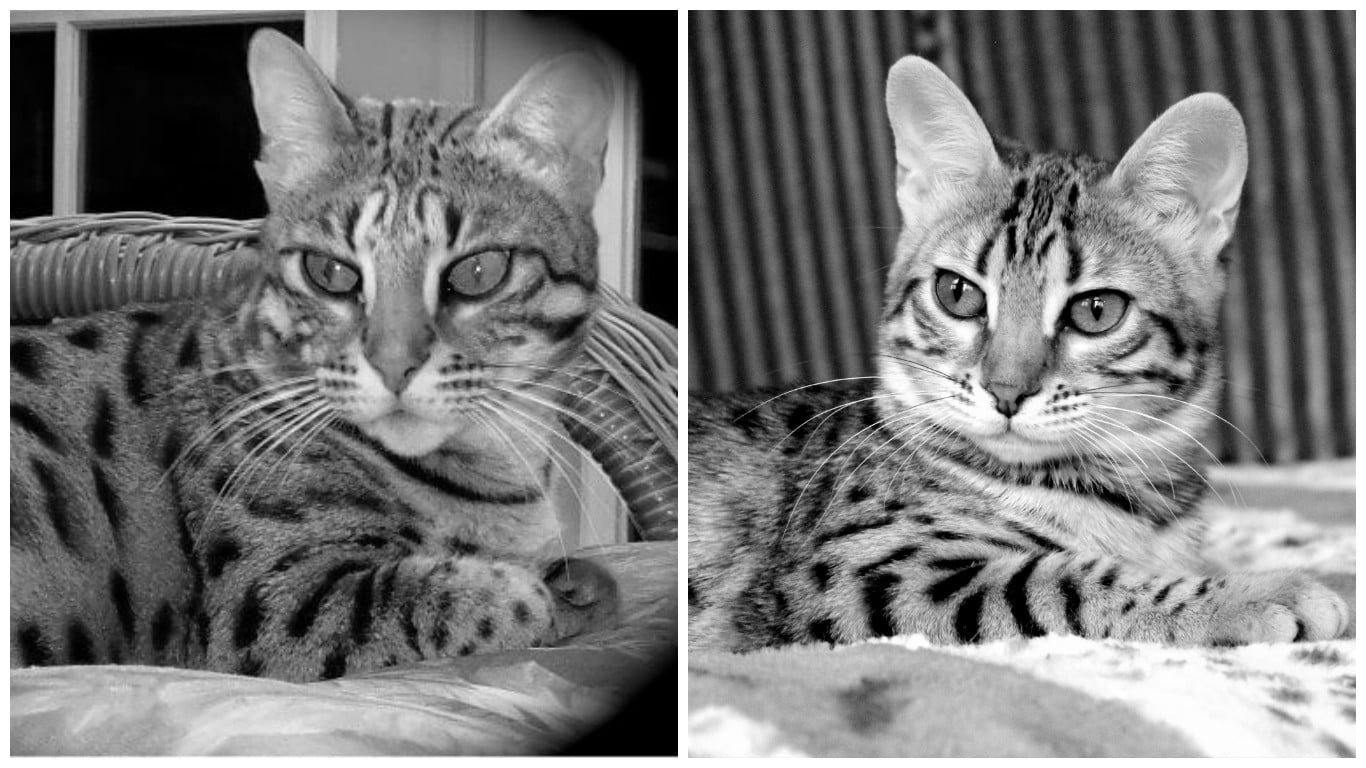
Above left is an F1 hybrid female. She is the great great grandmother of the cat on the right on both sides of the pedigree. While some changes are evident, the F1 still shines through in the face of her great great granddaughter.  

Establishing a Population 
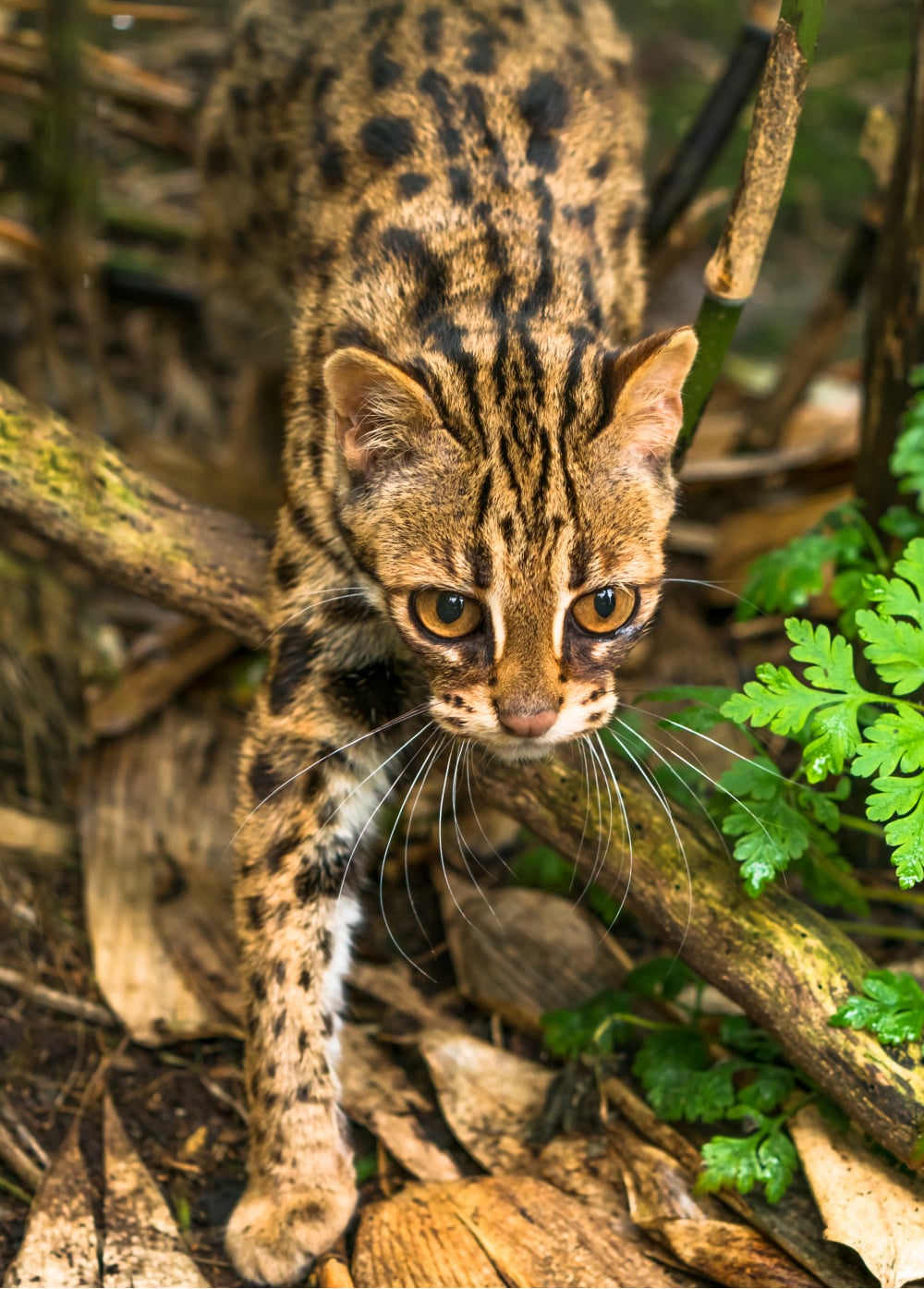
A population is a group of animals that breeds freely with one another in a particular area. In nature, this is a species population. As a population becomes separated from other groups of the same species, it develops adaptations to the specific environment, and these changes can push it towards being a subspecies. A subspecies is a variant from the original species that has some minor genetic changes but is still genetically similar enough to be considered a member of the same species. Over time and with further isolation, a subspecies can develop enough environmental adaptations and genetic mutations to become a separate species. In the wild, this takes a great deal of time and many generations to occur. Sometimes this process is accelerated when a population becomes dramatically isolated, such as when a peninsula becomes separated into an island. At that point, the genetic pool in the population is all that is available to work with. The individuals who are best adapted to the environment raise more offspring; over time, their genetics increase within the population. Related individuals with the same successful genetic adaptations will produce offspring until an identifiable genetic population is established. This causes a high expression of the genes that made the originals better suited. Eventually, these genes are found throughout the entire population. This is natural linebreeding, but in nature, selective pressures such as disease, weather conditions, competition for resources, and predators remove most animals that are not healthy or strong enough to continue the line. 

The picture above shows a leopard cat in the wild – Prionailurus bengalensis. Leopard cats occur over a vast area throughout Asia. Populations have diverged to adapt to the different environments they live in. Until recently there were more than 10 recognized subspecies. More recent genetic analysis has found that there are only 2 mainland subspecies – Prionailurus bengalensis bengalensis and Prionailurus bengalensis euptilura. The leopard cats found on Indonesia’s islands now represent a separate species known as the Sunda leopard cat – Prionailurus javanensis. This shows how a small population that has been separated from the mainland population has genetically diverged to the point of becoming a separate species. 

In a captive situation, we have mimicked the process of developing a population by keeping groups of cats separate and selecting pairings that are put together to establish a type, which develops into a breed over time. Starting with the typical domestic cat, selective breeding has allowed many separate populations to develop into breeds. Some breeds, such as the Norwegian Forest Cat or Maine Coon, are naturally forming breeds. They are domestic cats that adapted to the environmental pressures of their area and developed traits that made them better adapted and different from other domestic cat populations. Each breed has a gene pool with a degree of shared genetic material that allows certain traits to display and make that breed identifiable. While nature pushes animals to adapt to survive and reproduce in their specific environmental conditions, selective breeding in captivity pushes changes that fit the goals of the particular breeding program. 

A breed cannot be formed without some linebreeding. Creating a distinct population that replicates its look from one generation to the next for multiple generations is how we develop a breed. The linebreeding used in the process establishes a recognizable breed gene pool. This breed-specific gene pool is how companies such as Wisdom and Embark can identify different breeds. 

Understanding Homozygosity and Heterozygosity 

Inbreeding and linebreeding are effective in establishing a particular look in a population by increasing the homozygosity of that population. Our genes are located in our chromosomes. We inherit one version of each gene – known as an allele – from each parent. When two copies of the same allele are inherited this is known as being homozygous for that gene. If a different allele is inherited from each parent, then the individual is heterozygous for that gene.  The reason that most complex lifeforms on the planet reproduce sexually is to keep a high level of heterozygosity. Each parent can have variations in the genes they carry for each trait. When paired together, one of these genes is passed from each parent which allows for a different genetic shuffle for each of the offspring. When a population is isolated, there are a limited number of alleles for each trait. In a large wild population, animals tend to have a high degree of heterozygosity. This heterozygosity is healthy for the population as options are available, so if a particular allele becomes associated with a disease, there are still healthy allele variants that can pass on and keep the population healthy and strong. As populations become isolated or closed off, there is an increase in homozygosity. Over time this can be very harmful and lead to a higher susceptibility to illness. However, in some circumstances, especially under natural selection, homozygosity can work, and as long as the healthiest alleles become the established ones, it can strengthen a population. 

An Interesting Case of Natural Selection 

If you ever have the chance to visit Northern England, I highly recommend visiting the Chillingham Wild Cattle at Chillingham Castle. This herd of cattle represents a remarkable survival story that shows that inbreeding can work well when left to natural selection. 

The Chillingham cattle are an ancient type of early domestic cattle that predate modern domestic cattle breeds. Their ancestors roamed wild in the forests of Britain and lived off the land like a wild species. Over 700 years ago, a large group of these cattle were isolated on the grounds of Chillingham Castle, and since that point they have had no genetic addition from outside bloodlines. In 1947, a severely cold winter took a heavy toll on the herd bringing the total number down to just 13 individuals. Of these 13, only 8 were females. Of the five bulls, only one is believed to have been fit enough to continue breeding. While the herd lived wild on the estate, they were provided with hay to support their recovery across the harsh 1947 winter, and that same winter practice has continued to this day. In the herd, only one breeding bull occurs at a time. He will fight for the prime position and then drive the other bulls to the outskirts of the herd. This means that for one or more seasons, most or all calves born were the offspring of one male. The dominant bull that survived the winter of 1947 ended up being the dominant herd bull for three more years. When the dominant bull was overthrown by one of his sons, it meant that most breeding in the herd was between animals that were at least half-siblings. 
The herd now numbers around 100 individuals at Chillingham castle. Genetic analysis of the herd has found them incredibly low in genetic diversity. They are verging on genetic clones, having only minor genetic variations between individuals. The team studying their genetics wanted to look at the genes responsible for disease resistance. They found that the cattle have almost no genetic variation in the areas associated with immune response. Usually, this would increase the mortality rate, but this has not been the case. This could be because the genetic isolation has meant that they have naturally weeded out the most susceptible genes that allow the development of the diseases in the area, or it could be that their isolation from other cattle has protected them from exposure to disease. This is potentially very risky, so to protect the rare genetics of these cattle, a satellite herd was established in Northern Scotland as a safety net. Having a separate group far away from the original population means that if the main herd was to become infected with something in the future and have a mass die-off, there are still individuals out there to bring them back. 

The Chillingham cattle demonstrate that inbreeding can work well if the selective process is natural. The harshness of changing seasons, finding food, surviving predators, and disease all work together to weed out animals that are not genetically suitable to continue the  

lineage. Man-made selection tends to push for physical traits that serve our goals, but nature selects for the best survivors – those that can best adapt to their environment. We must try to mimic nature to get the best out of inbreeding or linebreeding. 

Popular Sire Syndrome 

Popular sire syndrome is a term you may have heard in the past. This is when an individual is deemed of good quality for one reason or another (multiple show-wins, exemplary structure, new and desirable traits, so many of the offspring go into breeding programs. Soon, many offspring are creating their own offspring, and these individuals spread many of the same genes around. Within a few generations, many of these related individuals descended from the original “popular sire” are then bred together, magnifying the original individual’s genes in the population. This seems fine until a case where an unknown and harmful recessive gene mutation is present in the original popular sire, and suddenly the ancestors start putting this together to make homozygous offspring. At this point, babies are born with issues that seem out of the blue, and it can take some time to identify the individual with the original mutated gene that the problem stems from. 

I’m going to talk about cattle again here. The reason for this is that I can share a particular example of popular sire syndrome and the extremely negative effect it can bring. 

In 1977, an Angus bull was born in the US, and was deemed very high quality. Because of his desirable qualities, he was used as an artificial insemination bull. His semen was transported worldwide, and his genetics became established in many herds globally. At the time, nobody knew that he carried a gene for a condition later named Developmental Duplication. This had not been seen before, and it took a while before the effects started to appear. The condition is an autosomal recessive trait. This means that it is not carried on a sex chromosome, so both genders are affected in the same way, and an affected animal must carry two copies of the gene – one from each parent. It took over 15 years for the full impact of this bull’s genetics to show up. A few anomalies appeared over the years, but the real impact showed when a fifth-generation descendant of the original bull became another popular sire in 1990 in Australia. Again, his semen was sent globally, and now the affected gene was able to come in contact with other descendants of the original popular sire. Calves who inherited a copy from each parent were born with an array of defects, the most common being extra limbs on the body in unusual locations. Calves with legs sticking out of their backs or heads, two heads, additional tails, two spines, and many other oddities appeared in abundance. The condition started showing up in herds worldwide at around the same time. A DNA test was eventually developed, and carriers could then be identified. Still, the condition had gone global. Like many recessive conditions in pedigree animals, it is not straightforward or wise to eliminate all carriers as this can risk a genetic bottleneck that increases the risk of other recessive anomalies showing up. Again, it is wise to note that it took over 15 years and five generations for the full impact of the original popular sire’s faulty gene to show up. Even with the shorter maturation time and short gestation period of cats, it could take 5-10 years to see the impact of popular sire syndrome. This demonstrates how dangerous popular sire syndrome is and how quickly linebreeding – even more distant linebreeding – can go wrong and have lasting effects. 
The above image is an Angus calf with Developmental Duplication. This shows the additional limbs that can appear due to having two copies of the affected gene. You can learn more about this condition and see more pictures at – http://www.flockandherd.net.au/cattle/reader/developmental-duplication-angus.html 
Please note that some of the pictures are quite graphic and not something to look at if you are squeamish. 

Inbreeding Depression 

Inbreeding depression is the decrease of vigor seen after a few generations of breeding between close relatives. Inbreeding depression can manifest as a population’s lower offspring survival rate, shorter lifespan, or lower fertility. Individuals can display stunted growth and an overall lack of vitality. This happens due to increased homozygosity across multiple genes within the individual. The animal is less genetically diverse, which exposes harmful recessive alleles, making it more susceptible to illness and environmental conditions. 

Stillbirths can be a sign of inbreeding depression. In the non-pedigree world, stillbirths only make up about 4% of kittens born. ”Generally pedigree cats have higher levels of kitten death than non-pedigrees. In one large study of pedigree cats, around 7% of kittens were still-born” (“Kitten deaths (Fading Kittens)”). With first degree inbreeding, this increases the risk of stillbirths and congenital defects further. The closer the relatives and the more generations of inbreeding used, the higher the risk of birth issues. 

Inbreeding depression can also reduce overall fertility. “In 1982 Wildt et al. compared an inbred group of Foxhounds with a not inbred group and found lower conception rate, smaller litter size as well as smaller number of sperms in the inbred group. Motility of sperms and ejaculate volume as well as volume of the testes also was different between the two groups although failing the significance limit” (Sommerfeld). This effect on fertility has been found across many species and is something to consider when low litter sizes occur repeatedly. 

Genetic Bottleneck 

Also referred to as a population bottleneck, this is when a population experiences a reduction in numbers resulting in a limited amount of genetic diversity within the remaining population. In nature, this happens after natural disasters, or when a disease sweeps through a population, killing off many individuals. In pedigree animals, this often occurs after a genetic condition is found in a section of the breed or when a desirable trait is developed and people bring in animals from that bloodline incorporating them into what they already had, much in the way of popular sire syndrome. Genetic bottlenecks should be avoided wherever possible. We live in a time when genetic testing is available for many health conditions. The primary conditions we can test for in the Bengal breed are Pyruvate Kinase Deficiency and a Bengal-specific form of Progressive Retinal Atrophy. We are lucky that both of these conditions are autosomal recessives so carriers are safe to use in breeding programs if only paired with mates who do not carry the condition. With the testing we have available, it is easy to identify carriers of conditions and plan matings accordingly to avoid producing affected kittens. One of the biggest mistakes we can make when a recessive disease is discovered is to eliminate carriers from the gene pool. Doing so creates a massive genetic bottleneck. The cats carrying one copy of the affected gene also have a variety of other healthy genes that can be inadvertently reduced or eliminated in the process of removing the one specific gene that was intended to be removed. When it comes to autosomal recessive health issues, identifying the carriers and carefully selecting pairings is the best way to move forward while maintaining a healthy and diverse population and avoiding a genetic bottleneck. 

Genetic Drift 

Genetic drift occurs when populations are split for an extended period of time. Genetic drift frequently happens in nature after a genetic bottleneck. Take one larger population and separate it into different groups for many years. There will be genetic drift as some genes from the original population may be lost while others are overrepresented in the new smaller group. This is not something that is selected for, and it happens naturally over time in both wild populations and pedigree breeding programs. 

Imagine a large colony of feral cats as an example to explain genetic drift. All of the cats are brown tabbies and carry for solid black. Their genetics are therefore A/a. When two cats with this genetic lineup breed, statistically speaking, a litter of four should on average produce one kitten who is A/A (brown tabby), two that are A/a (brown tabby carrying solid black), and one that is a/a (solid black). While this is the statistical average to expect from the pairing, any long-term breeder will know that the ratio of these combinations is not always quite what we would hope.  
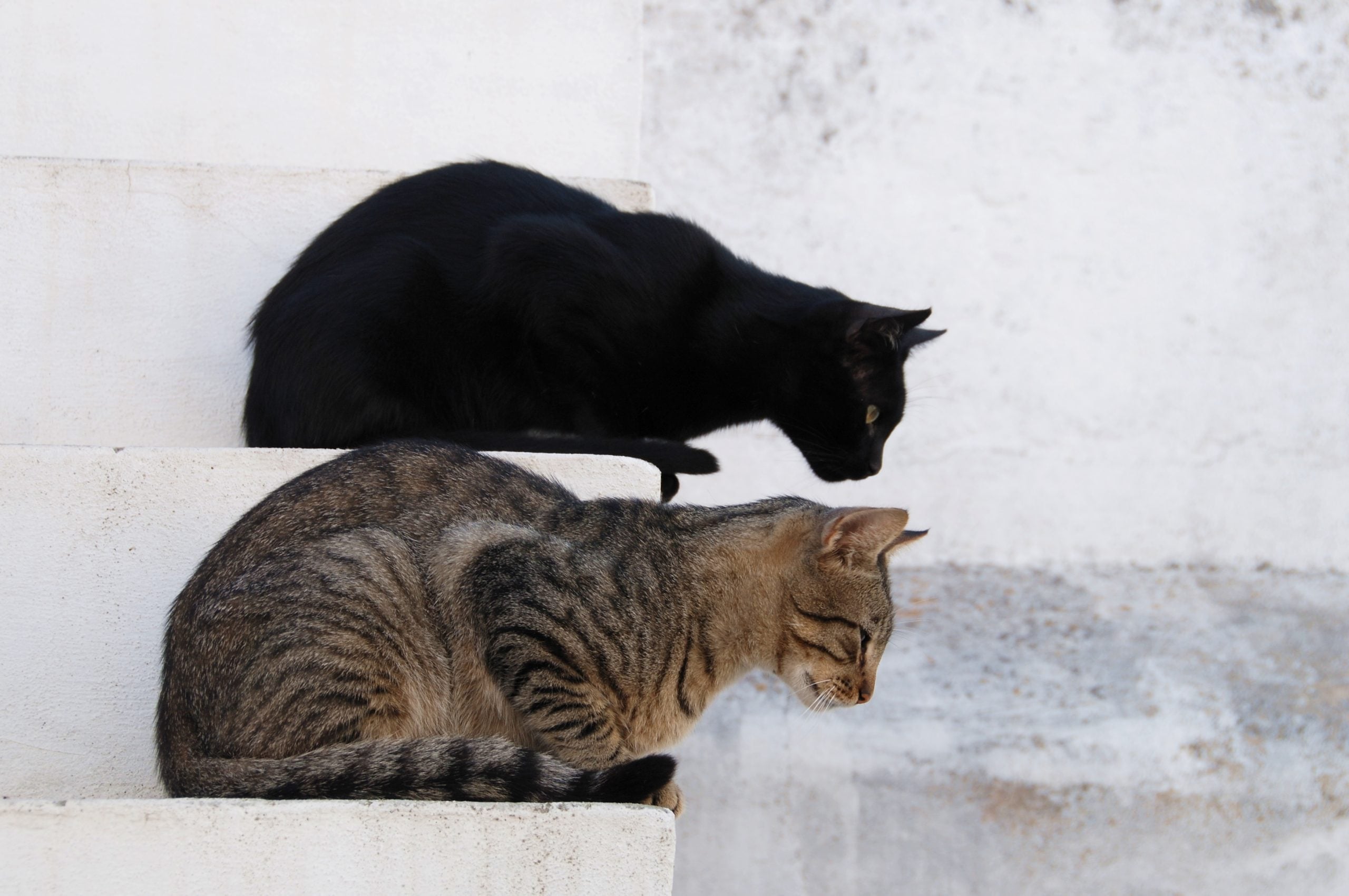
If you split this large colony into multiple smaller groups, you would expect 75% of the cats to be brown tabby and 25% to be solid black over a period of time. However, the success of some individuals in each population can skew the results. If a solid black male were born in one of the groups and took over as the dominant male, he would pass that gene on to all of his offspring. Within a few years, this would mean a high number of solid black cats would exist in this population. If, on the other hand, a brown tabby A/A male was dominant in another group then he would never be contributing the genes for solid black, and a reduction of this gene would happen in the population. Over multiple generations, genes may be lost entirely or completely take over in a population through this method. This is a basic example of how genetic drift works. 

While genetic drift might seem irrelevant in the overall topic of linebreeding and inbreeding, it is at play all the time in our breed. The effects of genetic drift can be used to our advantage to add in genetic diversity. For decades there have been programs that lean towards more flashy coated cats and programs that lean towards more typey cats. Some breeders try to combine these two looks, bringing genetic diversity. Programs that have selected for coat traits for many generations will have experienced genetic drift in a different direction from programs that have selected for type. While the breed is still the same, there will be considerable genetic drift, and combining these two looks can improve genetic diversity. When looking to bring in genetic diversity, don’t be afraid to step outside your comfort zone and bring in a different look. The genetic health benefits can be very much worthwhile. Just be sure to find a cat with some traits you want in your next generation. Also, be willing to bring in cats from far away from your local area. Certain bloodlines tend to become established in an area, and the same genetics are then in circulation. While some lines are widespread worldwide, some lines are less well represented. As long as the breeders are health testing, these rarer lines, even those with linebreeding within them, are a goldmine of genetic drift that can push your diversity way up. 

Outcrossing 

Outcrossing is the process of breeding to an individual that is not closely related to the main breeding population. Within a breed, this is the selection of an individual from a different lineage but still part of the breed. When inbreeding is chosen as the route of breeding in a program, bringing in another line every two to three generations can reduce the effects of inbreeding depression as they add heterozygosity to the offspring. 
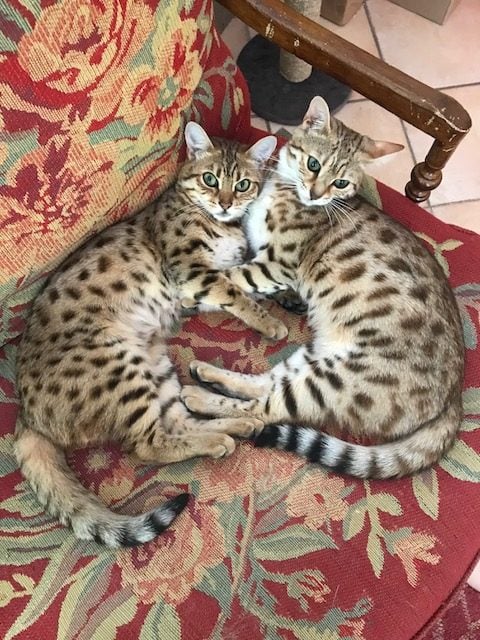
Outcrossing can also be done at a higher level by doing so outside of the breed. This is when a member of a different breed or a non-pedigree animal is brought into a pedigree line. Individuals from other breeds can add even more genetic diversity to a program. However, careful selection must be used to breed back to the desired look as a different breed will not match the desired goals of the original breed in every way. A non-pedigree animal can add even more diversity but again requires careful selection to breed away from undesired traits that are introduced simultaneously. 

On the left are two females from a breed outcross. Their mother is a cross between a Bengal and an Exotic Shorthair. She was bred back to a Bengal male, and the Bengal influence in their offspring is already very visible. 

In the Bengal breed, we also have species outcrossing. This means bringing in genetics from the leopard cat. This adds more diversity again but requires careful selection for desired behavioral traits. 

Whatever form of outcrossing is used, it is wise to plan on keeping genetic diversity high within your program. Higher genetic diversity will increase health and disease resistance. You can test the genetic diversity in your cats by submitting a DNA sample to Wisdom Panel. This allows you to accurately see the genetic diversity in each cat as an individual and how that compares to the average genetic diversity within the breed. 

What Does All Of This Mean For Breeders? 

If you are new to breeding or unsure whether inbreeding or linebreeding is right for you, it is best to avoid doing it. Inbreeding and linebreeding can be incredibly useful tools when used with a focused goal and with lines that have been thoroughly tested, preferably where the common ancestor is older and has had a chance to show any conditions that don’t show up straight away. Breeders with a thorough understanding of the pedigree can make huge strides in their program through linebreeding or inbreeding, but mistakes can happen. With closely related animals, those mistakes can have more significant consequences. Even with experience, you must be aware of the health of any cat you choose to linebreed or inbreed on. You must have an intimate knowledge of the health and structure of this cat, and be aware of any flaws present in that cat, or its close relatives, that would require corrections. 

Heart Health 

As with many pedigree breeds, as well as the non-pedigree cat population, Bengals can develop heart disease. The type we hear about most frequently and that has the most significant impact on our breed is Hypertrophic Cardiomyopathy (HCM). HCM is a genetic condition, although the exact mode of inheritance is not fully understood in Bengals yet. It is most likely to be a dominant gene with incomplete penetrance. This means that only one copy of the responsible gene is needed for a Bengal to be affected, but not every cat with the gene will show obvious signs of heart disease. Currently, our only accurate way to identify HCM is through an echocardiogram with a veterinary cardiologist. HCM can develop at any time in a Bengal’s life, but most cases start to show some development between two and six years of age. Some Bengals show changes and even advanced disease before their first birthday, and sometimes late onset individuals don’t show signs until their senior years. 

With the genes for HCM in Bengals not yet identified, we must try our best to identify affected cats through regular heart screening with a veterinary cardiologist. Affected cats should not be bred, and keeping diversity in your breeding program is important. Knowing the heart history of the cats in your program and their close relatives is extremely important. If you do not heart test your cats, PLEASE DO NOT LINEBREED OR INBREED. If you are buying a cat from a cattery that uses linebreeding and inbreeding, ask to see heart reports for both parents. Also, ask to see reports of all four grandparents, and place emphasis on the cat that has been inbred on (for example, if the same male is the grandfather on both sides of the pedigree). The age at which the cats were tested is helpful as cats that are only tested once as young adults (under six years) may not have exhibited any changes yet, but could develop the disease later. Older tested cats give more likelihood of safety, although there is never any certainty. If the breeder you are considering buying from uses linebreeding or inbreeding and does not heart test, please do not take the risk. Explain your reasoning and find another breeder who tests. The age-old phrase “there is no HCM in these lines” is just an excuse to avoid testing. Take it from someone who has fallen for this early on and don’t learn the lesson the hard way. Only an echocardiogram can tell the heart’s health for sure. Just like breeders who breed diverse lines, breeders who choose to breed closely related cats together owe it to the kittens they produce to ensure that they are only pairing the safest and healthiest cats together. 
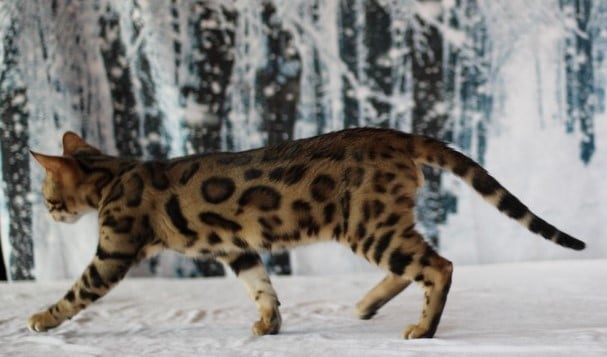
Pictured above is an inbred male we brought into our program in 2017. He had a male and female pairing in his pedigree that repeated 3 times in 3 generations. We knew there was a risk, but we trusted what the breeder told us. Sadly, when he arrived with us, it was clear that he should not have been sold for breeding. He was cow-hocked and had mild pectus excavatum (the base of the sternum is inverted), prominent pectus carinatum (the top of the sternum protrudes out towards the front), and a very poor immune system. We chose to neuter this boy due to the multitude of structural flaws. It was a blessing in disguise that he had these structural flaws as he was diagnosed with severe HCM at 18 months, and despite being on strong medications, he died of HCM a few weeks before his second birthday. 

HCM Research

HCM research is jumping forward, and two teams are working on identifying genetics that cause HCM in cats. 

One team performing research on HCM in Bengals is led by Kathryn Meurs, DVM, Ph.D. Diplomate ACVIM at North Carolina State Veterinary Hospital. If you have a Bengal that has been diagnosed with HCM, please consider submitting a DNA sample to this study. Submission instructions can be found here –  https://cvm.ncsu.edu/wp-content/uploads/2016/10/Genetics-Bengal-Cat-Hypertrophic-Cardiomyopathy-Study.pdf  You can also reach out to me directly with questions.

Thomas Smedley and Jade Raffle lead the other team working on identifying genes for HCM in all cats at the Royal Veterinary College of London. They are interested in pedigree and non-pedigree cats, so if you have a cat of any breed or mix that is affected by HCM, please consider submitting a DNA sample. They would also like samples from cats with a normal echocardiogram at the age of 9 or over. This allows them to compare the genes of cats that are past the high-risk age for developing HCM. Again, this is open to any cats, but if we can get a large number of heart-healthy 9-year-old or older Bengals and HCM positive Bengals, then we stand a good chance of finding at least one gene that may help us move towards a healthier breed. Please contact me at health@tibcs.com for submission instructions. If you are in the US or Canada, I can also send you the sample swabs for submission to this study. 

If we all work together, we can help these teams find the genes that cause HCM in our beautiful breed. Let’s get those samples sent in! 

Works Cited 

“Kitten deaths (Fading Kittens).” International Cat Care, International Cat Care, 20 August 2018, https://icatcare.org/advice/kitten-deaths-fading-kittens/. Accessed 24 July 2022. 

Sommerfeld, Irene. “Infertility and Inbreeding: How Veterinarians Should Tell What Breeders Do Not Want To Hear – WSAVA2006.” VIN, World Small Animal Veterinary Association World Congress, https://www.vin.com/apputil/content/defaultadv1.aspx?pId=11223&meta=generic&catId=31441&id=3859259&ind=238&objTypeID=17. Accessed 24 July 2022. 

“What do the terms inbreeding and linebreeding mean? – RSPCA Knowledgebase.” kb.rspca.org.au, 30 April 2019, https://kb.rspca.org.au/knowledge-base/what-do-the-terms-inbreeding-and-linebreeding-mean/. Accessed 11 June 2022.

How the Forest Shaped the Bengal Ear

For many years, it has appeared as if the top priority of breeders is to achieve small ears. Small ears are not very wild looking when they are triangular. 
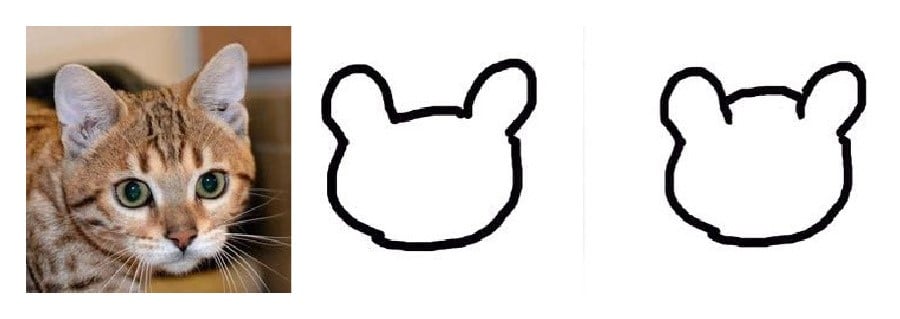
Take a look at the half-sisters snuggled up in the cat bed. The cat on the left has small ears, but they are narrow and triangular. The cat on the right has much larger ears overall, but they are, in fact, a step closer to the wild look than the small ears on the left. The ears on the right are wide-based and more rounded at the top. While the ears are much larger on the cat on the right, they are actually a step closer to the wild look based on their shape. In most cases, however, breeders would say the cat on the left has better ears simply because the size is diminutive. If the cat on the right had more forward tilt to hear ears, they would “look” smaller. Forward tilt can actually hide several different weaknesses in the ear – including both size and shape. For those breeders who really feel they struggle with ears, trying to get forward tilt would make the time it takes to correct everything a more bearable process as the ears will “look” better than they actually are. 

In addition to the forward tilt having an impact on the appearance of the size of the ear, where the ears sit on the head has an impact as well. The kitten collaged with the drawing has a fantastic shape, but the ears are too high on the head. If you move the ears down or add more top skulls, the same ears would “look” smaller. Now imagine not only moving the set down a tiny bit but also adding forward tilt; the ears would appear to be diminutive, even though their actual size would not change. 
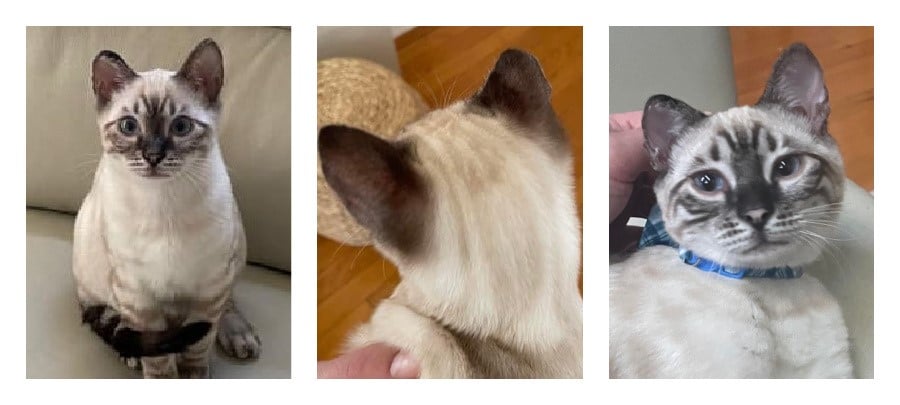
With the ears being a consistent struggle for breeders, it can be super exciting when you progress forward or see fantastic progress in other catteries. Recently a few cats with over-groomed ears have been doing the social media circuit and receiving a lot of praise. Micheal Turner permitted me to share pictures of his cat with one overgroomed ear. The mother of this cat overgroomed one ear at birth and left the other alone. Over-grooming can leave one with fantastic-looking ears when done on both sides, but when it is done on one side, it makes it much easier to identify.

When kittens are born, less than half of the ear flap is physically detached from the head. This is why newborn ears always look tiny. At this stage, there is very little active blood flow in the ear flap. Damage done to the ear flap at this time can easily go unnoticed due to lack of bleeding. 
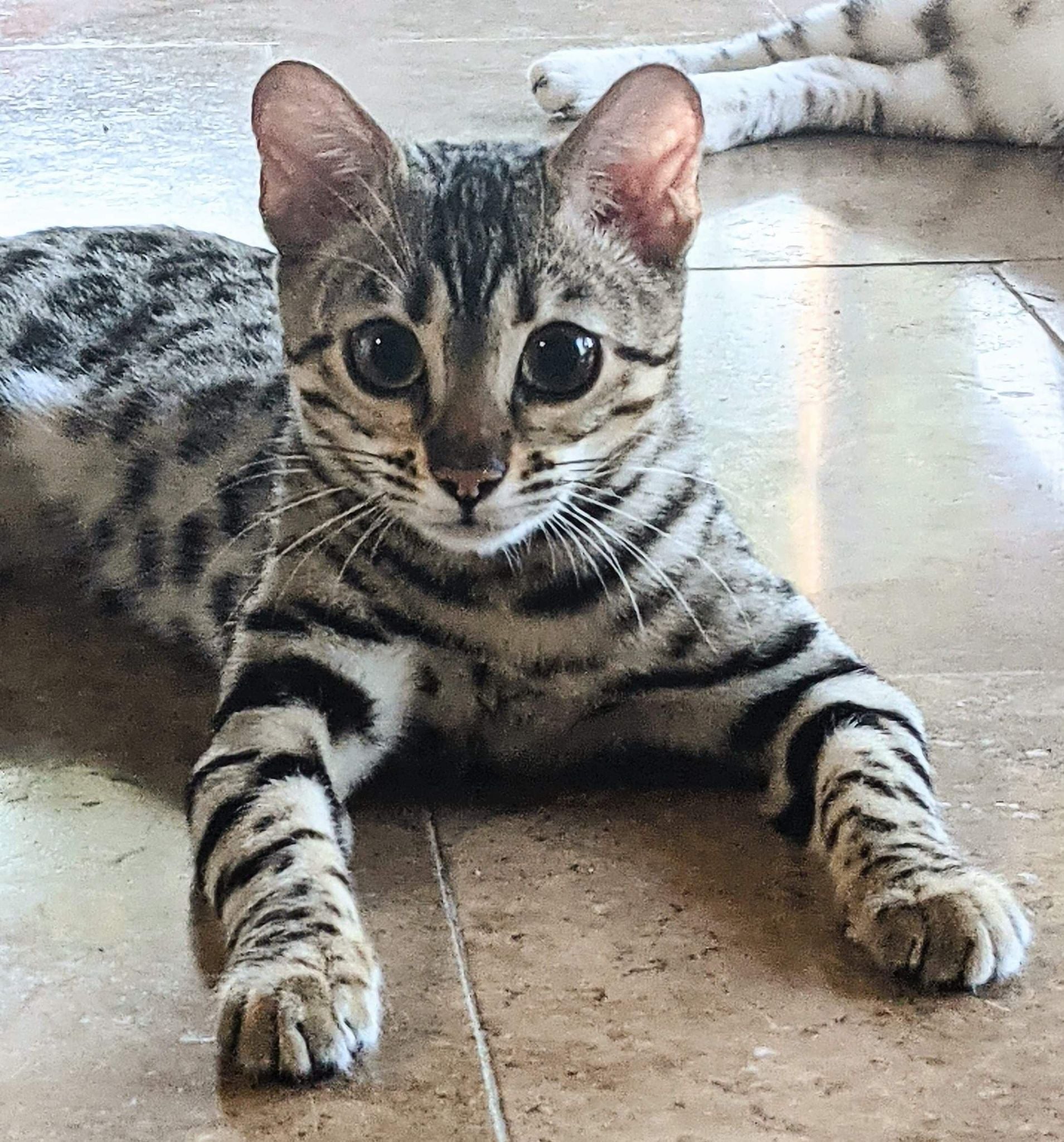
Between two and six weeks, the ear flaps fully open which is why ears often grow disproportionately during this time. If the ear is over-groomed early on, the unfused tip of the ear is removed. As the ear flap opens and grows, this stretches the area where the tip was removed which causes the ear to become rounded; in essence, as the ear gets larger, the scar tissue stretches and smooths down as either side of the growing ear is pulling it. This scar tissue is slightly less elastic and flexible than normal ear tissue. This means that any notches or uneven edges caused by the mother gradually smooth out as the scar tissue becomes tighter. Because of scar tissue, the point of removal does not have the fine hair edge you see on the natural rim of the ear. In addition, you will see an unnatural hairline surrounding this over-groomed ear.

Sometimes we see cats where this has happened, and our automatic assumption is that the breeder trimmed the ears because the shape looks so perfect. It is more likely that the mother overgroomed. This cat with one over-groomed ear and one natural ear demonstrates how this round shape results from the scar tissue being stretched as the ear grows; it is not because a breeder trimmed them to perfection equally on both sides.

It would be beneficial if those posting kittens and cats with over-groomed ears would add a disclaimer to their pictures stating they know the ear was over-groomed. Sometimes, the cat being published is a stunning cat worthy of compliments. Yet, the lack of clarity regarding the condition of the ears holds some back from complimenting the cat because they don’t want to be seen as supporting this unnatural ear. When these pictures do not have a disclaimer, it causes confusion for new breeders who may not understand that the ears are not natural. How sad it would be for a new breeder to buy a breeding cat with over-groomed ears while under the impression that the cat would produce those ears. The only realistic hope of that happening would lie in purchasing a female who inherits the overgrooming behavior of the mother. It is not an authentic way to improve ears. 

As breeders, sometimes we have to ask ourselves – what is the goal? Small? Or accurate? The Bengal will naturally go through phases in which the best ears do not appear small to get to the accurate ear. These cats will struggle in the show hall as the show hall, at the moment of publication, favors size over the shape and set. Most Bengal standards describe the size of the ears first. By having the size in the first place position in the description, it sends the message to judges that size is the most important aspect of the ear. Bengal breeders may consider discussing with their breed committees and breed chairs whether reorganizing the ear description could assist in the show hall, encouraging breeders to focus more on the shape and set and less on size. We need to get to the point where judges mention the shape of ears, such as these on Lots Of Spots Rayne Dancer; more often than not, they mention size.  


Bengal Eyes

The problems with using either oval or almond as the shape for the Bengal eye is that it does not allow for an openness that is needed on a nocturnal eye.  It seems the one thing all Bengal standards agree upon is that the Bengal should have the look of a nocturnal cat.  One of the traits that clearly distinguish a nocturnal cat from diurnal or crepuscular cats is its eyes, so we ought to spend some time getting this description correct.  

While oval and almond aren’t right, round isn’t exactly accurate either.  Of the three, it is likely the closest, but it would be the easy way out when formulating a standard – the description of the very best.  The Bengal has this interesting straight edge to the upper inner eyelid.  In addition, the widest point of the eye should have a slight bias toward the outer edge of the eye.  It is this slight bias that makes the eye look wild, not staring or domestic round. If you look down at the collage of four different tree-dwelling, nocturnal wildcat species, you’ll notice that while their top eyelid shape varies, they all have the lower eyelid that deepens towards the outside of the eye, not directly in the center like a round eye.  When we are looking for ways to distinguish the Bengal from all other breeds and using the nocturnal wildcat for inspiration, it is important to note these slight distinctions in the standard.

I reached out to a friend who is a judge and asked how one would describe the shape of the eye that I would like to see on the Bengal, and she pointed me to the American Curl standard for some ideas.  Bingo, I think they hit it – almost.  
The American Curl describes their eye shape as “Walnut in shape; oval on the top and round on the bottom.  For the Bengal, I would add “with the deepest point slightly biased to the outer edge.”  It seems that using a description that already exists and tweaking it to fit the Bengal would provide the most clarity for judges.

Another aspect that is often included in the description of an eye shape is the proportion of the eye to head size.  Look at the collage of four different tree-dwelling wildcats who are nocturnal hunters. Top left, Leopard cat; top right Marbled cat; bottom left, Margay; bottom right, Oncilla.  On all cats, the eyes are a dominating feature on the face as they should be on a Bengal as well.  So when describing the size, the Bengal eye should be moderately large in proportion to the head.  The allowance already made for jowls on male cats accommodates the difference in proportion between a male and female Bengal cat eye to head size proportion.

Standards need to account for the set of the eyes as well and this is where Bengal standards everywhere have an opportunity to clarify for breeders what a nocturnal set looks like.  It is obvious by looking at the wildcat collage that the eyes of nocturnal cats are set to the outside edges of the face with approximately one eye width between them.  Defining the width by the size of the eye would help Bengal breeders keep everything in the proper proportion.  There seems to be a common understanding that Bengal eyes should be wide apart, but the proportion of width to eye size is off on many Bengals with the width being too wide and the eyes being too small.  Clarifying the proportions could be an asset to kitten selection.  This would also allow for the eye description to help guide the head width to be in accordance to other areas of the standard – particularly where it calls for the head to be longer than it is wide and slightly small in proportion to the body.  It would be nice to start to see the different pieces of the standard working together instead of contradicting one another.
 

Often Bengal standards will call for the eye to not be bugged, which is understandable because no one should breed for structural flaws.  However, a nocturnal eye has a lot of surface area to its lens.  The difference between it and a bugged eye is that the non-bugged eye with a copious surface area is held strongly in place by prominent boning.  We’ve mentioned above that drop in the lower eye line towards the outside edge of the eye.  Look carefully below the lowest point in the lower eyelids on the pictures of the different wildcats, you can see the strength of the bone holding the eye in place so that it isn’t bugged.  Now, look at the image of the dorsal view of two skulls.  The comparison between a domestic cat skull on the top and a Leopard cat skull beneath shows the difference in the bone structure around the eyes.  Notice the Leopard cat’s zygomatic bone sticks out further in the front and sides and is a thicker bone than it is on the domestic cat.  Even the bones holding in the top of the eyes are longer and stronger on the Leopard cat. Selecting for the bone structure of a Leopard cat on the SBT Bengal will give the nocturnal eye that is coveted by Bengal breeders without the fear of the eye having the structural weaknesses of a bugged eye.  It is this strong bone structure that holds the eyes in a forward facing position.

To have the nocturnal look, the Bengal eyes cannot be deeply set into the skull.  The nose bridge should not extend out beyond the eye lens very far.  This coincides with the need for a lot of surface area on the lens of the eye. A nocturnal eye must allow as much light to enter the eyeball as possible.  Furthermore, the bottom of the eye is set further out than it is on the majority of cats making the angle of the eye parallel to the bridge of the nose if the cat has the desired downward turned muzzle that is shown on the Leopard cat in the picture.  Even on cats who don’t have the downward turned muzzle, the eye should sit ever so slightly tilted upward.  For all of this to exist, the Bengal needs the bone structure from the Leopard cat.  If standards start to describe with clarity what a nocturnal eye looks like, breeders will have to start selecting the stronger bone structure.  All choices have a domino effect, and this will have a positive domino effect.
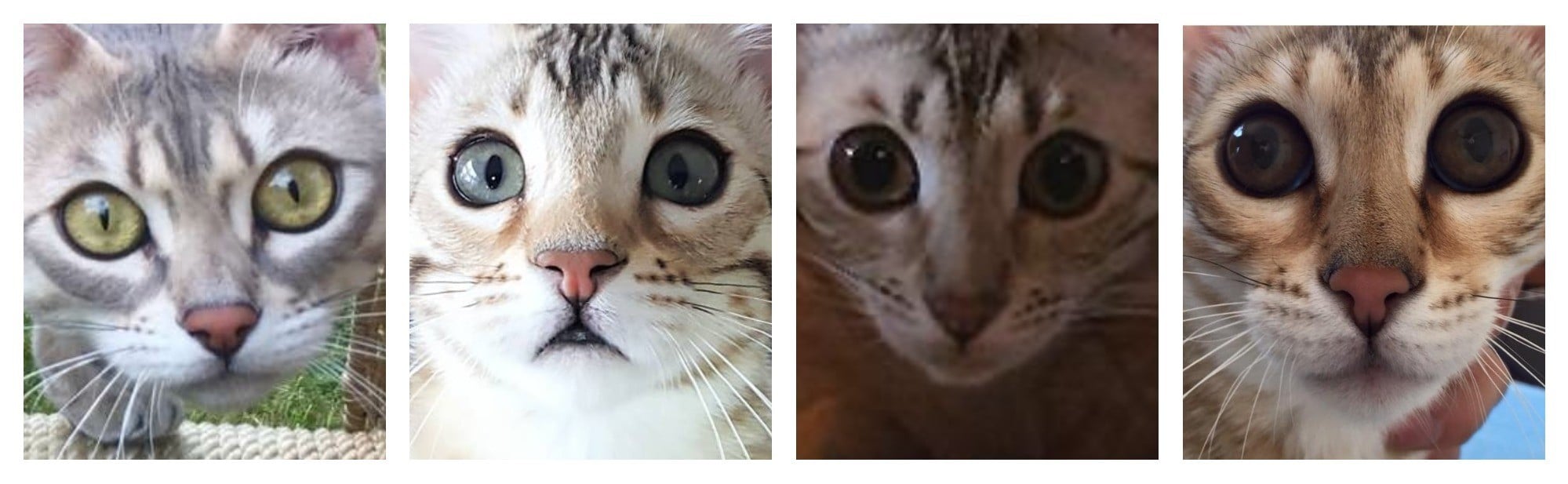
The lens of the Bengal eye should be visible from all sorts of angles – that is what makes the eye nocturnal. In the picture below, look at how you can see the lens of this male Leopard cat’s eye as it protrudes out from the face.  You can see the lens from behind the cat.  Notice, too, on the Bengal kitten how the lens is visible on the far-away side of the nose bridge.  Cats who hunt at night have to capture any of the minimal light they can and they have to be able to pick up light from all different angles.  If we are breeding the look of a nocturnal cat, we need to have a standard description that explains it as such.

It is time to get the description of the Bengal eye clarified by standards in order to help breeders make better selections towards the big picture goal of the Bengal breed which is to breed a domestic cat that emulates the look of a small, nocturnal, tree-dwelling wildcat.  To do so the eye shape, set, and size should be clearly stated. 

Shape: Oval on the top, round on the bottom, with the deepest point slightly biased to the outside. Set: Placed on the outside of the face with one eye width in between, surrounded by prominent boning that holds the eyes at a parallel angle to the nose bridge in profile. Size: Moderately large with a large surface area on the lens.  Strong boning keeps eyes from being bugged.

So the question remains – are Bengal breed section members of any organization interested in clarifying their standard’s eye description?


These Bengal eyes from around the world show that the ideal eye is attainable on SBT Bengals.  Pictured from left to right: Katzizi Ylvi at Katzizi Bengals in England; Fraser Valley Nova of Jewelspride at Jewelspride Bengals in Canada; Crestwood Vegas of Coppa at Coppa Bengals in the United States; Batifoleurs Moswen of Moulin Rouge at Moulin Rouge Bengals in France.

My Bengal Cat Wakes Me up at Night

by Robyn Paterson

You awaken from a peaceful slumber to the sound of your Bengal cat’s loud yowl. Stumbling out of bed, you nearly trip over the Bengal to determine the cause of your feline friend’s distress. Nothing appears to be wrong. You must get back to sleep, so the cat must be silenced. You do the first thing that comes to mind – fill the food bowl with food. Over the next few nights, the same cycle repeats itself. You awaken to your cat’s yowling, tend to its needs, and try to return to sleep. This is no way to live life. How can you make it stop?

Your Bengal cat is awakening you in the middle of the night because it needs something. You must determine what it needs and provide for it at a more appropriate time. If this is a change of behavior, the first thing is to rule out any health issues that could be underlying. 

Being that we are talking Bengals, the cause of the midnight meowing is likely to be rooted in either food or boredom. For high-energy cats, these are the most common causes of behavioral problems. All Bengals are high-energy cats. 

Why Food a Likely Cause of Midnight Meowing
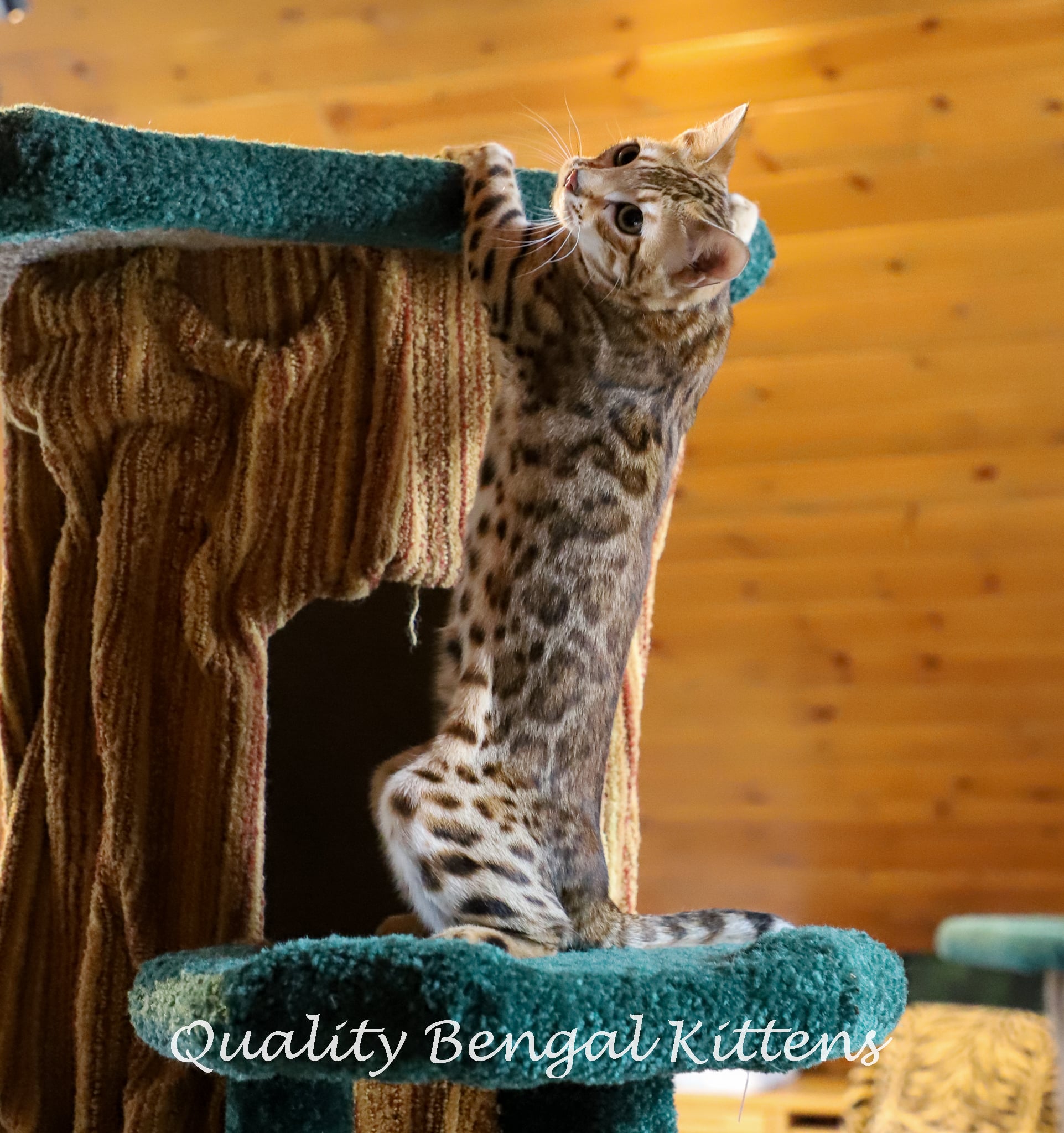
As high-energy cats, Bengals have a higher-than-average metabolism. This means their body burns more fuel than the average cat. Bengal cats need more than the daily recommended dosage on all food packaging. 

This is especially true for young male Bengal cats. Male Bengals between the ages of 6 to 18 months are growing like weeds. During this timeframe, they may eat up to twice the food they will eat as adults. If you are experiencing behavioral problems with a male Bengal within this stage of life, increase the food you are offering.

How and when you feed your cat may be contributing to the problem. Cats should not be free-fed or fed first thing in the morning. Free-feeding disrupts their natural body rhythm, which is to hunt (and expel energy) before they eat. Ideally, you want to feed your cat after a play session several times a day, with the largest portion being fed before you go to bed at night. By feeding the largest portion before you go to bed, your Bengal cat will be satisfied and more settled throughout the night. 

In addition, you never want to make feeding the cat the first step in your morning routine. When you get up in the morning, make coffee, eat breakfast, shower, etc. Do just about everything that you do daily BEFORE you feed the cat. This way, the cat does not associate you’re getting out of bed with it receiving food. 

For a more detailed explanation of why food is a likely candidate for causing the midnight meowing, please read What and How You Feed May Affect Your Bengal Cat’s Behavior.

Why Environment is a Likely Cause of Midnight Meowing
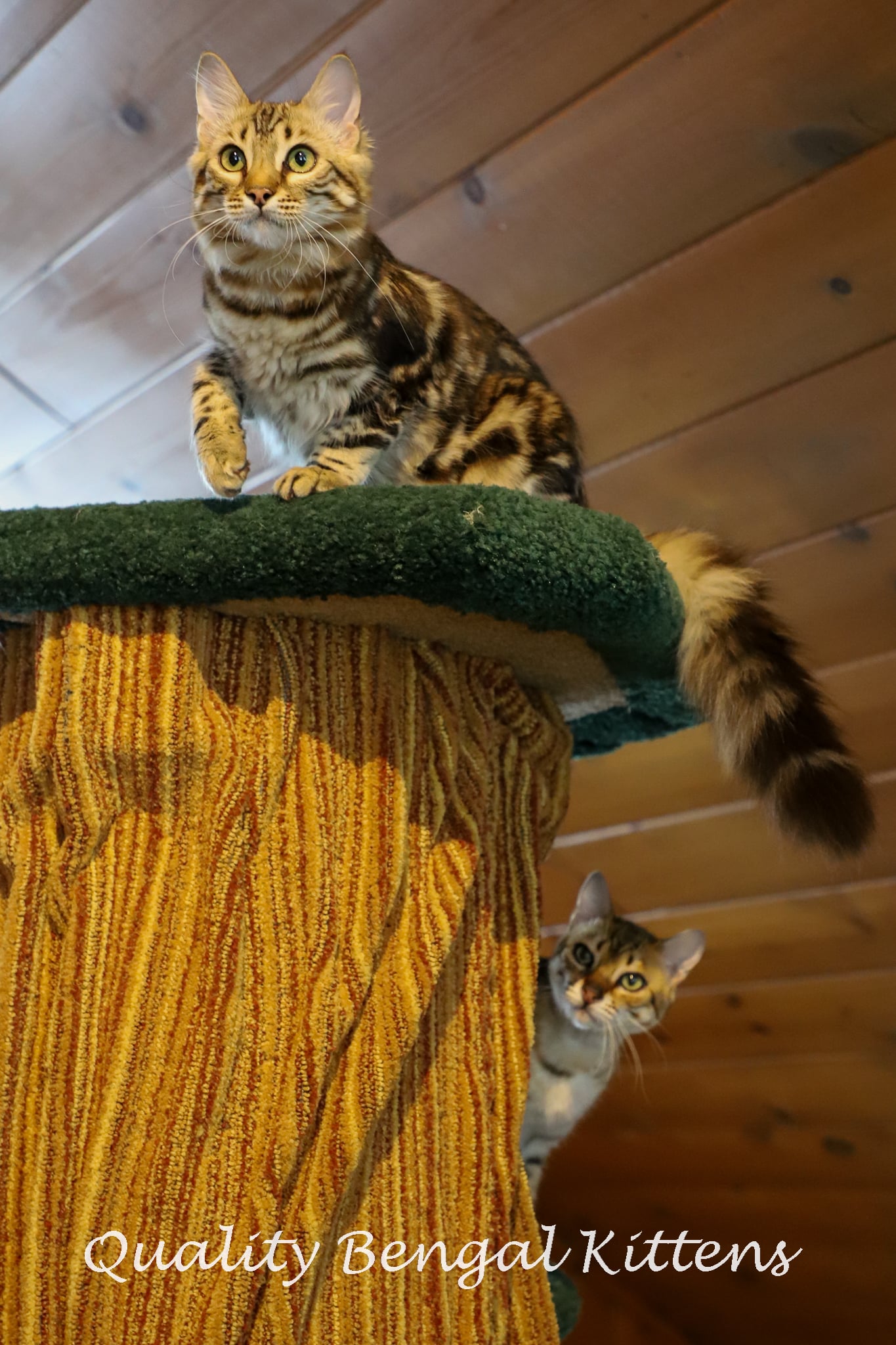
Bengals are high-energy cats. Most of their behavioral problems are rooted in the environment and the amount of stimulation the cat receives. Most people think this can’t be the problem because they play with their cats daily. You may, indeed, play daily, but if the cat is exhibiting behaviors you are not happy with, it likely needs more stimulation than what you are currently providing. A cat’s natural territory is many times larger than a house. A cat living outdoors will patrol, hunt, and climb all throughout its territory. If we do not provide enough things for our Bengals to do in our homes, they will likely exhibit unwanted behaviors. 

Every Bengal needs an enriching indoor environment. For a Bengal, this means lots of vertical space with sturdy, tall cat trees. It is best to create a walkway around the upper level of your home with a combination of cat trees and cat shelving. Because Bengals descend from the leopard cat, which lives in the tree canopy of Asian forests, they tend to need an enriched vertical habitat. A window perch strategically set in a window where there may be wildlife to watch provides not only additional vertical space, but also the mental stimulation of watching for wildlife, which utilizes a Bengal’s mental energy. 
 

A Bengal cat needs both vertical space and mental stimulation. You should have a set of Mind Puzzles that you rotate, so your Bengal cat has something to challenge its mind regularly. It is amazing how intensely exercising the mind alleviates behavioral problems in intelligent cats. If you are up for it, daily clicker training will help eliminate the midnight meowing and create a very satisfied cat. 
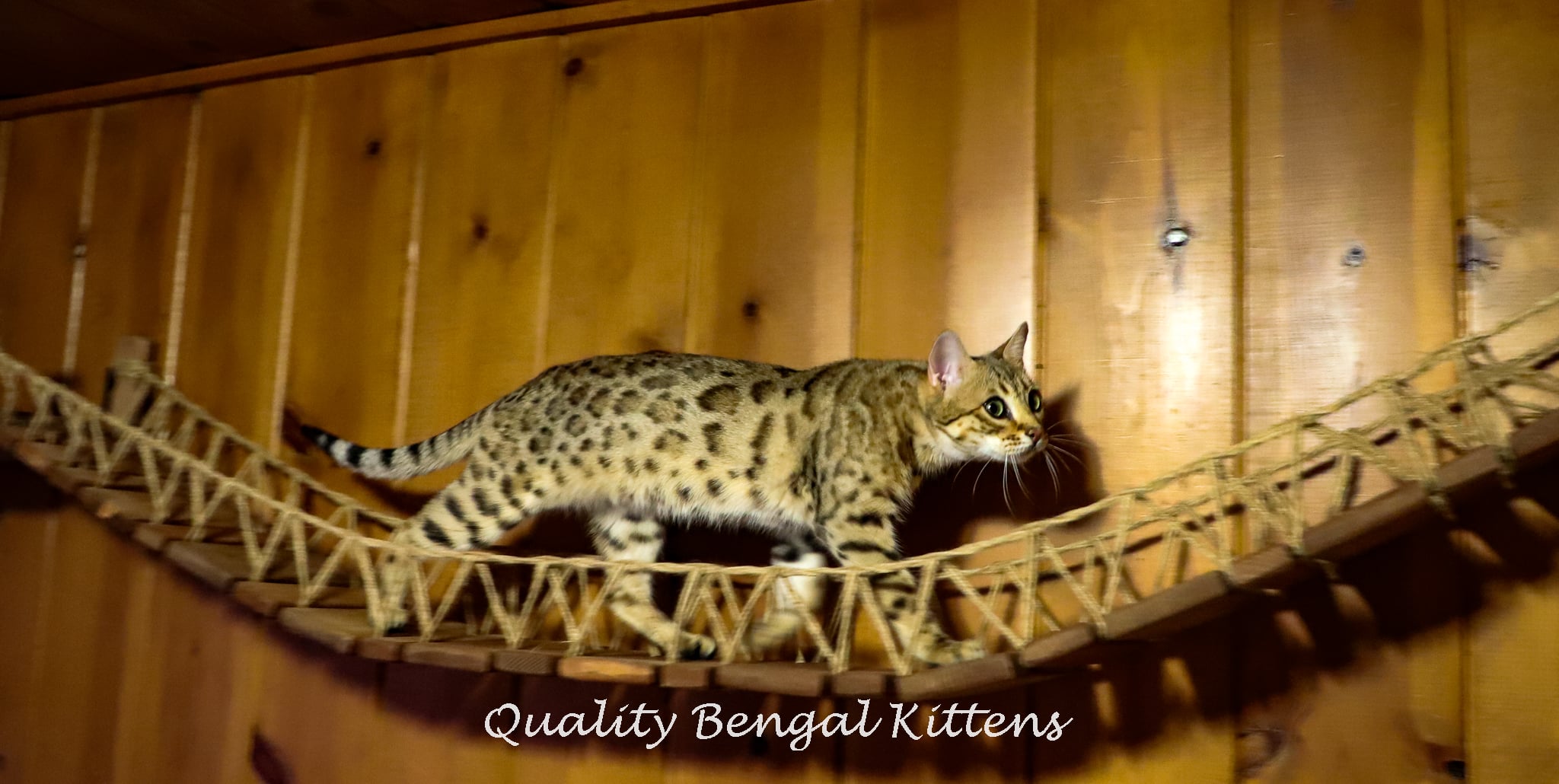
A cat wheel provides the outlet for how much patrolling a cat would naturally do outdoors. Cats can walk over 5 miles daily if needed, and feral cats patrol an average of 5 acres. Cat Wheels help take the burden off you to ensure your cat gets the daily physical energy outlet it needs. 

Adding a catio allows your Bengal cat to be in nature, which can help to reduce his stress levels and promote relaxation. Bengals are curious creatures and love to explore their surroundings. A catio provides them with a stimulating environment that they can explore, climb, and play in. It stimulates the mind, and if there is an ample enough enriched space, the body also. 
                                                                                
The last and most crucial aspect of creating an enriching environment is playtime. As a Bengal owner, you should consider daily playtime necessary for your cat’s care. It is as essential as it would be for a dog owner to walk a dog daily. Bengal cats do best with a play routine. Then they know what to expect each day, so they won’t ask for playtime at times that are inconvenient for your schedule, especially in the middle of the night. You must be playing with your cat to the point of panting during your play sessions.  

To review, creating an enriching environment for your Bengal includes the following:

If you are experiencing behavioral problems with your Bengal cat, you cannot pick and choose what enrichment you wish to provide; you need to go all-in.

Ignoring Unwanted Behavior

The final step in eliminating the midnight meowing is to ignore the behavior. This step is the hardest for many pet parents. Stick in a good set of earplugs and let the peaceful night of sleeping begin. You should expect your cat’s behavior to get worse before it gets better. If you live in an apartment or condominium, you may want to let your neighbors know that you are working on behavior modification with your cat, and he is likely to make noise for the next week to ten days. The persistency and volume commonly escalate during the first week the behavior is ignored. This is when many people make the mistake of giving up. It will get worse before it gets better. Giving in to them once will set you back to the start again. You must not reinforce their unwanted behavior by responding to it. Within two weeks of ignoring the behavior, the midnight meowing should be reduced by 75%. If you are not reaching the mark of a 75% reduction rate by the two-week mark, you need to re-evaluate your food quantity, daily routine, and environmental enrichment. Remember, ignoring the behavior will not work if you have not provided enough food and enrichment. If you tried some of the enriching tips but not all of them, you need to do more. 

Are you thinking of getting a Bengal cat and want it to come with a lifetime of expert advice? Check out our available Bengal kittens.   

How to Create an Enriched Environment for Bengal Cats

by Robyn Paterson

The cause of most Bengal cat behavior problems is rooted in the cat’s routine, food, and environment. People often dismiss this as the cause because they play with the cat, but if it exhibits undesirable behaviors, the cat has a need that is not being met. Because Bengals are high-energy and intelligent, they require more attention than the average cat. Their needs are not different from other high-energy, intelligent cats, but not every cat in the world is a high-energy, intelligent cat. With the Bengal, these are breed-specific traits.

Domestic cats have not been domesticated long enough for their bodies to evolve to the luxury lifestyle. The same is true for humans. Humans are still designed for a hunter, gatherer lifestyle. The less our lifestyle emulates one of a hunter/gatherer, the more stress, anxiety, and depression humans experience. A cat’s body is built to hunt several hours a day over a relatively large territory. When we bring them inside and provide for them, we reduce the size of the territory; therefore, we must enrich that territory to make it mentally and physically stimulating for a cat. 

There are many different elements that create a cat’s environment and impact the cat’s physical and emotional well-being. The location and number of resources play a significant role in the willingness to use them. Having these resources is not enough; they must be positioned in a location that a cat would choose. Resource scarcity leads to competition in multi-cat households and creates territorial stress. Even in single-cat households, similar issues can arise; therefore, the environment must be rich in resources.
 
Does your home have enough vertical space for a Bengal?

Because Bengal cats descend from a tree-dwelling cat, their need for vertical space may be higher than the average cat. A few short cat trees will not do. They need tall cat trees – to the ceiling or up to ten feet tall if you have the ceiling space. In addition, there should be shelving that helps them move around vertically. Pre-existing cupboards, bookcases, and other tall furniture can help you create a pathway in the sky for your cat. Window perches also make for great vertical space. 
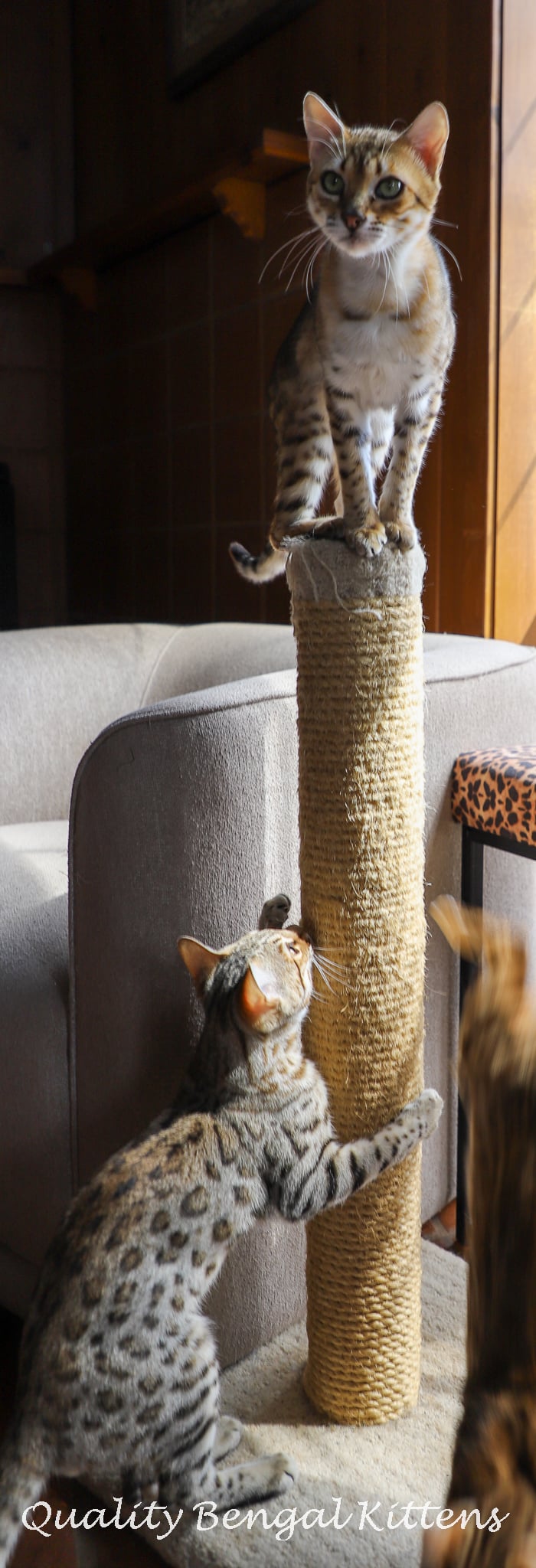
The vertical space must be located in the rooms where the family spends the most time. Vertical space back in a laundry room where people go in for ten minutes to load or unload the laundry does not work—Bengals like to be where the action is.

There will be an increased need for vertical space if there are children or dogs in the house that the cat needs a break from.  

Do you have enough scratching posts for your Bengals?

When it comes to scratching posts, the more, the better. Experimenting with a few different types is important to see what your cat likes best.
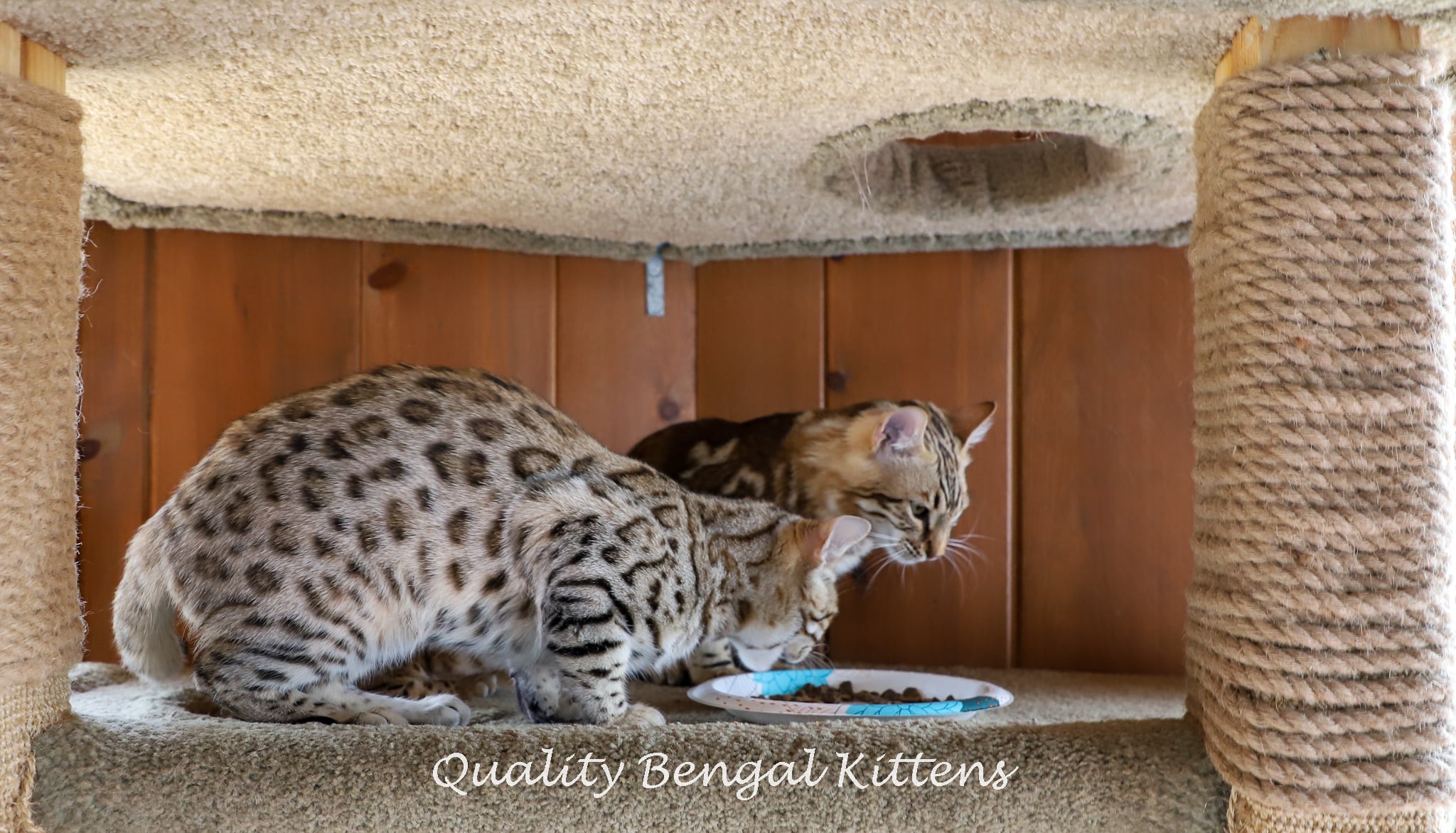
Some cats like vertical scratching posts. They should be 2.5 to 3 feet tall, so the cat can stretch up and scratch. The base must be solid so the post does not move around much when the cat scratches. Cat trees can double as scratching posts, but having some stand-alone posts around the house is also good. Mobile scratching posts are necessary if your cat is scratching somewhere you do not want it to. You can place the scratching post near the object you do not wish to be scratched to give the cat an acceptable option.  

Other cats prefer horizontal scratching surfaces. Many horizontal scratching posts are made from different materials, such as cardboard, carpet, and sisal. It is essential the cat can stretch fully out while scratching. 

Do you have toys for your Bengal cat to play with on its own?

Toys are a must-have, but finding out what toys engage your cat is important. You want to keep interactive toys locked up tight so your Bengal cat does not get them out and destroy them when you are not around to play. With other cat toys, you must experiment to see what your cat likes. Many Bengal cats like toys made of natural fibers such as rabbit fur, deer hide, wool, and leather. Others want to chase a ball or a spring. Get an eclectic mix of toys and see which one are used the most. Then rotate the toys, so your Bengal does not becomes bored with them.

In addition to the standard cat toys, you should consider the following to enrich your environment.

Cat Wheel – Cat wheels allow your cat to walk or run as much as they want within a confined space.

Puzzles – Puzzles provide a way to exercise a cat’s mind. When the mind is worked, the cat is content. Remember, rotating the puzzles, so your cat doesn’t become bored with them is important.

Cat Grass – Cat grass is a mental stimulant for your cat. Cats are attracted to the texture of grass and enjoy chewing on it. 

Aquarium or Outdoor Bird feeder – Aquariums and bird feeders also exercise the mind. Watching birds or fish safely separated from the cat stimulates the cat’s mind while keeping the birds or fish safe. 

Are your cat’s resources plentiful and in suitable locations?

Every cat needs a clean place to eat, drink, and deposit waste. The locations for all of these things are very important to a cat. 
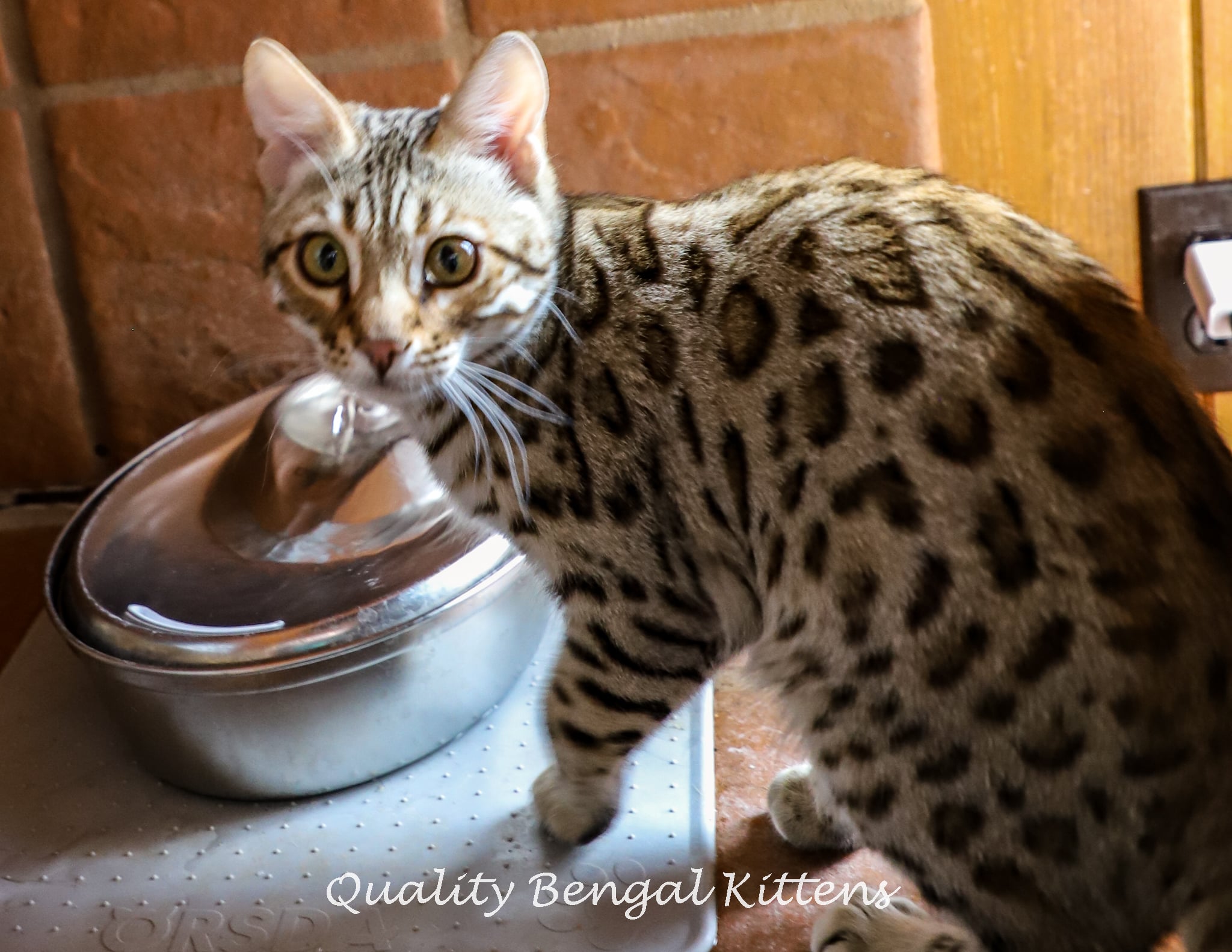
First, all three locations must be separate from one another. Sometimes you’ll see an under-stairs closet transformed into a cat lounge with food, water, and a litterbox. While this looks cool, it is horrifying for the cat. Cats want all three of these items to be separated from one another.  

Most people know the basic litterbox location rules, but food and water locations are less universally understood. The layers of large cat trees make great food locations because they keep the food out of reach of children and dogs. Because cats are naturally individual feeders, use the different tiers of a cat tree to separate your food dishes for your cats, giving them the individualized space they prefer when eating. Keep the food away from any direct light or heat and air vent. This is also the case for water. Water is best located on the floor on waterproof flooring or with a waterproof mat underneath it.

Water needs to be kept separate from food because cats instinctively do not drink water that is near a food source to avoid potential contamination. While they will often tolerate the water bowl near the food bowl, it is just tolerance. This is not ideal. 
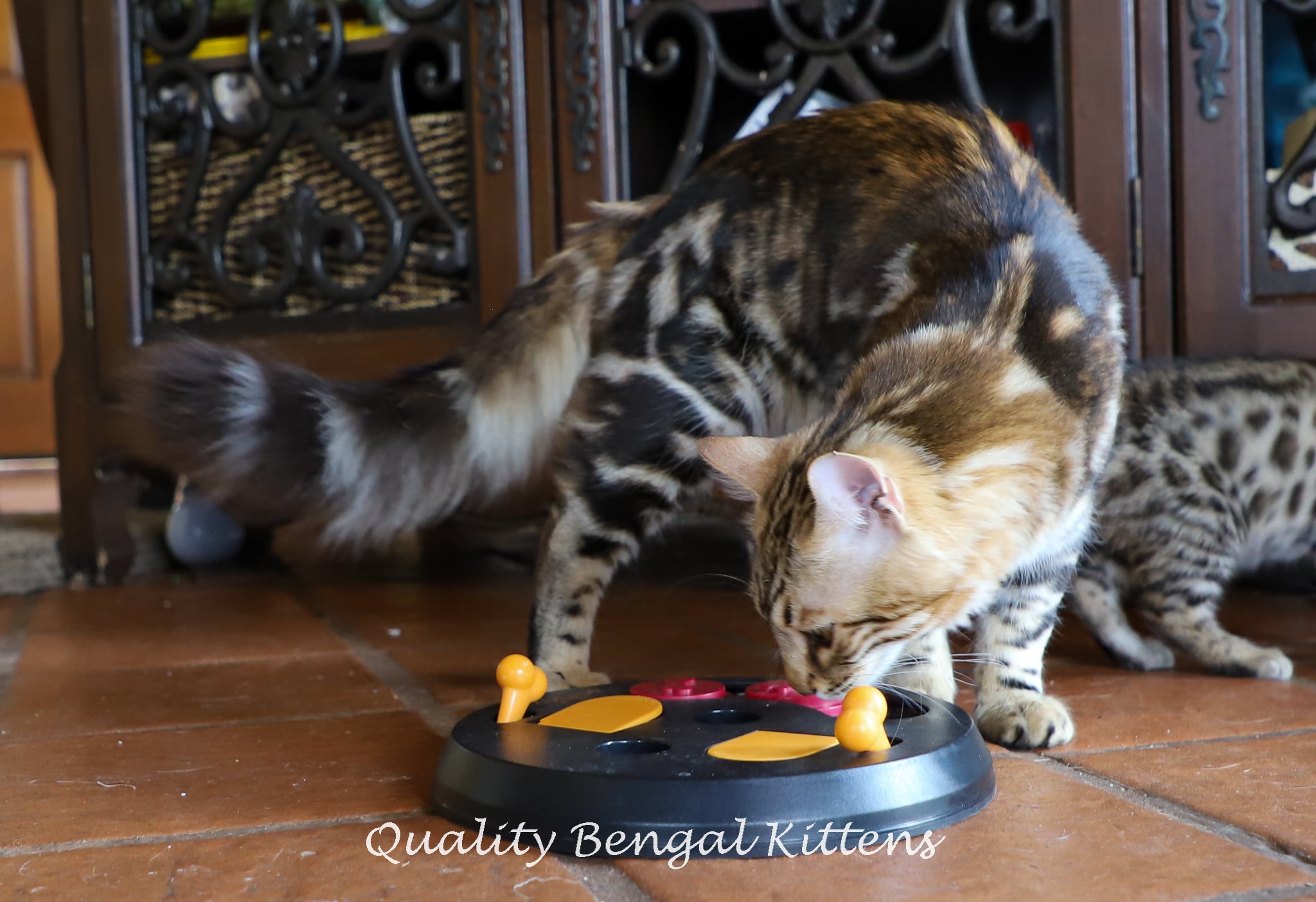
Bengal cats create a few challenges with water bowls because some like to play in them, and others want to pee in the water.   We have successfully prevented playing and peeing with the Orsada water fountain. The players don’t seem to be drawn to it because it is shallow, and the pee-ers aren’t attracted to it because they would get their privates wet in the process. 

Use food and water dishes that do not touch the cat’s whiskers as they eat or drink. Shallow dishes are better; any deep dish will force the cat’s whiskers to make contact. Some cats experience whisker fatigue, a sensory overload when their whiskers feel surfaces too often.  

In conclusion, creating a stimulating home environment for your high-energy, intelligent Bengal cat is important. This, however, is only one of the three most influential factors in Bengal cat behavior. You will also want to consider how and what you feed and establish a daily routine to eliminate unwanted behaviors. This article links to several other articles in our BLOG. If you are trying to resolve behavioral issues, you must read all the linked articles and follow all the advice to expect a behavior change. 


Are you thinking of getting a Bengal cat and want it to come with a lifetime of expert advice? Check out our available Bengal kittens.  
 

The Color That Captures Our Hearts: Why We Love Brown Bengals with White Bellies

The Vision That Drew Us In

The goal of the Bengal breed has always been clear: to create a wild-looking cat with a domestic temperament. That vision resonated with both of us from the very beginning – not just because of how breathtaking these cats can be, but because it felt like a preservationist goal. Wildcats are beautiful, but they aren’t meant to live in homes. They need expansive territory and near-constant stimulation to thrive. By contrast, the Bengal gives people the beauty and awe of a wild animal in a companion that truly belongs in a home. That balance – the reverence for nature without compromising a cat’s quality of life – is something we deeply respect.

Both of us were independently drawn to brown Bengals with white bellies long before we met. There’s something about that look – warm golden tones, dramatic contrast, and the unmistakable softness of countershading – that felt like the closest thing to the cats we admired in the wild. For me, it was Rosettea’s breeding program that first brought this vision into sharp focus. Rosettea was producing white-bellied Bengals better than anyone else, and I knew I had found what I was looking for. I’ll never forget picking Rosettea Lothar – my first true countershaded Bengal – up from the airport. Seeing a true, as Lisa would say, “blue white” bellied Bengal in person was a heart-stopping moment. You don’t just see it; you feel it.  Lothar didn’t just meet my expectations; he redefined them.

To this day, producing a beautiful brown Bengal with countershading makes us feel like we’re doing what the breed was meant to do—bringing the wild beauty of the forest into people’s homes, without taking a wild animal out of it.

The Aesthetic Ideal (And the Challenge Behind It)

What Bengal breeders refer to as a white belly is actually part of a scientific concept known as countershading. This ancient camouflage pattern, dating back to some of the earliest known land vertebrates, and possibly predating those, is most commonly found in animals that are viewed from below, such as dolphins, sharks, squirrels, monkeys, and, of course, wildcats that spend their lives in trees, forests, or jungles.

Countershading is more than a cosmetic detail. It is one of the defining features of the tree-dwelling wildcats our breed was created to emulate. From clouded leopards to margays to the leopard cat, this gradient from brown and black to bright white underparts helps these wild cats blend seamlessly with their environment. On a Bengal, it brings the pattern to life in a way no solid-colored belly can. It’s not just color – it’s evolution, art, and instinct all in one.

The combination of rich, warm brown, crisp black pattern, and a true white belly is incredibly difficult to achieve. The pigments fight each other. If you push for warmth in the brown base coat, you risk losing the black outlines to chocolate or charcoal tones. If you stabilize the black and white, you often sacrifice the golden warmth of the background, leaving you with grayish or sandy tones. Achieving all three – golden brown, true black, and clean white – is like chasing a unicorn.

I’ll never forget the first time I saw a jaguar at the zoo or the striking coat of an ocelot under sunlight. The intensity of their colors was breathtaking – bold, wild, and unapologetically vivid. That level of pigment saturation and contrast has always stayed with me. It’s something we want to bring into the homes of our kitten families. We aren’t there yet – but every brown Bengal we breed with that wild level of contrast and countershading brings us one step closer.

These colors are undeniably more wild-looking. Why? Because they mimic the palette and structure of actual wildcats. No other combination of colors and pattern placement reflects nature with the same accuracy. A Bengal with a rich brown coat, bold black markings, and a white belly doesn’t look like a pet pretending to be wild. It looks like a wild animal that somehow belongs in your living room.

Why It Matters to the Breed

Jean Mill, the founder of the Bengal breed, had a vision that went beyond beauty. She wanted to create a cat so stunning that it would make people think twice before wearing real fur. Her dream was that people who shared their lives with a cat that looked like a leopard or ocelot might stop to consider the consequences of fur fashion. She believed that beauty could inspire compassion.

When we breed brown Bengals with white bellies, it feels like we are honoring her legacy. This look – the one that takes your breath away and makes your guests pause – isn’t just about aesthetics. It’s about connection: to nature, to purpose, and to a more ethical way of living with animals.

The Breeder’s Dilemma (And Why We Still Strive for It)

It’s important to say that color alone doesn’t guide our program. A cat must be healthy, well-tempered, structurally sound, and emotionally resilient. Sometimes, we move forward with cats who have less white than a parent but who represent important advances in other areas – bone structure, temperament, or type. Sometimes we hold onto a kitten because the white is everything we’ve been working toward, even if other traits aren’t as refined. Breeding is always a balance.

But make no mistake – the white belly still pulls at our hearts. It reminds us what we’re aiming for. When we see it in a young kitten, we pause. We ask if this might be the one that brings us closer to that elusive, complete picture: the cat that looks like it stepped out of the rainforest, but sleeps curled on your lap.

 Why Browns with White Bellies Will Always Be Our Favorite

There are many beautiful Bengals in all colors, but silvers, snows, charcoals, and other novel variations don’t reflect the palette of the leopard cat. They may catch the eye, but they don’t capture the heart in the same way. Brown Bengals with white bellies are different. They feel true. Familiar. Ancestral.

With so many other cat breeds already offering every color under the sun, Bengals don’t need to mirror the full domestic color palette. What makes this breed special is its preservation of the wild – the way it holds onto the essence of the leopard cat while living comfortably in our homes. 

For us, this isn’t about novelty – it’s about legacy. Brown with countershading is the look that first pulled us in, the look that still stops us in our tracks, and the look that keeps us grounded in what the Bengal breed was always meant to be. This color combination doesn’t just look wild – it is wild, in the most beautiful, thoughtful, and intentional way.

More About Us
We are dedicated Bengal breeders who focus on preserving the breed’s original purpose: to bring the beauty of the wild into our homes – ethically, responsibly, and with heart. Our program centers on producing brown Bengals with white countershading, honoring the leopard cat lineage while prioritizing health, structure, and temperament.

Want to dive deeper into what makes the white belly so special?
Read our blog post on the science and beauty of countershading in Bengals.

Indoor Bengals Make Happier Cats: How Breeders Can Lead Change

Concerns about Bengal cats’ predatory instincts and their impact on wildlife, notably birds, raise questions about their suitability as pets. While it is true that outdoor cats impact wildlife, particularly birds and small mammals, this truth is not exclusive to Bengals. The real problem all cat owners face is that studies estimate that domestic cats kill billions of animals annually, contributing to population declines in species already vulnerable due to habitat loss and climate change (Carrington). Birds are particularly at risk.

Several countries have implemented laws restricting outdoor cat roaming in response to these concerns. In Australia, some regions have enacted curfews requiring cats to stay indoors at night. Similarly, the EU and UK have introduced legislative efforts to minimize cats’ environmental impact. These measures include requiring bells or other warning devices for cats, mandating cat-proof fencing in new housing developments, and restricting outdoor access in ecologically sensitive areas (Stephens). These actions reflect a growing recognition of the need to balance pet ownership with environmental stewardship.

Despite this broad issue, some legislators have unfairly targeted Bengals and other hybrid breeds, claiming their hunting skills are more advanced than those of other domestic cats. This perception lacks evidence and stems from biases that place undue blame on Bengals. Hawaii’s ban on Bengals exemplifies this misplaced fear rooted in past ecological missteps. The mongoose was introduced to Hawaii in the 1800s as a biological control method to curb the population of rats in sugarcane fields. However, the introduction turned disastrous. The mongoose, a diurnal animal – active during the day – had zero impact on the nocturnal rat population. Instead, the mongoose began preying on native species, particularly ground-nesting birds – who have no natural defenses against this new predator. This led to a significant decline in native bird populations, many of which were already vulnerable or endangered due to predation by rats and through habitat loss. While Hawaii still battles the problems caused by the mongoose, the Hawaii Department of Agriculture has banned Bengal cats due to potential threats to the state’s unique ecosystems.  In essence, the Bengal is being punished for the past mistakes of humans who introduced a daytime predator to eradicate a nighttime pest, which was an epic failure. 

The Truth about the Bengal’s Hunting Skills

Hunting behaviors are common to all felines, and studies on domestic cats do not single out Bengals as having an unusually high predatory impact. Research from the Smithsonian Conservation Biology Institute underscores that domestic cats, regardless of breed, tend to stay close to their home base, impacting local wildlife populations similarly. This is precisely why humans domesticated cats in the first place. On average, each outdoor cat is responsible for the deaths of about 130 animals per year, including birds and small mammals (Loss et al.). Furthermore, other studies confirm that breed does not notably influence hunting habits in cats. Domestic cats generally have a strong predatory instinct, which manifests in similar patterns across breeds, as shown in multiple studies examining hunting behavior and the environmental impact of all cats (Cecchetti et al.; Loss et al.). 

How can Bengal Breeders help with this problem?

Even though Bengals are no more a threat to wildlife than other breeds, Bengal breeders still need to be aware that this claim will be made against our breed. By educating buyers about responsible pet ownership, Bengal breeders play a crucial role in addressing the issue of outdoor cats contributing to bird population declines. By equipping owners with the knowledge and tools to meet a Bengal’s physical and mental needs indoors, breeders can help minimize the environmental impact of Bengals and ensure a harmonious relationship between these energetic cats and their ecosystems.

Breeders should proactively inform potential Bengal owners about

  • The ecological impact of allowing any cat to roam outdoors
  • The benefits of keeping Bengals indoors

    • Increased lifespan
    • Reduced risk of injury
    • Decreased predation on wildlife 
  • Techniques to create an enriching indoor environment

    • Climbing structures
    • Puzzle feeders
    • Interactive play sessions 
    • Clicker training
    • Appropriately sized cat wheel
  • alternatives to unsupervised outdoor access

    • Leash training
    • Catios
    • Cat fencing 


Breeders Can Evoke a Shift in Cultural Norms

Attitudes toward keeping cats indoors vary globally. Around 70% of cat owners in the United States keep their pets indoors (Carrington). In contrast, only about 30% of cat owners in the UK keep their cats indoors, as outdoor roaming is a traditional practice, and the EU is likely to align with the UK (Stephens). Australia has begun shifting toward indoor-only cat ownership, particularly in urban areas, due to the devastating impact of cats on native wildlife (Carrington). 

Cat owners let their cats roam freely outside because they feel they cannot be truly happy unless they get to roam outside. However, this is not actually true. A study by the University of Lincoln found that indoor cats with access to controlled outdoor environments, such as enclosed gardens or “catios,” exhibited improved welfare indicators, including reduced fearfulness and health issues, compared to those with unrestricted outdoor access (“Indoors, Outdoors, and the Lifestyle of Pet Cats”). Thus, cats with access to a limited outdoor space are ultimately the most satisfied. 

Screening Buyers: A Crucial Step for Bengal Breeders

Bengal breeders are responsible for ensuring their kittens are placed in homes fully prepared for owning an intelligent, high-energy cat. Screening potential buyers is essential, not only for the welfare of the cats but also for preventing behaviors that could lead to rehoming or outdoor living—both of which contribute to the broader problem of cats impacting wildlife.

Breeders should ask detailed questions to gauge a buyer’s knowledge, preparedness, and long-term commitment. Examples of critical screening questions include:

  • Living Arrangements: “Do you plan to keep your Bengal indoors, and how will you manage their energy levels?” Buyers must understand that Bengals thrive in enriched indoor environments, and outdoor living poses significant risks to both the cat and local wildlife.
  • Lifestyle: “How much time can you dedicate daily to interactive play and enrichment?” Bengals require significant mental and physical engagement, and a buyer who cannot commit to this may not be the right fit.
  • Problem Solving: “How would you address unwanted behaviors such as scratching, excessive vocalizing, or litter box issues?” This will indicate any proactive steps pet owners will make and the effort they will put into problem-solving. 

Placing a Bengal in a home unprepared for the breed’s needs can lead to unwanted outcomes, including behavioral issues, rehoming, or outdoor access that threatens the Bengal’s safety and that of local wildlife. These questions help assess whether the buyer is willing to address challenges proactively instead of letting their Bengal roam outside freely as an easy way to meet the Bengal’s needs. Breeders must recognize that improper placements not only affect the individual cat’s well-being but also contribute to the misconception that Bengals are unsuitable pets. Every Bengal placed in an ill-prepared home risks reinforcing stereotypes about the breed’s behavior and impact. By carefully screening buyers and educating them about the responsibilities of Bengal ownership, breeders can ensure their cats are placed in loving, capable homes. This proactive approach not only enhances the cats’ quality of life but also reduces the likelihood of problems contributing to broader issues, such as the impact of outdoor cats on wildlife. Through responsible placement, breeders can help protect both the reputation of the Bengal breed and the natural environment.

Conclusion

Domestic cats undeniably impact wildlife populations, but the narrative unfairly targeting Bengals as particularly harmful is both misplaced and unsupported by research. Studies show that the hunting behavior of Bengals is no different from that of other domestic cats. However, the responsibility for mitigating this impact falls squarely on human shoulders. By embracing indoor enrichment, catios, leash training, and responsible ownership practices, Bengal owners can ensure their cats live fulfilling lives while safeguarding local ecosystems.

Bengal breeders have a unique role in this process, as they are responsible for educating buyers on how to meet the breed’s needs within an enriched indoor environment. Through careful buyer screening, education, and support, breeders can evoke a shift in cultural norms, encouraging indoor lifestyles for cats that protect both the pets and the environment. With commitment and care, Bengals can thrive as indoor pets, debunking the myth that they are unsuitable companions due to their hunting instincts. Ultimately, responsible ownership and proactive measures ensure that Bengals—and all domestic cats—can coexist harmoniously with wildlife.

Works Consulted

American Veterinary Medical Association. “Household Cat Lifespan and Risks of Outdoor Access.” Journal of Feline Medicine and Surgery, 2021.

Carrington, Damian. “Cats Kill Billions of Animals Each Year so Should They Be Kept Indoors?” The Guardian, 14 Aug. 2022, https://www.theguardian.com/environment/2022/aug/14/cats-kill-birds-wildlife-keep-indoors. Accessed 25 Nov. 2024.

Cecchetti, M., et al. “Provision of High Meat Content Food and Object Play Reduce Predation of Wild Animals by Domestic Cats.” Current Biology, 2020.

Hawaii Department of Agriculture. “Administrative Rules.” Hawaii Department of Agriculture, https://hdoa.hawaii.gov/admin-rules/. Accessed 25 Nov. 2024.

“Indoors, Outdoors, and the Lifestyle of Pet Cats.” International Cat Care, https://icatcare.org/indoors-outdoors-and-the-lifestyle-of-pet-cats/. Accessed 25 Nov. 2024.

“The Indoor Pet Initiative: Enriching Indoor Environments for Cats.” Ohio State University College of Veterinary Medicine, The Ohio State University, 2020, www.indoorpet.osu.edu/cats/basic-indoor-needs. Accessed 22 Oct. 2024.

“The Indoor Pet Initiative: Understanding Your Cat’s Needs.” Ohio State University College of Veterinary Medicine, https://indoorpet.osu.edu/cats/understanding-cats. Accessed 22 Oct. 2024.

Loss, S. R., et al. “The Impact of Free-Ranging Domestic Cats on Wildlife of the United States.” Nature Communications, 2013.

Rosenberg, K. V., et al. “Decline of the North American Avifauna.” Science, vol. 366, no. 6461, 2019, pp. 120–124.

Stephens, Thomas. “Feline Felons: What to Do with Switzerland’s Killer Cats?” SWI swissinfo.ch, 7 Sept. 2024, https://www.swissinfo.ch/eng/swiss-abroad/feline-felons-how-to-fix-switzerlands-killer-cats/87475848. Accessed 25 Nov. 2024.

Shared Responsibility: How Breeders and Owners Can Address Inappropriate Elimination to Counter False Claims

Bengal cats are noted for their intelligence, energy, and appearance, all of which contribute to their popularity. However, like all cats, Bengals can develop behavioral issues, including urinating outside the litter box. Contrary to what some believe, multiple studies have confirmed that Bengals are no more prone to litter box avoidance than other breeds or moggies (naturally formed domestic cats with no purebred heritage). For instance, an extensive study of over 8,000 Finnish cats did not identify Bengals as more likely to exhibit inappropriate elimination (Ahola et al.). Similarly, the “Prevalence of 17 Feline Behavioral Problems in Japan” found that inappropriate urination occurs across various breeds, with no particular breed, including Bengals, being overrepresented (Yamamoto et al.).

Litter box avoidance occurs among all domestic cats, typically stemming from stress, poor litter box hygiene, or medical conditions. Environmental stressors, such as multi-cat households, can trigger this behavior in any cat, not just Bengals (Salonen et al.). Veterinary experts confirm that inappropriate elimination is one of the most frequent reasons for surrendering cats, including Bengals (Herron et al., Yamamoto et al.). While environmental stress is the number one cause of litter box avoidance, breeders should avoid placing all the blame on pet owners for not providing the correct environment, just as owners should not attribute the issue solely to the breed. A balanced understanding of how environment and genetics play a role is crucial. 

Breeders have the most power to improve the likelihood of inappropriate urination behavior by ensuring proper breeding practices, proactively educating pet owners, and offering ongoing support. With this behavior often cited as a reason Bengals make poor pets, Bengal breeders who want to protect their breed will take steps to mitigate inappropriate urination in Bengals. 

Environmental Causes of Inappropriate Urination

With environmental issues being the top cause of litter box avoidance, the owner of a cat urinating inappropriately needs to investigate extensively to pinpoint the cause. Owners should start by observing their cat’s behavior around the litter box. If the cat approaches the box but hesitates or quickly leaves without using it, it could indicate that the box is unclean, poorly placed, or not to the cat’s liking in size or litter type. 

Additionally, owners should assess whether there have been recent changes in the household, such as new furniture, pets, or people, as these can create stress and lead to avoidance. With their high sensitivity and intelligence, Bengals are particularly susceptible to stress caused by environmental changes. Minor alterations, like furniture layout changes or daily routine adjustments, can trigger stress-related behaviors, including litter box avoidance (Harvey et al.). Like all cats, Bengals thrive on consistency, and disruptions to their environment—such as changes in their owner’s schedule or the introduction of new people—can lead to anxiety-driven urination. Maintaining stable routines, providing gradual introductions to changes, and offering ample enrichment can help mitigate the impact of stress on Bengals. 

It’s also important to watch for signs of territorial behavior, especially in multi-cat households, where one cat might be preventing another from accessing any cat resources (food, water, litter box, sleeping spaces, etc). Cats may mark their territory through urination when they feel their space is threatened or perceive another cat as an intruder. Monitoring feeding schedules and interactions with family members can also provide clues, as disruptions in routine can trigger anxiety-driven behaviors.  Stress from territorial disputes, such as blocking other cats from accessing resources like food or litter boxes, can lead to anxiety-related marking (Herron et al., “Are Bengal Cats Territorial?”). Addressing these issues through proper management of space and understanding a Bengal’s territorial instincts can reduce the occurrence of stress-induced urination.

If an owner, with the guidance of their breeder, cannot identify the cause of the issue, consulting a behaviorist is essential to determining the root of the problem and developing a targeted solution.

The Breeder’s Role in Preventing Environmental Issues

Breeders play a crucial role in ensuring that Bengal cats are placed in homes capable of meeting the needs of a high-energy, intelligent cat. Thoroughly screening potential buyers is essential to this process. Breeders should ask specific questions about the buyer’s readiness to provide adequate litter boxes, engage with the cat regularly, maintain consistent routines, and understand a Bengal’s territorial instincts. Additionally, the breeder must confirm that the buyer possesses the knowledge and skills to care for a high-energy, intelligent breed. It would behoove breeders to equip the buyer with a reliable resource, such as a book on caring for active and highly intelligent cats, to ensure the new owner is well-prepared and to reference when offering guidance down the road. Breeders who place Bengals in homes that are ill-equipped for intelligent, high-energy cats increase the likelihood of them being surrendered, which is a blemish on the breed. Critics of the breed often attribute the consequences of irresponsible breeding to the breed itself, using these mistakes as leverage in their efforts to call for the breed’s elimination. Breeders must prioritize the well-being of the breed over personal profit by conducting a thorough screening process for potential buyers. Selling kittens without properly vetting the clients puts the breed at risk. By screening applicants carefully, breeders can ensure their cats are matched with responsible owners, thus safeguarding the breed’s future.

To assess how well a potential buyer understands the importance of engagement, breeders can ask about their plans for physical and mental stimulation for their Bengal. Bengals are intelligent and active cats, and buyers should demonstrate knowledge of enrichment tools like climbing structures, interactive toys, and daily play sessions. Inadequate engagement often leads to stress-related behaviors, including inappropriate urination. Research shows that bored cats, particularly high-energy breeds like Bengals, are more prone to behavioral issues when not appropriately stimulated (“Enrichment and Mental Stimulation in Cats”). Breeders should stress the need for regular interactive playtime, the use of puzzle feeders, and environmental enrichment to satisfy a Bengal’s high activity level. When Bengals feel mentally and physically fulfilled, they are less likely to develop stress-related litter box problems (Turner and Bateson).

Breeders must ask potential buyers about the structure of their daily routines, especially regarding feeding and playtime, to assess if they can provide the consistency Bengals need. Buyers who lead unpredictable lives may not be ideal candidates, as lacking routine can cause stress in Bengals. Research suggests that cats thrive on predictability, and deviations from a stable environment can lead to behavioral issues, including inappropriate urination (“Feline Medicine and Surgery”). Breeders should explain to buyers that Bengals benefit from set meal times, consistent play, and regular sleep schedules. By keeping routines predictable, buyers can create a sense of security for their Bengals, reducing the likelihood of territorial marking or other stress-related litter box issues (“Stress and Cats”).

In addition, breeders should inquire about how the buyer plans to set up their home to give their Bengal expanded territory, especially the use of vertical space.  Bengals stem from a cat who lives in trees, so many of them are genetically wired to enjoy being up high. Buyers must be prepared to meet this need.  Research shows that Bengal cats, like other territorial breeds, can become anxious if their space feels threatened, leading to behaviors such as marking (“Territorial Behavior of Domestic Cats”). Providing Bengals with high perches and ample territory to explore can help satisfy their territorial needs and prevent inappropriate urination caused by stress or competition (“ISFM Guide”).

Medical Causes of Inappropriate Urination

Medical issues are a common cause of inappropriate urination. However, it is not unusual for a cat to be tested for urinary issues, only for the results to return as normal. At this point, Feline Lower Urinary Tract Disease (FLUTD) must be considered if a cat exhibits inappropriate urination and no other cause is found. FLUTD can be a baffling condition, often driven by stress and anxiety, especially in Bengals. Affected cats may associate the litter box with pain, leading them to avoid it in search of relief elsewhere. Bengal Rescue stresses that FLUTD is curable with veterinary care, particularly with the use of Amitriptyline Transdermal, a medication that reduces bladder discomfort and tones down the anxiety that fuels FLUTD in Bengals (“Litter Box Issues”). Bengal Rescue has saved hundreds of cats using Amitriptyline, turning around even extreme cases with this affordable treatment. They have found it to be more effective than alternatives like Prozac or Gabapentin. In all of the cats Bengal Rescue has worked with over many years, they never had a urination problem that was not resolved, and for many of them, the solution was often Amitriptyline (“Litter Box Issues”). These resolutions are not temporary; their longest-lasting case has remained resolved for eight years.

Temperament as a Cause of Inappropriate Urination

Temperament plays a critical role in a cat’s likelihood of urinating outside the litter box, as this trait impacts the animal’s ability to manage stress and environmental changes. 

Breeders are crucial in reducing these behaviors by selecting cats with stable temperaments. Research shows that the sire significantly influences kittens’ boldness, sociability, and overall temperament (Salonen et al.). The sire’s temperament impacts how kittens respond to stressful situations, such as new people, other animals, or routine disruptions, all of which can trigger anxiety-driven behaviors like inappropriate urination. Resilient cats handle these changes better, reducing the likelihood of stress-related issues. A confident and social sire interacting positively with humans and other animals is more likely to produce less fearful and more adaptable kittens (McCune). Confident and resilient sires pass on traits that help their offspring cope better with stress, reducing anxiety-driven behaviors such as inappropriate urination. This makes it essential for breeders to choose sires with non-reactive, confident personalities to help produce kittens that are better equipped to handle stress and exhibit fewer behavioral problems (McCune). Ultimately, breeders should not be flexible when choosing their sires. They must prioritize friendly, curious, confident sires to produce better-equipped kittens to handle stress and environmental changes.

The dam’s temperament is equally important – both genetically and through early socialization. A calm and nurturing mother provides emotional security to her kittens, modeling positive stress management behaviors (Yamamoto et al.). Kittens are highly sensitive to their mother’s emotional cues, and a calm, resilient mother can model positive stress management behaviors. Research shows that kittens exposed to a low-stress environment during early development are more likely to develop well-balanced, confident temperaments (McCune). Additionally, a calm mother is more likely to provide consistent care, ensuring the kittens receive adequate nutrition and emotional security during their crucial early weeks (Ahola et al.). Therefore, breeders should prioritize selecting calm, non-reactive female cats and avoid breeding anxious or overly territorial females.

Inappropriate urination in Bengal cats is a complex issue influenced by environmental, medical, and temperamental factors, but it is not an inherent trait of the breed. Bengals require dedicated owners who understand their high intelligence, energy, and sensitivity. Owning a Bengal means more than admiring its appearance; it requires a commitment to providing consistent mental and physical stimulation, a stable environment, and proper care. Breeders play a crucial role in shaping these animals’ well-being by selecting sires and dams with stable temperaments and educating buyers on how to meet a Bengal’s needs. By doing so, they can reduce the risk of stress-related behaviors like inappropriate urination. 

Ultimately, both breeders and owners share the responsibility of ensuring Bengals thrive as well-adjusted pets. That starts with addressing the underlying factors contributing to behavioral issues and maintaining a high standard of care throughout the cat’s life.

Works Cited

Ahola, M. K., et al. “Health and Behavioral Survey of over 8000 Finnish Cats.” Journal of Veterinary Behavior, vol. 16, 2016, pp. 26-34. PubMed, https://pubmed.ncbi.nlm.nih.gov/27622188/.

“Are Bengal Cats Territorial? Exploring Their Marking Behavior and Territory Protection.” ThePetFAQ, 26 Sept. 2023, https://thepetfaq.com/are-bengal-cats-territorial-exploring-their-marking-behavior-and-territory-protection/.
 

“Enrichment and Mental Stimulation in Cats.” Pet Behavior Science, petbehaviorscience.org.
 

“Feline Environmental Needs Guidelines.” American Association of Feline Practitioners (AAFP) and International Society of Feline Medicine (ISFM), 2013.
 

“Feline Medicine and Surgery.” Journal of Feline Medicine and Surgery, 2020.
 

Harvey, N. D., et al. “Companion Cats: Behavioral and Welfare Considerations in the Multi-Cat Household.” Journal of Veterinary Behavior, vol. 29, 2019, pp. 47-56.
 

Herron, M. E., et al. “Feline Behavior Problems: Inappropriate Elimination.” Today’s Veterinary Practice, 2020, https://todaysveterinarypractice.com/feline-inappropriate-urination/.

“ISFM Guide to Multi-Cat Households.” International Society of Feline Medicine, 2019.

“Litter Box Issues in Bengals.” Bengal Rescue, https://bengalrescue.org/resources/litter-box-issues/.

McCune, Sandra. “The Influence of Maternal Behavior on Kitten Development.” Animal Behaviour Journal, 1995.
 

Salonen, M., et al. “Breed Differences in Behaviour of Cats: A Study of the Finnish Domestic Cat Population.” Scientific Reports, vol. 9, no. 1, 2019, doi:10.1038/s41598-019-52277-z.
 

“Stress and Cats: Behavioral Reactions to Environmental Changes.” Journal of Feline Behavior, 2020.
 

“Territorial Behavior of Domestic Cats.” Animal Behavior Journal, 2018.
 

Turner, Dennis, and Patrick Bateson. The Domestic Cat: The Biology of Its Behaviour. Cambridge University Press, 2014.
 

“Welfare Implications of Feline Inappropriate Elimination.” International Cat Care, 2016.
 

Yamamoto, M., et al. “Prevalence of 17 Feline Behavioral Problems and Relevant Factors of Each Behavior in Japan.” Journal of Feline Medicine and Surgery, vol. 22, no. 5, 2020, pp. 411-417. PubMed, https://www.ncbi.nlm.nih.gov/pmc/articles/PMC7118490/.

Bengal Breeders: Know the Facts About How Mislabeling Affects Shelter Statistics

Regarding Bengals, there’s a persistent and misguided belief circulating that Bengals frequently end up in shelters due to behavioral issues, making them poor pets. This assumption, however, is based on a series of misunderstandings. One of the most significant contributors to this misconception is the frequent misidentification of cats in shelters. As a result, statistics about purebred cats, including Bengals, are often wildly inaccurate, leading to the false perception that Bengals are commonly abandoned. Misidentification, along with flawed DNA testing, has distorted the reality of how many Bengals truly end up in shelters. This misconception needs to be addressed so Bengal breeders are armed with facts.

Misidentification of Pedigree Cats in Shelters

To address this misconception, it’s essential to first understand the actual proportion of cats purchased from breeders. In the United States, only 3% to 4% of cats are purchased from breeders, according to both the American Pet Products Association and the AVMA. Globally, this percentage is only slightly higher, hovering between 3% and 6% (“Pets by the Numbers”). Despite the small proportion of cats that are purebred, shelters often report a high percentage of “purebred” cats. So, how do these numbers make sense? The explanation lies in how shelters identify cats, where misidentification plays a considerable role.

One of the most significant issues is that 16% to 31% of cats in shelters are labeled as purebred (“Pets by the Numbers.”). This is an obvious discrepancy when compared to the small percentage of breeder-purchased cats. As Smithsonian Magazine points out and The Humane Society confirms, shelters frequently misidentify the breed of cats and dogs based on appearance alone, significantly overestimating how many purebred animals are in shelters (“Pets by the Numbers”). With Bengals being a popular breed known for their appearance, the chances of misidentification are even higher. From 1993 to 2021, Bengal cats were The International Cat Association’s most registered breed. This popularity increases the likelihood of a domestic shorthair with no pedigree cats in its genetics being mislabeled as a Bengal. 

The Bengal’s coat patterns play a significant role in why they are frequently misidentified. While Bengals are known for their coats, which can be spotted or marbled, these coat patterns aren’t exclusive to Bengals. Many domestic shorthairs or mixed-breed cats naturally develop spots. Shelters that rely on visual traits alone often categorize any cat with spots as a Bengal, even if they don’t have Bengal ancestry. This mislabeling is even more likely when it comes to the classic tabby gene, which is present in approximately 80% of mixed-breed cats (“Tabby Cat”). This gene, responsible for the circular pattern on many tabby cats, can resemble the marbled patterns of a Bengal, further complicating accurate identification. The assumption is that potential adopters are often attracted to specific breeds, especially purebreds, which are seen as more desirable. According to Fear Free Happy Homes, “shelters often attribute breed names to feline residents to make them more appealing,” resulting in a faster adoption (Bahner)​.


In addition, the Best Friends Animal Society indicates that adoption trends of younger adults favor pedigree pets ​(“2023 National Data Report”); therefore, cats labeled as pure breeds boost adoption rates due to the perceived value of purebred pets. This mislabeling practice can significantly improve a cat’s chances of finding a home, with many adopters mistakenly believing they are getting a specific breed when, in fact, the cat most likely has no pedigree cats in its lineage at all.  Unfortunately, cats with no known ties to being a Bengal other than a similar coat pattern are labeled as Bengals to get them a home faster. 

When a cat is inaccurately labeled as a Bengal, the initial misidentification can create a mismatch cycle between the cat and its adoptive family. Often, adopters take home a cat expecting breed-specific behaviors, only to be surprised when the cat’s temperament or needs differ from their expectations. For instance, a mislabeled Bengal might not display the high energy levels or playfulness that people associate with the breed. This disconnect can lead to frustration, and the cat is sometimes returned to the shelter. The problem is further compounded when the cat re-enters the system with the same inaccurate label, making the cycle more likely to repeat. Returned pets are already at a disadvantage, and the continued mislabeling can reduce their chances of finding a permanent home. Not only does mislabeling cause initial adoption issues, it can lead to repeated shelter stays, ultimately hindering the cat’s chances of finding a suitable and lasting home.

Furthermore, shelter cats may experience various forms of trauma, such as abandonment, neglect, or being shuffled between multiple homes. This trauma can manifest in behaviors like insecurity, anxiety, or even aggression. The adopter may become frustrated when the cat acts out. These behaviors, stemming from trauma, are then seen as “Bengal problems,” further cementing the misperception of the breed. When the cat is returned to the shelter, this can exacerbate the issue. Trauma-related behaviors are mistaken for breed traits on a mislabeled cat. If those mislabeled cats are repeatedly returned, it perpetuates the myth that Bengals are difficult or aggressive pets. This creates a compounding issue, where breed labels are incorrectly tied to trauma-induced behaviors, distorting the reputation of Bengals.

Breed Identification DNA Testing: A Flawed Tool

While DNA testing may seem like a good solution for accurately identifying a cat’s breed, it, too, comes with its own set of problems. DNA breed identification tests compare a cat’s DNA to a reference database of known breeds. However, these tests often produce inaccurate results because their accuracy depends on how comprehensive the reference database is. Smithsonian Magazine explains, “the reference database may not cover all the possible genetic lineages” (Solly). This means that DNA tests can indicate that a cat belongs to a particular breed even if it has no direct lineage to that breed. For instance, a moggies cat may share some genetic markers with a Bengal, but that doesn’t necessarily mean it has Bengal ancestry. 

DNA tests were initially developed for use with pedigree animals, which have well-documented lineages. However, most cats worldwide are “moggies”—naturally occurring mixed-ancestry cats with no specific breeds in them. Unlike dogs, where mixed breeds sometimes have pedigree breeds in their background, most moggies don’t come from recognized breed lines. As Cats Protection explains, pedigree cats are rare, and most cats don’t belong to a lineage that would be recognized by breed registries (“Getting a Pedigree Cat”). DNA tests identify breed markers, but that does not mean that moggies have a cat with that breed in their ancestry. Many breeds of cats share similar genetic markers due to common ancestors or traits not exclusive to one breed. For example, coat colors or patterns, like tabby markings, are present in multiple breeds and moggies. 

Pedigree cats – all of which originated from moggies – share genetic markers with modern moggies due to common ancestry before the creation of pedigree cats.  Modern breeds have existed for less than 150 years (“Domestication of the Cat”).  Domesticated cats, in general, have less genetic variation compared to dogs. As a result, moggies may show genetic similarities to multiple breeds, even if they don’t have a direct lineage from those breeds. If a test finds that a moggie has markers resembling a certain breed, the DNA test will report a “match,” even if that breed is not part of the cat’s actual lineage. The test essentially finds similarities in the genetic code, which can happen by chance or due to distant genetic overlap. So, a DNA test might pick up a marker associated with a particular breed, but this does not guarantee that the cat has a purebred ancestor from that breed. For the millions of moggies, these DNA tests produce misleading results that imply a moggie is created from pedigree cats when it is not.  Pedigree cats were created from moggies, and the ancestry is so close that the DNA markers are shared.

While some Bengals do end up in shelters, they are not disproportionately represented compared to other breeds. The perception that Bengals are overrepresented in shelters due to behavioral issues is not grounded in accurate data. Mislabeling of mixed-breed cats as Bengals, along with flawed DNA breed testing, has inflated the number of supposed “Bengals” in shelters. Bengals are not inherently problematic pets—they, like all other high-energy cats, need a family that will engage with them to provide mental and physical stimulation. Bengal breeders must take the time to educate their buyers on the needs of a high-energy cat and ensure the buyer has the time and dedication to meet the cat’s needs before placing a Bengal in their home. As breed identification becomes more accurate and shelters move away from unreliable visual assessments, the myth surrounding Bengals in shelters can be dispelled.

Works Consulted

“2023 National Data Report.” Best Friends Animal Society, Best Friends Network, 2023, https://network.bestfriends.org/research-data/national-dataset. Accessed 6 Oct. 2024.

“Adopter Handout: Breed Labeling.” HumanePro, Humane Society of the United States, 6 Oct. 2024, https://humanepro.org/magazine/articles/adopter-handout-breed-labeling. Accessed 6 Oct. 2024.

“The American Pet Products Association (APPA) Releases 2024 Dog and Cat Owner Insight Report.” American Pet Products Association, www.americanpetproducts.org. Accessed 6 Oct. 2024.

Bahner, Sally. “Want a Pedigree Cat? Here’s What to Know.” Fear Free Happy Homes, Fear Free, www.fearfreehappyhomes.com. Accessed 6 Oct. 2024.

“Cat Coat: Tabby and Genetics.” The Little Carnivore, 2024, www.thelittlecarnivore.com. Accessed 6 Oct. 2024.

“Cat Genetics: A Progressive Look at Coat Colors & Patterns.” Liz’s Kitty Boot Camp, Tails & Tips, 2022, www.lizskittybootcamp.com. Accessed 6 Oct. 2024.

“Decoding the Tabby Cat: Purebred or Mixed?” Cat Breeds List, 1 Feb. 2024, www.catbreedslist.com. Accessed 6 Oct. 2024.

“Domestication of the Cat.” Wikipedia, en.wikipedia.org/wiki/Domestication_of_the_cat. Accessed 6 Oct. 2024.

“Getting a Pedigree Cat.” Cats Protection, www.cats.org.uk/advice/getting-a-cat/getting-a-pedigree-cat.

“Pets by the Numbers.” Humane Society of the United States, https://humanepro.org/pets-by-the-numbers.

“Pet Statistics.” American Society for the Prevention of Cruelty to Animals, www.aspca.org/animal-homelessness/shelter-intake-and-surrender/pet-statistics. Accessed 6 Oct. 2024.

Solly, Meilan. “Genetic Testing Shows Animal Shelters Often Misidentify Dogs’ Breeds.” Smithsonian Magazine, August 27, 2018, www.smithsonianmag.com.

“The State of U.S. Animal Sheltering, 2022.” Best Friends Network, Best Friends Animal Society, network.bestfriends.org/research-data/state-us-animal-sheltering-2022. Accessed 6 Oct. 2024.

“Tabby Cat.” Wikipedia, en.wikipedia.org/wiki/Tabby_cat. Accessed 6 Oct. 2024.


Bringing a Bengal Kitten into a Home with Other Cats: What You Need to Know

Bringing home a new Bengal kitten is exciting. Careful preparation is essential for a smooth transition when you already have resident cats at home. Like other high-energy and intelligent cats, Bengals thrive when introduced with the right knowledge and approach.

Before Bringing A Kitten Home

Before deciding to bring a Bengal into your home, you must ensure your existing cats are healthy and active enough to interact positively with a high-energy companion like a Bengal. Bengals thrive on play and mental stimulation and generally do best with other cats that can keep up with their active lifestyle. Introducing a Bengal to a low-energy or senior cat may lead to frustration for the Bengal and discomfort for the more laid-back or senior cat. According to certified cat behaviorist, Pam Johnson-Bennett, it’s important to consider the energy levels of cats in a multi-cat household to avoid stress and potential conflicts. Cats with differing activity levels often struggle to harmonize because their play and social needs are incompatible. For Bengals, having a companion with a similar energy level helps meet their social and physical needs, preventing boredom.
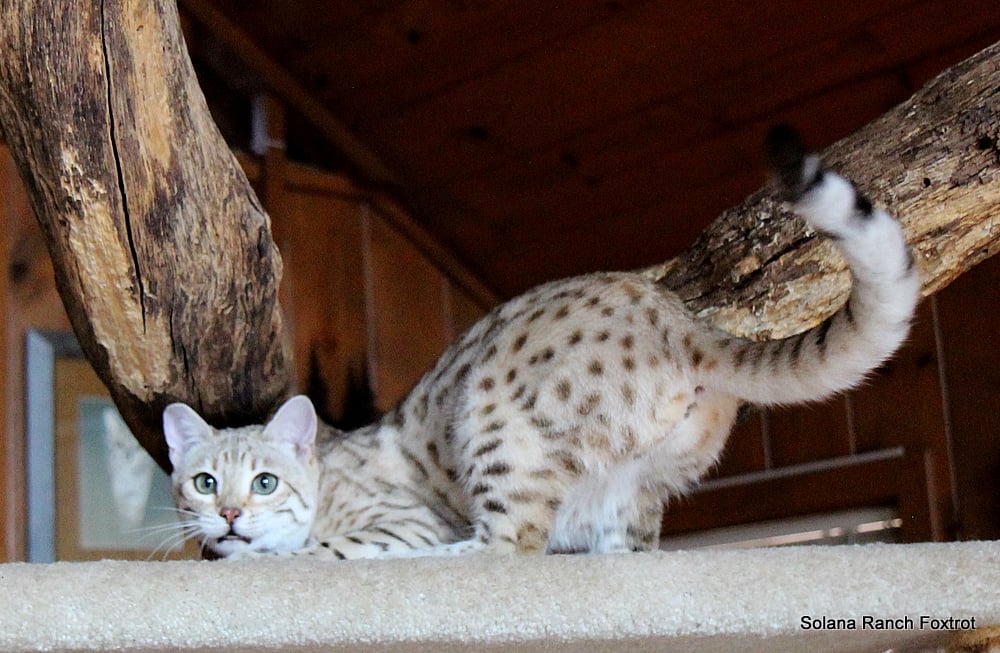
Preparing Your Home for a Bengal Kitten

When preparing your home for a Bengal cat, space is key—not just physical space, but mental stimulation too. Bengals thrive in environments where they can explore, climb, and play. Ensure your home has vertical spaces like cat trees or shelves to allow them to exercise and satisfy their curiosity. Interactive toys and regular play sessions are essential for engaging their intelligent and active minds. Bengals love to climb, so creating height is just as important as floor space when preparing for their arrival. For further details on how to set up your home for a Bengal, please read “Do I have enough space for a Bengal cat?”.

Like any new cat introduction, setting up a safe room is key. This gives your Bengal kitten a dedicated space to adjust without feeling overwhelmed by the presence of resident cats. In this room, provide resources such as food, water, a litter box, scratching posts, and toys. Before your kitten comes home, you must create your Safe Room by following the guidelines in The Safe Room and the Integration of Your New Bengal Kitten.

Removing potential hazards such as toxic plants, exposed electrical cords, and heavily scented items is crucial when preparing your home for a Bengal cat. Many common household plants like lilies, philodendrons, and pothos are toxic to cats and should be kept out of reach or removed entirely. Being naturally curious, Bengals will likely chew on things they shouldn’t. Secure electrical cords with covers or hide them behind furniture to avoid accidents. Additionally, strongly scented items, such as air fresheners or cleaning products, should be avoided as cats have sensitive respiratory systems.  

Synthetic feline pheromones can greatly ease your Bengal’s transition into a new environment. These pheromones mimic the natural ones cats produce, helping them feel calm and confident during stressful situations. According to certified cat behaviorist Rachel Geller, synthetic pheromones can be particularly helpful in reducing stress and anxiety during the transition to a new home when cats are bound to feel insecure. 

Introducing Your New Bengal Kitten to Resident Cats

The introduction process should always start with scent, not sight. Begin by swapping bedding or soft toys between the new kitten and the resident cats, allowing them to become familiar with each other’s scents. As the “Step-by-Step Guide” explains, this gradual introduction reduces stress and builds familiarity. Before progressing to more direct interactions, ensure no signs of tension, like hissing or growling.

Visual access is an excellent next step. Use barriers like screens or baby gates to let the cats see each other without direct interaction. Positive reinforcement through treats and toys will help the cats associate each other’s presence with good experiences. Supervised playtime, where the Bengal and resident cats can engage separately but within sight of each other, helps diffuse tension. Final integration should involve short, supervised visits in a large room where the cats can interact freely. Play with them with a wand toy so they have something to focus their attention on other than each other. Monitor body language closely; any signs of aggression or fear should prompt you to slow the process down. 

When introducing two cats, it’s important to remember that vocalizations, such as hissing or growling, are normal and part of the process. These sounds are the cats’ way of communicating their feelings of uncertainty or establishing boundaries. While these vocalizations may seem concerning, they don’t necessarily indicate aggression and are often a natural part of cats getting to know each other. Do not intervene if the cats are vocalizing to one another. 

Maintaining Harmony in a Multicat Household

Contrary to the common belief that cats are solitary creatures, research has shown that many cats enjoy companionship and thrive in social environments. While cats may have a reputation for being independent, they are highly adaptable and can form strong bonds with other cats and humans. For instance, cats living in groups often engage in social behaviors such as grooming each other, playing together, and sharing spaces, which contribute to their overall well-being (“Are cats Solitary”). Cats do enjoy the company of other cats. 

However, maintaining harmony in a multi-cat household requires providing sufficient resources and managing play and interaction. One of the most common causes of tension between cats is competition for resources, such as litter boxes, food, water bowls, and hiding spots. Ensuring that there are enough resources for each cat—ideally one of each per cat, plus one extra—and spreading them out throughout the house helps prevent territorial disputes and stress.

Daily play sessions are another important tool for reducing tension. Playtime allows high-energy cats to release their energy healthily, preventing them from redirecting their frustration onto other cats in the household. Make sure to break up any staring contests by placing a barrier or using distractions such as toys. Staring often results in aggression; preventing conflicts before they start is best. If tension occurs, temporarily separating the cats with access to their own resources can help them calm down and reset​.

In conclusion, bringing a Bengal kitten into a home with other cats is most successful when there is preparation and a gradual introduction process. By using the proper introduction techniques, you can ensure a smooth transition for all your pets. With the right balance of patience, knowledge, and attention to each cat’s needs, you’ll create a peaceful and harmonious multi-cat household where your Bengal can thrive.

Works Cited

“Are Cats Solitary? Debunking Myths about Feline Social Behaviors.” Isaac Mewton, https://isaacmewton.net/feline-social-behavior/. Accessed 29 Sept. 2024.

Geller, Rachel. “Feline Pheromones: The Science Behind Them.” Fear Free Happy Homes, 2024, https://www.fearfreehappyhomes.com/pheromone-science/. Accessed 29 Sept. 2024.

Johnson-Bennett, Pam. “Introducing a New Cat or Kitten.” Cat Behavior Associates, https://catbehaviorassociates.com/introducing-a-new-cat-or-kitten. Accessed 29 Sept. 2024.

“Step-by-Step Guide: How to Introduce a New Cat to Other Cats in Your Home.” American Association of Feline Practitioners, 2024, https://catvets.com/resource/2024-intercat-tension-guidelines/  Accessed 29 Sept. 2024.

Five-Year Health Guarantee from Quality Bengal Kittens

We’ve Extended Our Health Guarantee to Five Years!

We invest so much into the health of our kittens. We have twenty years of heart testing behind our cats. We have tested more of our breeding cats to older ages than any other breeder. When your kitten has SolanaRanch or Wildernesswell parents, it often has two to three generations of heart-tested cats behind it. Many of these ancestors have been tested beyond the age of five, with several reaching the critical milestone of eight years.
In addition, we feed our cats, including our kittens, a raw diet. This approach ensures they receive bio-available nutrients directly from their food, without the need for synthetic additives often found in processed feeds.  When people adopt our retired, adult breeding cats, they are amazed at their health and energy level. We credit our cats’ long-term health to the all-natural diet.  

Additionally, we maintain a toxin-free environment in and around our home to protect our cats from potential carcinogens. We abstain from using pesticides and poisons, both indoors and outdoors. Living in a residential forested area, we are surrounded by more trees than cell towers, minimizing their exposure to harmful agents and promoting a healthier, cleaner lifestyle.

Understanding the importance of long-term health for your new family member, we have decided to increase our health guarantee from three years to five years. This enhanced guarantee reflects our confidence in our breeding program and our ongoing commitment to the health and happiness of our kittens.

Why the Extended Guarantee?

Peace of Mind: Enjoy greater peace of mind knowing that your Bengal kitten is covered for a wide range of genetic health issues for up to five years.

Commitment to Quality: Our extended guarantee underscores our commitment to the highest breeding standards and health practices.

Support and Guidance: Gain ongoing support and guidance as you raise your Bengal kitten, knowing that we are here to help every step of the way.

Secure Your Future Kitten with Confidence
Choosing  Quality Bengal Kittens means more than just welcoming a new pet—it’s about adding a healthy, joyful companion to your family. With our extended five-year health guarantee, you can feel even more confident in choosing one of our kittens.

See Our Current Kittens At
Quality Bengal Kittens – Available Kittens
Facebook Page Photo Albums

Choosing the Right Breeder Helps You Find the Perfect Bengal: How Breeders Impact Personality.

A fellow Bengal breeder faced a dilemma.  She raised Bengals because she wanted to share the joy of these beautiful cats with others.  As usual, her clients picked out their kittens while they were young. As the kittens developed, she noticed that one of the boys was not developing the personality she prided herself in offering her clients.  She diligently worked to bring the shy kitten out of his shell – having him play with her children, around the dogs, with the littermates, household visitors, and extended family members, but the kitten never became bold.  His personality was, by nature, shy. As the kittens’ departure date approached, she grew weary.  This kitten did not epitomize what she wanted to provide for her clients. So she did what every well-intentioned breeder would do.  She offered the family her sweet-natured keeper kitten and kept the shy one for herself, not realizing how the selfless act would affect all of her future kittens when using the shy male as her sire. 
Undesirable cat behavior adversely affects the owners’ satisfaction with their cats and their cat’s welfare (Powell et al.). Several factors, including genetics and in-utero stress, affect physical and psychological development long before a kitten is born (“Kittens”). Once a kitten is born, there are learned behaviors that kittens pick up on from their mother’s reactions to all the stimuli inside of a home – food, other cats, dogs, humans, and everyday household activities.  Because personality and behavior significantly influence a cat’s quality of life and one’s relationship with one’s cat, when searching for a new kitten, you want to find out just how each breeder you inquire with makes the right choices to have the personality you want. 

Before Kittens Are Born

Breeders’ selection of breeding stock directly affects their future kittens’ personalities and behavior. To begin with, both the mother and the father establish the kittens’ emotional capacity, which is their ability to manage their reaction to new situations and even to the body language of other cats, dogs, and humans. While research has not yet determined whether or not cats have self-awareness of emotions, they have a spectrum of abilities to manage and understand the feelings of others, which has been directly connected to the parent’s ability. Breeders should be breeding adult cats who demonstrate emotional resilience – the ability to dissipate emotions (Cats.com Editorial Team). It is best to work with cats that observe without reacting and ultimately avoid danger or conflict. When the parents pass down emotional resilience, their kittens have the emotional capacity to become well-adjusted house cats. Kittens who do not inherit a large enough capacity for emotional resilience cannot learn to become good house cats. Dr. Sarah Heath compares a cat’s emotional capacity to a sink.  Sinks come in different sizes. The parents of each cat determine what size sink they are born with.  If their sink is too small, no amount of training can build a cat’s emotional resilience beyond what the sink can hold, which is why some feral cats are domesticable and others are not. They have different sink sizes and different capacities to build emotional resilience. 

The sire strongly influences his kittens’ personalities, demonstrating a vital genetic component. While a fellow breeder had told Jon about the male’s influence on behavior, we experienced it firsthand around 2014.  In 2013, we borrowed our friend’s stud – the one kept because he was too shy to go to a pet home.  We used this boy with a few of our girls while our two new studs matured. We found that the kittens took a lot of work to socialize because they lacked confidence.  The following breeding season, our new boys – BeauxMondes Home of the Brave and Vividcats Deuces Wild – were ready to breed.  When the two bred with the same females, the kittens were naturally confident and easy to socialize. Having this back-to-back experience of working with a male who ended up being a breeding cat because he was not considered friendly enough to be a pet cat, followed by breeding two males who were both confident and friendly, opened our eyes to just how much the sire affects the personality of the kittens. 

We have since learned that research backs up our experience.  Sires influence the boldness trait in kittens (Heath). Boldness is defined as “The genetic contribution to friendliness towards people in cats…; a general response to unfamiliar or novel objects irrespective of whether or not the objects are people” (McCune 109). Boldness determines not only a cat’s friendliness level but also a cat’s reactions to new experiences. In a study on friendliness in cats, “cats from the friendly father were quicker to approach, touch, explore and remain in close contact with the novel object than were cats from the unfriendly father” (McCune 109). We have seen this correlation in the males we have used over the years.  However, friendliness and reactivity are not necessarily connected.  For example, we have one male who predominantly produces very friendly kittens, but they are not comfortable in new environments. Quality breeding requires being aware of and documenting traits that are passed down so one does not inadvertently layer up on less desirable characteristics. If, for example, a sire creates kittens who are uncertain in new situations, it is not advisable to breed his daughter to another sire who produces kittens with a similar trait.   

Both parents determine emotional capacity – or size sink the kittens must work with.  The sire predominantly controls personality – where the kittens fall on the shy-to-bold spectrum. However, the mother cat has the most decisive influence on behavior. During pregnancy, the queen’s stress level affects the kittens’ hypothalamic-pituitary-adrenal (HPA) axis, which, in turn, affects the sensitivity of the kittens’ HPA axis and their ability to manage stress (Smith and Vale). This clarifies just how the female contributes to her kittens’ emotional resilience. If a mother cat feels safe, she will produce appeasing pheromones both in utero and after birth (Heath). Recalling Dr. Health’s analogy of the parents determining the size of each kitten’s sink of emotional resilience, the kitten will receive a smaller sink if the mother is stressed during pregnancy. In addition, if a fetus is exposed to a stressor after adrenocortical maturation occurs, “subsequent adrenocortical responses to stress might… increase” (Bain and Buffington). Therefore, the mother contributes to a kitten’s emotional health by affecting both the capacity for emotional resilience and the quality of the kitten’s HPA axis. 


After the Kittens Are Born

Once the kittens are born, the mother continues to affect their behaviors. From the queen, kittens learn essential aspects of behavior, such as food acceptance, toileting habits, and fear responses to other species – including people and dogs (“Kittens”). In feral situations, the kittens need a mother to demonstrate protective emotions to increase their chance of survival. Kittens need to learn to fear the unknown for their safety.  However, we want the exact opposite in domestic cats.  We do not want a mother to exhibit protective emotions when exposed to situations they will experience in a typical home, including the presence of humans, dogs, and everyday household noises. The kittens will mimic their mother’s behavior in new situations.  Ideally, breeders work with mothers who model good behavior and do not release stress pheromones. If a breeder works with a mother who will not exhibit desirable behavior, the mother should not be present when the kittens are introduced to new experiences. 

Trauma in early life can affect a cat’s emotional and physical health later in life. Unfortunately, the full effect of this trauma is not seen until cats are typically two years of age.    All experiences the kittens have in their breeders’ homes factor into the cat they will grow up to be. To begin with, it is essential that kittens live inside of a home so they are exposed to ordinary domestic experiences. We want the dishwasher, vacuum, TV, kid noise, the existence of dogs, and strangers coming in and out to be typical experiences for kittens before they join the home of their new family (Heath). 

Ideal kitten socialization is a lot of work.  Cats are not naturally social; they are obligatorily social (Heath).  If the cat is not in control, it does not feel safe; thus, it is the breeder’s job to slowly alter this instinct within the kittens. Kittens need to be touched all over, lifted frequently, and gently restrained, all of which are unnatural for a cat (Heath). Before the kittens are seven weeks of age, they must be handled by a minimum of five different people, not just their breeder (Heath). This presents a challenge as kittens do not typically receive a vaccine before eight weeks of age, so the breeder must be able to trust the cleanliness of those handling the kittens.  They should not be people who work with large populations of cats. Breeders should expose the kittens to new situations that allow them to grow their emotional resilience.  However, this must happen in ways that encourage the kitten to engage with the new stimuli instead of fleeing or fighting. For example, the kittens should meet new adult cats, dogs, people, etc., but they need to do this in a way that they learn to face new experiences, not flee from them. Establishing and maintaining a correct feline environment for kittens’ first 14 weeks does wonders for their emotional development, making the cats happier and healthier throughout their lives. 


What Does This All Mean?

When looking for a new kitten, select the breeder first, then the kitten.  People typically choose their pets based on appearance and availability without considering how the breeder’s choices affect the kitten’s ability to form a relationship. While appearance is important, personality and behavior affect a cat’s quality of life, particularly whether it is rehomed. One advantage of buying a pedigree pet is that it is bred for purpose.  What is a cat’s purpose? To be a lovable household companion. When rescuing a kitten, it is expected to accept the risks of not knowing the parents’ genetics or how the upbringing will impact behavior, but pedigree cats should not have the same risk.  

When interviewing breeders, ask how they prepare their kittens to be well-adjusted, happy pets.  Listen to their answer.  Does their answer explain:

  • How their choice of parents increases the kittens’ capacity for emotional resilience
  • How the sire increases the boldness factor
  • How the dam models positive reactions to stimuli
  • How the breeders raise kittens in a home (not a garage, shed, cattery, etc) so the kittens experience home life
  • How the breeder exposes the kittens to unnatural experiences that house cats must learn to enjoy: being touched, held, restrained

Even well-intentioned breeders can make mistakes that affect the entire lives of kittens when they do not understand how genetics and socialization shape the confidence and behaviors of cats. 

Works Cited 

Bain, Melissa, and Tony Buffington. “Stress and Feline Health – PMC.” National Library of Medicine, Veterinary Clinics of North America: Small Animal Practice, 27 April 2020, https://www.ncbi.nlm.nih.gov/pmc/articles/PMC8801065/. Accessed 27 December 2023.

Cats.com Editorial Team. “Do Cats Have Emotions?” Cats.com, Cats.com, 14 April 2023, https://cats.com/do-cats-have-emotions. Accessed 27 December 2023.

Heath, Sarah. Preparing Kittens for the Domestic Setting. Online Breeder Conference. Crazy Cat Vet, 16 December 2023.

“Kittens.” AAHA, American Animal Hospital Association, 2023, https://www.aaha.org/aaha-guidelines/life-stage-feline-2021/behavior-and-environmental-needs/kittens/. Accessed 27 December 2023.

McCune, Sandra. “The impact of paternity and early socialisation on the development of cats’ behaviour to people and novel objects.” Applied Animal Behaviour Science, vol. Volume 45, no. Issues 1–2, 2000, pp. 109–124. Science Direct, https://www.sciencedirect.com/science/article/abs/pii/016815919500603P?via%3Dihub.

Powell, Lauren, et al. “Understanding feline feelings: An investigation of cat owners’ perceptions of problematic cat behaviors.” Applied Animal Behaviour Science, vol. Volume 266, no. September, 2023. Science Direct, https://www.sciencedirect.com/science/article/abs/pii/S0168159123001971. Accessed 27 Dec 2023.

Smith, Sean, and Wylie Vale. “The role of the hypothalamic-pituitary-adrenal axis in neuroendocrine responses to stress.” National Library of Medicine, Dialogues in Clinical Neuroscience, 8 Dec 2006, https://www.ncbi.nlm.nih.gov/pmc/articles/PMC3181830/. Accessed 27 December 2023.


Are you looking for a Bengal to Harness Train? Here is what you need to know first.

How does one meet the needs of this type of cat?  
The easiest way to meet the needs of this type of cat is to have a high-energy, intelligent companion.  The companion does not have to be a Bengal, but getting another cat is the safest choice for a companion. The second cat must be cat-friendly and play-driven with an energy level to match your Bengal. In addition, a stimulating environment must be provided to keep the two entertained throughout the day. There is a lot of truth to the statement that two Bengals are easier than one.  They keep each other entertained, so you do not have to be the sole source of entertainment.

A small dog who is cat-friendly and who can be left out inside the home when the family is away can also work as a companion to your Bengal.  It needs to be a dog who will run around and rough and tumble with your Bengal for it to be a suitable companion.  If you are searching for a dog who will do this, you should work with a breeder who raises their dogs with cats and will be honest with you about their puppies’ personalities. 

Having a companion takes the pressure off of you to be the companion. 


How does one meet the needs of this type of cat without a companion pet? 
If you do not want a second pet but still want a confident, non-reactive, curious kitten who seeks human interaction to join you on your adventures, you must be committed to being the companion – the constant sidekick. You must put the recommended scheduled play on super drive.  When working with one of our cat parents on how to satisfy her cat, she ultimately landed on the following schedule:
5:30 – 6 AM: Play followed by breakfast
8:30 – 9 AM: Walk outside
10 AM: Treat puzzle toy
12 – 12:45 PM: Play followed by food on a lick mat
3 PM: Treat puzzle toy
6 – 7 PM: Outside time/play followed by dinner
Scattered play in between!

Before using this schedule, the Bengal, which is the only pet, was disconnected from its human, bored, and destructive.  Following this schedule resolved the problem. A cat cannot turn on and off its desire to be active and to interact at the will of its human family. A highly interactive cat who will joins in on adventures needs an abundance of daily interaction. Intense mental and physical stimulation cannot be limited to a weekend outing. 

Can I choose a kitten that is less needy for attention and still harness-train it? 
Yes, you can.  Picking a more independent kitten will alleviate some of the daily demands but requires more patience with harness training. It will take longer to achieve the ideal dream of walking our cat through the forest like one would walk a dog.  More independent cats tend to be more cautious of their surroundings.  These cats will move slower and want to assess their environment longer before becoming comfortable.  Independent cats will require more patience on your part and regular trips in the great outdoors before they can relax.  Plan to have a backpack, so the cat can be scooped up and placed in the backpack at any given time throughout the walk.


I still want a harness-trainable cat what do I do?
Weigh the pros and the cons and decide what is the best choice for you.  Is it easier and more fun for you to get two cats and create a stimulating environment and a routine schedule to interact with your cat, or would it be easier to remove all expectations and accept the slower pace of the cat’s training? 


Your family should also be a factor in this choice.  A family with young kids needs a cat with a dependent, people-centered personality, as it will put up with child antics as long as it is getting attention.  However, a home with one or two adults often has the patience and desire for a more independent cat – which often bonds very deeply with one or two people. 

What is really important is that you can determine which personality is best for you, so we can help you pick the right kitten.  Getting a Bengal cat is a 15-20-year commitment; we want to send you home with the right kitten for you when you make such a big commitment. 

When people are interested in harness training, we send The Zen of Cat Walking by Clifford Brooks home with your kitten. This gives you expert guidance on how to work with your cat – regardless of its personality. 

Whatever you decide, we work to match you with the best fit.  Let us know your preference on the dependency scale in your Bengal Kitten Application.  Are you leaving towards dependent or independent? This will help us help you pick out the right kitten for your home. 


How to Read Our Kitten Profile Charts

Bengal Kitten Personality Traits

April 6, 2026
by Robyn and Jon Paterson

People often ask us to describe our kittens’ personalities. It sounds like a simple question, but in reality, it’s one of the hardest to answer well.

A Bengal kitten’s personality isn’t just what you see in a single moment. It’s shaped by genetics, development, and how the kitten responds to its environment over time.

Because of that, we developed a rating system to help families better understand what to expect—so they can choose a kitten that truly fits their home and lifestyle. Our ratings are built from three layers of knowledge.

First, we rely on multi-generational lineage knowledge. Some of the lines in our program go back over 25 years and span five or more generations. Because these cats have been part of our lives for so long, we start to see characteristics of parents, grandparents, and great-grandparents emerge as the kittens develop. 

Second, we understand how traits are passed down genetically. Not every kitten will mirror its parents exactly. Sometimes we see a kitten whose personality clearly reflects a grandparent or even a great-grandparent. Because of that, we do not assume. We observe.

Third, we evaluate each kitten’s development. We begin assigning ratings after six weeks of age, when the kittens are interacting more fully with their environment. We watch how they respond to change, how they engage with people, how they interact with other cats and dogs, and how they play. We look at whether they seek attention or prefer independence, whether they confidently enter new situations or take time to assess them.

Allergen expectation is evaluated differently. That rating is based on known Bengal traits that influence allergen production, including gender, coat length, density, texture, pigmentation, and whether the kitten is glittered.

These ratings are thoughtful and experience-based, but they are not guarantees. A kitten’s personality will continue to develop in its new home, shaped by environment and daily interaction.


There Is No “Best” Rating

One of the most important things to understand is that there is no good end or bad end of any scale. Every trait exists on a spectrum, and every home has different needs. Our goal is not to produce one “ideal” type of cat. Our goal is to match the right kitten to the right home.

For example, a highly interactive, very dependent cat can be an incredible companion for someone who wants constant engagement. That same cat may struggle in a home where people are busy, frequently on calls, or away for long periods. In the same way, some families want a cat that is always with them, while others want a cat that is present but not constantly underfoot.

We often see people drawn to certain traits without realizing what those traits require. A good example is harness training. People love the idea of a cat that hikes with them. What they do not always realize is that this kind of cat requires consistent, daily interaction. That personality is not something you turn on for the weekend. It is something you commit to every day.

The charts exist to help set realistic expectations, so both the cat and the home are set up for success.

Understanding Each Trait

Energy Level

All Bengals are high-energy cats. This scale reflects where a cat falls within that range. A cat on the higher end of the scale wants to play throughout the day. If it is the only cat, it may need multiple structured play sessions daily to stay happy. These cats often do best in homes with another high-energy companion. A mid-range cat still has plenty of energy, but its needs are more manageable. A couple of intentional play sessions each day is often enough. A lower-energy Bengal is still active compared to most breeds, but it is more moderate in activity. These cats may be satisfied with a single consistent play session each day.

Adaptability

This scale reflects how easily a cat adjusts to new environments, people, pets, and experiences. We evaluate this by watching how cats respond to real changes in our home. They are born in our bedroom and are later moved to our main living area, where there is more activity, more space, and interaction with our dogs and daily household life.

Highly adaptable cats settle in quickly. They explore, engage, and become comfortable without needing extended time to assess every change. These cats are often a better fit for homes that plan to travel with their cat or pursue activities like harness training.

Lower adaptability is not a flaw. It is very normal cat behavior. These cats tend to observe first and engage once they feel secure. They are thoughtful and aware of their surroundings. These cats are homebodies and enjoy the stability and familiarity of home.


Independence

This scale reflects a cat’s ability to entertain itself and enjoy life as an only pet. A cat on the lower end of the scale seeks frequent interaction. It wants to be involved in what you are doing and will actively pursue your attention. These cats thrive with companionship and dislike social isolation. On the high end of the scale, a more independent cat is comfortable spending time alone and does not rely on constant interaction. These cats will enjoy you while you are around, but they are okay when you are otherwise engaged with life. These cats are often better suited to homes with busy schedules or those who prefer a more balanced level of interaction.

Neither end is better. The key is alignment. Some people want a cat that is always by their side. Others want a cat that shares their space without constant engagement. 

Intense Bengal Kitten

Intensity

Intensity reflects how strongly a cat engages with the world. Higher intensity cats tend to respond quickly and expressively, while lower intensity cats are more measured and consistent. A high-intensity cat feels like a strong personality in every area. A high-intensity cat expresses each trait exuberantly. A lower-intensity cat still shows clear personality traits, but in a more subtle way. The tendencies are there, just not as strongly expressed.

This trait often has the biggest impact on daily life. Two cats may both be high energy, but the one with higher intensity will feel much more demanding. When energy needs are not met, Bengals do not simply become quiet. They become frustrated. That frustration can show up as destructive behavior or withdrawal. Their intensity score will affect how they express their frustration, with more intense cats more likely to display destructive behavior and less intense cats more likely to withdraw into depression. 

For example, a high-intensity, high-adaptability cat is more likely to take on new experiences with gusto, whereas a low-intensity, high-adaptability cat will walk in with calm confidence. As another example, a high-intensity, low-independence cat will demand attention non-stop; whereas, a low-intensity, low-independence cat will quietly sit on your lap the minute you sit down. 

seal lynx and charcoal Bengal kittens

Allergen Expectation

This scale reflects how likely a cat is to produce allergens based on known Bengal traits. Several factors influence this. 

  1. Females tend to produce fewer allergens than males. 
  2. Darker, more heavily pigmented coats produce fewer allergens than lighter coats, such as snow or silver. 
  3. A shorter, tighter coat holds fewer allergens than a longer or looser one. 
  4. Glittered coats also tend to hold fewer allergens than non-glittered coats.

These factors guide our expectations, but no cat is truly free of allergens. Individual sensitivity will affect a person’s reaction. Individual reactions will always vary.

Our Role in the Process

Our goal is not simply to place kittens. Our goal is to place them well.

We have spent over 25 years working with these lines, studying how traits are passed down, and continuing to educate ourselves on behavior, health, and development. That experience allows us to look at a kitten and understand not just who it is today, but who it is likely to become.

We take that responsibility seriously because the outcome matters. We want our cats to stay in their homes for life. That only happens when the match is right from the beginning.

Every rating, every conversation, and every recommendation is made with that goal in mind.

What to Do Next

Understanding how to read our kitten profiles is the first step in finding the right match—but it’s only part of the process.

If you’re still in the early stages and want to better understand how we approach breeding, health, and placement, you can start here:
Why Buy from Quality Bengal Kittens

If you’re ready to begin thinking about timing and how selection works, we recommend learning more about our process here:
Advisory Membership

And if you’d like to see the kittens we are currently working with, you can explore them here:
Available Bengal Kittens

Cleaner Paws, Fresher Floors: Our Switch to Cat Butler Litter

For over fifteen years, Dr. Elsey’s Unscented litter has been our go-to recommendation. We try nearly every other litter that people swear by, and none of them compare. The number one factor that always rules a litter out for us is the smell. If we can smell it, it is an absolute no-go for us. Fortunately, the cats agree with us on this factor. Dr. Elsey’s has kept our house odor-free for a very long time.

We were not looking to change, but at a recent cat show, we met the owner of Cat Butler and agreed to try his product. We were thrilled to open the bag and discover that it is, as proclaimed, odor-free. Many litters claim to be odor-free, but the reality doesn’t measure up. Not this one.

Within the first few weeks, we saw that Cat Butler offers benefits that make our lives easier and keep our cats cleaner. The first thing we noticed was the lack of residue. Bengals have a habit of playing in their water bowls and then playing in the litter box. I know, it’s disgusting, but they are Bengals. With Dr. Elsey’s, this means gray paw prints across our Saltillo tiles and residue on the cats’ coats. With Cat Butler, the pellets are shaped to resist sticking to paws, which reduces tracking and scatter, therefore leaving no marks on the floor and no residue. Furthermore, the pea fiber is also naturally dense, so it doesn’t break down into fine particles and produce the same dust you get with clay. This means cleaner paws, cleaner coats, and cleaner air. That alone is a noticeable benefit.

Scooping is also easier. With Dr. Elsey’s, if we get behind on scooping, a cement-like block forms at the bottom of the litterbox. These are especially challenging when we have a pet sitter whose scooping skills are never quite up to par with our own. With Cat Butler, the cement block does not form. The starch in the pea fiber used in Cat Butler quickly absorbs liquid. It binds it into strong, tight clumps that not only don’t break apart but also stay separate from each other, making them easier to scoop out, even when the litterbox scooping gets behind schedule. In addition, the litter is about 60% lighter than clay, which makes pouring and refilling less of a chore. These may seem like small changes, but when you are cleaning multiple litter boxes every day, they add up.

The most important test is always going to be odor. Cat Butler passes the opening of the box odor test, but does it pass the your-house-does-not-smell-like-cats test? Answer – yes, it does. The litter itself has no strong fragrance. When the cats urinate, there is a faint Play-Doh-like scent that disappears quickly. Because the pea fiber locks in moisture so fast, the box stays drier and fresher, which helps keep odor down even more. Combined with the fact that our cats are raw fed, which already reduces odor, the result is an odor-free house that visitors still comment on.

Our one hesitation in trying Cat Butler was the texture. Cats naturally prefer a sand-like litter, and Dr. Elsey’s provides that. Cat Butler is a small pellet made from pea fiber. At first, our Bengals hesitate, and we wonder if they will reject it. To give them the choice, we set out one box of Cat Butler litter next to a box of Dr. Elsey’s litter. Over time, they begin using the Cat Butler box with as much ease as the Dr. Elsey’s box, and within a month, they are choosing the pellets regularly. If we ever face litter box problems again, we will temporarily use Dr. Elsey’s Cat Attract until the issue is resolved, just as we still advise anyone struggling with litterbox issues to use Cat Attract until they are resolved. But when everything is status quo, Cat Butler is our daily litter.

Another benefit worth mentioning is what Cat Butler is made from. The litter is created from peas, specifically a byproduct of gluten-free food production. Instead of going to waste, that pea fiber is reused in a way that is safe for cats, biodegradable, and sustainable. It is food-grade material, naturally low in dust, and free from chemicals. We’ve seen the infamous Jean Mill cat litter mound visible by Google Earth’s camera, so it does make us feel better knowing we are choosing something lighter on the environment.

For us, the change is worthwhile. Our floors are cleaner, our cats are cleaner, the litter is lighter to handle, and the boxes remain odor-free. Cat Butler earns its place as our new favorite cat litter.